1/4
Growing and Care Tips for Mexican Bush Sage
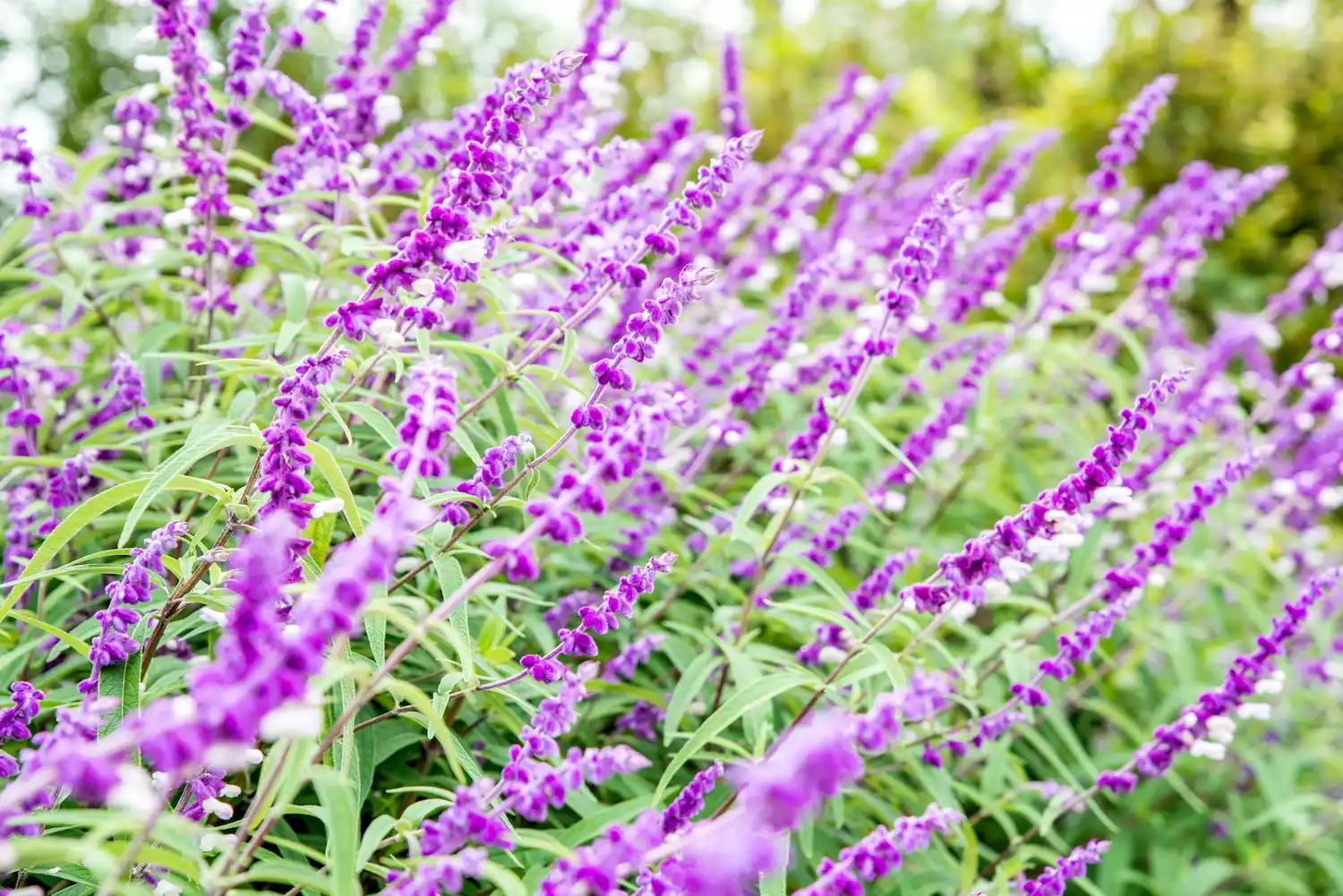
Mexican bush sage (_Salvia leucantha_), also known as velvet sage, is a perennial shrub native to Central America and Mexico, admired for its vibrant purple flowers and low-maintenance requirements. This plant features velvet-textured, gray-green leaves on square stems and emits a pleasant aroma. It grows rapidly, reaching 2 to 3 feet in height each season, making it suitable as an annual in cooler climates. When planted in spring, it flowers from late summer to early fall, attracting butterflies, hummingbirds, and other pollinators.
Optimal care for Mexican bush sage includes planting it in a sunny location with fertile, well-drained soil. It should be spaced three feet apart and planted in the spring. Consistent watering is necessary during its initial growing season to promote robust root development and during prolonged periods of drought. Annual fertilization with a balanced, all-purpose fertilizer should occur in early spring before new growth emerges. Regular shearing two or three times during spring and summer encourages denser, more compact growth and abundant blooms. Deadheading spent flowers can also stimulate reblooming in autumn. In warmer climates, the plant can be cut back to the ground in winter for vigorous regrowth, while in colder regions, leaving dead growth provides insulation against frost.
Several varieties of Mexican bush sage exist, each with distinct characteristics. '_S. leucantha_ 'Midnight'' features dark purple calyces and purple flowers, growing up to 5 feet tall and wide. '_S. leucantha_ 'Pink Velour'' (also known as 'Velour Pink' or 'Danielle's Dream') produces rosy pink tubular flowers with white calyces and grows 3 to 4 feet tall and wide. '_S. leucantha_ 'White Mischief'' is a larger variety, reaching 4 feet tall and up to 8 feet wide with fuzzy white blooms. '_S. leucantha_ 'Santa Barbara'' is a compact version, growing only 3 feet tall and wide, making it suitable for rock gardens and mixed shrub borders.
Propagation of Mexican bush sage is typically done through stem cuttings taken in spring or summer. While it can be grown from seed, cultivars may not produce offspring true to the parent plant. To propagate from cuttings, a hardwood piece with four to five nodes is cut using clean, sharp pruners. All but the top set of leaves are removed, and the cut end is dipped in rooting hormone. The cutting is then planted in a 4-inch pot with moist potting mix and placed in a warm, bright area away from direct sunlight. The soil should be kept consistently moist. After a few weeks, roots and new foliage will develop, and once the plant is several inches tall, it can be hardened off and planted outdoors in late spring.
Mexican bush sage is largely low-maintenance and resistant to deer and rabbits. However, it can be susceptible to pests like whiteflies, aphids, and spider mites, especially when grown in greenhouses. It may also develop rust and leaf spot diseases. Optimal blooming occurs in July and August, extending into the fall, with individual blooms lasting several days. Full sun, rich soil, and adequate moisture during dry spells are essential for promoting a healthy bloom. Leaves falling off or turning yellow often indicate overwatering or an excess of nitrogen-rich fertilizer. These issues can be addressed by adjusting watering practices and amending the soil with sand or grit to improve drainage. Mexican bush sage is not typically used as a culinary herb but is valued for its ornamental flower spikes.
#MexicanBushSage #SalviaLeucantha #Gardening #PerennialPlants #PlantCare #PollinatorGarden #DroughtTolerant #Horticulture #FlowerGardening #MexicanBushSage #SalviaLeucantha #Gardening #PerennialPlants #PlantCare #PollinatorGarden #DroughtTolerant #Horticulture #FlowerGardening
 No comments yet
How to care for a snake plant – 3 things every houseplant parent should know

How to Grow and Care for Mexican Petunia
How to Grow and Care for Pride of Madeira