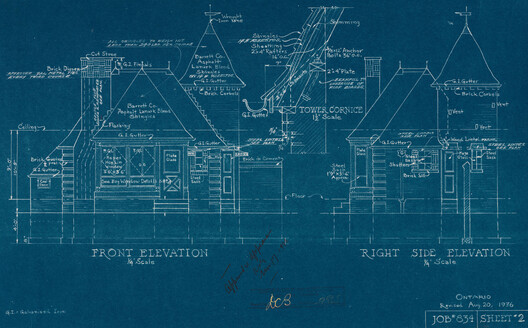
How today’s enterprise architect juggles strategy, tech and innovation
The role of the enterprise architect has evolved significantly beyond a simple bridge between business and IT, becoming critical in connecting business strategy, technological innovation, and ecosystem survival. This expanded role requires enterprise architects to adopt multiple personas, encompassing responsibilities from technical design to ecosystem management and navigating emerging technologies like Artificial Intelligence (AI).
As a trusted advisor, the enterprise architect offers credible guidance to business leaders on technology trends, risks, and opportunities, ensuring decisions align with both short-term goals and long-term sustainability. In their strategist persona, they align technology initiatives with the business's vision to drive value and competitive advantage. They also act as innovators and experimenters, identifying new opportunities and framing experiments to maximize learning. Navigators guide businesses through complex and uncertain technology landscapes and market dynamics, ensuring organizational stability amidst evolving challenges. As designers, they craft balanced solutions that meet business needs and technology capabilities, often requiring trade-offs. The role also involves acting as a "Jenga builder," assembling reusable and replaceable components to create responsive architectures that accelerate time-to-market without compromising quality or integrity. Furthermore, enterprise architects serve as observer-optimizers, continuously monitoring and refining systems for optimal performance, cost reduction, efficiency improvement, and scalability. They are also crucial collaborators, working with various stakeholders to ensure business outcomes are met, and acting as "ecosystem warriors" who manage broader ecosystems, addressing sustainability, vendor management, compliance, and risk mitigation across all systems and components.
The enterprise architect's concerns are broad, extending to enterprise/portfolio architecture, solution architecture, software architecture, infrastructure architecture, and data architecture. These concerns involve planning and managing a holistic view of the complex solution landscape, ensuring alignment with business plans, supporting current needs while adapting to future demands, designing scalable and secure applications, building foundational hardware and cloud resources, and ensuring data governance and seamless data flow. Cross-cutting perspectives such as performance, security, data protection and privacy, resilience and availability, cost and efficiency, user experience and accessibility, and automation must also be addressed and balanced. They are also responsible for bridging execution to strategy, ensuring IT services align with strategic goals and developing roadmaps that consider skills, tools, standards, and organizational structure.
Managing complex ecosystems presents several challenges, including maintaining technology and business sustainability, navigating distributed responsibility models, managing contracts and vendor relationships, evaluating aggregated Total Cost of Ownership (TCO), prioritizing initiatives, and handling change management for both technology and business. They must also balance delivery pace with quality and address fragmented customer experiences, compliance management, and risk management across diverse environments. Navigating emerging trends like AI requires careful evaluation to integrate these technologies into the broader strategy, balancing innovation with caution, and addressing risks related to organizational readiness, data privacy, security, ethical concerns, and regulatory changes. The constant pace of technological change necessitates that enterprise architects balance the urgency of adopting new technologies with the need for stability, scalability, and sustainability.
Achieving enterprise architecture excellence involves aligning technology strategy with business objectives, ensuring razor-sharp execution, maintaining professionalism and credibility, and making informed decisions while navigating technology and innovation at pace. It also requires traceable architecture decisions and a commitment to continuous learning and improvement. The enterprise architect's strategic importance is paramount in today's business environment, as they act as technology strategists who integrate business, strategy, and technology to drive overall business success amidst growing complexity and rapid technological advancements.
#EnterpriseArchitecture #CloudArchitecture #DataArchitecture #ITStrategy #ArtificialIntelligence #EcosystemManagement #DigitalTransformation #ITLeadership #Innovation #EnterpriseArchitecture #CloudArchitecture #DataArchitecture #ITStrategy #ArtificialIntelligence #EcosystemManagement #DigitalTransformation #ITLeadership #Innovation
0 تعليق إجمالاً
 لا توجد تعليقات بعد
قد تعجبك أيضًا

15 Best Architecture and Design Firms in the USA


I’m an expert freelance project manager. How come no one’s hiring me?

New Talent: Seven Innovative Design Studios to Watch

Innovations Driving Sustainable Building and Architecture Forward

Building Knowledge, Not Just Structures: Redefining the Architect’s Role in Times of Uncertainty


7 innovative ideas in architectural design


Avoid Rigidity And Drive Innovation By Rewiring Marketing And Comms


Architectural design to meet the needs of our time

Meet Philip Oloo | Architectural Designer, Virtual Reality for Architecture and Licensed General Contractor

Whatever Happened to “The Architects’ Architect”?
10 Revolutionary AI Tools Reshaping Architectural Design

How generative design is shaping the future of architecture?

Designing Beyond Buildings: An Architect’s Strategic Shift


Building a profile: The sway of marketing on architectural design


The Plan and the Prompt: How AI Is Rewiring Design and Practice

Social Media-Friendly Design: Is Architecture Adapting to Viral Trends and Algorithms?

Strategy and design

Real Estate Design Solutions - Commercial Space Design
The impact of machine learning on architectural design

News Release: NOCO-NOCO announces strategic alliance with TESNOLOGY to advance smart city initiatives