1/4
How the Technicolor Ikat Designs of Central Asia Thread Into Textile History
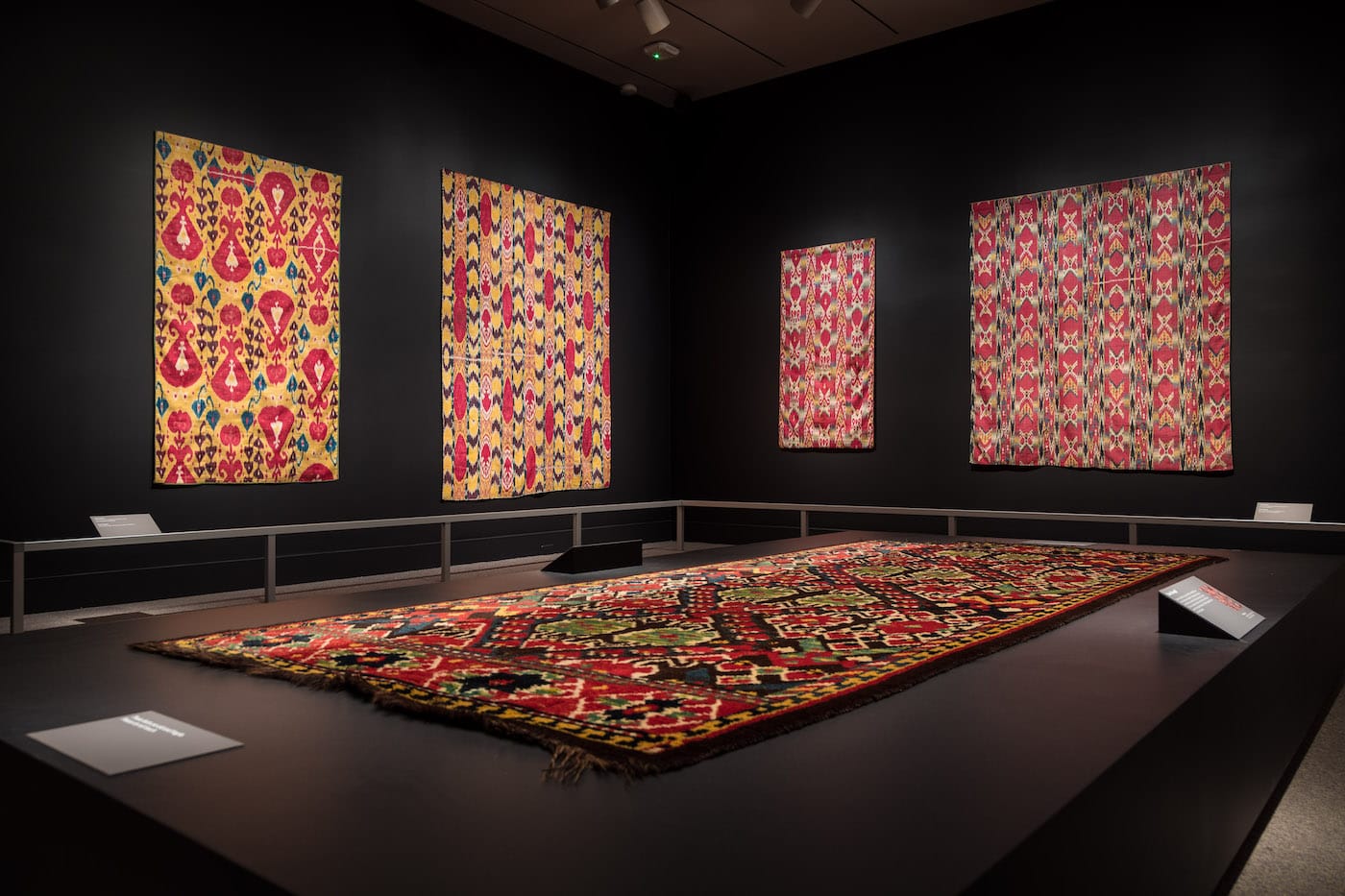
The article explores the rich history and intricate artistry of Central Asian ikat textiles, currently featured in the Smithsonian exhibition “To Dye For.” Ikat, a fabric known for its vibrant colors and geometric patterns, has been a significant symbol of status and wealth among the seminomadic peoples of Central Asia throughout the 19th century. The exhibition, on view at the Arthur M. Sackler Gallery in Washington, D.C., showcases nearly 70 pieces of 19th-century ikat art, donated by private collector Guido Goldman. This donation marks 20 years since Goldman first introduced ikat to many Americans at the same venue, in what was the museum's inaugural textile show.
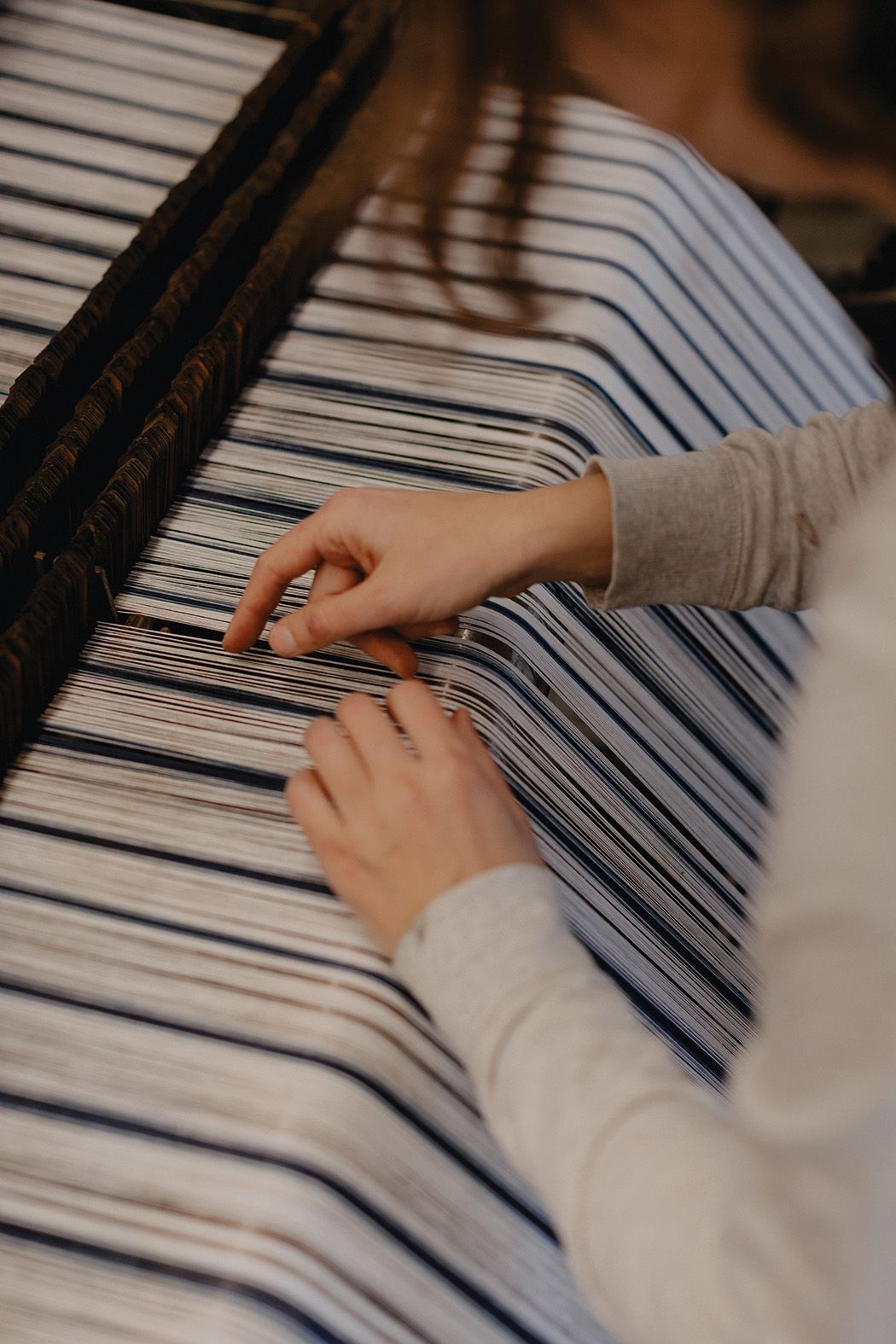
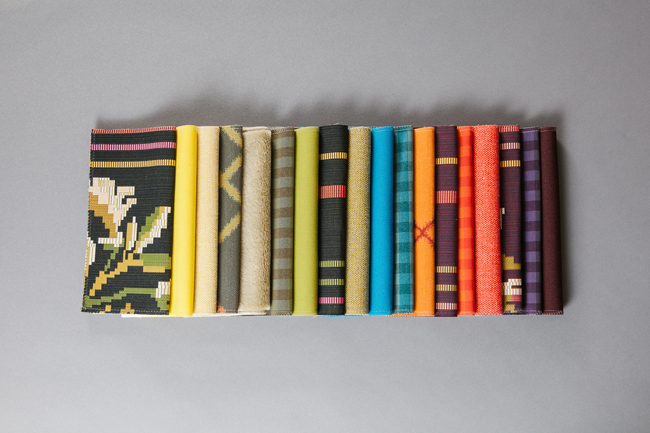
Massumeh Farhad, chief curator of the Freer and Sackler Galleries, highlights that while the ikat technique, derived from an Indonesian word for “tie,” has roots in Indonesia, India, and Japan, it was in Central Asia, particularly Uzbekistan, where the craft reached its pinnacle of perfection. Farhad emphasizes the boldness and arresting quality of Central Asian ikats. The creation of an ikat design is a meticulous and time-consuming process, demanding a clear vision of the final color pattern before any weaving begins. The process involves soaking warp threads in a series of up to eight dye vats. Before each immersion, specific sections of the warp are strategically bound with dye-resistant greasy thread, exposing only the portions intended for coloring. By repeatedly repositioning these threads, textile makers gradually imbue the entire warp with a spectrum of tones. Highly skilled designers may subject parts of the material to multiple immersions to achieve blended colors, such as orange from red and yellow, or purple from red and blue.
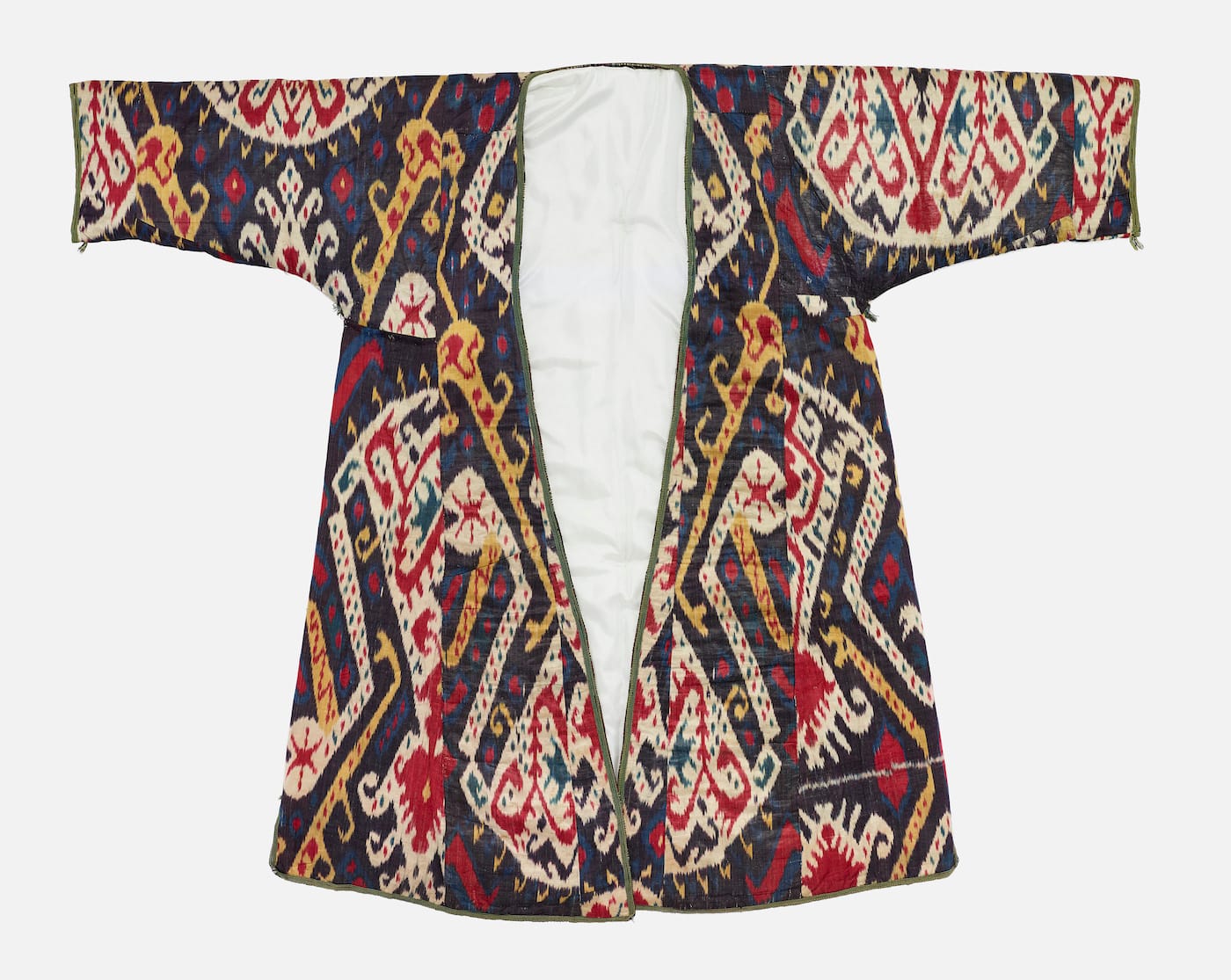
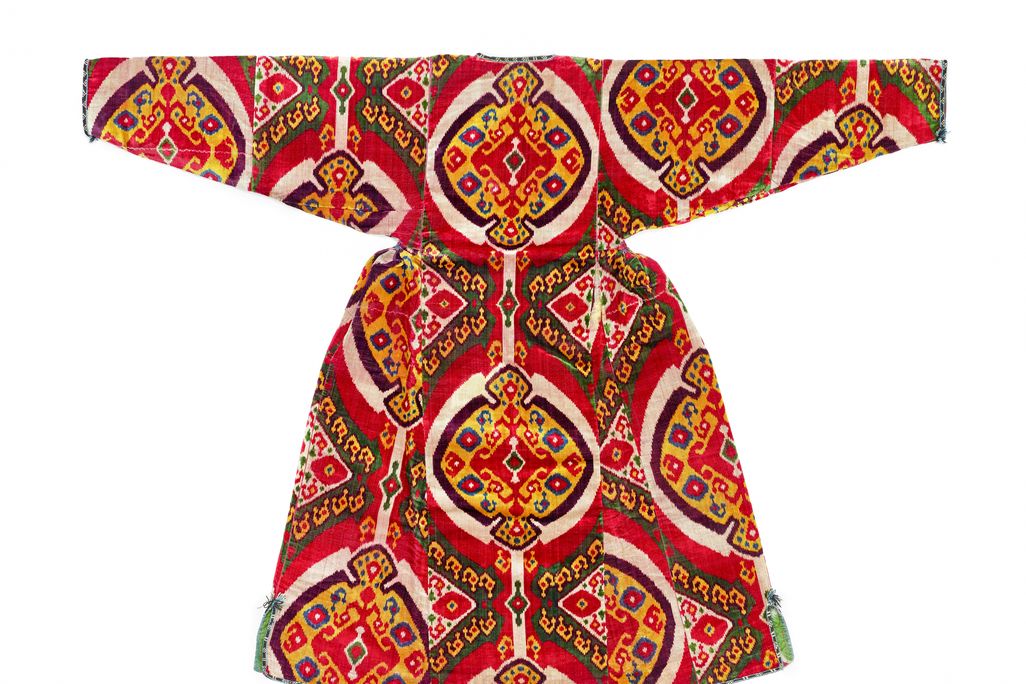
Once the multi-colored warp is prepared, it is stretched onto a loom and combined with a cotton or silk weft, resulting in a long, narrow textile featuring the designer’s repeating geometric pattern. These textiles are then fashioned into distinctive coats or used as two-dimensional wall hangings. A fascinating aspect of this collaborative process in Central Asia is the involvement of different ethnic groups at various stages. Farhad notes that Tajiks were responsible for yellow and red dyes, the Jewish community imported indigo, and Uzbeks handled the weaving, illustrating a complex, collaborative effort.
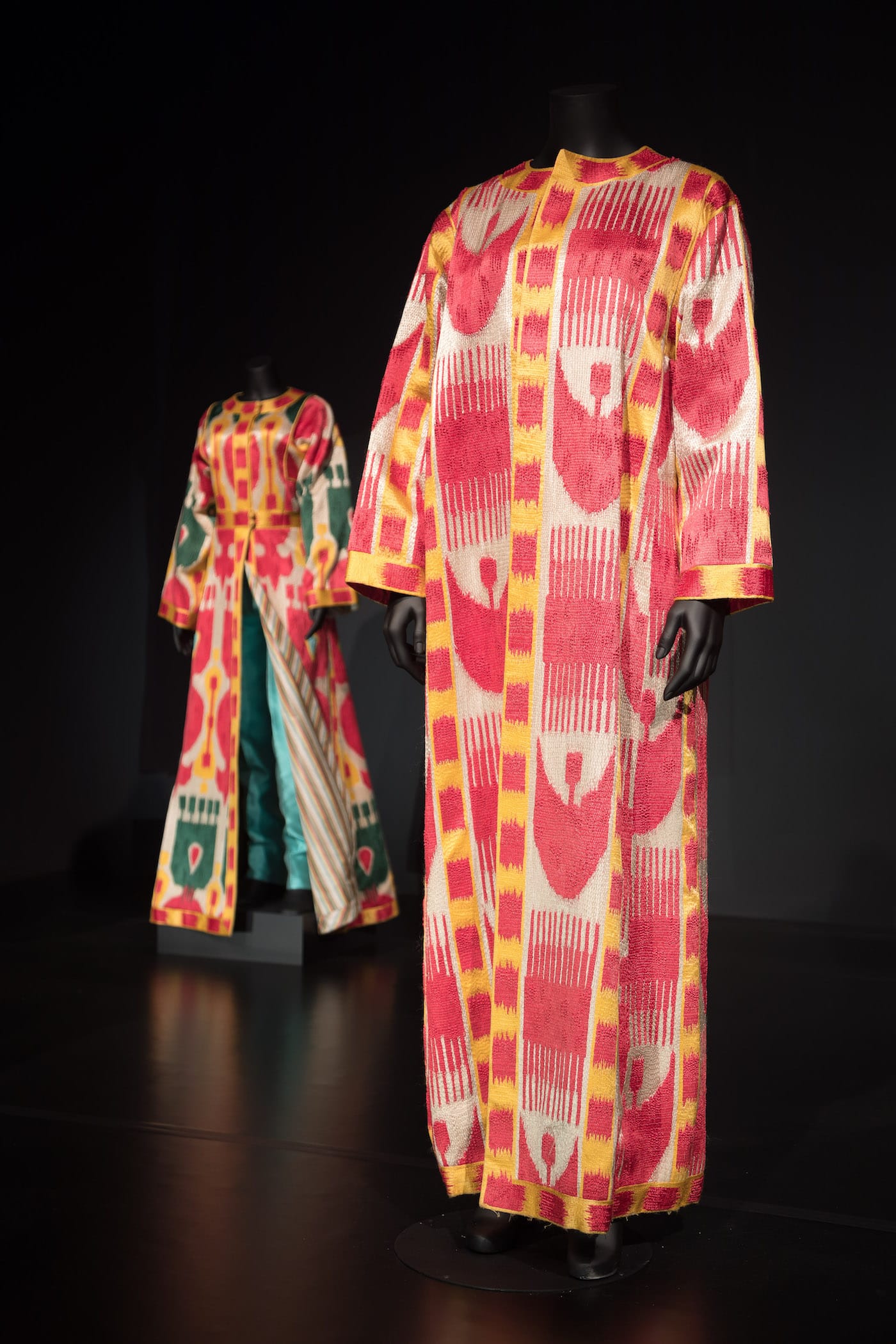
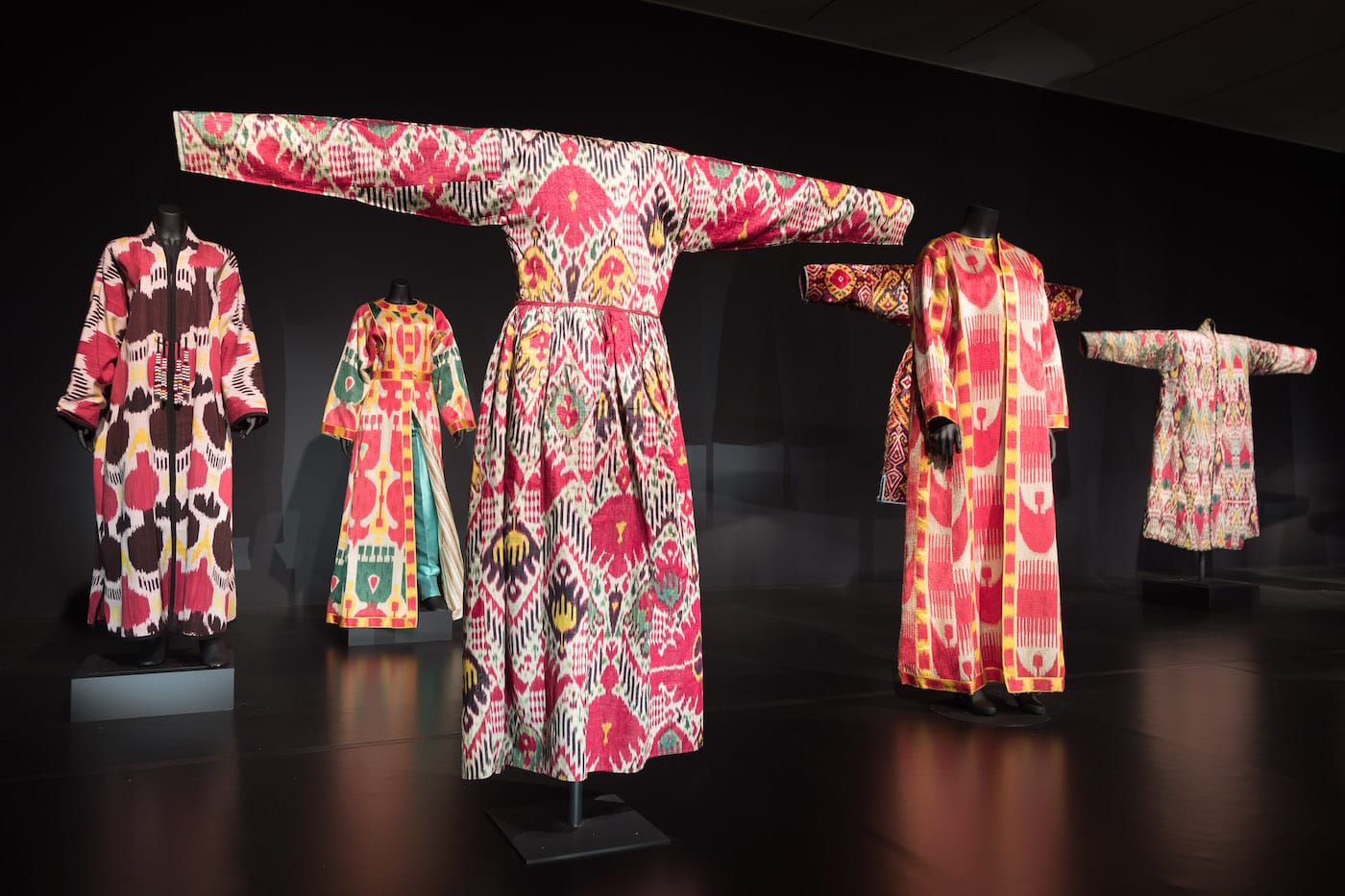
The exhibition is structured to progressively display the increasing complexity and vibrancy of ikat designs. The initial gallery features simple wall hangings with limited colors, gradually leading to more intricate pieces suggesting a greater number of dye baths. The highlight of the show is a room dedicated to ikat coats, distinguished by their unique style and elaborate linings of Russian cotton and Indian chintz. Farhad explains that among the mobile Central Asian populations of the 19th century, clothing served as a critical status symbol, as wealth was often carried or worn. Ikat coats, therefore, were a direct representation of an individual's status and importance.
The exhibition also explores the contemporary influence of ikat fashion, featuring works by designers like Oscar de la Renta. De la Renta, a prominent figure in haute couture, drew significant inspiration from ikat patterns, helping to popularize the aesthetic in America. His pieces, such as a 2005 trench coat and a 2013 floral gown, are displayed in the coat room. However, de la Renta's designs employed modern manufacturing techniques rather than the traditional ikat method, lacking the characteristic panel divisions often seen in historical ikat textiles. This modern adaptation has contributed to a global surge in ikat patterning, making it ubiquitous in contemporary home furnishings and products, from Crate & Barrel couches to Target items. “To Dye For” serves as an educational reminder of the arduous labor and artistic vision behind these widely recognized patterns, connecting the historical origins of ikat with its pervasive presence in modern design. A complementary exhibition, “Binding the Clouds,” is also on view at George Washington University’s Textile Museum.
#Ikat #CentralAsianTextiles #TextileHistory #SmithsonianExhibition #ArthurMSacklerGallery #GuidoGoldman #MassumehFarhad #DyeingTechnique #OscarDeLaRenta #Ikat #CentralAsianTextiles #TextileHistory #SmithsonianExhibition #ArthurMSacklerGallery #GuidoGoldman #MassumehFarhad #DyeingTechnique #OscarDeLaRenta
0 ความคิดเห็นรวม
 ยังไม่มีความคิดเห็น
คุณอาจจะชอบอีกด้วย
The Enduring Influence of Ikat Fabric, from Oscar de la Renta to Contemporary Design

Islamic Carpets in European Paintings
This Textile Line Pairs Timeless Patterns With Trippy Color Combinations

28 shades of aimai : Reinventing Japan’s traditional color wheel
The floral fabric that was banned

Let’s Talk Pattern Design With Shadé Akanbi
What Is Batik? Learn How to Use This Traditional Textile in Your Home


Dorothy Cosonas Carries KnollTextiles’ Storied Mantle
Textile as Portable Garden
Ikat to Kalamkari: 7 Indian textiles to add a touch of tradition to your modern homes | Hindustan Times

The ancient Islamic roots of modernity

Our Current Pattern Crush Is Made for Mixing and Matching
5 global textile techniques still seen in modern fabrics

Europe's secret dyeing formula
The Forgotten History of Bourne and Allen’s Mid-Century Textiles

9 Ways to Decorate with Patterns
When Hollywood Needs a Historically Accurate Outfit That Looks Just Right, It Turns to Rabbit Goody
The real history of tartan, from the Scottish Highlands to the streets of Tokyo

Textile Designer Esha Ahmed Joins Joy Moyler for a Conversation on Global Weaving Arts

KnollTextiles Revives Three of Its Original Textile Colors