1/11
Villa Léandre: An English-Inspired Art-Deco Street in Montmartre
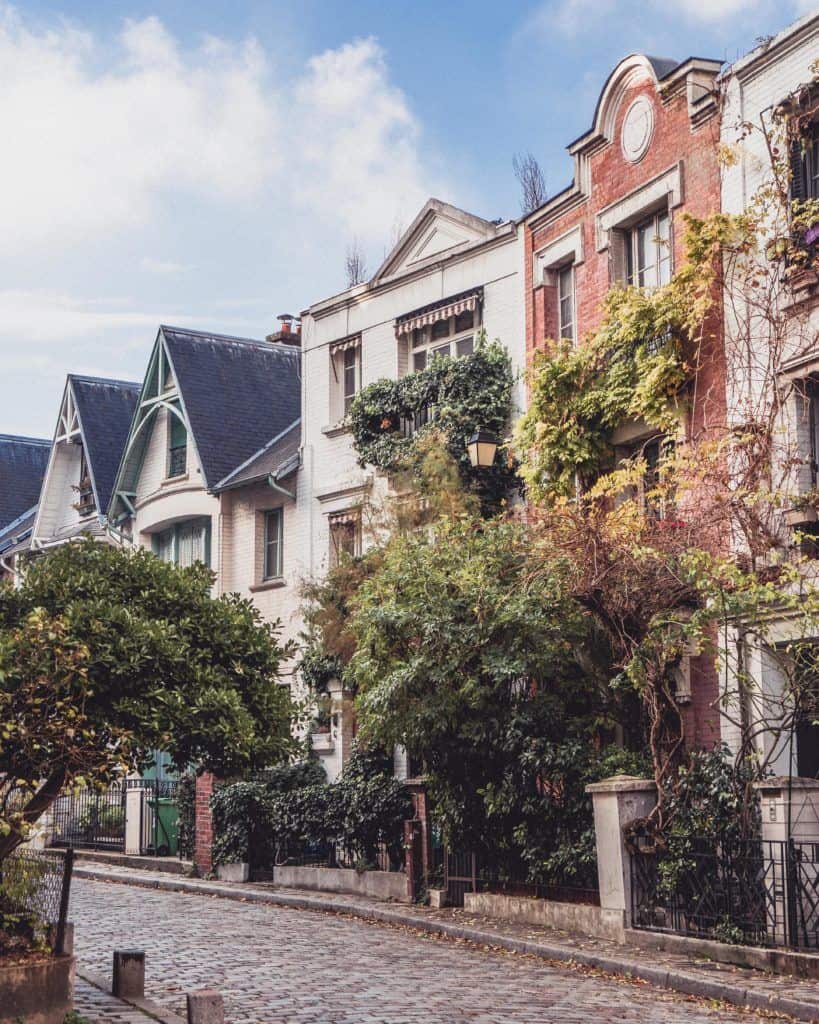
Villa Léandre, nestled in the 18th arrondissement of Paris, offers a unique glimpse into a bygone era, contrasting sharply with the typical Haussmannian architecture prevalent throughout the city. This hidden impasse, just a short walk from iconic Montmartre landmarks like Place de Dalida, Musée de Montmartre, and La Maison Rose, transports visitors to a charming, English-inspired Art-Deco street. The closest metro station is Lamarck-Caulaincourt on Line 12, making it easily accessible.
The history of Villa Léandre predates its construction in 1926. The site was once home to le Moulin des Prés, a wooden windmill built in the early 18th century, which remained active until at least the 1770s. Montmartre, once a village characterized by vineyards, rolling hills, and numerous windmills, now retains only two of its original windmills and a single vineyard, Le Clos Montmartre. Historical accounts suggest some debate regarding the exact number of windmills on the site, with some sources indicating two, one of which was informally known as Moulin de la Béquille. Regardless, the windmill or windmills fell into disuse by the 19th century and were eventually demolished in the early 20th century to pave the way for the development of Villa Léandre.
The street itself is named after the local comedian Charles Léandre. The houses along Villa Léandre are distinctively English-inspired and built in the Art-Deco style, offering a visual departure from the uniform facades of central Paris. Each house possesses unique decorative elements and architectural features. A notable example is No. 15, constructed in 1926 for the French-Romanian poet Tristan Tzara. House No. 10 playfully features a miniature 'Downing Street' plaque, a nod to the Prime Minister’s Office in London. Each residence in Villa Léandre is complemented by its own small garden, and these properties are now considered some of the most exclusive and expensive real estate in Paris. Prior to 1936, the road was known as Villa Junot.
Visiting Villa Léandre requires mindful consideration, as it is a residential area. While once a secluded spot, its popularity has grown, particularly with the rise of social media. Visitors, especially on weekends, are advised to maintain a respectful demeanor and avoid excessive noise to preserve the tranquil atmosphere for residents, drawing a parallel to how other charming Parisian streets like rue Crémieux have faced restrictions due to over-tourism. The surrounding area of Montmartre offers a wealth of attractions. Nearby points of interest include the Montmartre Cemetery, known for its unique layout and notable interments like Dalida and Émile Zola. Place Dalida is famous for its picturesque views and offers excellent photo opportunities, particularly in the morning light. The Calvary of Montmartre, an often-overlooked church, is open to the public only on November 1st each year. Le Clos Montmartre, the area's last remaining vineyard, is charming to view through its gates, although it is only accessible to the public during the wine harvest. Exploring Montmartre can also involve a self-guided walking tour, staying in one of the many Montmartre hotels, or a romantic vintage Citroën 2CV tour for a unique perspective on the 18th arrondissement.
#Paris #Montmartre #VillaLeandre #ArtDecoArchitecture #HiddenGems #TravelGuide #HistoricalSites #EuropeanCities #Architecture #Paris #Montmartre #VillaLeandre #ArtDecoArchitecture #HiddenGems #TravelGuide #HistoricalSites #EuropeanCities #Architecture
Há 0 comentários no total
 Ainda não há comentários
Você também pode gostar
House Tour: Classical Modern Parisian Pied-à-Terre Apartment Opposite the Louvre
Five character-filled properties for sale in Madrid

Inside a Parisian Hôtel Particulier That’s Equal Parts Art Gallery and Zen-Like Spa

!['Sophisticated rustic': French Eclectic design in Lancaster features hip roof, tower [architecture column]](https://gstatic.ideal.house/news/images/3d9d49ff884d4125978aa1fb5db2b410.jpg)
'Sophisticated rustic': French Eclectic design in Lancaster features hip roof, tower [architecture column]
This Manor House Apartment Will Make You Fall in Love with the French Countryside

A Stylish Madrid Residence Brimming With Art Deco Charm

Photo 10 of 18 in A 1960s Heritage Home in London Could Be Yours for £2.2M

Why One Designer Gave Dean Martin's Former House in LA a French Makeover
This East London apartment offers elevated industrial calm
Dreaming of a French-Inspired Home? Designers Share Everything to Know


Restoring the Grade II listed Jacobean manor house, Langdon Court

Catherine Deneuve's 18th-Century French Country House Has Been Transformed Into a Five-Star Retreat

1900s Cherokee Triangle Victorian boasts modern touches, antique charm
Alma-nac renovates London apartments with colourful herringbone patterns
9 Gilded Age homes for sale in the US right now
A Historic Villa Among the Vineyards of Monferrato Embraces the Art of Slow Living
Maclaren.Excell infuses a West London Victorian with cool concrete and steel
19th Century Montclair Home Undergoes Stunning Makeover

Victorian townhouse renovation opens dining room to the garden
5 Fort Worth Mansions That Are Castle Worthy — Including a $12.9 Million Westlake Stunner