1/2
Global Insulated Concrete Form (ICF) Market Size, 2033
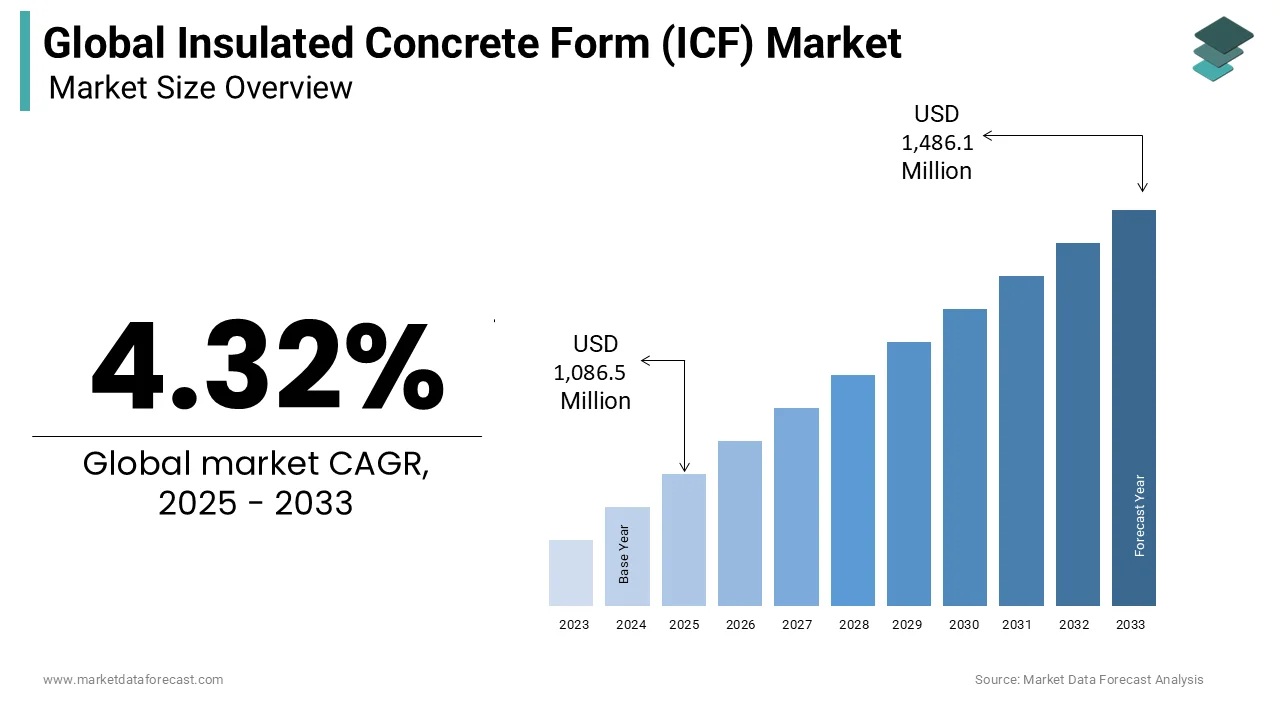
The global insulated concrete form (ICF) market, valued at USD 1,015.6 million in 2024, is projected to reach USD 1,486.1 million by 2033, demonstrating a compound annual growth rate (CAGR) of 4.32% from 2025 to 2033. Insulated concrete forms are a construction method utilizing permanent formwork made from insulating materials, primarily expanded polystyrene (EPS) or extruded polystyrene (XPS), to create reinforced concrete walls. These modular units offer superior thermal performance, sound insulation, and structural resilience, finding increasing application in residential, commercial, and institutional buildings where energy efficiency and disaster resistance are priorities.
The market's growth is primarily driven by the increasing demand for energy-efficient buildings, spurred by stringent building codes and regulations worldwide. For instance, the U.S. Department of Energy highlights that residential buildings contribute significantly to national energy consumption, leading to mandates for improved thermal envelopes. Similarly, Canada's National Energy Code for Buildings has tightened insulation requirements, favoring ICF usage. The rising frequency and severity of extreme weather events also contribute to market expansion by increasing the need for structurally robust buildings capable of withstanding hurricanes, tornadoes, and wildfires. ICFs offer exceptional resistance to these disasters, making them a preferred choice in vulnerable regions, as exemplified by increased adoption in Florida following hurricane code strengthenings.
However, the market faces restraints, including higher initial material and labor costs compared to traditional construction methods. ICF systems can be 5% to 10% more expensive than conventional wood or masonry framing, a factor that limits adoption in price-sensitive markets, especially in emerging economies where capital is constrained. Furthermore, a lack of skilled installers and limited awareness and misconceptions among architects and contractors hinder widespread utilization. Studies indicate that a significant portion of architectural firms are unfamiliar with ICF detailing and integration, leading to underutilization and resistance from subcontractors accustomed to traditional framing.
Opportunities for market growth lie in the expansion of affordable housing projects that prioritize long-term energy savings. Government initiatives, such as Canada's National Housing Strategy, focus on building energy-efficient and climate-resilient homes, where ICFs can significantly reduce heating costs. The integration of ICFs with net-zero energy building (NZEB) initiatives also presents a substantial opportunity. ICFs contribute to minimizing heating and cooling loads, crucial for NZEB certification, with buildings using ICF walls achieving significantly lower heating demands than conventional structures.
Challenges for the market include supply chain constraints for polystyrene insulation materials, which are derived from petrochemicals subject to price volatility and geopolitical disruptions. Fluctuations in production capacity and logistical bottlenecks directly impact ICF production timelines and costs. Regulatory fragmentation and a lack of standardized testing protocols also impede cross-border adoption and certification, creating compliance challenges and deterring multinational developers from standardizing ICF use across global portfolios.
In terms of product segments, polystyrene foam holds a dominant share due to its cost-effectiveness, ease of manufacturing, and compatibility with existing construction workflows, meeting or exceeding energy code requirements. Polyurethane foam is projected to grow at a higher CAGR, offering superior thermal performance and structural integration capabilities. The residential sector constitutes the largest application segment, driven by homeowner demand for durable, energy-efficient, and disaster-resilient homes. The non-residential segment, encompassing commercial and institutional buildings, is also experiencing significant growth due to demand for low-operating-cost and high-resilience structures.
Geographically, North America leads the market, driven by stringent energy codes, frequent extreme weather events, and a robust network of ICF manufacturers. Europe holds the second-largest share, with countries integrating ICF systems into passive house and low-energy building frameworks. The Asia Pacific, Latin America, and Middle East & Africa regions are experiencing nascent but rapidly expanding growth, fueled by urbanization, climate resilience needs, and increasing demand for sustainable construction.
#InsulatedConcreteForm #ICFMarket #EnergyEfficiency #SustainableConstruction #BuildingCodes #DisasterResilience #ConstructionMaterials #GreenBuilding #InsulatedConcreteForm #ICFMarket #EnergyEfficiency #SustainableConstruction #BuildingCodes #DisasterResilience #ConstructionMaterials #GreenBuilding
Há 0 comentários no total
 Ainda não há comentários
Você também pode gostar
Curtain Wall Market | Global Market Analysis Report - 2035

Lego-like product saving energy in construction

Europe Gypsum Board Market Size, Share and Analysis, 2033

AI Rendering Market Size, Share | CAGR of 34.8%
![Modular Flooring Market Size & Forecast [Latest]](https://gstatic.ideal.house/news/images/88e7dffc81964dc0b0928f6aca821eed.jpg)
Modular Flooring Market Size & Forecast [Latest]
Insulated Concrete Forms

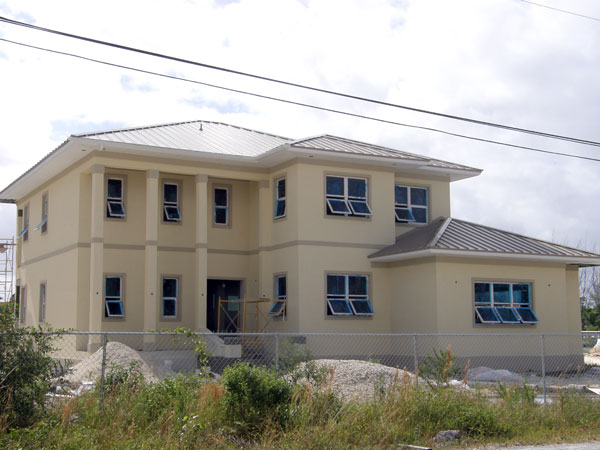
Going Green with ICF

An Outlook on 2025 - Is 2025 Looking Good For Concrete Contractors?

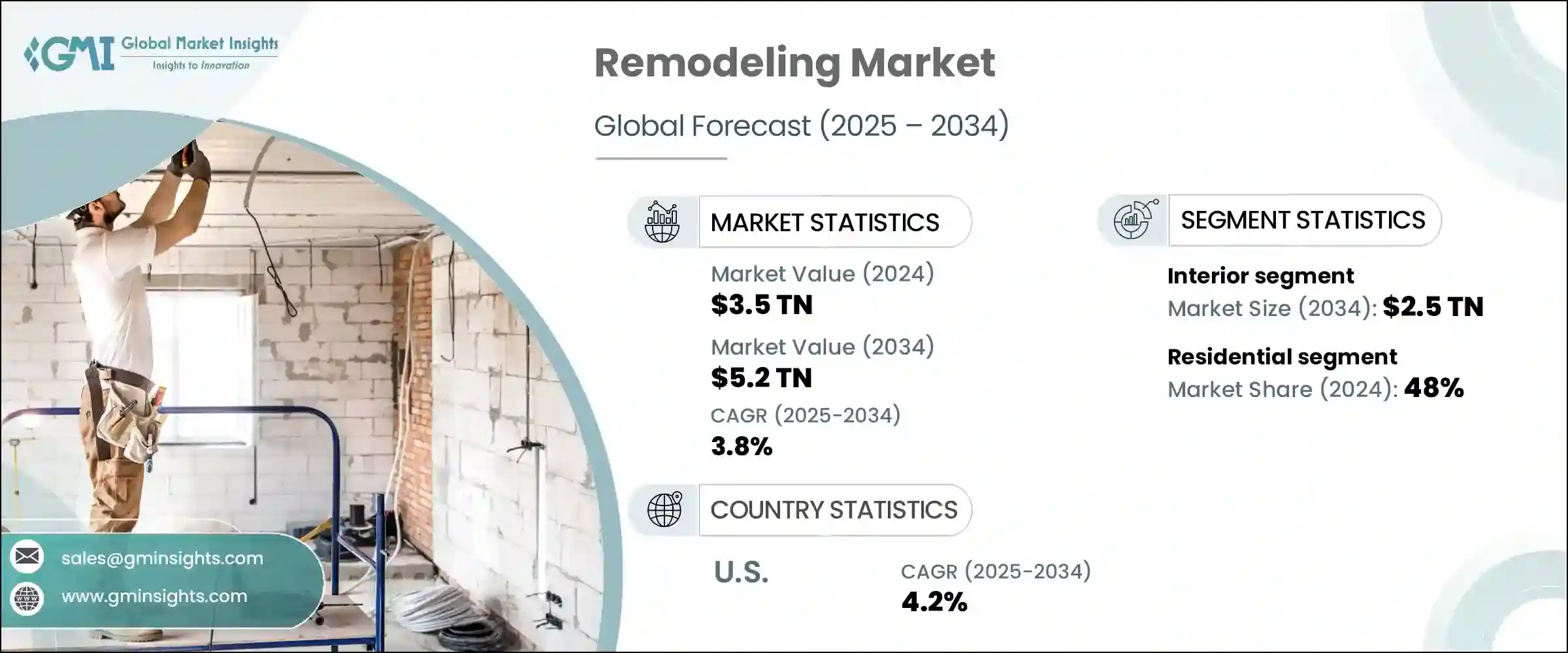
Remodeling Market Size, 2025-2034 Trends Report

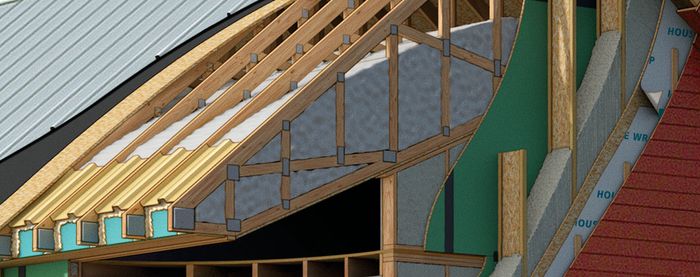
Benefits of Building with ICFs

Modular Kitchen Market Size, Share, Demand | CAGR of 5.3%
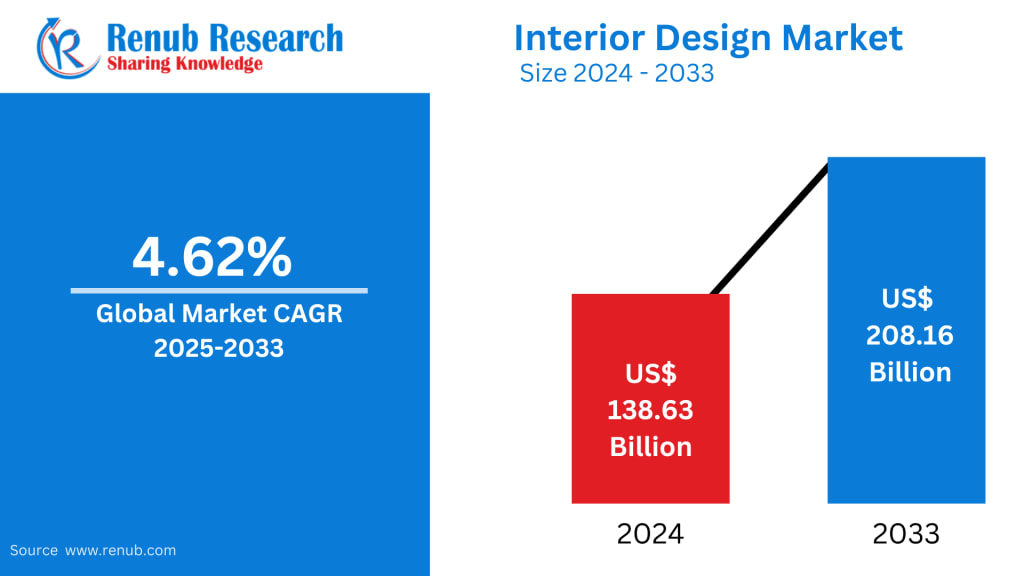
Interior Design Market Size and Forecast (2025–2033): A Rising Global Demand for Smart, Sustainable, and Personalized Spaces

Built to Last: Michiana ICF Supply


Global Plywood Market Size and Forecast 2025–2033
North America Doors Market Size, Share & Growth, 2033
![Doors Market, Industry Size Growth Forecast Report, [Latest]](https://gstatic.ideal.house/news/images/49bdcee660bd4d108750313d21923184.webp)
Doors Market, Industry Size Growth Forecast Report, [Latest]

Global Carpet Market Size and Forecast 2025–2033
North America Garage Overhead Doors Market Size, Share, 2033