1/12
Slim Skins: Towards a New Glazed Façade System
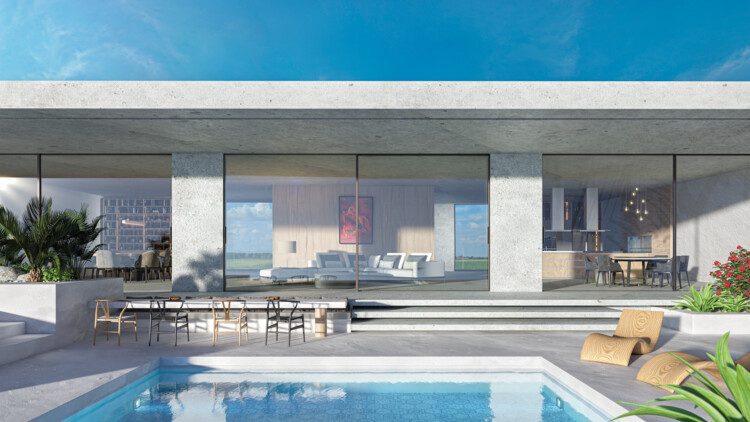
This paper explores the development of 'Slim Skins,' a novel glazed façade system designed to address the increasing demand for highly transparent buildings while simultaneously reducing environmental impact through efficient resource utilization and lower embodied carbon. Drawing inspiration from Mies van der Rohe's "skin and bones" concept, the research tackles the challenge of achieving maximum transparency in modern building design without compromising energy efficiency or structural integrity. The article highlights that traditional curtain wall systems, despite their popularity, often fall short of desired transparency due to their protruding frames (mullions and transoms). Structural glass systems offer high transparency but are often inefficient in material use, time-consuming to design, and costly, leading to higher environmental footprints.
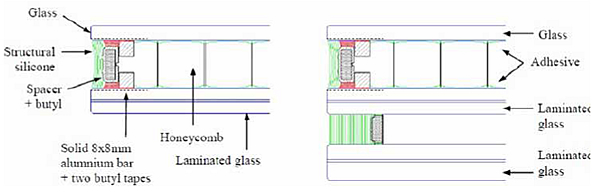
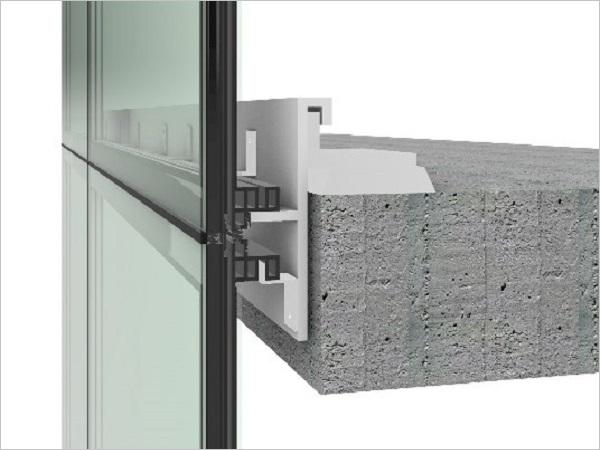
The 'Slim Skins' system proposes a solution by integrating the frame within the glazed units, making the glass work structurally. This approach, building on previous research, particularly Cordero (2015), utilizes composite action where the frame is adhesively bonded between the glass panes. This not only allows for a lower thermal transmittance but also creates a significantly slimmer façade element. The paper details the methodology, which began with a literature review and the establishment of design scope and requirements based on Dutch building codes and industry standards. Various design iterations, including different profile shapes for the integrated mullions, were assessed for structural feasibility using finite element models (FEMs) and hand calculations, focusing on stiffness and strength requirements like deflection and stress. The study found that profiles with greater contact surfaces between the mullion and glass achieved higher composite action, leading to improved structural efficiency.
A key aspect of the research is the sustainability assessment, which evaluates the end-of-life environmental impact of the 'Slim Skins' system compared to existing façade systems, such as the Triodos Bank project. The assessment, following the method developed by Hartwell & Overend (2019), analyzes different end-of-life scenarios: landfill, recycling (including downcycling and energy recovery), reuse of components, and full system reuse. The study demonstrates that reuse scenarios (component reuse and full system reuse) offer significantly greater environmental savings in terms of embodied energy (EE) and global warming potential (GWP) compared to recycling or landfill. Notably, full system reuse, particularly for unitized systems like 'Slim Skins,' provides the highest environmental benefits by avoiding material separation and enabling easier relocation.
While structural assessments required adjustments, such as increasing glass thickness for certain profiles to meet deflection and stress requirements, the 'Slim Skins' system aims to combine the high transparency of one-way spanning glazing with the economic efficiency of unitized curtain wall systems. The final design, which incorporates glass fibre reinforced polymer (GFRP) profiles attached to glass panels, achieves flush construction with minimal visible opaque materials. The system is designed for factory assembly, allowing for efficient production and on-site installation by attaching panels to slab edges. Challenges include the intricate profile design requiring high precision during construction and the extensive use of adhesive, which can complicate disassembly for recycling but facilitates full system reuse. The research concludes that the 'Slim Skins' system offers a viable, transparent, and more sustainable alternative for modern glazed façades by leveraging composite action and prioritizing reuse in its end-of-life strategy.
#SlimSkins #GlazedFaçade #SustainableArchitecture #CompositeAction #GlassDesign #BuildingTechnology #EmbodiedCarbon #UnitizedSystems #EnvironmentalImpact #SlimSkins #GlazedFaçade #SustainableArchitecture #CompositeAction #GlassDesign #BuildingTechnology #EmbodiedCarbon #UnitizedSystems #EnvironmentalImpact
0 komentarzy łącznie
 Brak komentarzy jeszcze
Możesz również polubić

Facade Systems
Structural Glass Sandwich Panels

Cupa Pizarras creates cladding system that "utilises the beauty of natural slate"
8 Window Treatment Trends That Will Dominate 2026, According to Designers
Insulated Sliding Doors - Sky-Frame Classic from Sky-Frame

Cupa Pizarras slate-cladding system Cupaclad offers modern siding options
Swap Outdated Flimsy Blinds With One Of 2025's Biggest Window Treatment Trends

A Minimal Window Frame that Combines Elegance and Functionality
Facade Panel – Twine from Rieder Smart Elements GmbH & Co KG
Swap Outdated Flimsy Blinds With One Of 2025's Biggest Window Treatment Trends
Building facades and vertical shade

Fabric awnings vs. metal
Shedding Light on the Future of Window Treatments

Designers Are Ditching "Flat Painted Walls" for THIS Unexpected Trend

5 brands that are transforming the architectural surfaces of your home


Window blinds, shutters and curtains: top trends for 2017
Facade System - LINEA Dietfurt Limestone from Franken-Schotter

Which window treatments will actually keep my house cool? 5 ideas that will help control the temperature inside

Forget Basic Curtains: These Will Be The Biggest Window Treatment Trends Of 2026
Portico shade structure opens up new possibilities