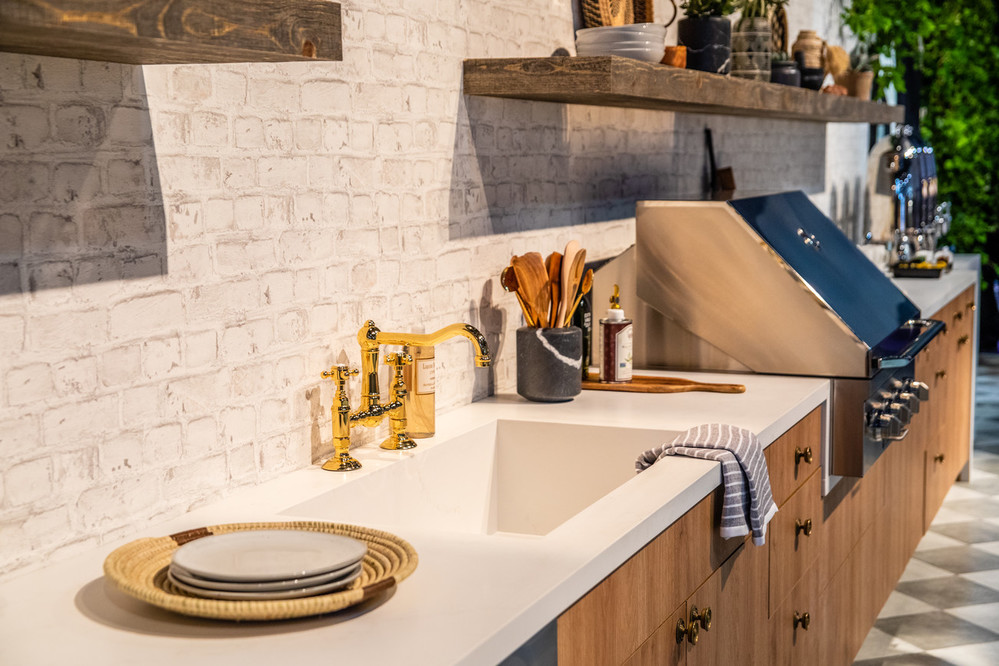
1/10
Outdoor Kitchen Countertop Ideas - The Materials, Designs and Expert Advice You Need
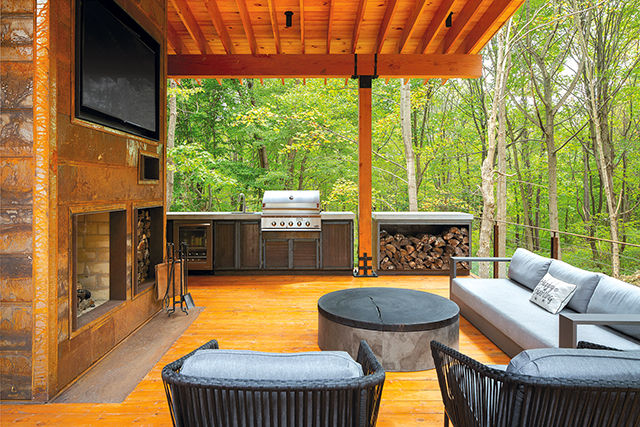
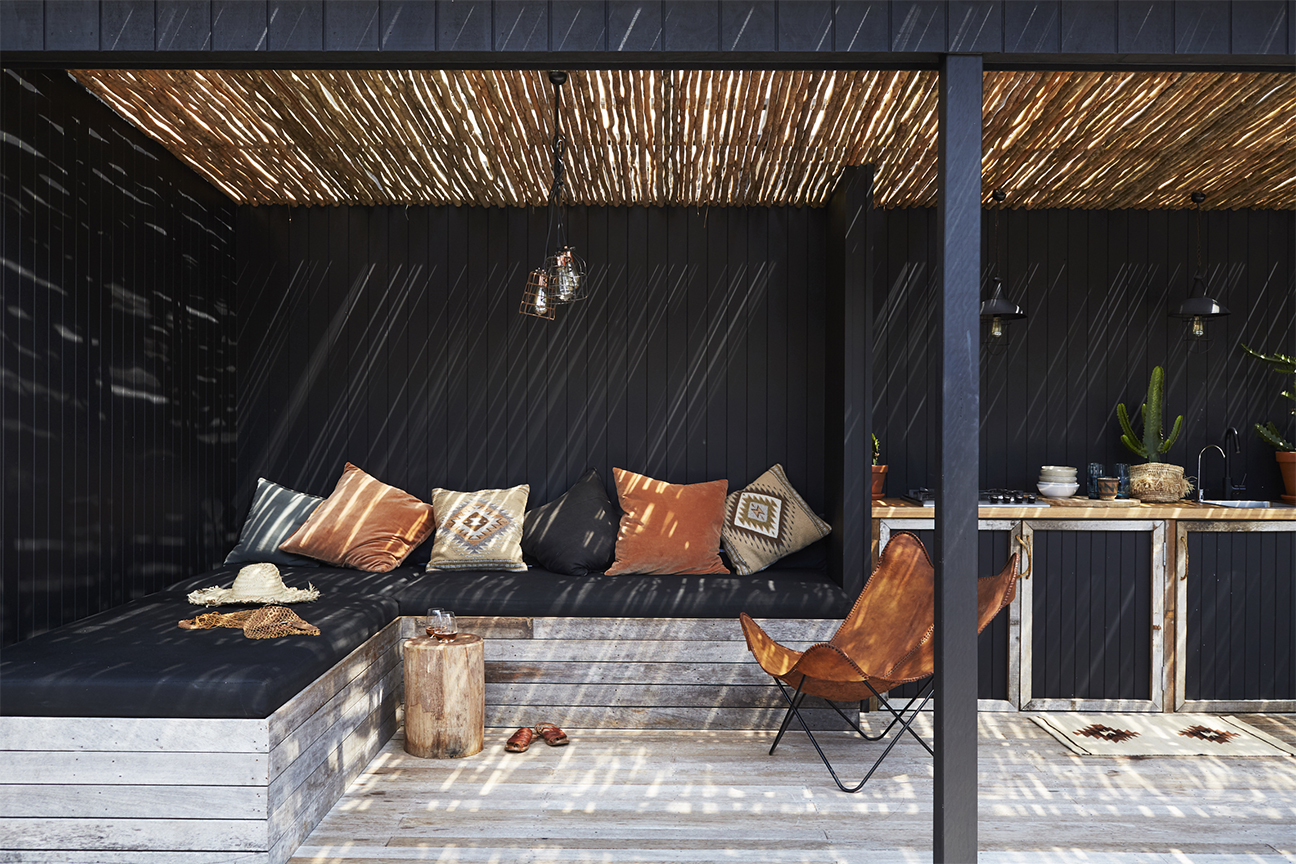
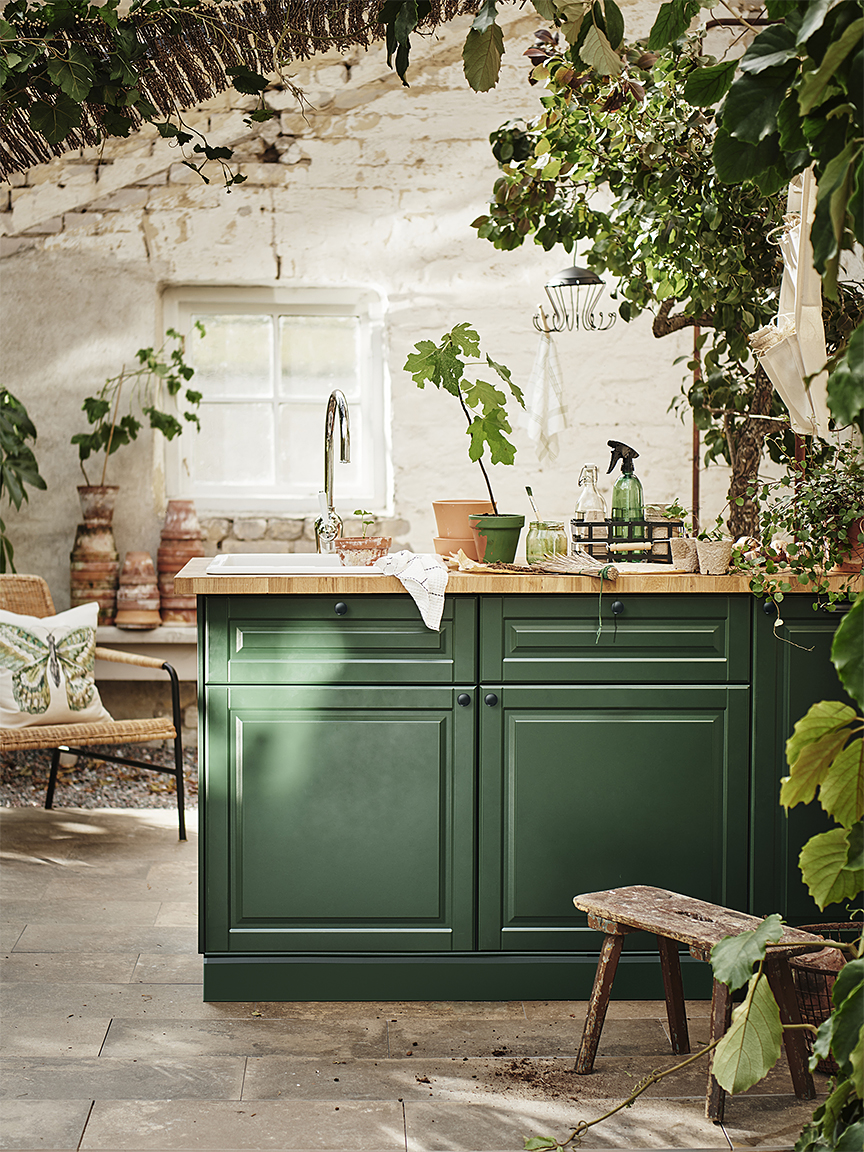
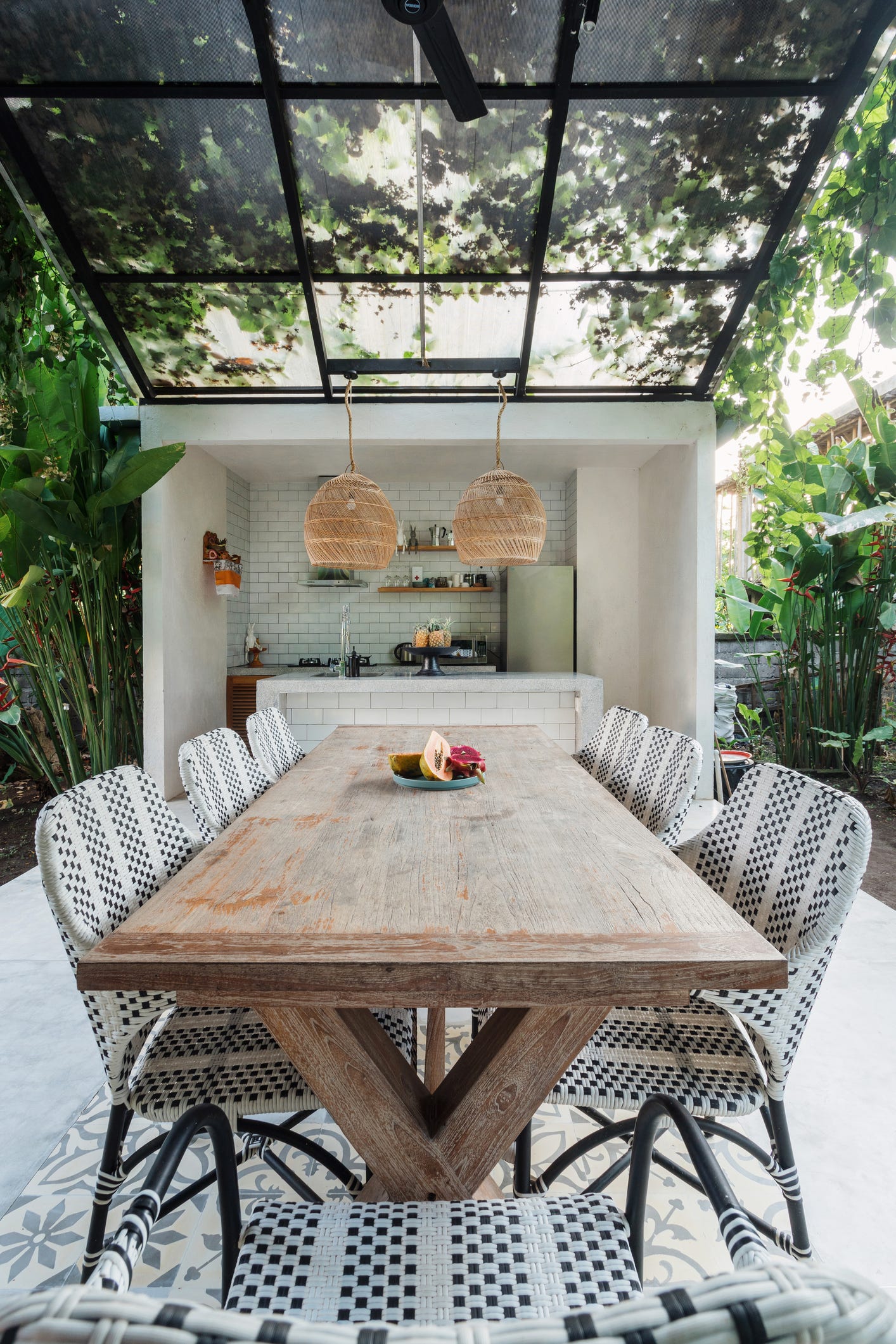
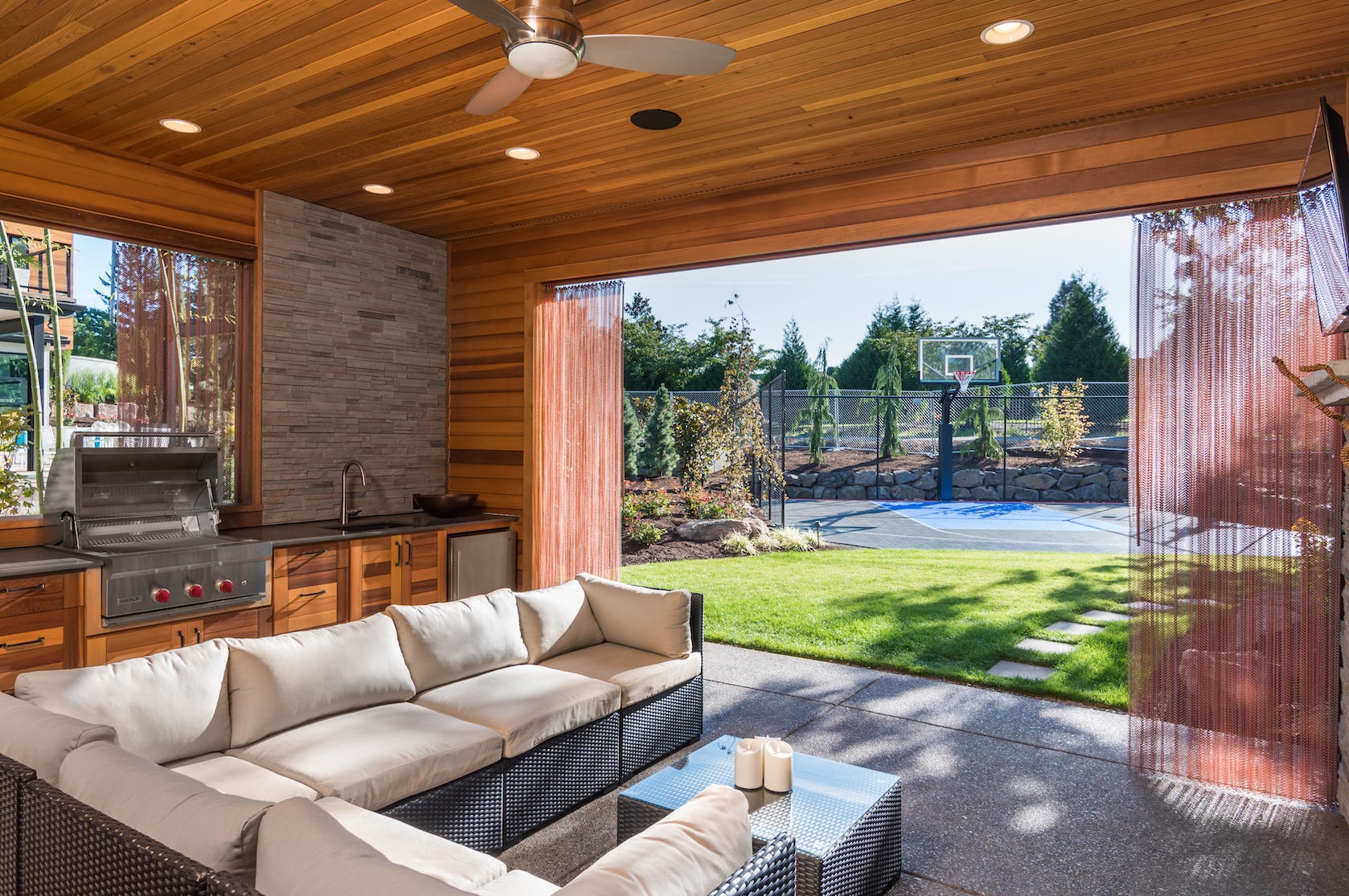
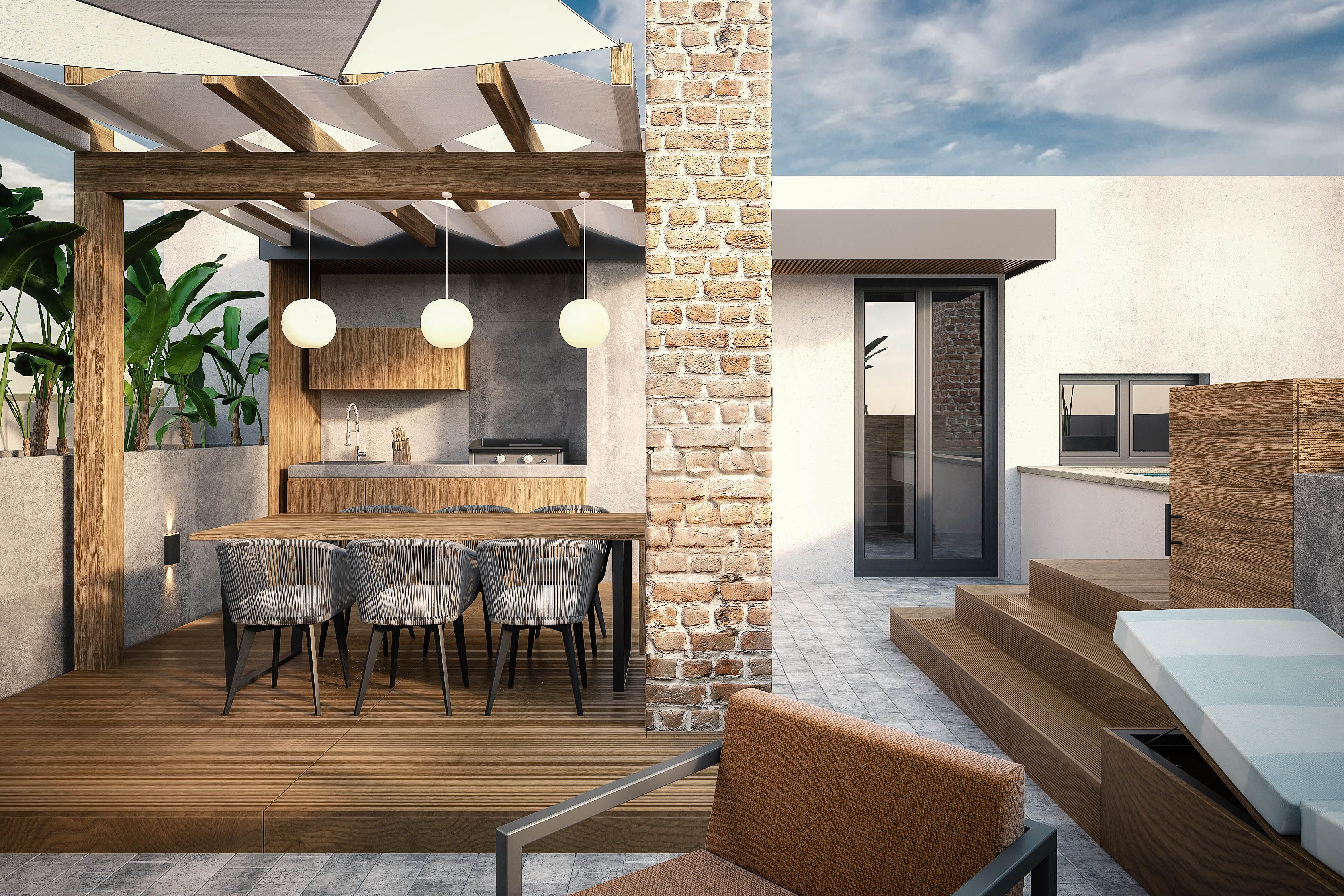
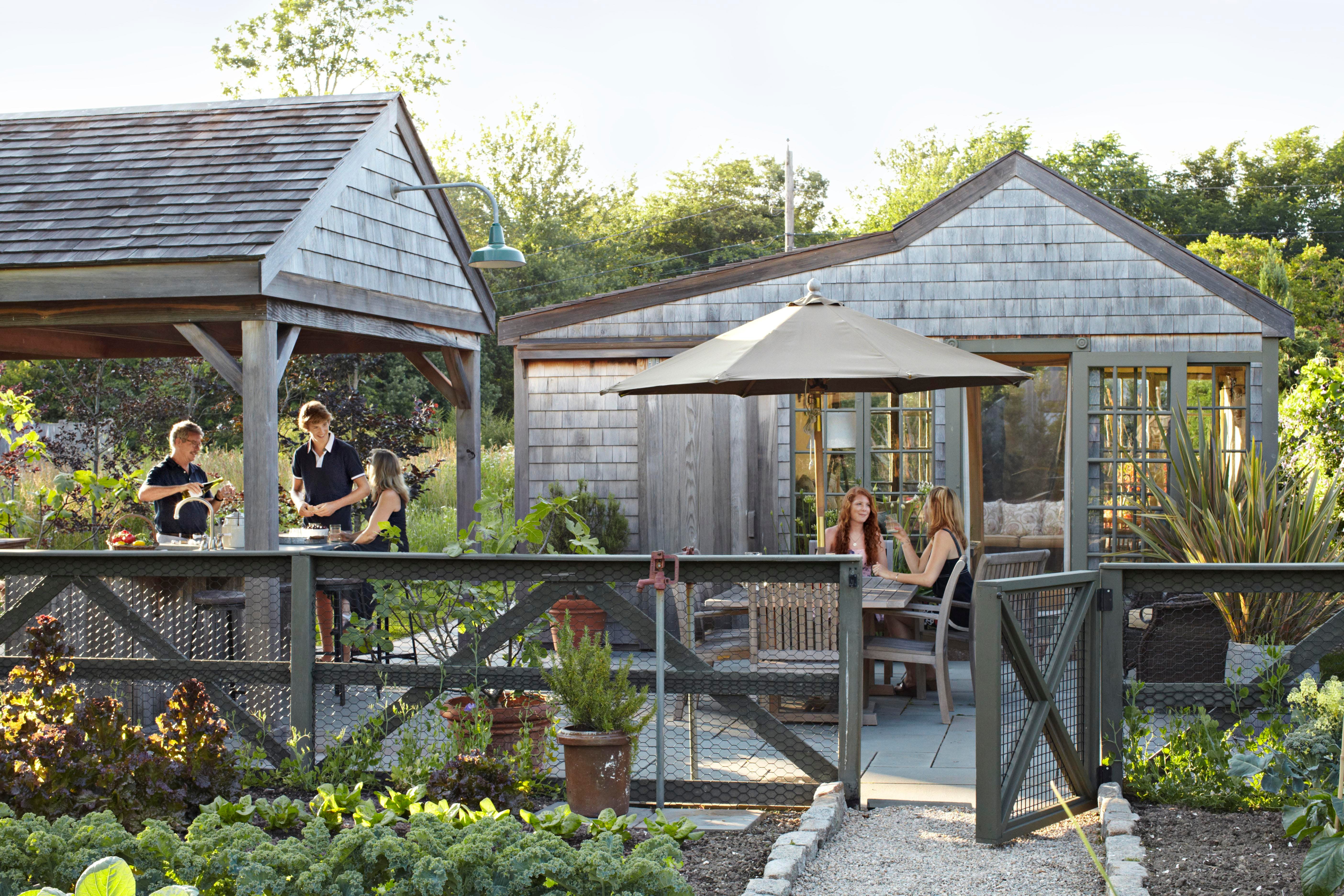
Outdoor kitchens are a luxurious addition to any home, and selecting the right countertop material is crucial for both aesthetics and functionality. The ideal outdoor countertop must be durable, easy to maintain, and suitable for the specific climate. Various materials offer different benefits, ranging from weather resistance to heat tolerance and aesthetic appeal.
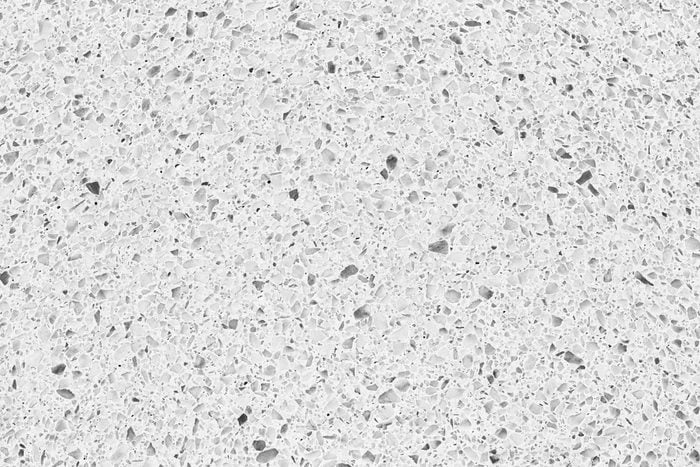
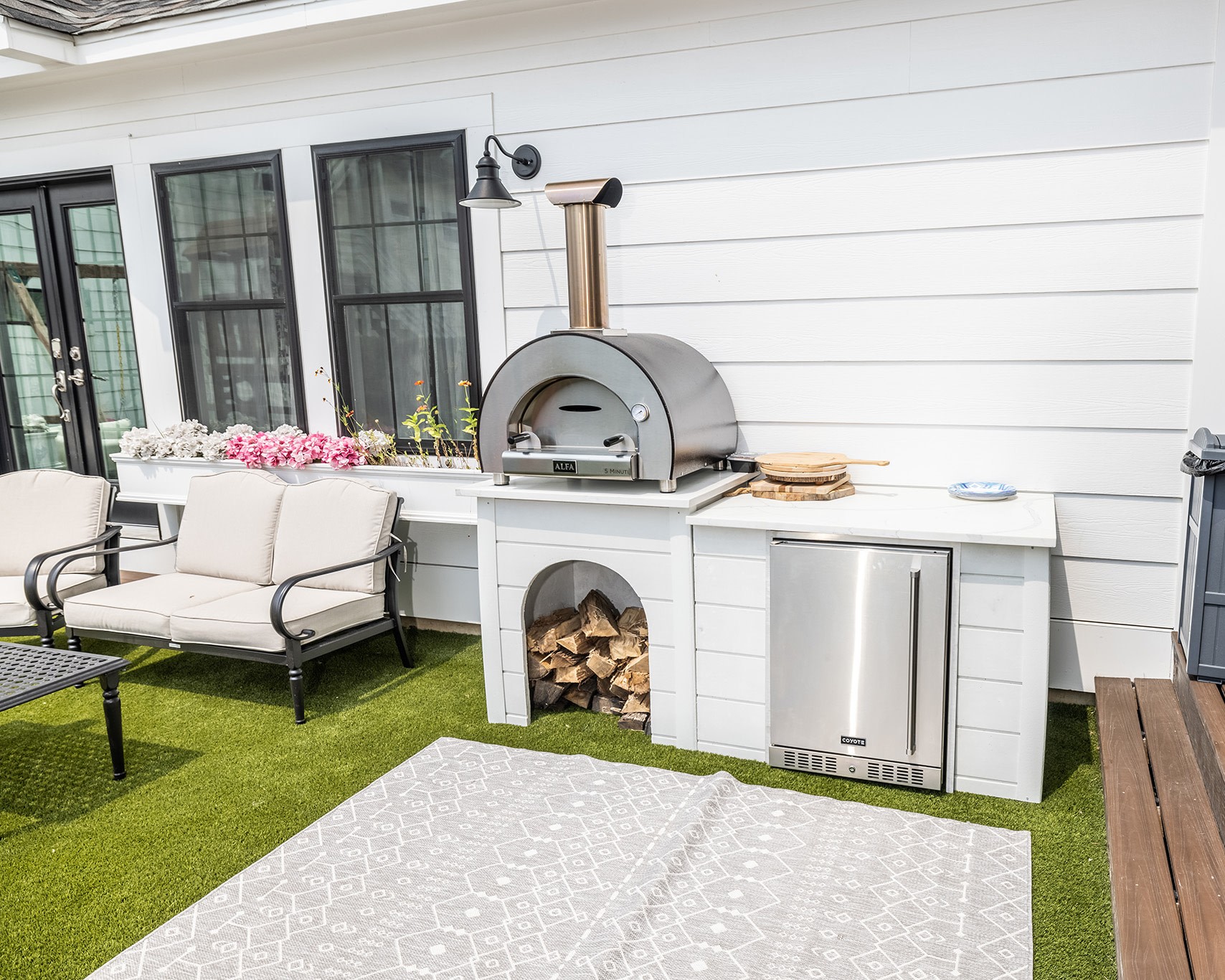
Quartz, traditionally an indoor kitchen staple, has evolved for outdoor use with specialized resins that provide weather and UV resistance, preventing fading. Brands like Caesarstone offer outdoor collections with a ten-year warranty, ensuring color retention. These non-porous countertops are also scratch and stain-resistant and easy to clean, making them a practical choice.
Sintered stone, another emerging option, is manufactured through intense heating and compacting of raw materials. This 'bomb-proof' material is highly resistant to scratching and staining and, importantly, does not retain heat, a common issue with many natural stones. Brands such as Lapitec and Dekton provide sintered stone in large slabs and a variety of natural colors and textures, suitable for matching with other outdoor kitchen components like flooring and siding.
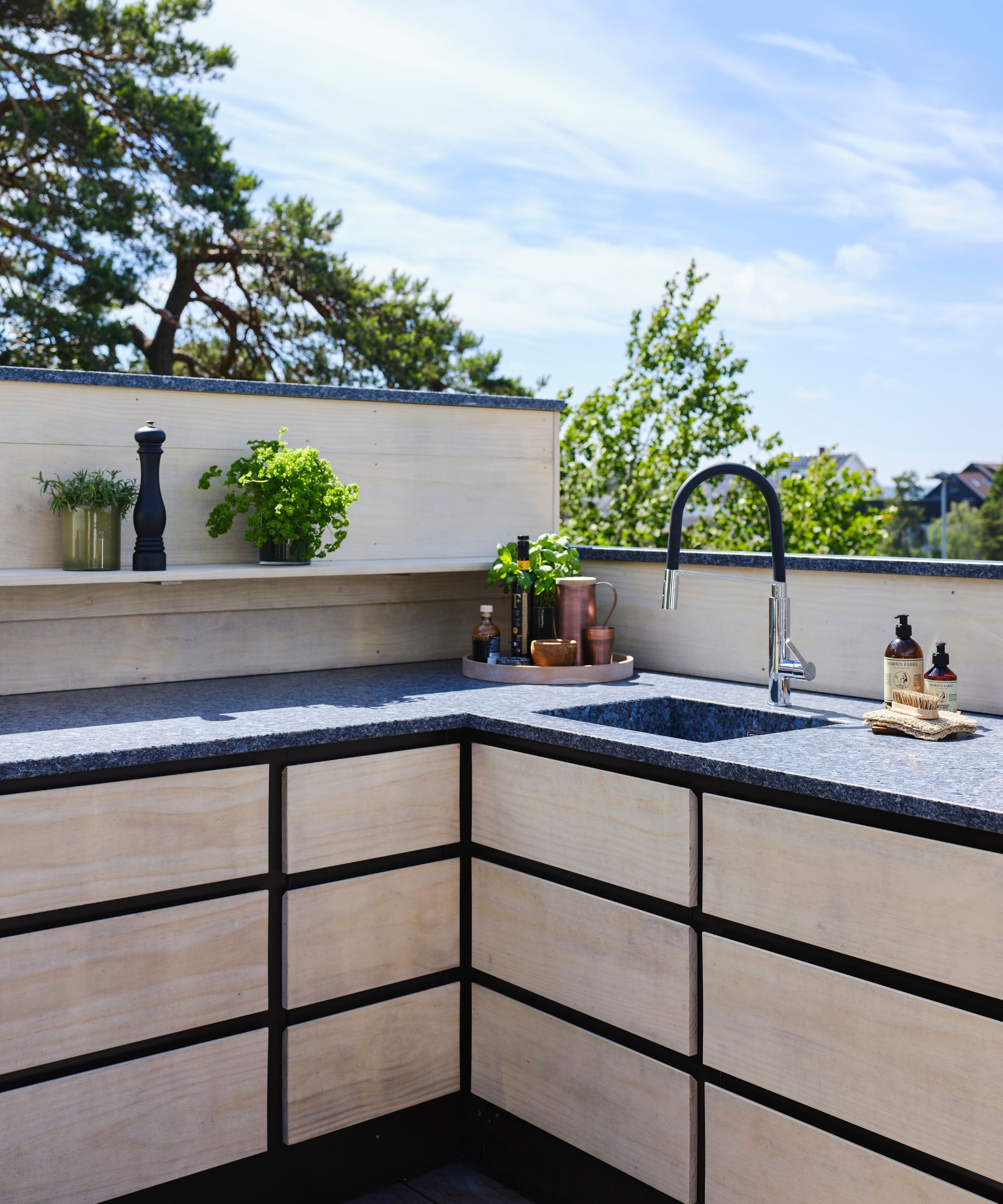
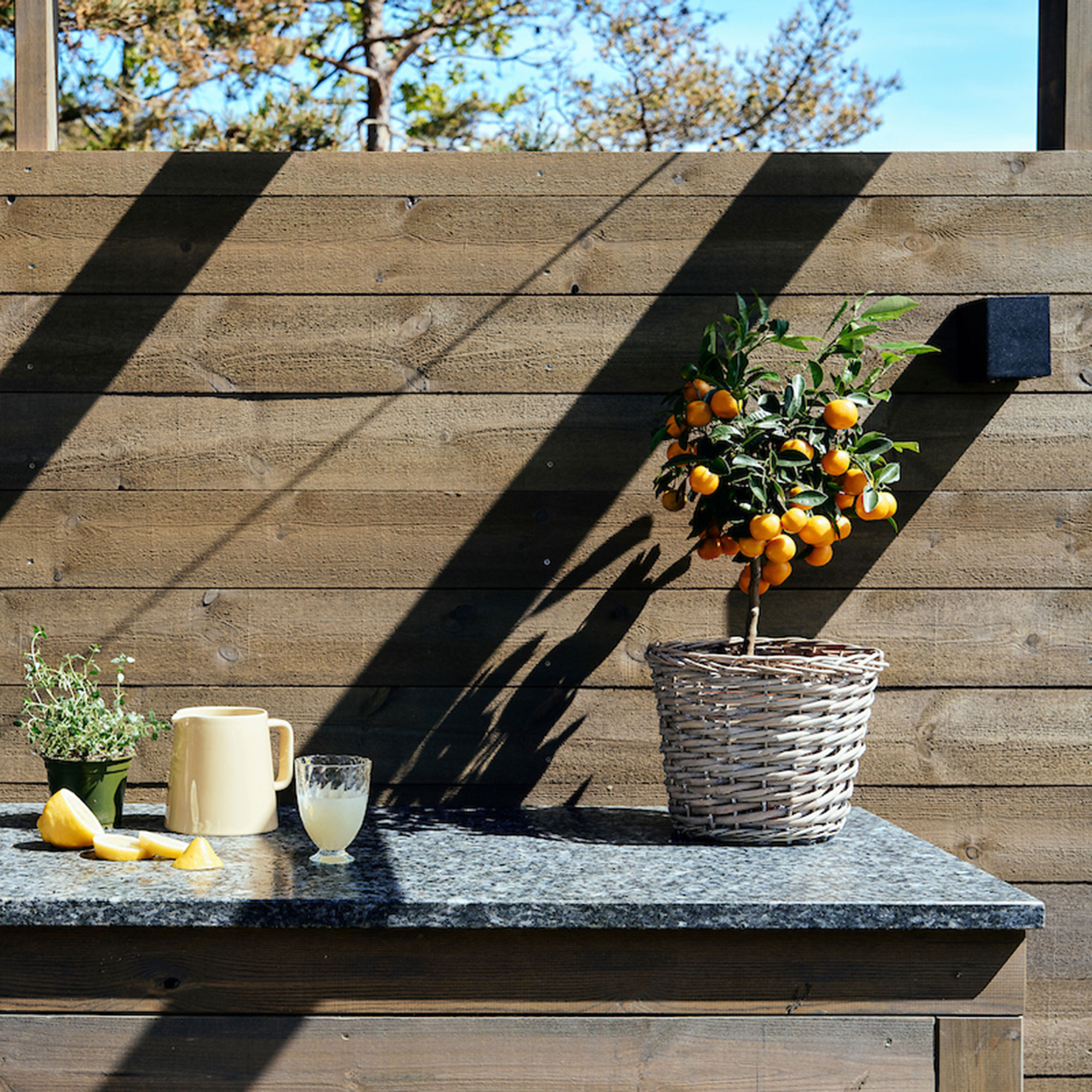
Natural stone, particularly 100% natural stone, is considered a reliable choice for outdoor kitchen countertops in diverse climates. It is UV-resistant, has low porosity, and can withstand scratches and stains. Larvikite, a strong material quarried by Lundhs Real Stone, is highlighted for its durability in extreme weather conditions. However, materials like concrete and composite boards may degrade over time, making natural stone a more enduring option.
Soapstone offers a dark, elegant aesthetic with shades of gray, green, and black, often featuring lighter veining. It is non-porous, requires no sealing, and is easy to clean, naturally tolerating significant temperature and moisture fluctuations. While costly and softer than other natural stones, it develops a darker patina with age, which can be seen as an advantage.
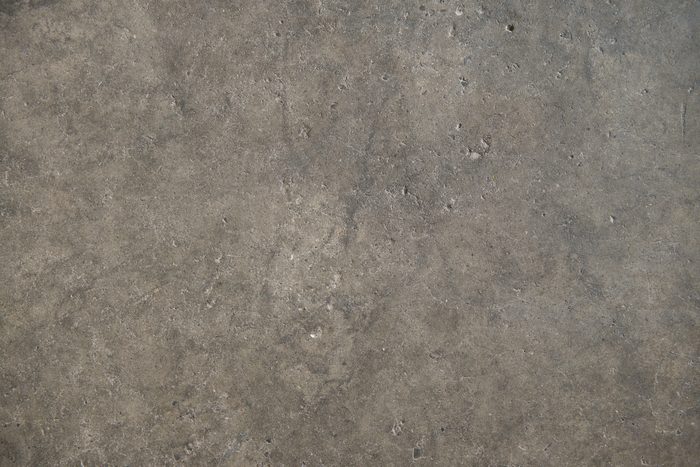
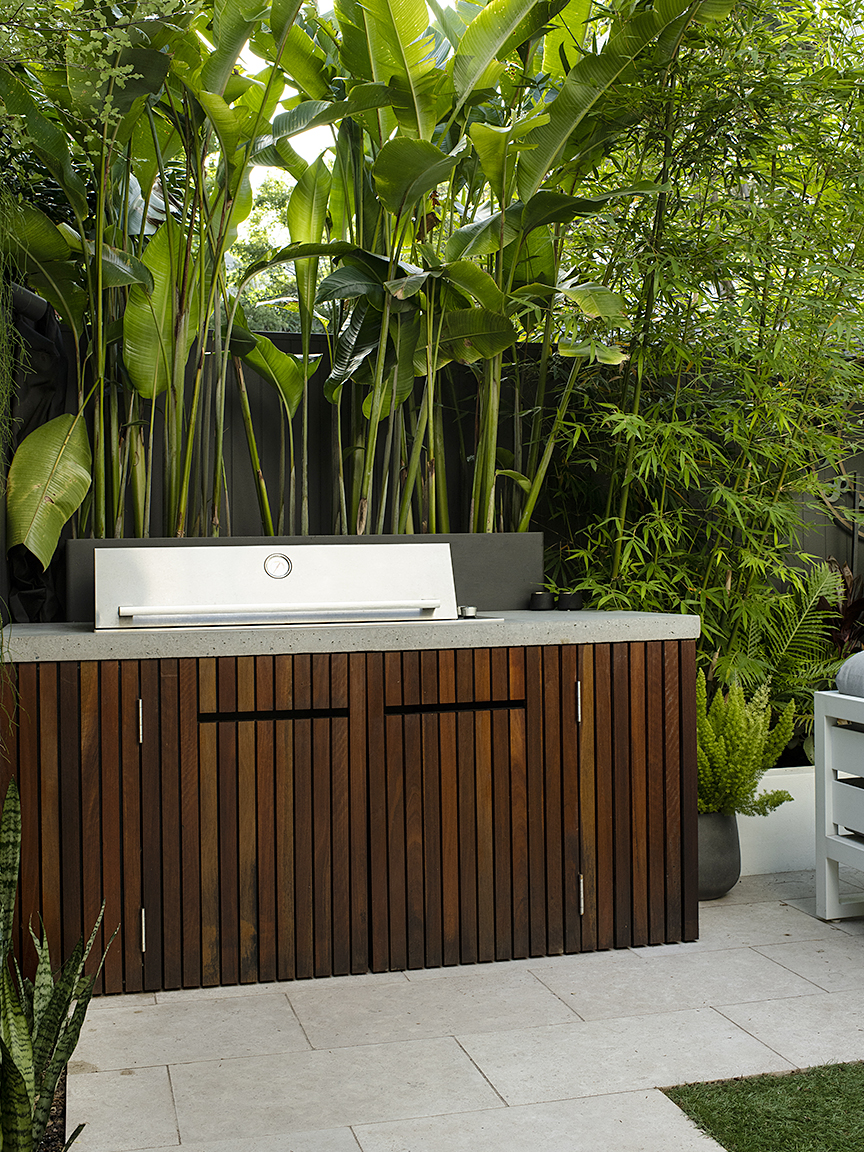
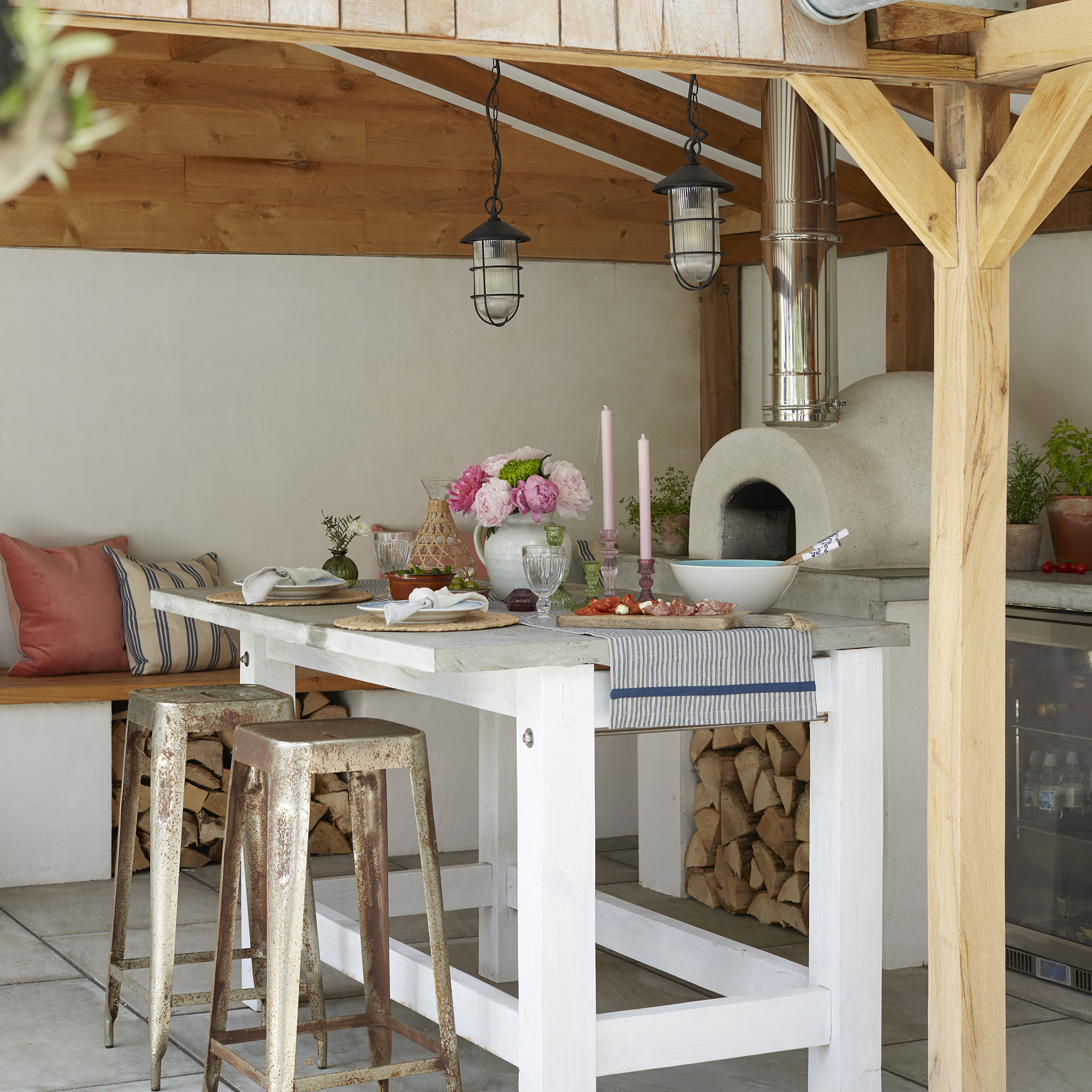
Poured concrete countertops provide a modern, minimalist look and are more economical than high-end stones. However, they are not low-maintenance and require regular sealing. Concrete absorbs grease and responds to environmental conditions, developing a patina over time, necessitating consistent maintenance.
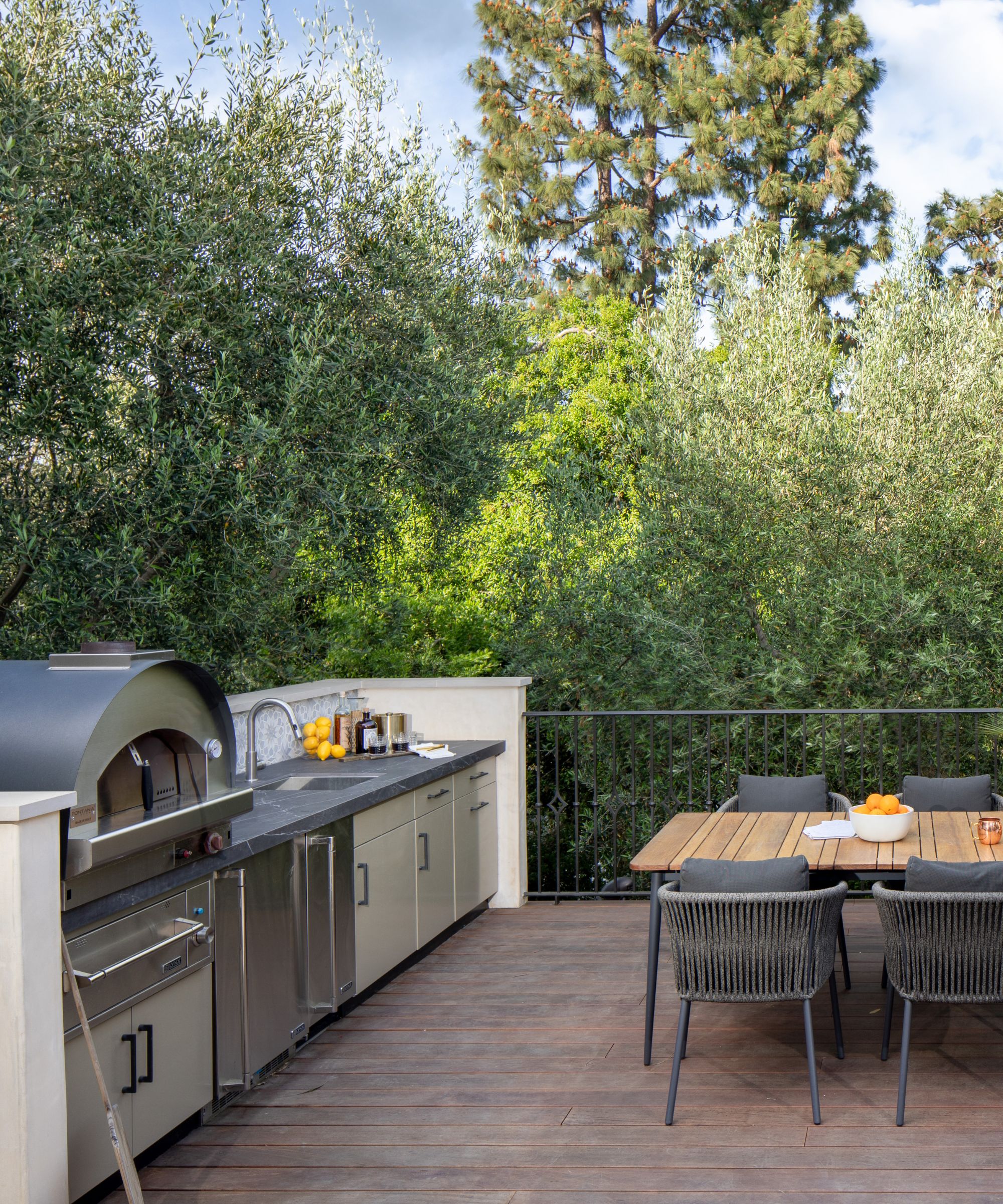
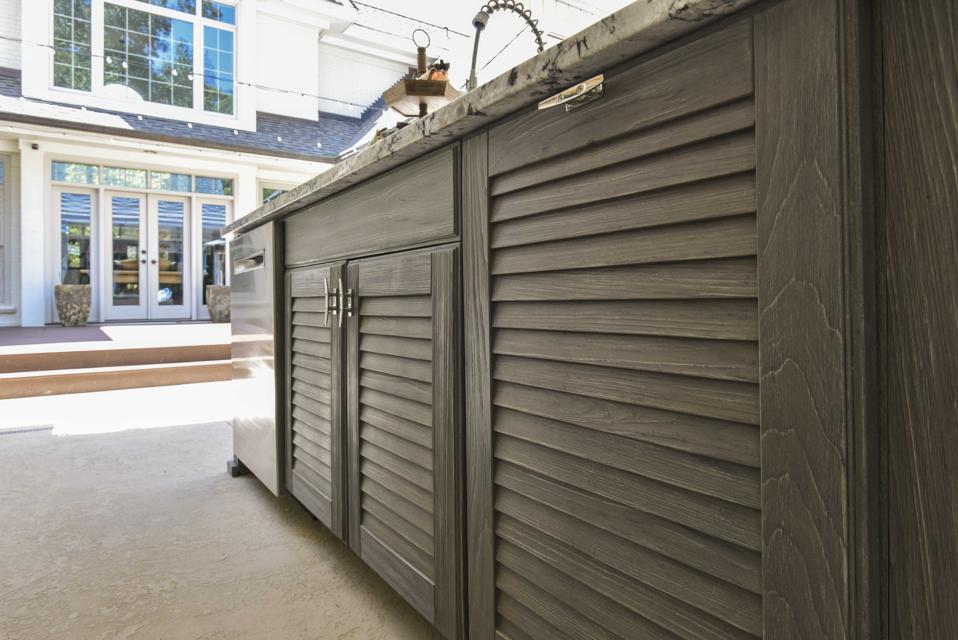
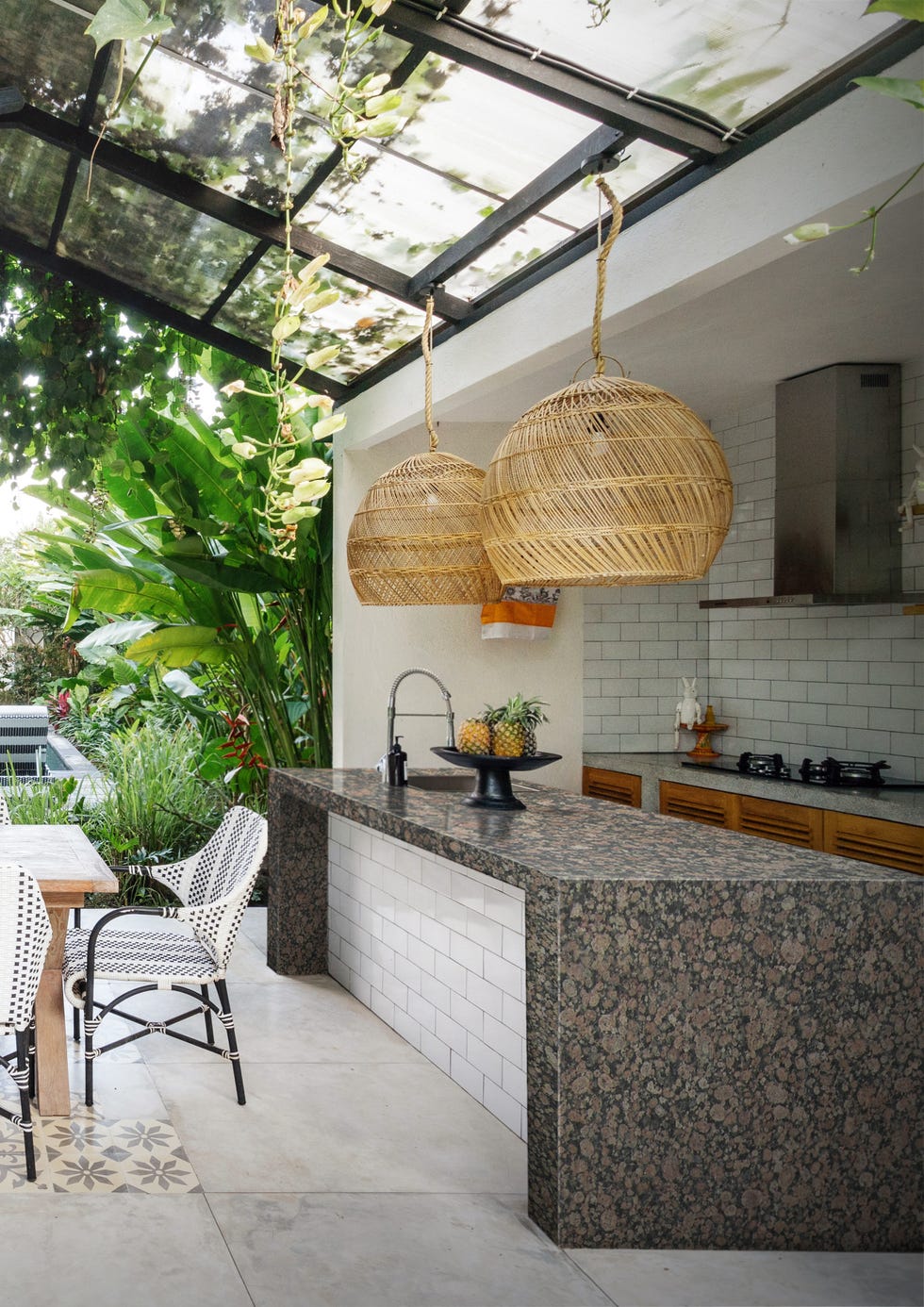
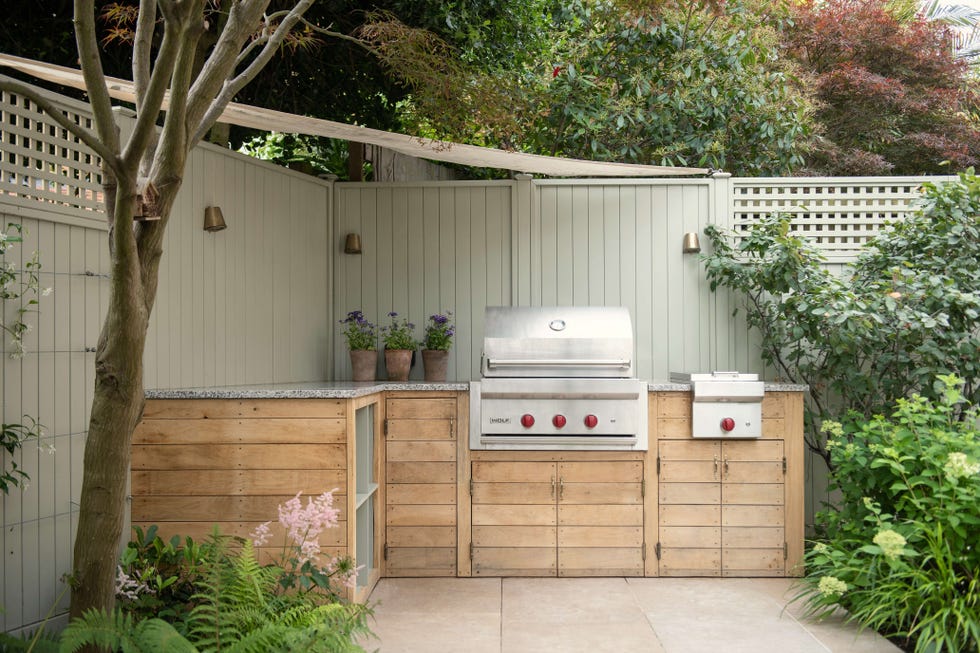
Granite is a highly durable natural stone that can withstand heat, rain, scratches, stains (when properly sealed), and UV rays. It comes in a wide range of colors but can become hot to the touch and requires regular sealing. Extreme temperature fluctuations or shifts in kitchen framing can cause cracking, and prolonged direct sun exposure may lead to sun damage. When choosing granite, large samples are recommended to assess its appearance in natural light.
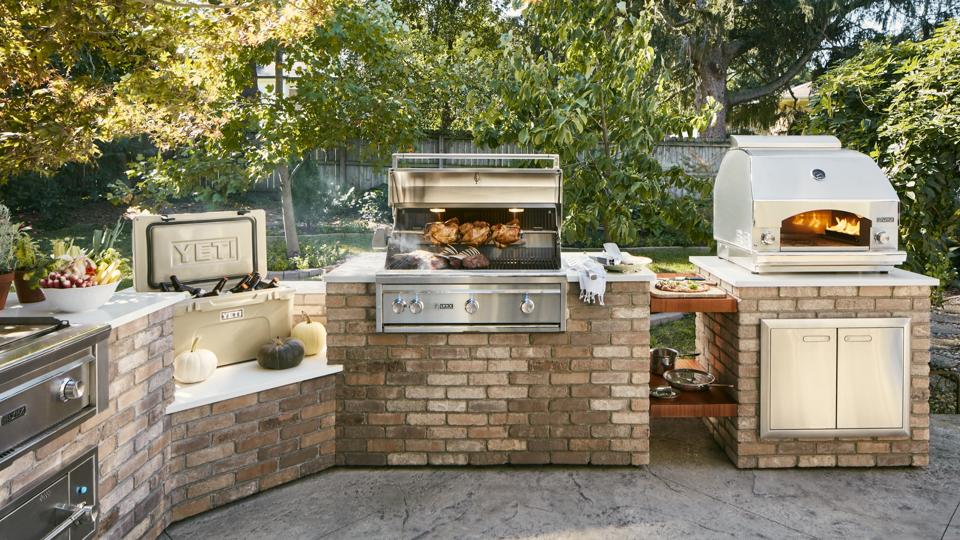
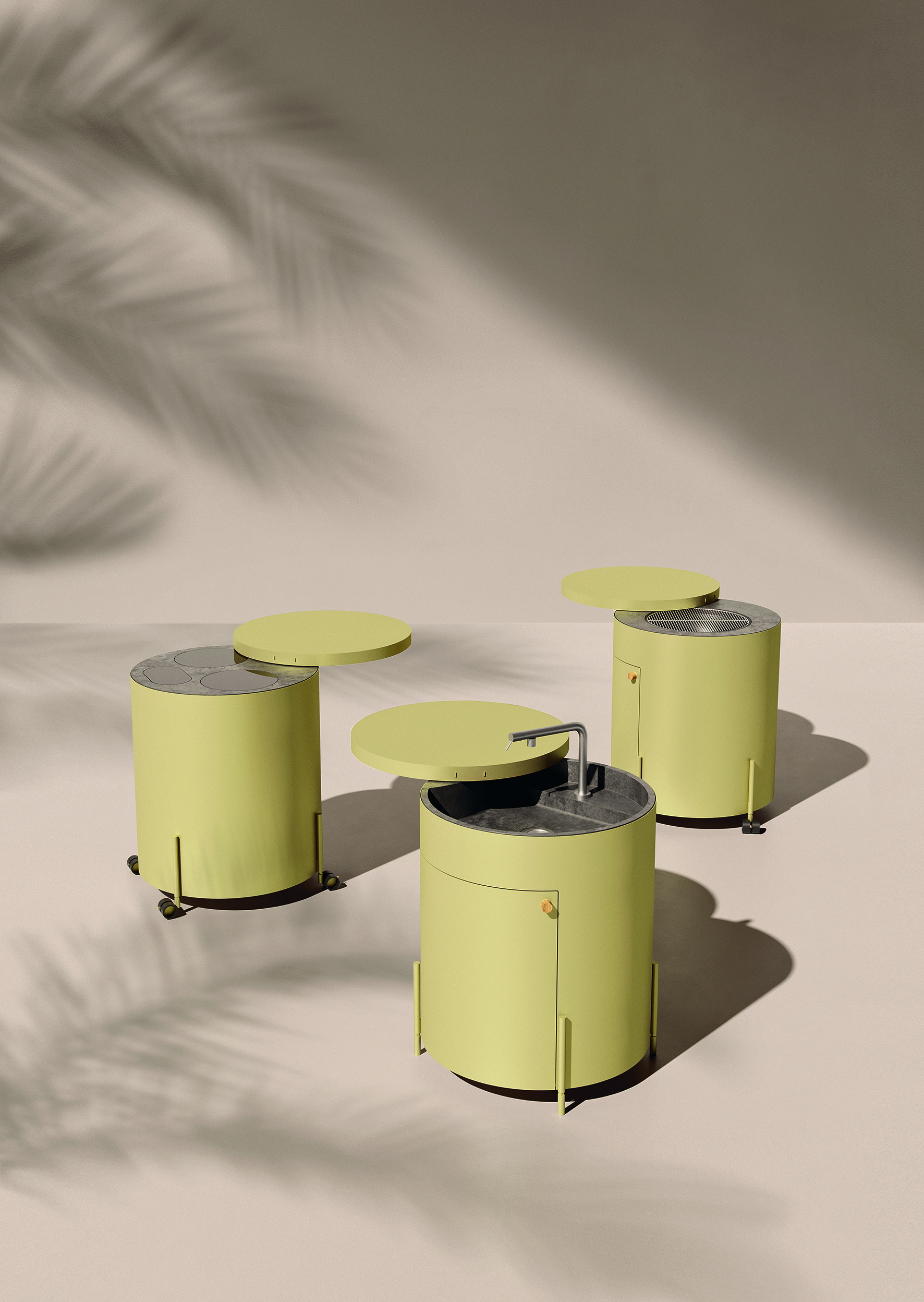
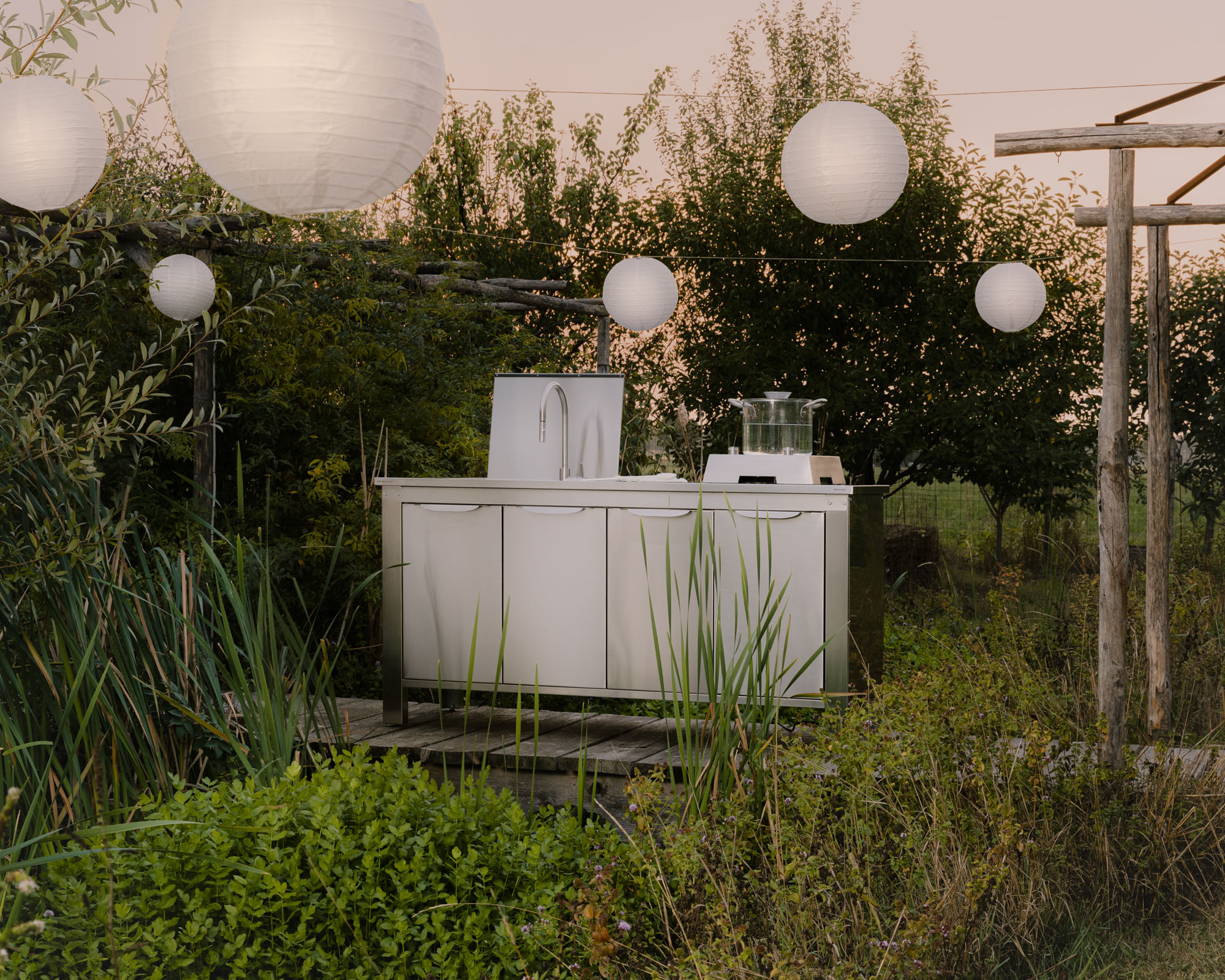
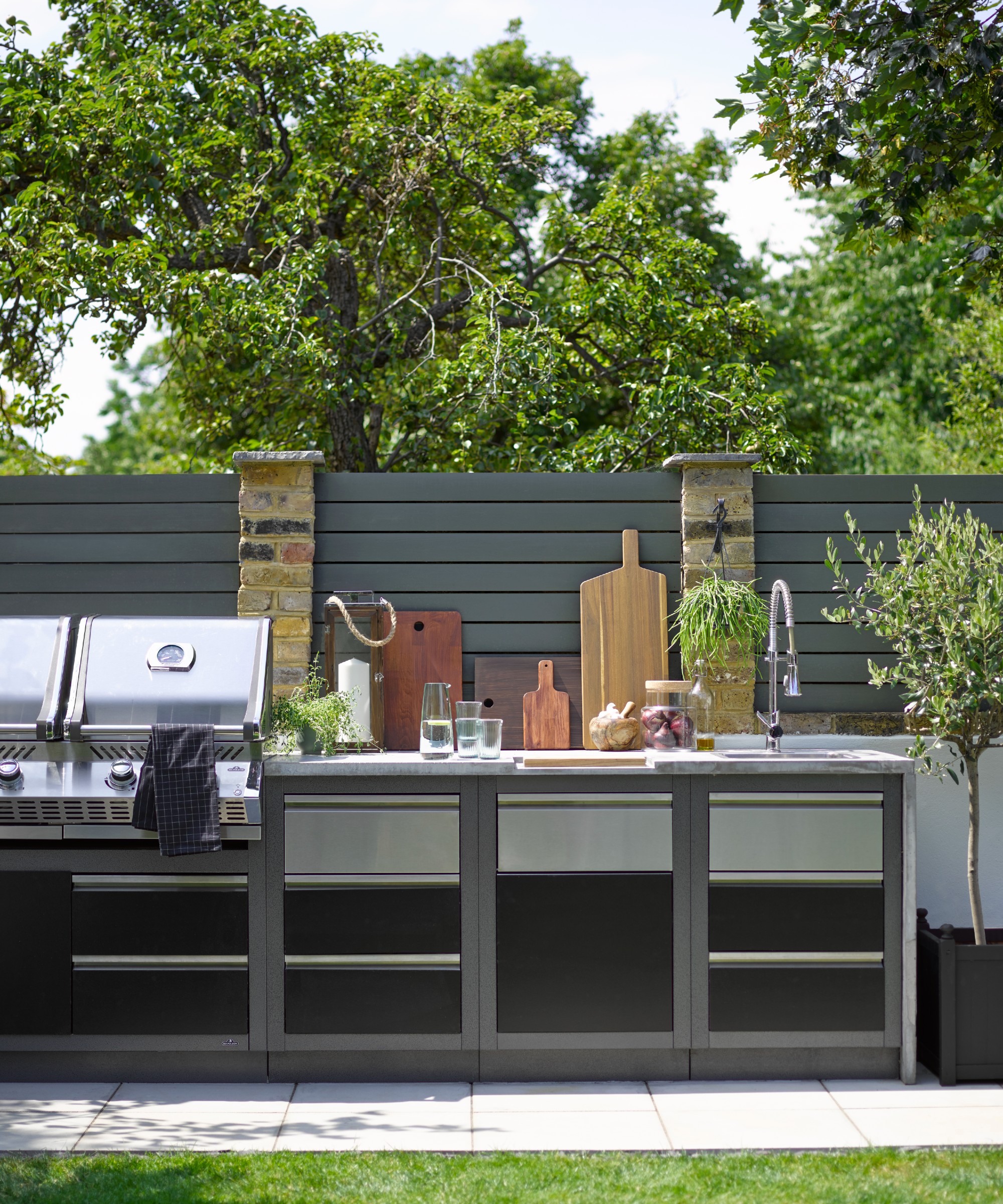
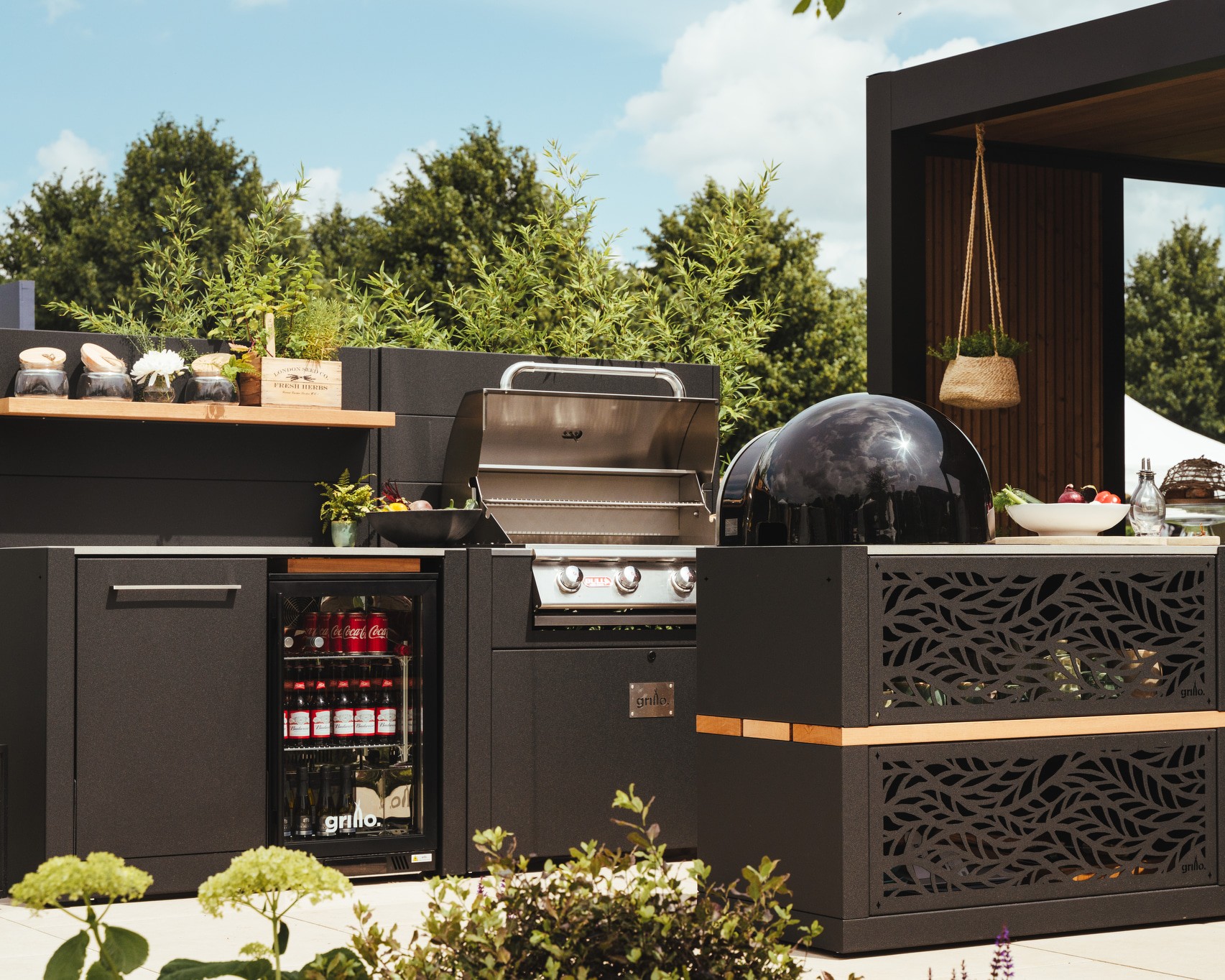
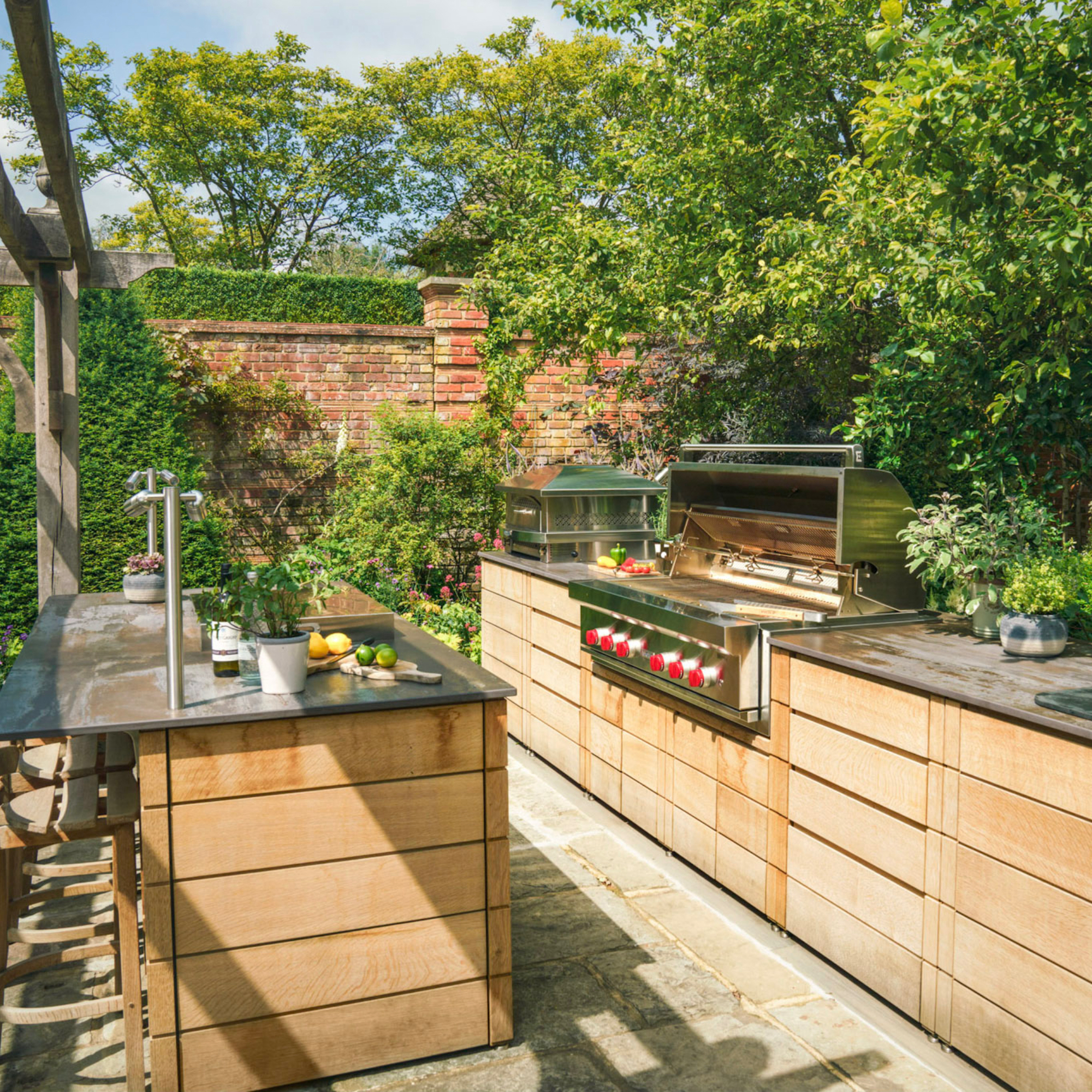
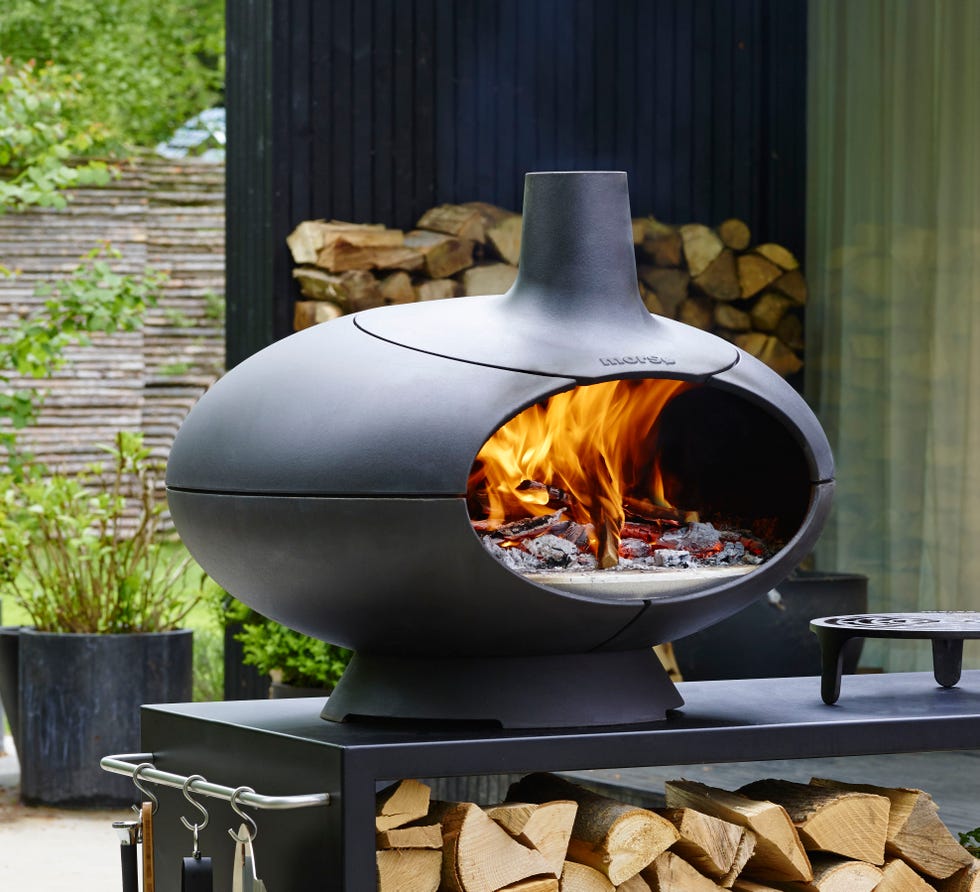
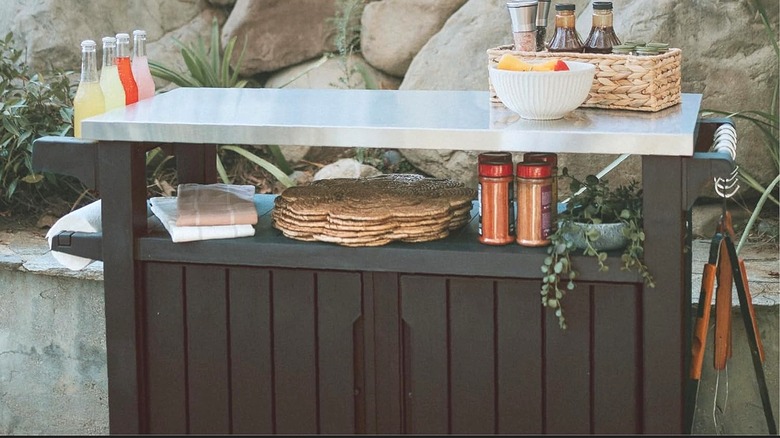
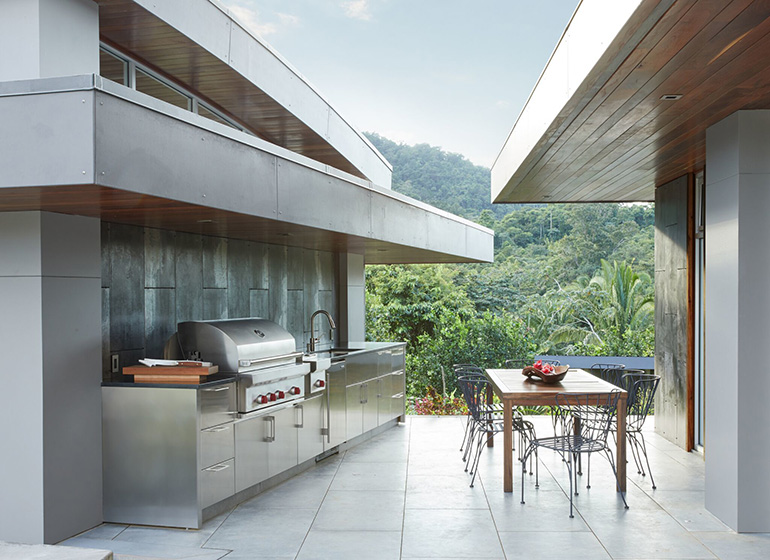
Stainless steel is a practical and sleek option, mirroring its use in professional kitchens. It is durable, corrosion-free, easy to clean, and handles high temperatures, though it can get hot in direct sunlight. Modern designs, like those from Sweden’s Röshults, emphasize clean lines and integrate well with natural surroundings. Modular outdoor kitchen units, exemplified by Röshults, Roda’s Norma collection, and Talenti’s Tikal, offer convenient, all-in-one solutions with integrated appliances and various countertop materials.
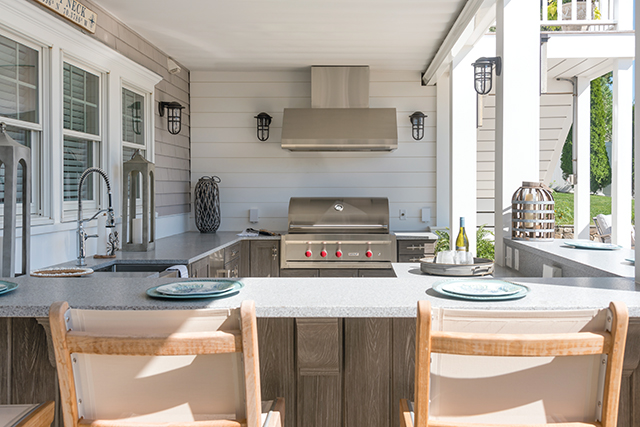
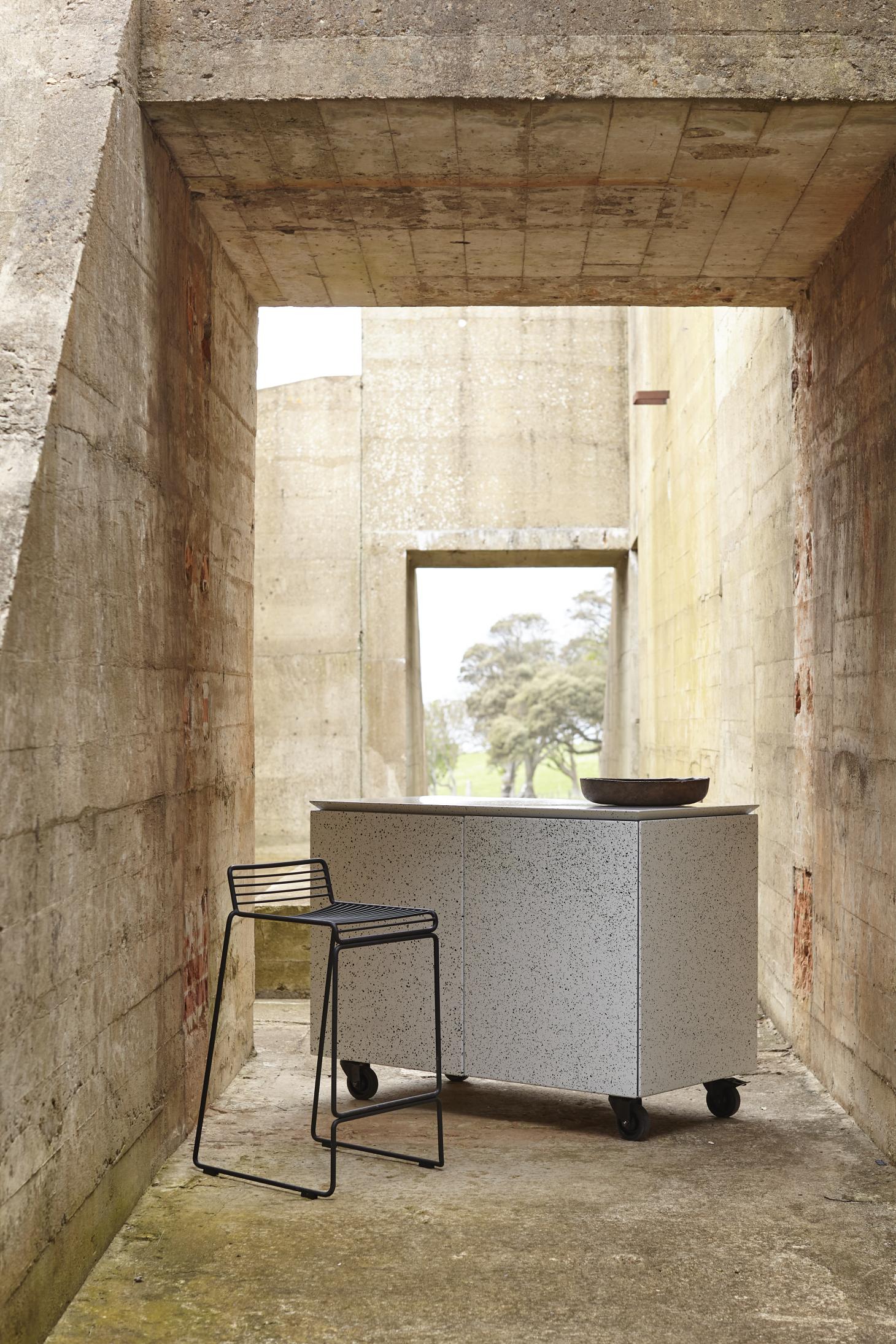
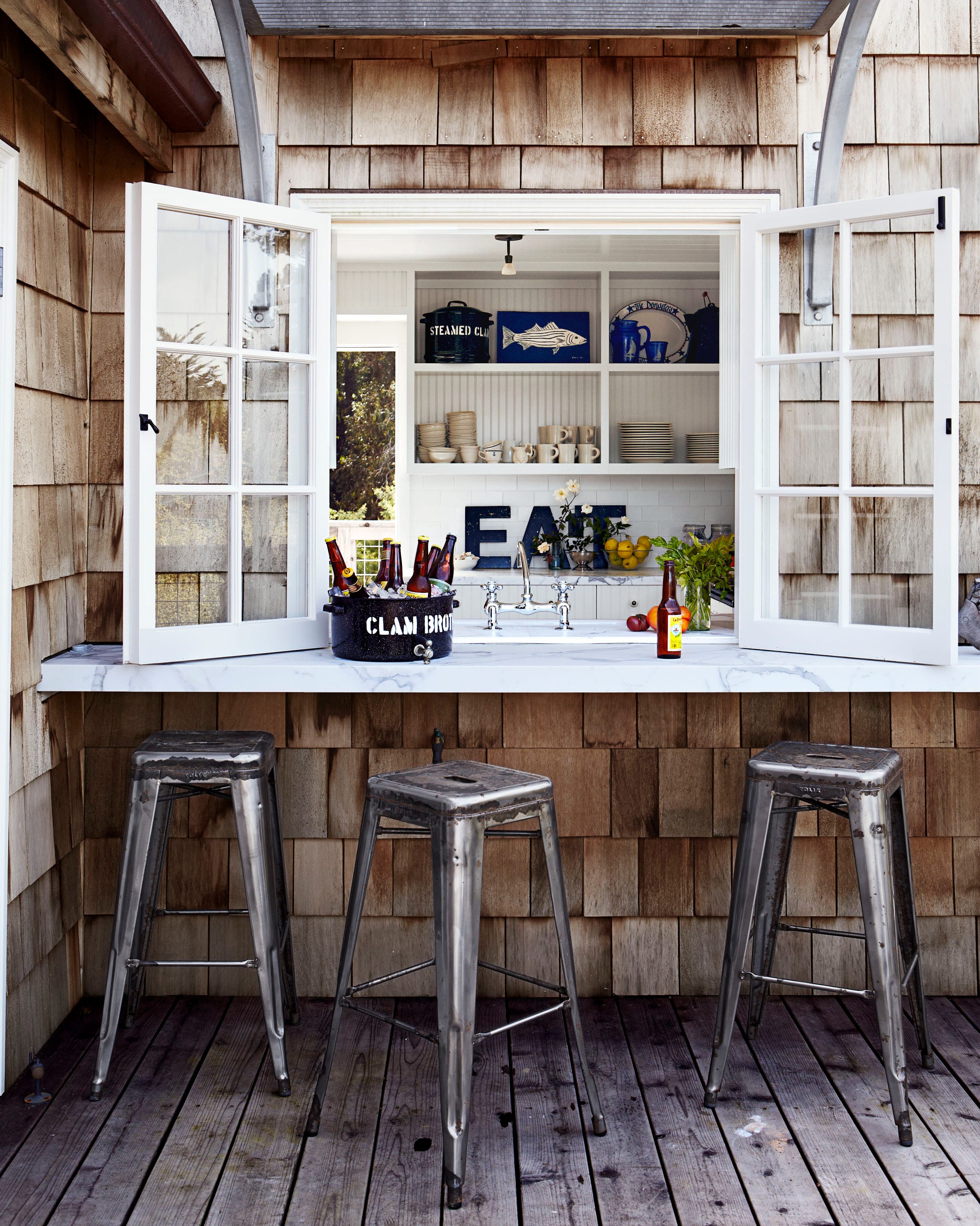
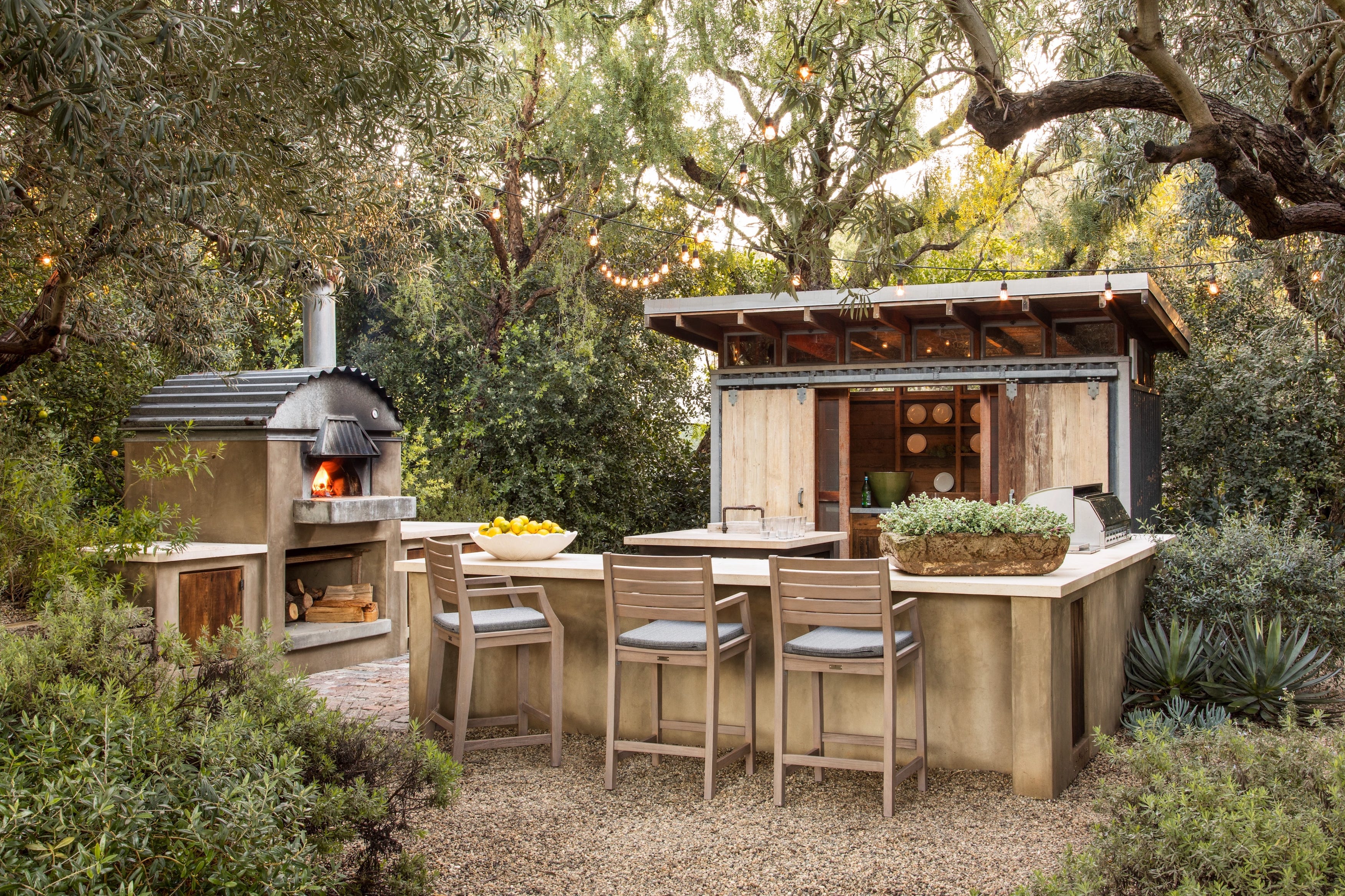
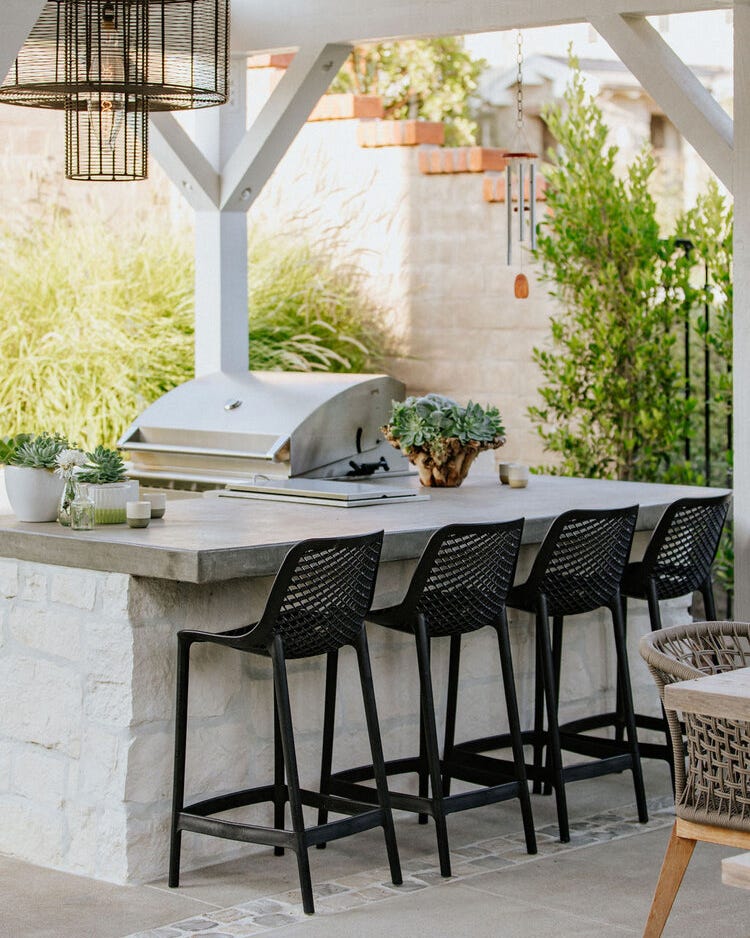
The waterfall style countertop, where the material extends down the sides of the kitchen, creates a solid, monolithic effect, adding drama and a modern aesthetic. Incorporating a bar area in the outdoor kitchen design is a growing trend, providing additional counter space for conversation and entertaining, reflecting the social aspect of cooking.
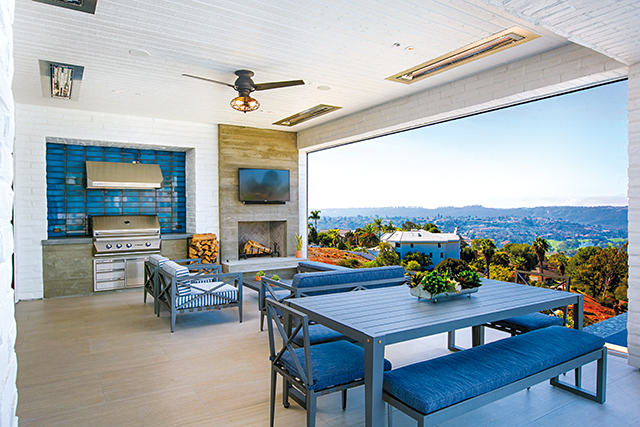
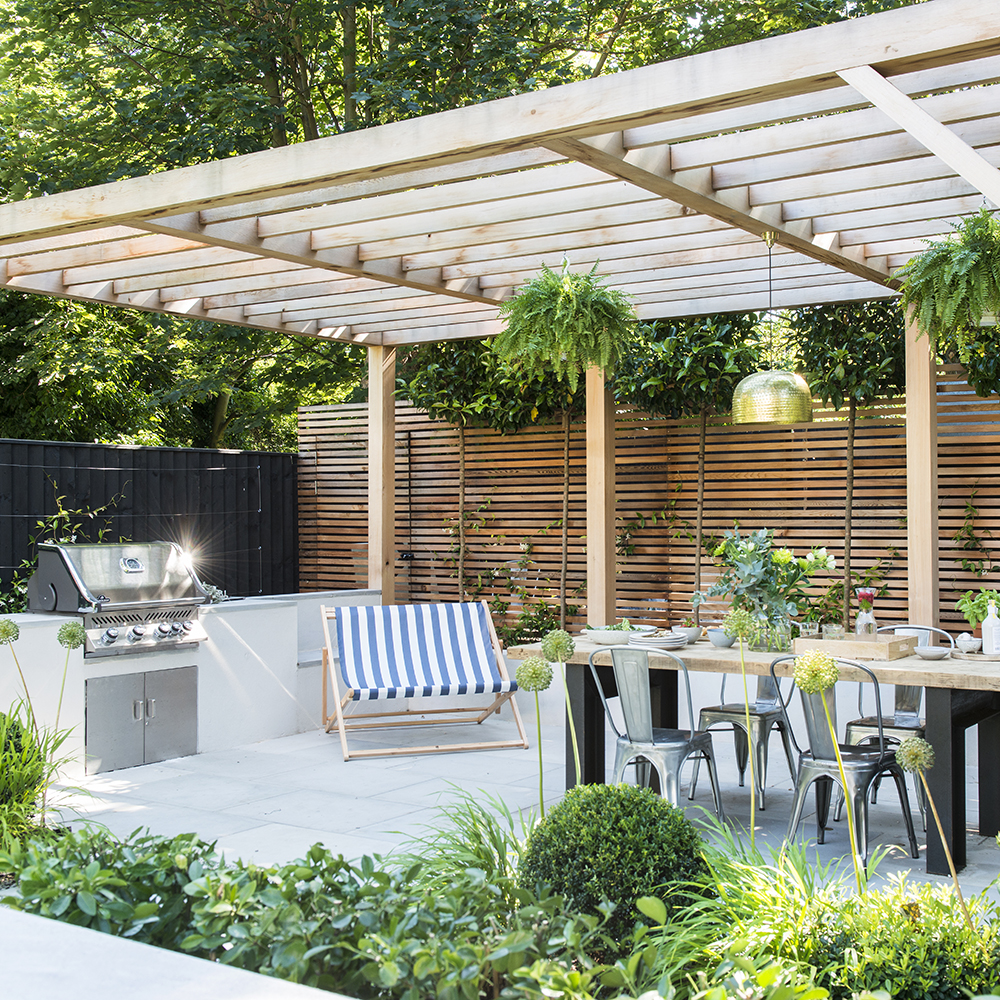
Ultimately, the best outdoor countertop prioritizes functionality, durability, and low maintenance. Natural stone, such as soapstone, is often favored for its inherent resilience. The choice also depends on the climate; engineered materials like quartz are suitable for temperate zones, while granite handles broader temperature swings despite its porous nature and need for sealing. For care, it is essential to consult vendors for recommended cleaning agents and understand sealing requirements. Covering the outdoor kitchen with a pergola or retractable shade can significantly extend the lifespan of any material.
#OutdoorKitchen #CountertopMaterials #HomeDesign #KitchenDesign #NaturalStone #QuartzCountertops #SinteredStone #Soapstone #ConcreteCountertops #GraniteCountertops #StainlessSteel #ModularKitchens #WaterfallCountertop #OutdoorKitchen #CountertopMaterials #HomeDesign #KitchenDesign #NaturalStone #QuartzCountertops #SinteredStone #Soapstone #ConcreteCountertops #GraniteCountertops #StainlessSteel #ModularKitchens #WaterfallCountertop
0 komentarzy łącznie
 Brak komentarzy jeszcze
Możesz również polubić
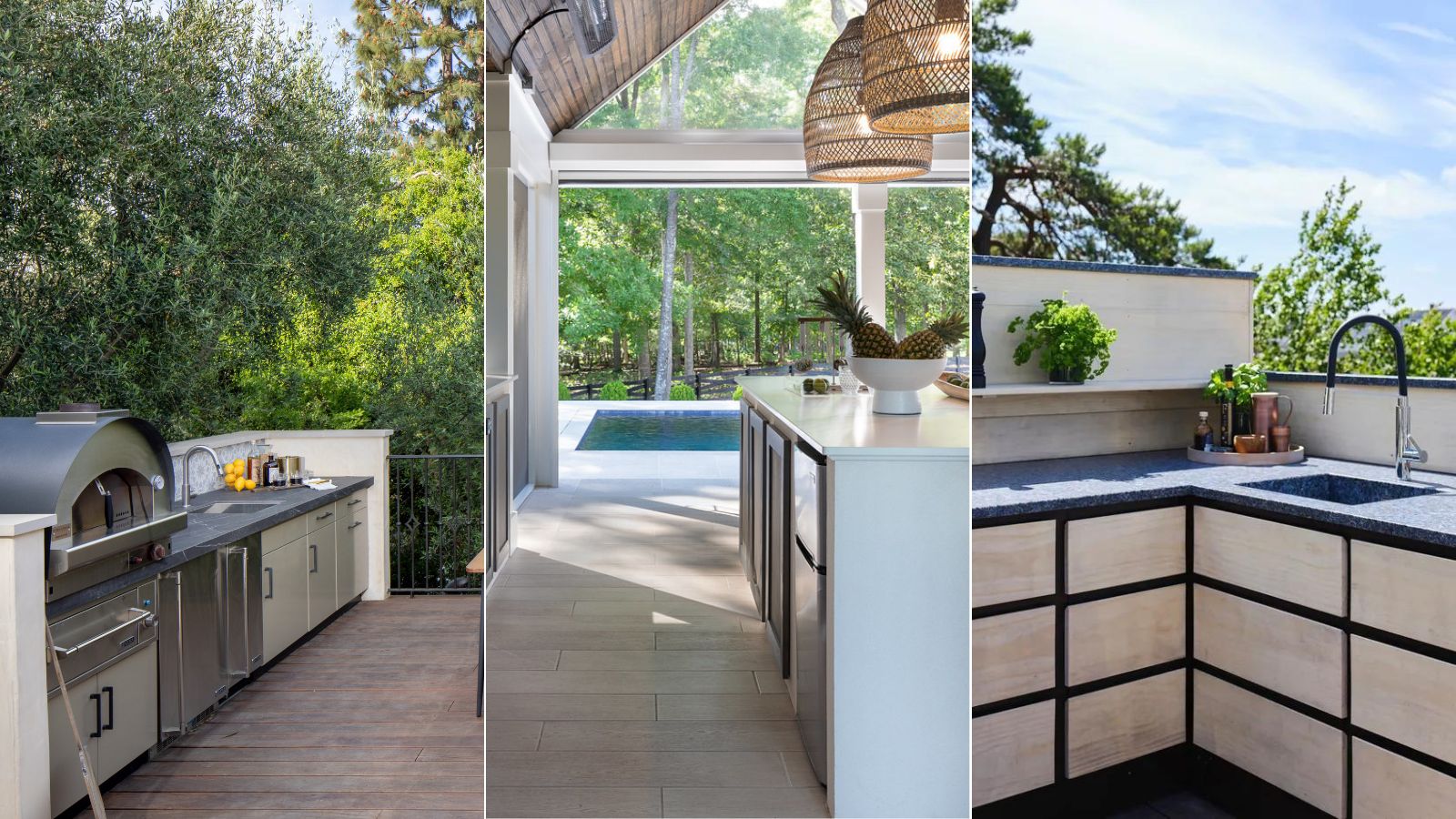
What are the best countertops for an outdoor kitchen? 5 materials that are stylish and practical

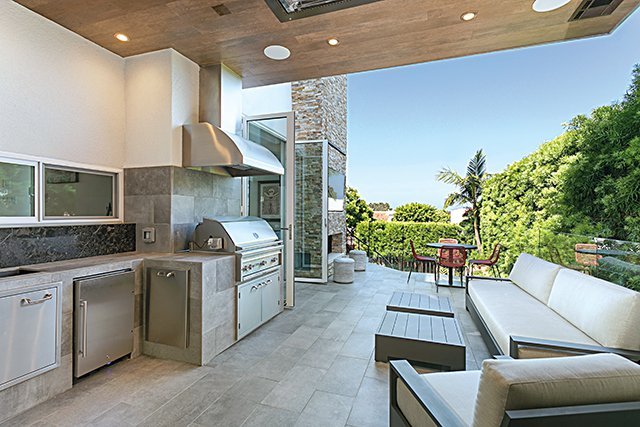
Inside Out

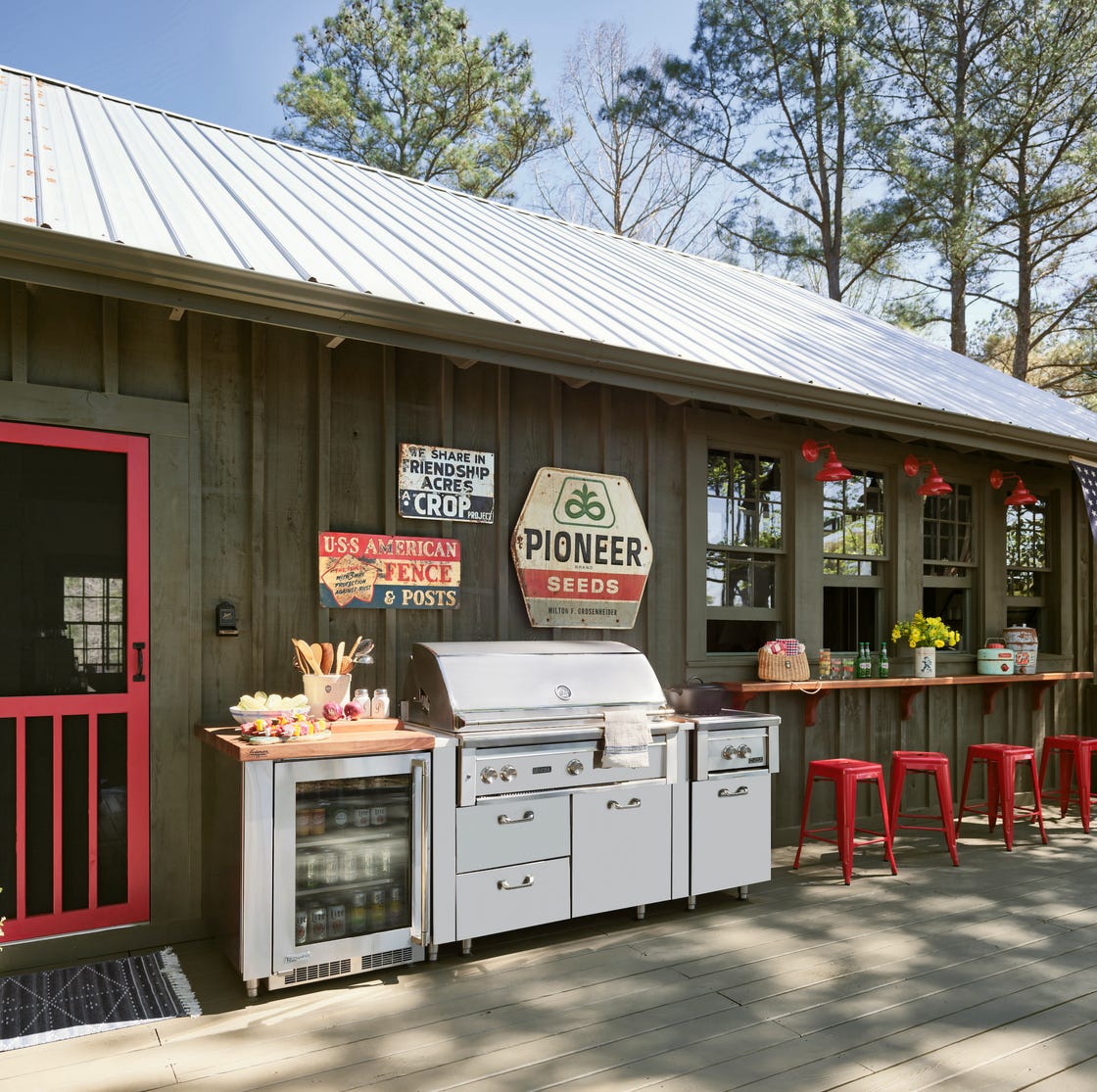
These Outdoor Kitchen Ideas Will Have You Eating Outside All Year Long
Outdoor Kitchens By The Numbers

Outdoor countertop ideas to finish your alfresco kitchen to perfection
9 Outdoor Kitchen Cabinet Setups That Rival Their Indoor Counterparts

15 Outdoor Kitchen Plans With Cost-Effective Accents

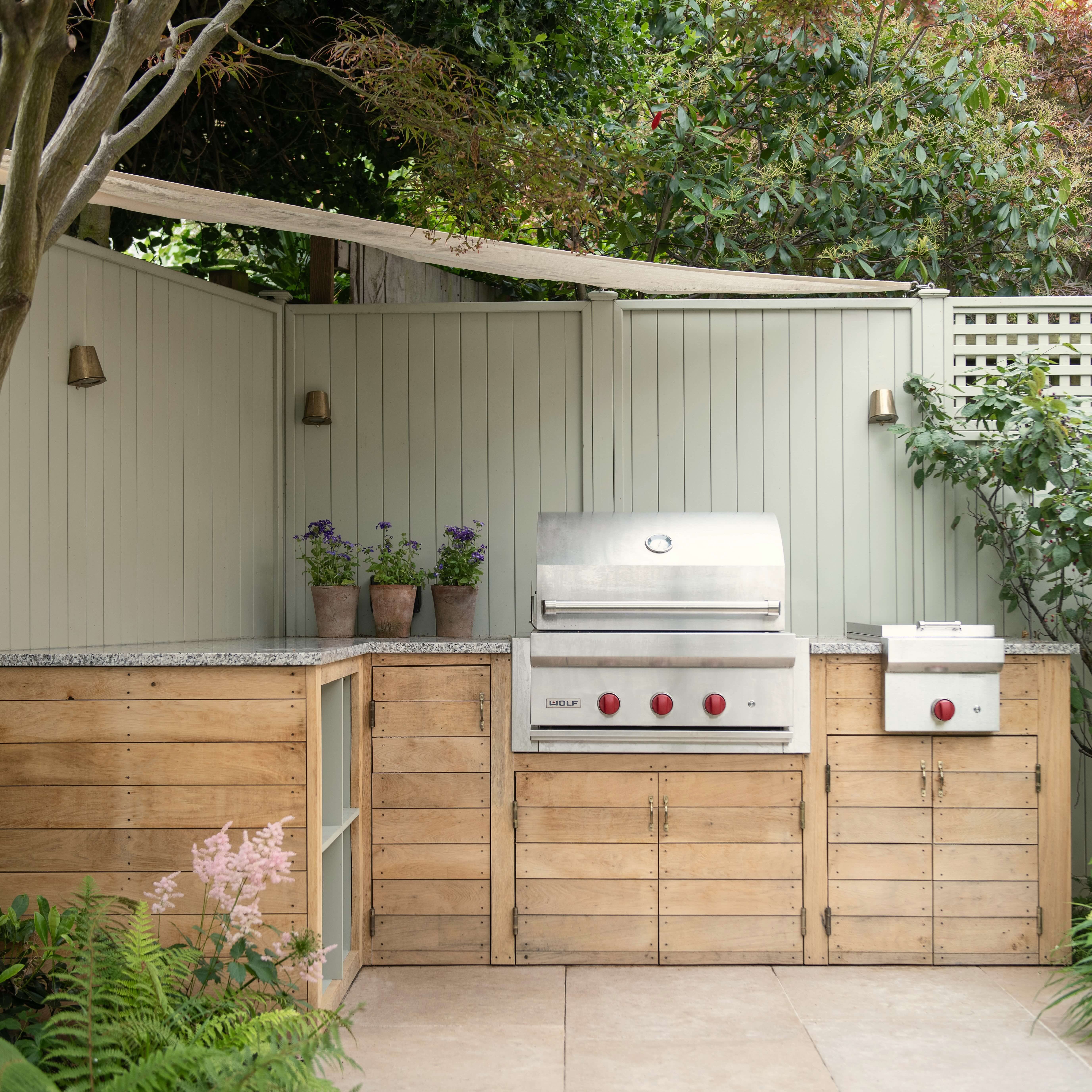
12 outdoor kitchen ideas for effortless summer dining in the garden
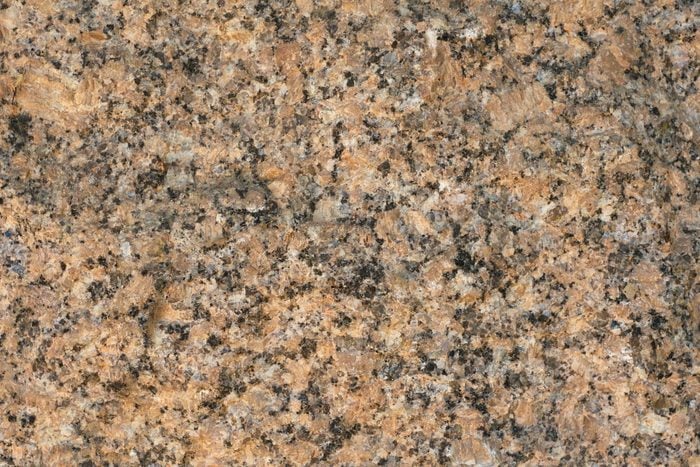
6 Outdoor Kitchen Countertop Options

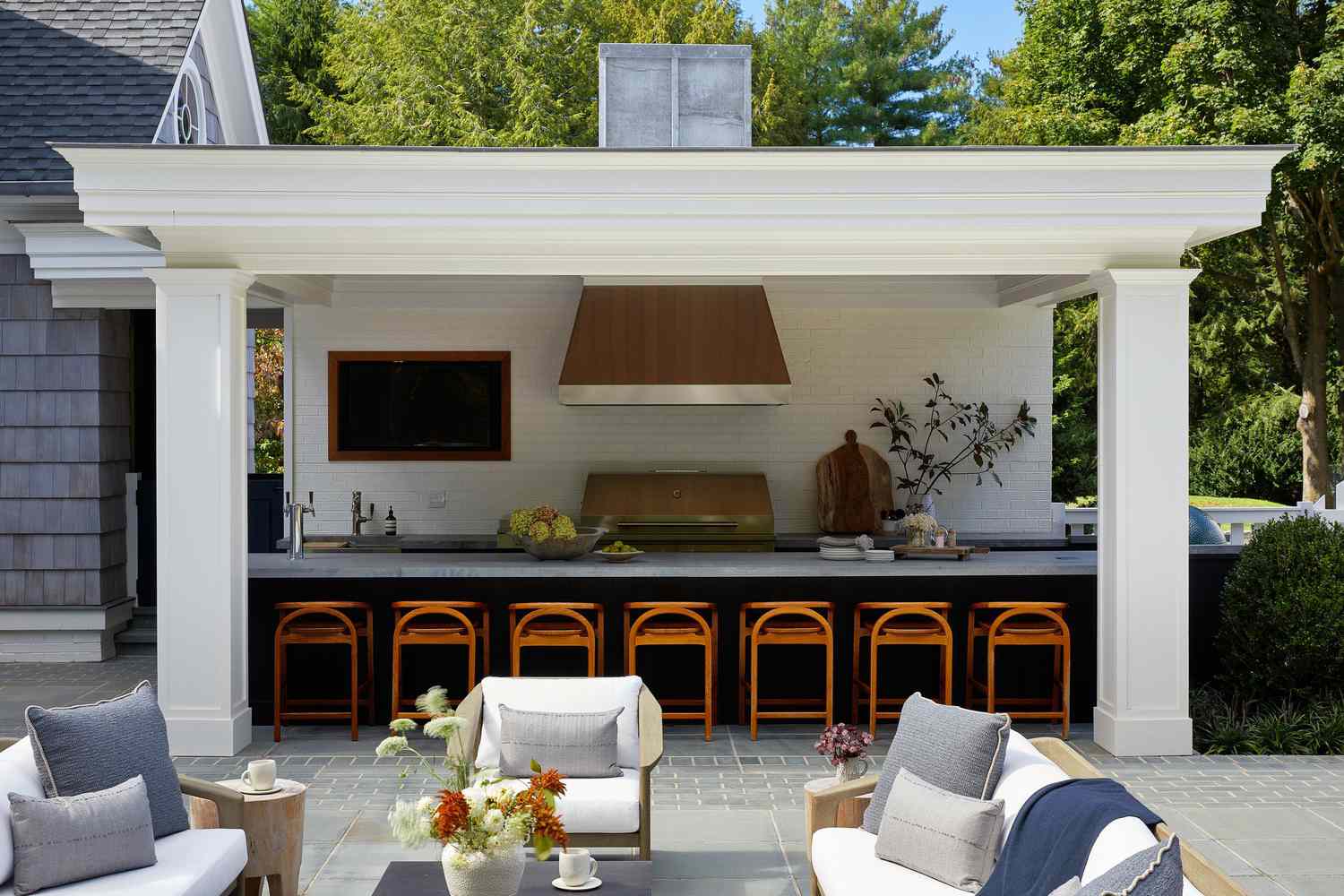
15 Covered Outdoor Kitchen Ideas for Every Season and Style
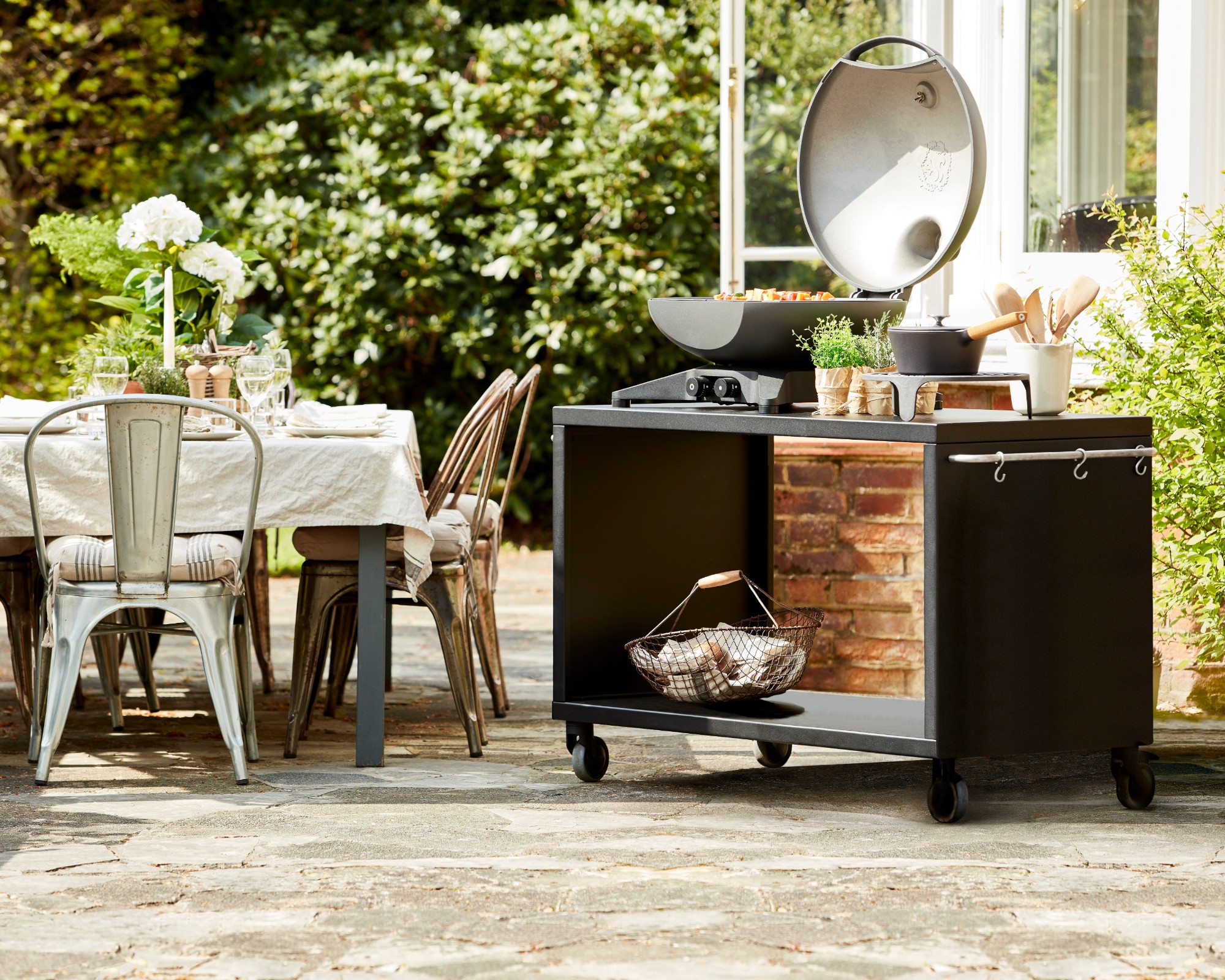
27 outdoor kitchen ideas – DIY, modular and small space designs for all backyards

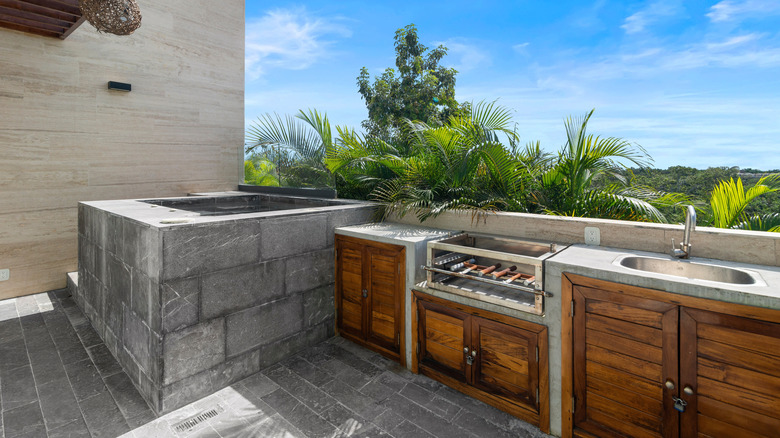
The Most Highly Recommended Waterproof Storage Cabinets For Outdoor Kitchens
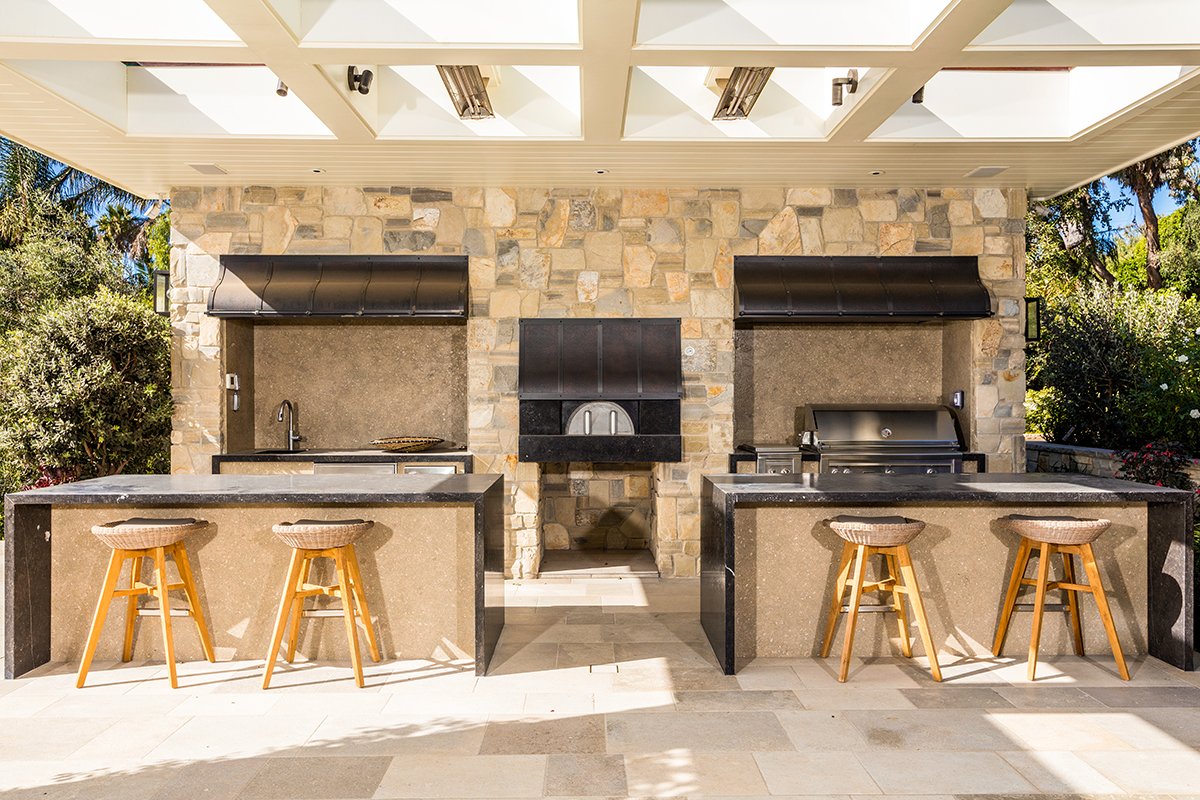
Outside Entertainment
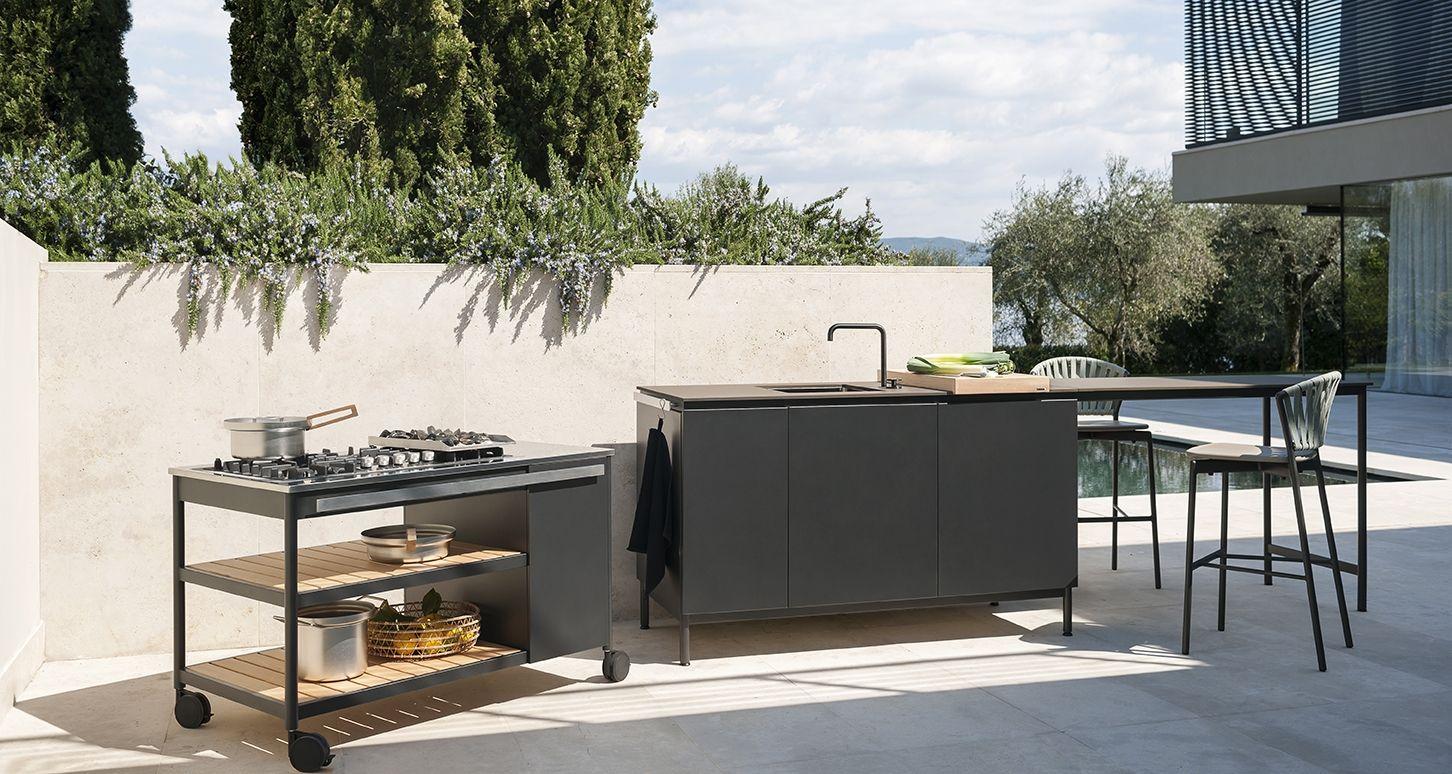
Outdoor kitchen ideas to elevate your summertime dining

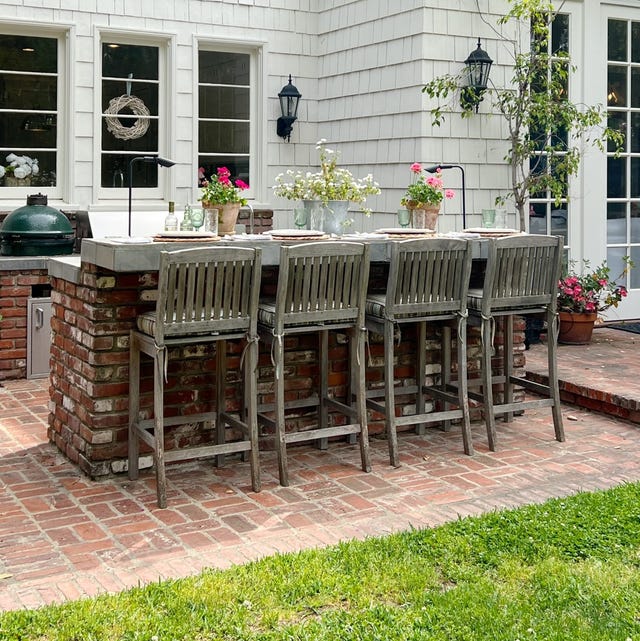
Check Out These Outdoor Kitchen Ideas for Any Budget

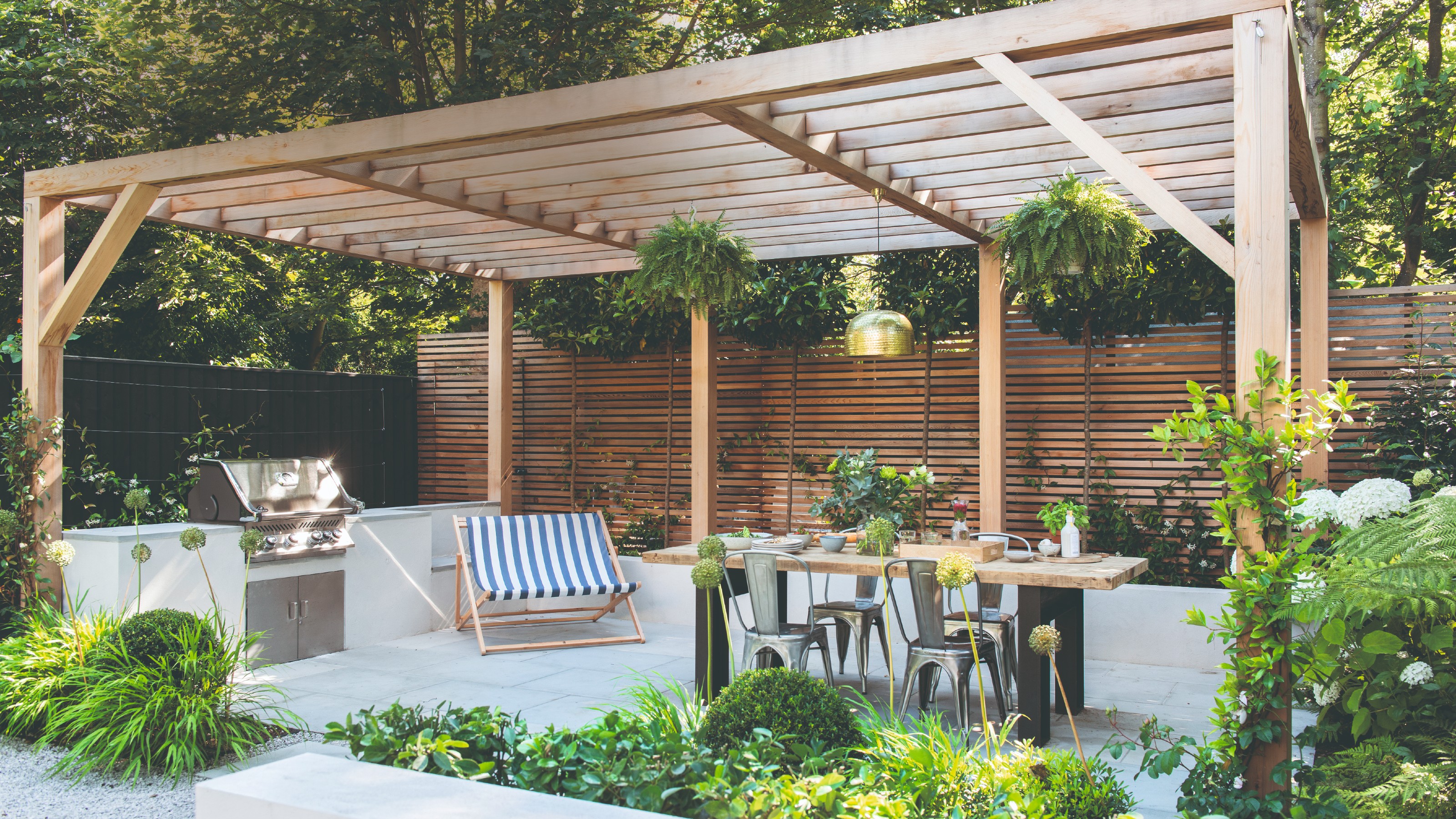
11 covered outdoor kitchen ideas for sheltered cooking and dining
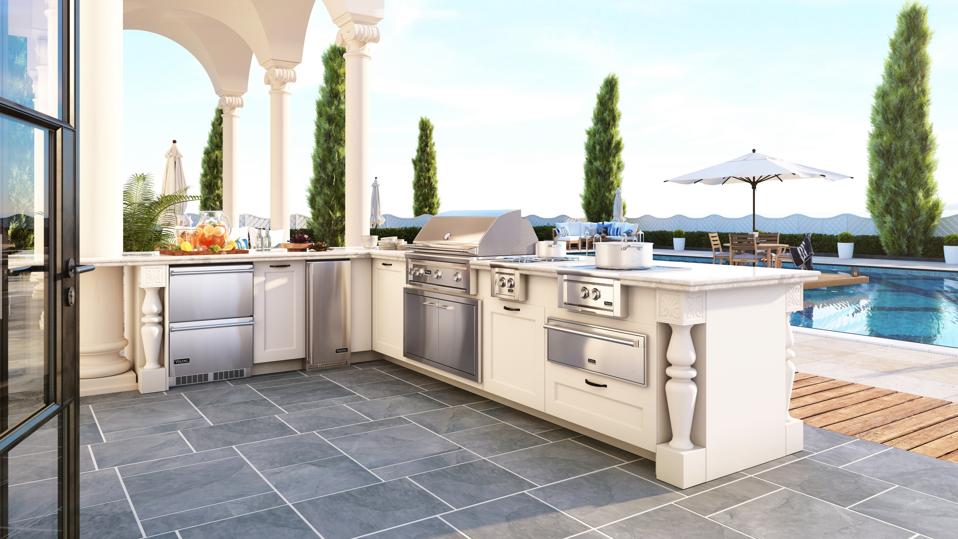
Experts Share New Outdoor Kitchen Ideas And Trends

Upgrade Your Backyard and Enjoy the Warm Weather With These Outdoor Kitchen Ideas

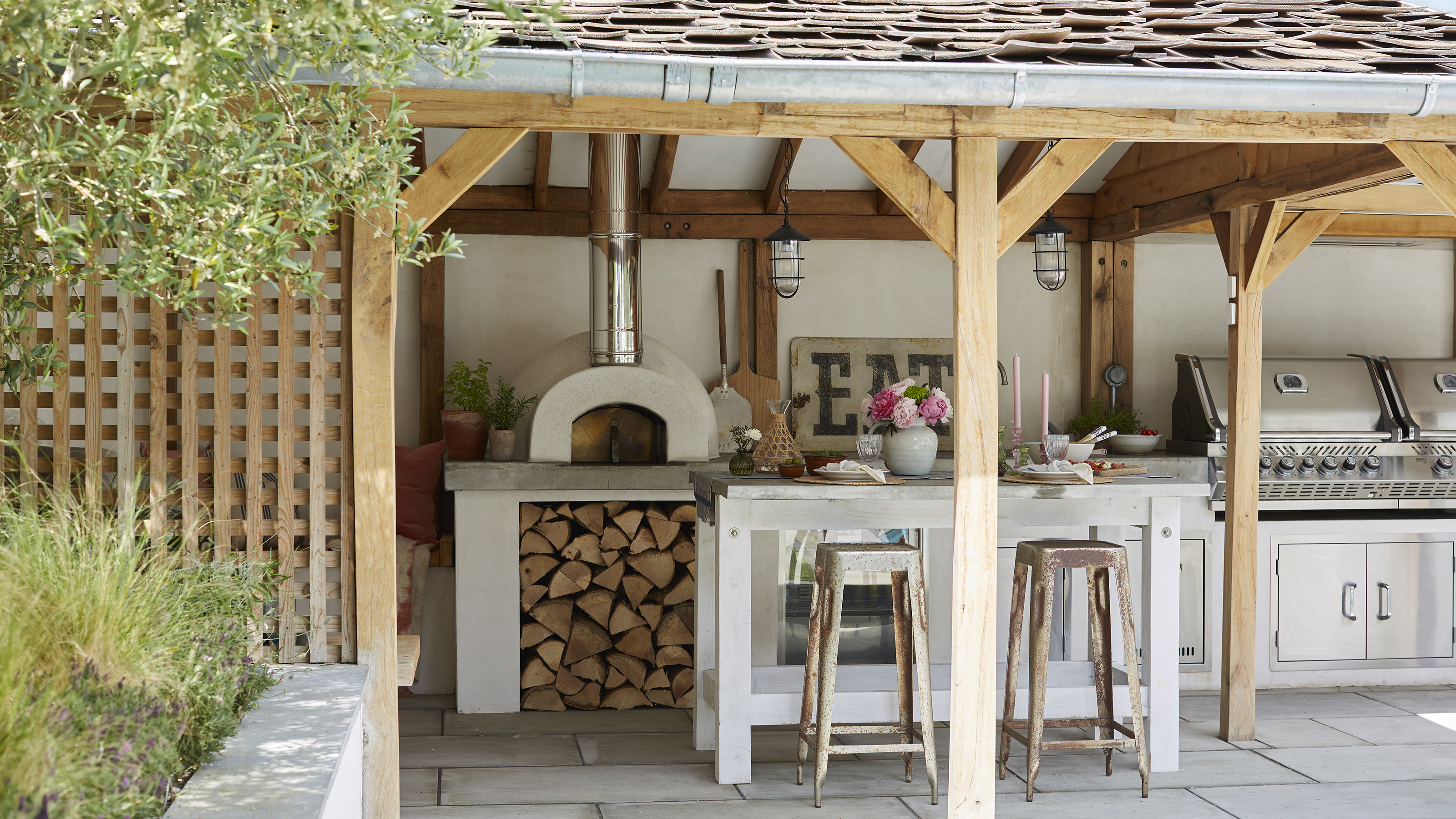
5 outdoor kitchen island ideas to take alfresco cooking and dining up a notch
7 Unusual Kitchen Countertops That Totally Work