1/10
Primary school children design wooden seats in Grade Three Chairs project
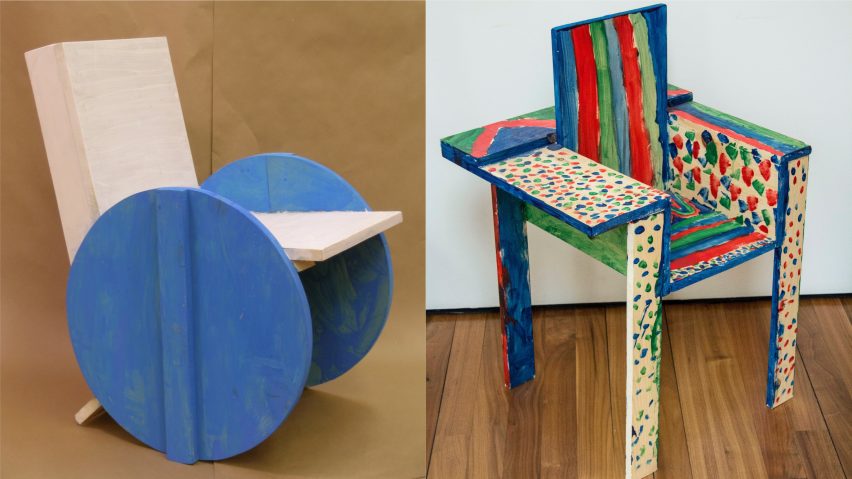
Art instructor Bruce Edelstein has compiled a collection of chairs designed, built, and decorated by children aged seven to ten as part of his "Grade Three Chairs" project. This initiative, which has been running for over 18 years at Trinity School in New York, aims to introduce third-grade students to the concept that they can actively participate in shaping their environment through design and creation. Edelstein emphasizes that this process helps children appreciate objects and understand their origins. The project requires students to design and construct a unique chair for themselves using simple pinewood planks. The curriculum spans several weekly, hour-long sessions, beginning with sketching their ideas and then creating paper scale models to visualize the construction process.
Throughout the project, Edelstein encourages students to deconstruct the traditional understanding of a chair's function and elements. He prompts them to question conventional designs, such as whether a chair necessarily needs four legs, leading them to explore innovative solutions. This approach helps children understand that there are multiple ways to achieve a functional design. The resulting chairs demonstrate a wide range of creativity, including a rocking boat chair with portholes, a triple-height backrest with zigzag shapes, and a chair featuring a giant alligator mouth with teeth armrests. One student even designed a tree-shaped chair with movable leaves attached by hinges, while another insisted on an asymmetrical design with twisted and turned elements, demonstrating a sophisticated understanding of form and structure.
In addition to fostering creativity, Edelstein teaches the children fundamental woodworking skills, such as clamping, cutting, and nailing wood. While he supervises for safety, the students perform most of the physical construction themselves, using basic toolbox saws. The project culminates in the decoration phase, where Edelstein provides a brief lecture on using colors and patterns to break up surfaces and the effects of different opacities through staining and painting. This guidance leads to highly individualized and imaginative final products, such as a chair with each surface finished in a different shade and texture, and a three-legged bench adorned with bold streaks of pink, yellow, and black, resembling an abstract expressionist painting.
Edelstein highlights the children's spontaneous and intuitive approach to design, noting their ability to generate ideas quickly and fearlessly. He suggests that adults could learn from this uninhibited creativity and trust their intuition more. The article also draws parallels between the Grade Three Chairs project and other design and architecture-related activities launched during the coronavirus pandemic to engage children confined to their homes. Examples include IKEA's guide to building forts from furniture and Foster + Partners' paper-based challenges for constructing skyscrapers and cities. These initiatives collectively underscore the importance of hands-on, creative learning experiences for children to develop an understanding of design and their ability to influence the built world around them.
#ChildrensDesign #FurnitureDesign #Woodworking #CreativeEducation #StudentProjects #PrimarySchool #ChairDesign #DesignThinking #HandsOnLearning #ChildrensDesign #FurnitureDesign #Woodworking #CreativeEducation #StudentProjects #PrimarySchool #ChairDesign #DesignThinking #HandsOnLearning
0 komentarzy łącznie
 Brak komentarzy jeszcze
Możesz również polubić
7 best kids’ tables and chairs that will encourage them to get creative

One of the Best Couches for Kids Is a Modular Design That Comes in Sky-Blue Corduroy

12 Pieces for Your Nursery That Your Child Won’t Outgrow Overnight

Restoration Hardware’s RH Teen line is more playful and (slightly) less expensive
The 10 Best Children's Chairs
3 Perfectly Designed Playrooms for Kids and Teens

A Curiosity Tray, An Under-Pillow Talisman, and 8 More Kids’ Room Essentials

12 designs made from wood that showcase the versatility of the material
Where to shop the best children’s furniture online in 2025
Sitter Chair brings together two puzzle pieces to create a seat and side table

This Kid’s Room Was Built Around an Elaborate Electric Train Track
We Asked 9 Stylish Parents: What’s the Best High Chair?

Designers inspired by children room decor

7 best kids’ tables and chairs that will encourage learning and creativity
Make Room for the Kids
Blending functionality with artistry: the essence of Albert Potgieter’s designs

One Playroom and Two Beds Later, This 5-Year-Old’s Space Continues to Evolve

10 Best Couches for Kids, According to Real-Life Parents

7 children’s room designs that discerning parents can get behind

JSN design assembles diamond-shaped tiles into chair