Harvard’s Never-Ending Home Improvement Project
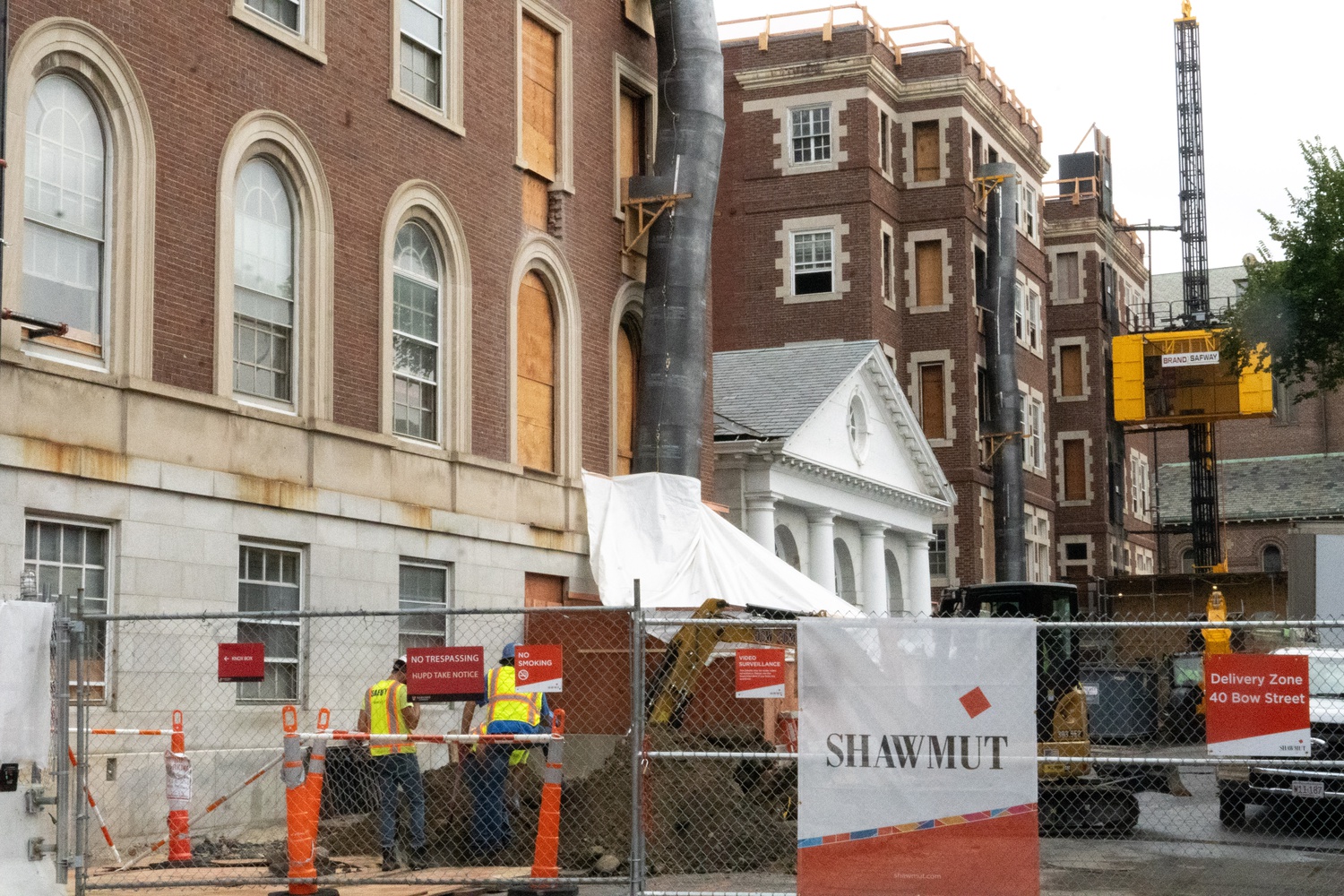
Harvard University's House Renewal initiative, designed to renovate its undergraduate housing, has encountered significant delays and cost overruns. The project, initially announced in 2008 with a projected budget of over $1 billion and a 15-year timeline, began with groundbreaking in Quincy House's Stone Hall in 2012. Twelve years into the initiative, only five and a fraction of the houses have been completed, and the total cost has already exceeded $800 million. Projections suggest that the renovations will extend well beyond the original 2023 completion date, potentially running past 2030, a decade longer than a similar project at Yale University, which lasted from 1998 to 2011. The Executive Director of the Undergraduate House Renewal Program, Stephen Needham, acknowledged these delays in 2023.
Beyond delays and budget increases, the quality and scope of the renovations have also drawn criticism. Notably, buildings like New Quincy were excluded from the renovation plan, and many newly renovated dorms still lack in-room air conditioning. The Faculty of Arts and Sciences had promised to update physical spaces to support 21st-century student academic and social needs, but some renovations have been perceived as prioritizing mere comfort over genuine student growth and development. For instance, some renewed houses feature an insufficient number of single rooms and an excess of undesirable hallway doubles, despite a 2016 report acknowledging the benefit of eliminating such doubles in favor of more suites and hallway singles.
A significant problem arising from the phased renovation approach is the creation of housing disparities across the university's residential system. Project costs, living perks, and student amenities have varied between different renovation phases. Early renewals in Quincy and Leverett Houses, for example, did not receive the comprehensive overhaul currently being implemented at Adams House. This staggered and evolving approach means that initial oversights corrected in later projects lead to persistent inequalities in housing quality. Consequently, older, un-renovated halls, such as New Quincy, will continue to age without improvements, while other areas, like housing in the Quad, will be effectively brand new.
While Harvard has sought student feedback throughout the process, the inherent difficulty of correcting major renovation mistakes means that many initial issues are unlikely to be addressed, especially given the project's current state of being significantly behind schedule and over budget. The article suggests that a more robust initial planning phase, incorporating comprehensive student feedback, could have mitigated some of these challenges. It concludes by advocating for more sustainable renovation practices, not only for the university's financial health but also to better serve its students and prevent long-lasting inequities.
#HarvardUniversity #HouseRenewal #CampusRenovations #StudentHousing #UniversityBudget #ConstructionDelays #EducationalInfrastructure #StudentExperience #HarvardUniversity #HouseRenewal #CampusRenovations #StudentHousing #UniversityBudget #ConstructionDelays #EducationalInfrastructure #StudentExperience
0 comment in total
 No comments yet
You may also like

Builder-Architect-Designer Team Transforms Dream Home

Rising Home Equity Keeps People In Place, Exploding Remodeling Tech

Here's What Nobody Tells You About Buying and Renovating a Historic Home

HGTV's 2025 Smart Home Upgraded The Under-Stairs Storage Space With One Simple Idea

You Can Teach an Old House Transitional Tricks With The Right Builder

One Step at a Time: A Phased Approach to Home Remodeling Projects


Great Day Home Improvement
These Are Hudson Valley's Home Design Awards Winners in 2025

Remodeling
Is it better to finish the basement as part of the build or later on?


Ennead Designs Sustainable Home for Stanford’s New Knight-Hennessy Scholarship Program


5 renovation projects that will add value to your home in 2024


Amaral Services General Contracting shares tips on Home Remodeling Projects

Once overrun with florals, this ex-farmhouse has had a major glow-up

How this New Hampshire designer found her ‘forever home’ niche

Redefining Luxury Living with Ridgeline Contractors
Back to school: Paper House Project makes a Hackney schoolhouse a home

Renovate | Build


Peek Inside: A Century-Old Park Hill Home Gets a Major Facelift

"It Cost $4 And Changed Everything": 27 Homeowners Share Low-Cost, High-Reward Home Upgrades