1/5
'gold digger' installation covers 16th century convent patio in spain
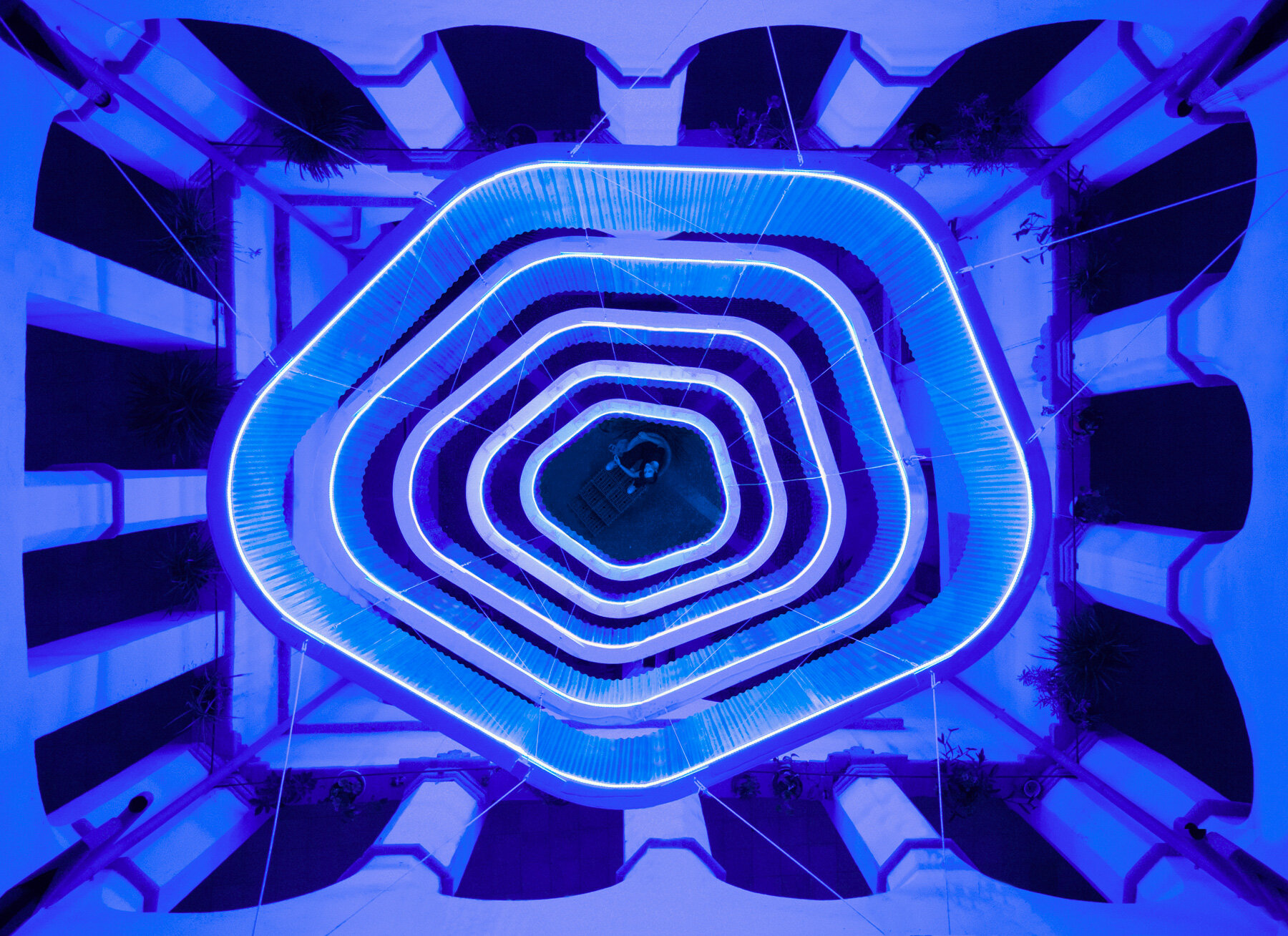
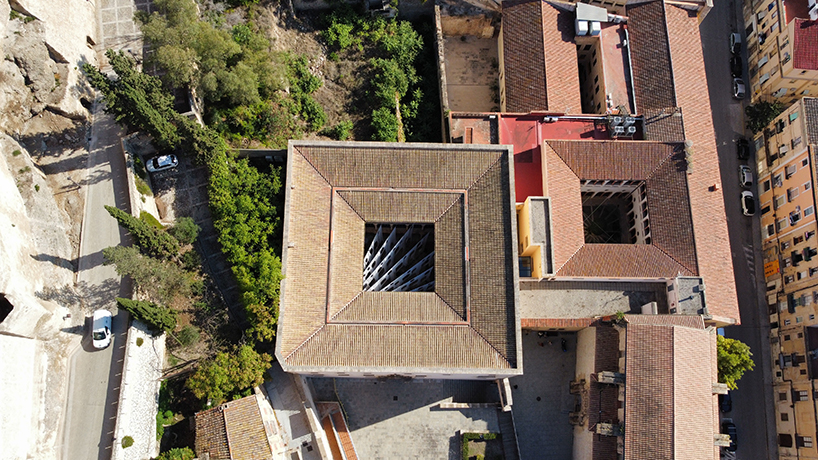
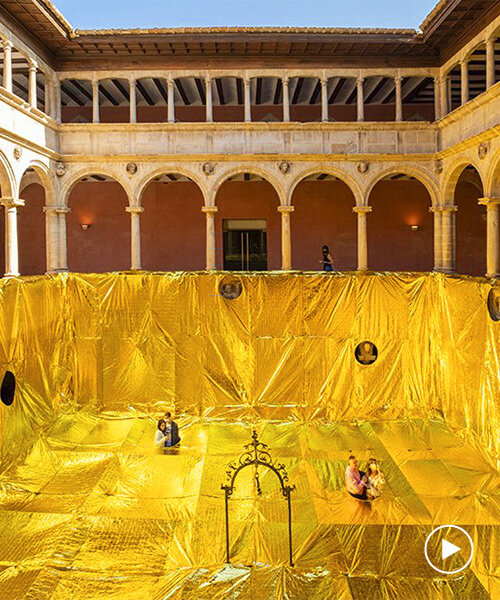
The 'gold digger' public art installation, designed by Nicola Dario Baldassarre, Salvatore Dentamaro, Francesco Di Salvo, and Ilyass Erraklaouy, was featured at Tortosa’s A Cel Obert Festival in Spain. This ephemeral art intervention involved covering the entire patio of the 16th-century Sant Jordi and Sant Domènec dels Reials Col·legis convent with a large sheet made from 112 golden thermal blankets. The convent, historically built to educate the Moors, represents a significant example of civil Renaissance architecture in Catalonia and served as a fitting backdrop for the project, which aims to transform historical spaces into stages for artistic expression while highlighting the city's architectural heritage.
The installation, named 'gold digger', explores themes of curiosity and the desire for discovery, transforming the traditional appearance of the historic convent. The thermal blanket sheet, suspended 1.30 meters above the ground, creates a striking visual contrast within the patio. Its design intentionally incorporates two distinct sides: the golden surface faces inward towards the courtyard, while the silver side faces the surrounding building. This dual-sided approach generates an interplay of warmth and cold, light and shadow, and contrasting gold and silver tones, offering visitors varied visual experiences depending on their vantage point.
Upon entering the installation, visitors are initially met with a darker space dominated by the silver side of the blankets. Circular perforations in the sheet allow shafts of light to penetrate, piquing curiosity and inviting exploration. This encourages users to interact physically with the artwork by crouching to pass under the sheet, transitioning from a darker, silvery space to a bright, golden-lit courtyard. This journey through the installation is designed to foster a sense of discovery and immersion. The movement of the fabric, influenced by the local wind, adds another dynamic element, producing reflections of light and a sound that resembles ocean waves.
The aesthetic and atmospheric qualities of the 'gold digger' installation evolve throughout the day, dictated by natural light conditions. During midday, direct sunlight creates intense, almost blinding reflections on the golden surface. As the sun sets, the golden hue softens and takes on a pinkish tint. At night, artificial lighting emphasizes the contrast between darkness and light, further enhancing the installation's dramatic effect. This temporal variation ensures a continuous and dynamic experience for visitors, encouraging multiple visits at different times.
The installation proved to be a highly successful and interactive piece of public art, winning recognition at the festival. It encouraged visitors, particularly children, to engage with their surroundings and each other. Observers from the upper floors of the convent could watch people moving beneath the fabric, with children playfully peeking through the holes and waving. This interaction not only allowed for a new appreciation of the courtyard's Renaissance ornamentation but also fostered a sense of community and shared experience, reinforcing the festival’s goal of making historical sites accessible and engaging through ephemeral art.
#PublicArt #EphemeralArchitecture #HistoricConvent #ThermalBlankets #ArchitecturalInstallation #SpanishArchitecture #InteractiveArt #AcelObertFestival #PublicArt #EphemeralArchitecture #HistoricConvent #ThermalBlankets #ArchitecturalInstallation #SpanishArchitecture #InteractiveArt #AcelObertFestival
0 comment in total
 No comments yet
You may also like

Designers Are Ditching Gallery Walls for This Gorgeous Antique Item
HARQUITECTES surrounds metal-clad house 905 with wide veranda in spain
thin floating roof shelters arquitectura-G's colonnaded courtyard house in spain
13 Ways to Modernize Spanish Style Without Losing Its Charm

monumental lamp installation lights up the main patio of a 17th century monastery in spain

Decorative Concrete Patio Paradise

translucent organza curtains float within renaissance arched courtyard in spain

Building an Ornate Cornice