1/9
Experiments with Amber: Recreating an Early Modern Varnish Recipe on the History of Design Course
This blog post details an experimental lab class conducted as part of the V&A;/RCA History of Design MA course, where students recreated an early modern furniture varnish recipe using linseed oil and amber. The 'Thinking and Experiencing Techne' course, a satellite project of Columbia University's 'Making and Knowing' initiative and a collaboration with Dr. Spike Bucklow from the Hamilton Kerr Institute, aimed to provide students with practical experience in historical making techniques. The focus was on understanding early modern artisan knowledge and skills through direct engagement with materials and processes. The specific recipe chosen was from a sixteenth-century French manuscript, notable for its rudimentary instructions and lack of precise measurements, prompting students to rely on sensory observation and intuition, mirroring historical practices.
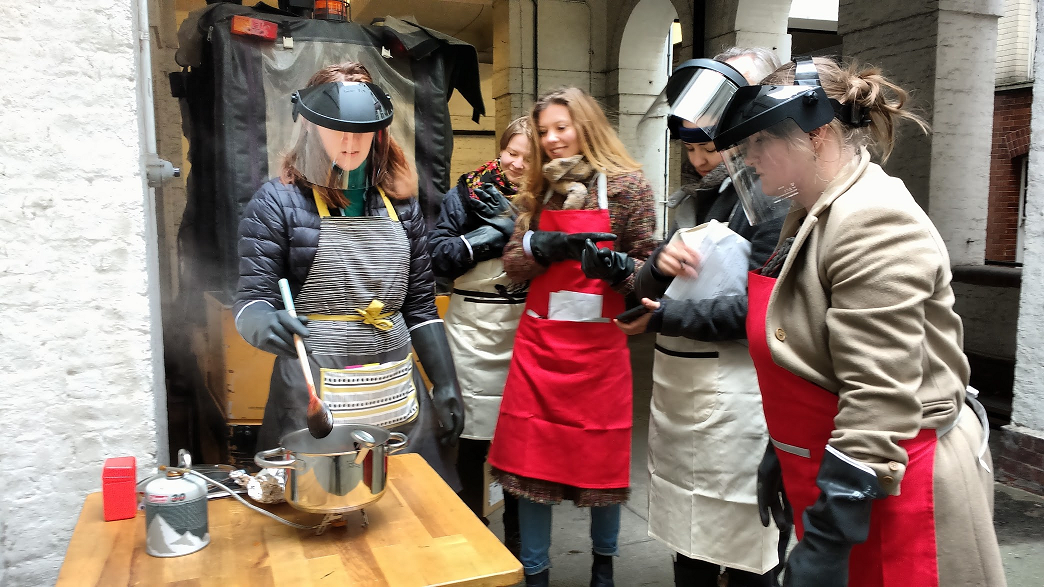
The process was divided into three main stages: preparation of the amber, heating the linseed oil, and combining the two. For the amber preparation, raw amber was manually ground into a fine powder using a pestle and mortar, a step that, while not explicitly detailed in the original recipe, was necessary for better melting and combination. Health and safety measures, such as wearing goggles and masks, were implemented due to the fine dust produced. Students noted the sweet, treacly aroma of the amber, a reminder of its origins as tree sap, and observed its natural hard, translucent, and golden qualities, which made it an ideal wood finish.
The second stage involved heating the linseed oil to 200°C. A small camping burner was used, and the oil was stirred regularly for even heating. A tin foil jacket helped maintain a steady temperature. As the oil heated, its aroma intensified, becoming diesel-like and then citrusy at higher temperatures. Once it reached 200°C, lead minium, an orange-colored powder, was added to enhance bonding with the amber, turning the mixture a vivid orange. The melting of the amber, the third stage, was conducted using a scientific heating mantle and a round-bottom flask, allowing for observation of the transformation. The amber, after grinding, became dark and sticky during heating, reaching 300°C. This stage required constant stirring to prevent graininess and ensure uniform melting. The strong odor necessitated the use of masks. The entire amber melting process took 64 minutes.
Finally, the melted amber was carefully added to the heated linseed oil with gentle stirring. This combination produced a significant amount of smoke, which eventually dissipated. The resulting varnish appeared dark and contained dark impurities, which were theorized to be either from the ground amber or burning during the melting process. These impurities, it was noted, could be filtered out, potentially with white bread to maintain historical accuracy. The color of the final varnish on wood was reserved for a future discussion. The experience underscored the importance of 'techne' – the reliance on tacit knowledge and sensory judgment – in interpreting and executing historical recipes, given the often imprecise instructions. The students and faculty involved expressed gratitude to the various experts who provided guidance and support during the experimental lab class.
#earlyModernHistory #historyOfTechnology #makingAndKnowing #research #RoyalCollegeOfArt #techne #VARCAHistoryOfDesignMA #varnish #historicalCraftsmanship #earlyModernHistory #historyOfTechnology #makingAndKnowing #research #RoyalCollegeOfArt #techne #VARCAHistoryOfDesignMA #varnish #historicalCraftsmanship
0 comment in total
 No comments yet
You may also like

With bright color palettes, Pita and Bloom's work embraces ornament
Designers Are Taking Lacquer Way Beyond Trays and Dressers | domino

A designer’s guide to decorating with antiques

Woven Inspiration recovers the gilded age

'Modern style can be so sterile' – how one designer softened the look with heirloom pieces in a transitional design masterclass

Historical Wallpapers and Fabrics Have Never Felt More Contemporary
At Home With... Pandora Taylor - Interiors
Is It a Crime to Paint Antique Furniture?

Objects of Common Interest explores "secret recipe" for iridescent resin
My First Design History Primer

‘We’re just the current caretakers’ – The Brownstone Boys' golden rules for making the most out of your home's historic bones
The Forgotten History of Bourne and Allen’s Mid-Century Textiles

Morgan Fisher

Antiquing vs. Distressing: 8 Tips on Creating the Look and Patina of a Genuine Antique

A New Color Palette Rewrote the Story of This Art Deco Gem, Previously Untouched for Over Half a Century

Here's Why Everyone Is Talking About American Craft Right Now

How to use antique furniture in a contemporary scheme
Designers Say These Vintage Paint Colors Are Back

Paul Coenen adds "shrink-wrap" pattern to aluminium furniture collection
The man they call 'the paint detective' shares his 10 tips for choosing the right colours for your house