1/9
6 inspiring sensory surface trends to expect in 2023
The design industry is anticipating a shift towards more tactile and textured surfaces in 2023, moving beyond purely hygienic considerations to embrace elements that promote warmth and wellbeing. Sustainability continues to be a foundational aspect of design, influencing material choices and production methods across various product categories. This emerging focus is evident in several innovative surface design trends that emphasize sensory engagement and environmental responsibility.
One significant trend is the use of three-dimensional cork wall tiles, exemplified by Granorte’s 3DForms collection. These modular tiles, designed by Alzira Peixoto and Carlos Mendonca of SimpleFormsDesign, are crafted entirely from 100 percent post-industrial recycled cork, highlighting both sustainability and a unique natural aesthetic. Their geometric designs allow for bespoke textures on vertical surfaces, inviting touch and visual interest.
Another trend involves natural fiber wallcoverings, as seen in Arte’s Osmanthus Collection. This collection draws inspiration from the Far East, utilizing sophisticated embroidery techniques and materials like sisal, cotton, and hemp. Designs such as Kudzu, made from climbing kudzu plant fibers, and Sambe, crafted from hemp fibers with contrasting black yarns, showcase irregular thicknesses and natural variations, offering authentic and pure textures that connect to nature.
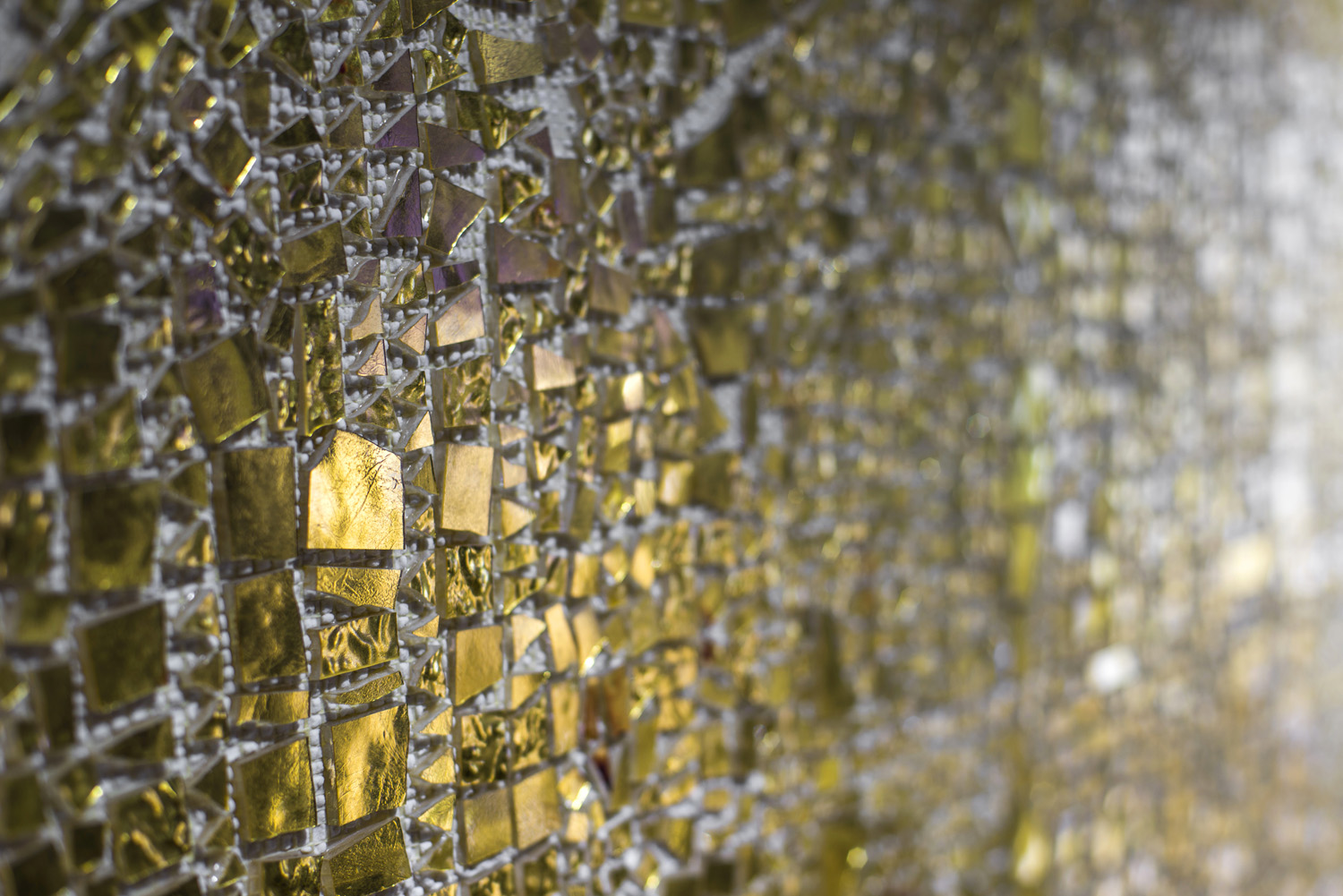
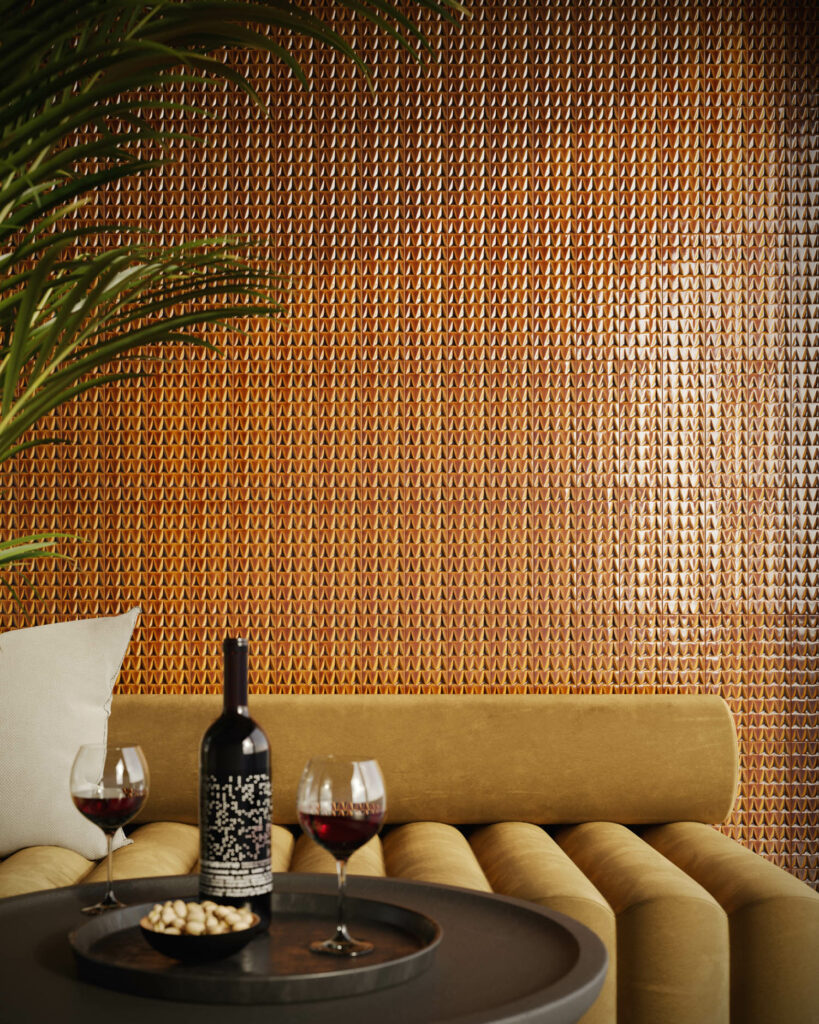
Moving to more opulent materials, gold mosaic tiles from TREND Group demonstrate a timeless appeal. These mosaics, produced using artisanal methods developed in Venice in 1888, incorporate 24kt yellow gold to create rich, luxurious surfaces. Their textured designs add depth and dynamism, proving that gold, with its historical significance and durability, aligns with both aesthetic and longevity aspects of sustainable design.
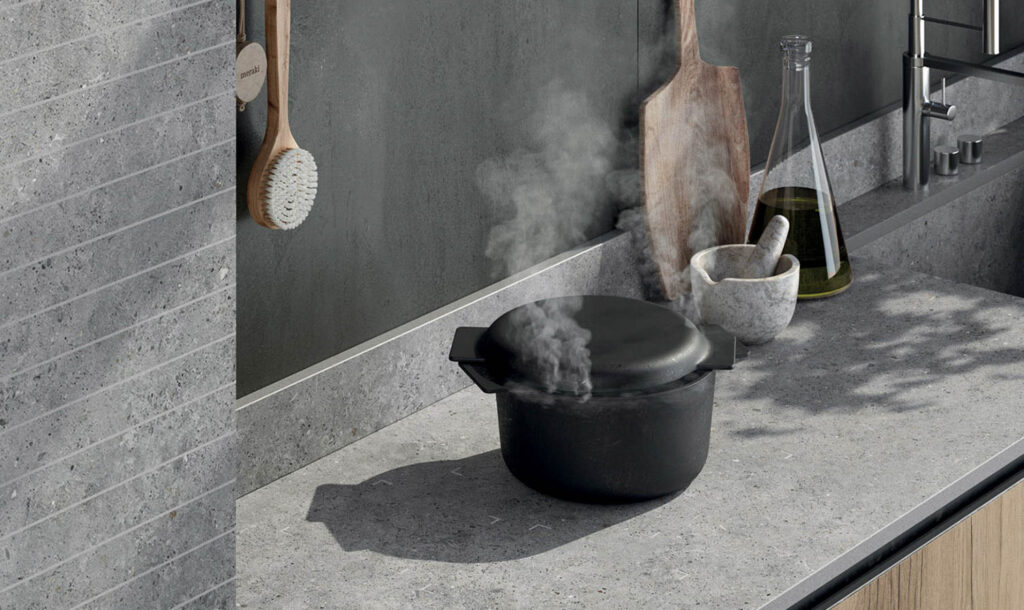
Atlas Concorde’s 3D wall tiles introduce plastic, three-dimensional expressions of bas-reliefs and sculptures into interior design. These tiles create scenic walls that are dynamic, with light interacting to change their appearance throughout the day. Available in various colors and textures, these surfaces invite tactile exploration, ranging from geometric precision to soft, sinuous sensations, while minimizing joint visibility for a more uniform look.
Biomaterials are also making a significant impact, with Mogu Acoustic panels leading the way. Italian-based Mogu utilizes mycelium-based technologies to create interior design products from mycelium and upcycled bio-based materials. These panels are 100 percent biodegradable and bio-based, transforming textile industry residues into functional and aesthetically pleasing acoustic solutions through the action of selected microorganisms.
Finally, Foresso’s timber terrazzo offers an innovative approach to sustainable surfacing. This product is made from waste wood sourced from British trees, with offcuts and wood dust combined to create a warm, organic reimagining of classic terrazzo. Hand-finished in Birmingham, Foresso emphasizes a circular design process, marrying environmental ethics with a high-quality, professional finish. These trends collectively underscore a renewed appreciation for sensory experiences, sustainable practices, and innovative material applications in surface design for 2023.
#SensoryDesign #SurfaceTrends #SustainableMaterials #TactileSurfaces #CorkDesign #NaturalWallcoverings #LuxuryMosaics #Biomaterials #TimberTerrazzo #SensoryDesign #SurfaceTrends #SustainableMaterials #TactileSurfaces #CorkDesign #NaturalWallcoverings #LuxuryMosaics #Biomaterials #TimberTerrazzo
0 comment in total
 No comments yet
You may also like
6 bathroom trends that will lead the way in 2023
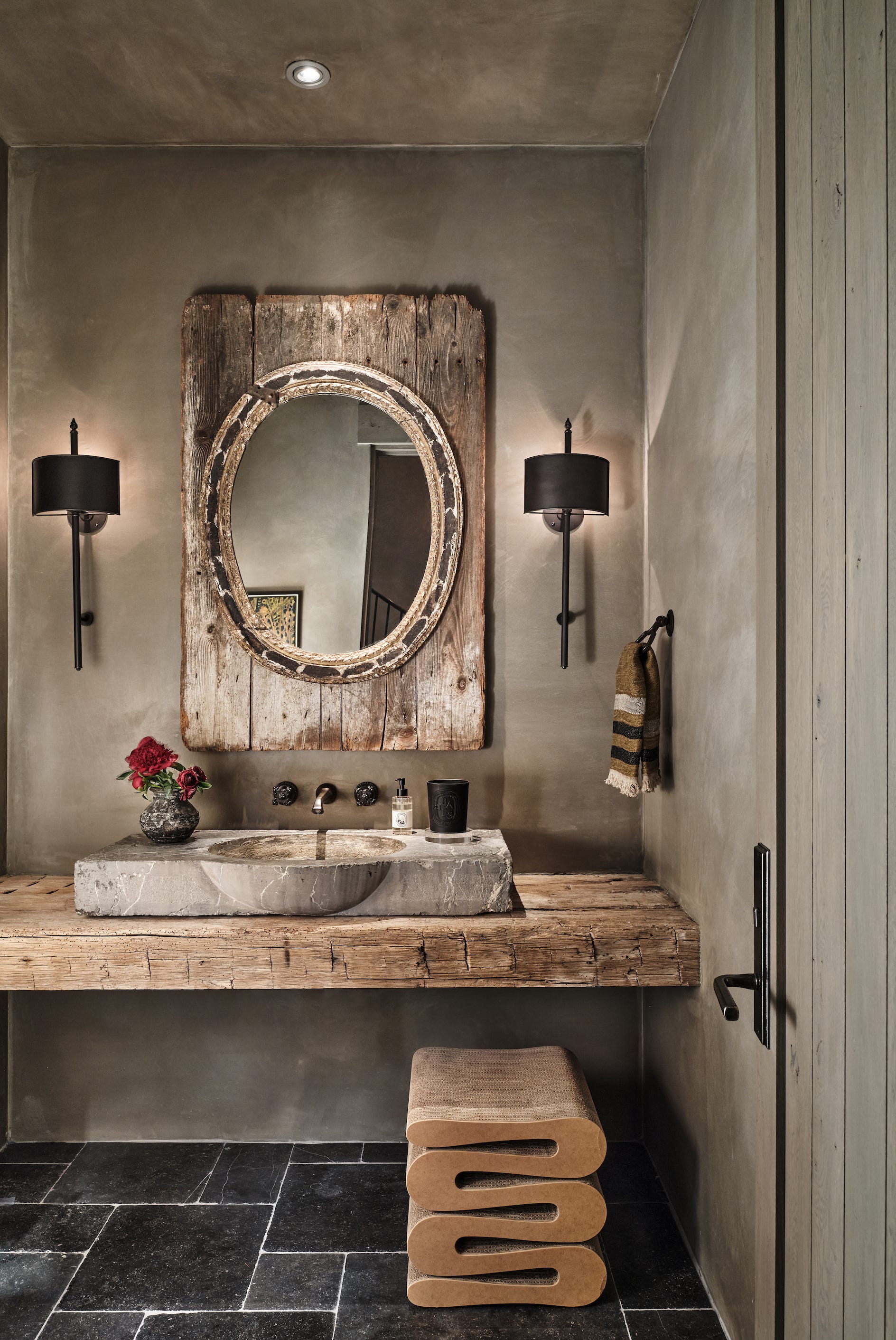
Sensorial Features and 12 Other Bathroom Trends That'll Be Everywhere in 2025

9 Color Trends That Will Take Over in 2023

8 Furniture Trends That Will Be Everywhere in 2026, According to Designers

8 interior trends predicted to be huge in 2023, according to designers
Moss-Core, Squishy Shapes, and 6 Other Trends We’re Super Excited About Right Now
8 Flooring Trends Designers Say Will Be Everywhere In 2026
3 Wallpaper Trends We’re Loving (& Shopping) for in 2025

7 Home Decor Trends to Look for in 2023 According to Interior Designers
From Funky Shapes to Bold Colors—6 Unexpected Hardware Trends That Will Define 2025 Home Design

You’re About to See These 2023 Interior Design Trends All Over Your FYP
8 Flooring Trends You Should Know for 2022
6 Flooring Trends You’re Going to See Everywhere in 2023
6 Trends Defining Home Décor in 2025

These are the interior trends to leave behind in 2023, according to experts
Designers Predict: These Will Be the Biggest Home Décor Trends of 2022

Interior Design Trends to Know in 2023—And What’s on Its Way Out
6 Tile Trends Spotted at Coverings 2024

Here Are the Hottest Bathroom Trends for 2023, According to Design Pros

2025 Design Trends We're Loving