1/2
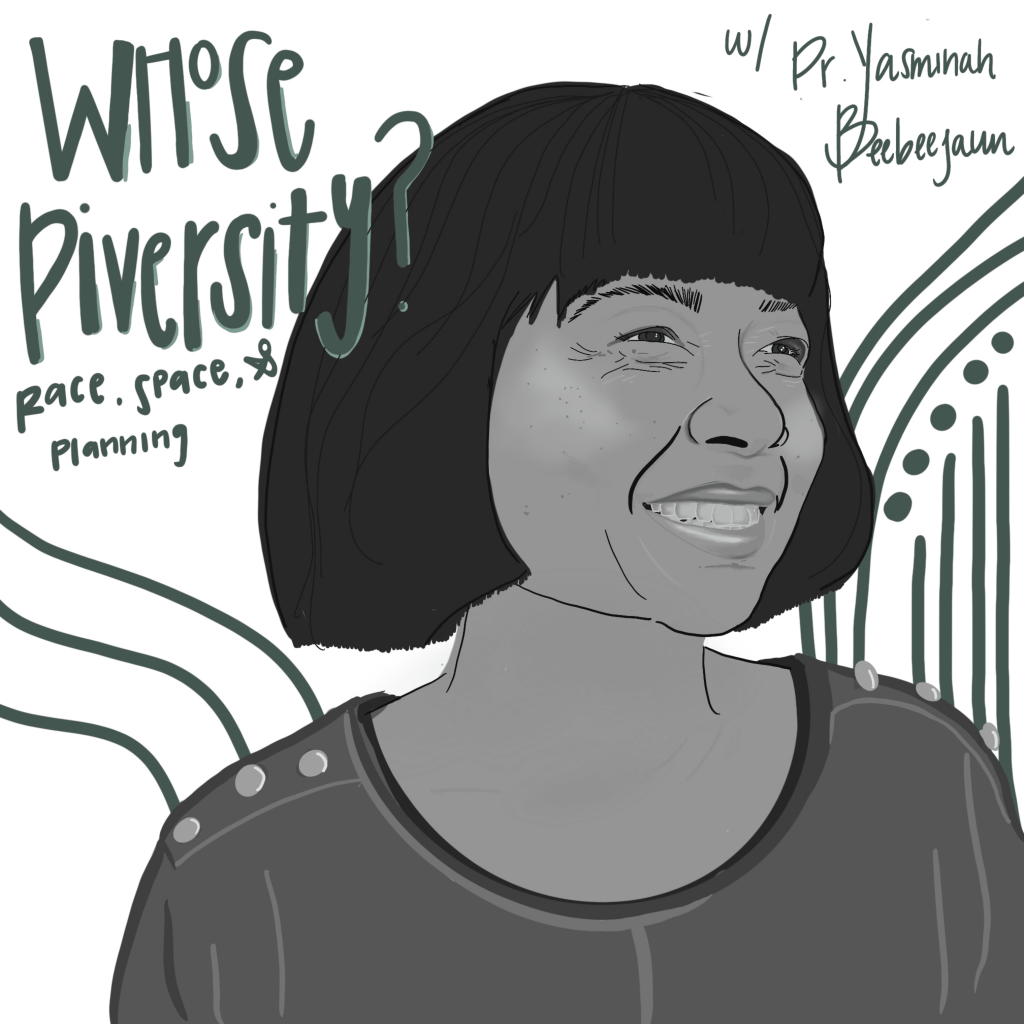
Yasminah Beebeejaun: Whose diversity? Race, space, and planning
This blog post, part of the Cities@Tufts lecture series, discusses Professor Yasminah Beebeejaun's presentation "Whose diversity? Race, space, and planning," delivered on April 5th, 2023. The lecture critically examines the concept of diversity in European cities, particularly British cities, and its entanglement with colonial legacies and racial imaginaries. While many European cities present themselves as progressive due to their "super-diverse" neighborhoods, Beebeejaun argues that this narrative often overlooks the underlying epistemological framing of Europe as white.
Beebeejaun's central thesis is that the contemporary understanding and promotion of urban diversity in Europe obscure the historical and ongoing influence of colonial racial narratives. She specifically highlights how these narratives have shaped postwar urban planning and development in British cities, leading to the racialization of urban spaces. This historical context is crucial for understanding current urban inequalities and power dynamics, suggesting that the seemingly progressive embrace of diversity might inadvertently perpetuate existing racial biases if the foundational issues are not addressed.
Professor Beebeejaun advocates for a deeper and more critical engagement with the colonial and racial history within the European planning discipline. She contends that without a thorough reckoning with this past, efforts to reconceptualize progressive urban diversity will remain superficial and ineffective. This involves acknowledging how historical power structures have influenced the design and categorization of urban areas and how these structures continue to impact the experiences of diverse communities.
Her work, as summarized in this post, emphasizes the need for an anti-racist approach to planning theory and practice. This approach would move beyond simply celebrating multiculturalism to actively dismantling the systemic racializations embedded in urban landscapes and planning policies. Such a reconceptualization would involve critically examining existing planning frameworks, identifying and challenging inherent biases, and developing new strategies that truly foster equitable and just urban environments for all residents.
Professor Yasminah Beebeejaun is a distinguished academic in the field, serving as a Professor of Urban Politics and Planning at the Bartlett School of Planning, University College London. Her extensive research focuses on feminist and anti-racist approaches to planning, with her articles published in prominent journals such as Environment and Planning C, Journal of Planning Education and Research, and Planning Theory. She also co-edits The Journal of Race, Ethnicity and the City, further cementing her expertise and influence in these critical areas of urban studies. This lecture is part of a broader series in collaboration with Tufts University and Shareable, supported by the Shift Foundation, Barr Foundation, and The Kresge Foundation, which aims to explore the impact of urban planning on communities and promote greater equity and justice.
#UrbanPlanning #Diversity #Colonialism #RaceAndSpace #EuropeanCities #AntiRacism #UrbanStudies #SocialJustice #UrbanPlanning #Diversity #Colonialism #RaceAndSpace #EuropeanCities #AntiRacism #UrbanStudies #SocialJustice
0 comment in total
 No comments yet
You may also like

Ten principles for designing vibrant and liveable mixed-use spaces
What a Classic Folk Song Gets Wrong About Daly City

Universal Design: The Essential Tool for Intergenerational Communities

The new elegance of cities. The evolution of inclusive design


A Place For Every Person

Alaska Alaska and Limbo Accra on supporting Black-on-Black design and more


How Can Architecture be Designed to Reflect Human Behavior?


The changing faces of Cabinet diversity, George Washington through Joe Biden

Discriminatory housing practices in the District: A brief history


"Interior design borrows from cultures it finds aesthetically pleasing"