

1/6
A New Way to Think About Our Filing Systems
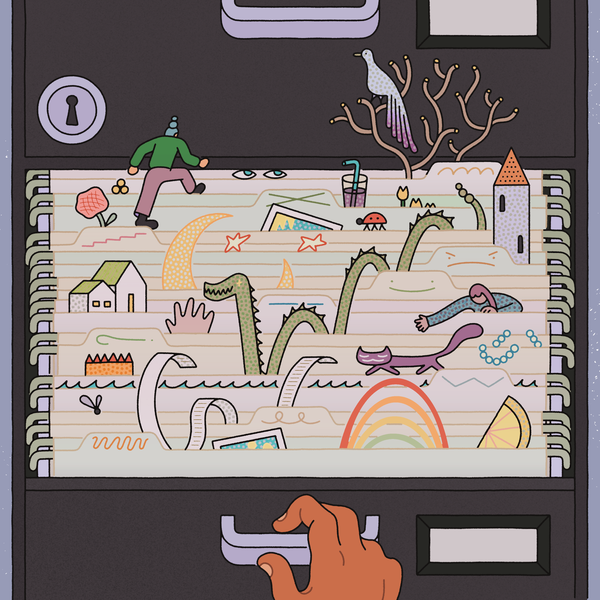
The article explores how the concept of organizing information has evolved and how a shift in perspective can imbue the sorting process with meaning, rather than solely focusing on efficient retrieval. It begins by discussing Craig Robertson's book, "The Filing Cabinet: A Vertical History of Information," which details the 19th-century invention of the filing cabinet. This invention was initially advertised as a high-tech tool that promised corporations unprecedented capitalist efficiency by providing a rigid system for classifying, storing, and retrieving information. However, the article notes that managing knowledge is never truly simple, even with modern digital tools like computerized folders and advanced search engines. The sheer volume of digital information today creates an "infinite sprawl" that profoundly impacts how individuals interact with the world, as highlighted by L. M. Sacasas in "The Frailest Thing."
The central argument is that instead of being overwhelmed by this information overload, one can redefine the purpose of organizing information. The article suggests that the act of sorting itself can hold intrinsic value and meaning, moving beyond the utilitarian goal of quick retrieval. This idea is illustrated through several examples from the world of books and literature. "Roget’s Thesaurus" is presented not merely as a reference tool but as an inspiring creation that reveals a complex web of relationships between words. Similarly, book indexes, often seen as dry and functional, are shown to possess potential for interpretation, whimsy, and intelligence, as discussed in Dennis Duncan's "Index, A History of the."
The discussion extends to personal organization methods, specifically referencing Leslie Kendall Dye's approach to arranging her bookshelves. Dye's system defies conventional, outwardly legible organizational principles. Instead, she places books together based on an intangible "kinship or shared sensibility," fostering unexpected connections between seemingly disparate works, such as Antoine de Saint-Exupéry’s "The Little Prince" and Moss Hart’s "Act One." This method of organization is described as both a literary argument and a personal revelation, reflecting as much about the organizer's inner world as about the books themselves. Ultimately, the article advocates for a more thoughtful and subjective approach to information organization, one that values the process of connection and discovery over mere efficiency.
#InformationOrganization #FilingSystems #BooksBriefing #KnowledgeManagement #RogetsThesaurus #BookIndexes #PersonalLibraries #InformationOrganization #FilingSystems #BooksBriefing #KnowledgeManagement #RogetsThesaurus #BookIndexes #PersonalLibraries
 No comments yet
ON&ON updates shelving system with new modular components
Opinion | The Case for File Cabinets (Published 2021)

The Future Of Finance Is Already Here, And It’s Rewiring The Enterprise


Bookkeeping Tips for Plumbing Business Owners