1/20
‘Vaso Bianco’: Michele De Lucchi first product after Memphis
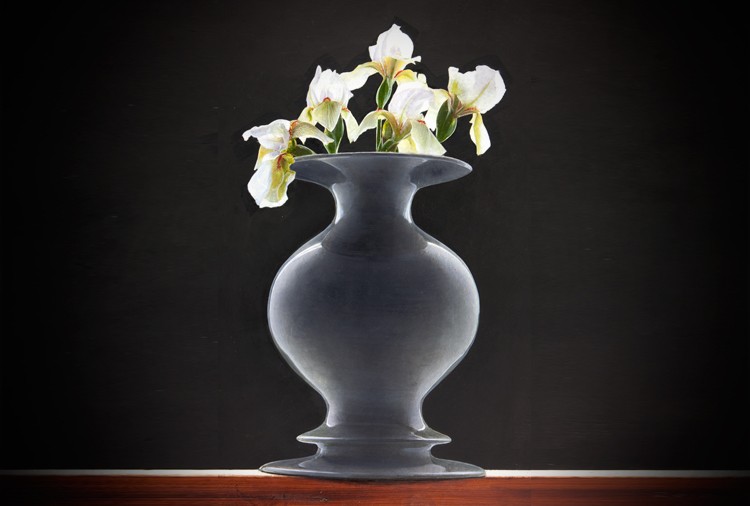
This article details the origin story of the 'Vaso Bianco' (White Vase) by Michele De Lucchi, which became the foundational product for his company, Produzione Privata. The narrative begins with De Lucchi's strong interest in ceramics, cultivated during his involvement with the Memphis Group in the 1980s, a movement renowned for its radical, postmodernist design approach. After the dissolution of the Memphis Group, a period that left De Lucchi creatively unmoored despite ongoing corporate work, he sought an outlet for unconstrained experimentation. This led him to design the 'Vaso Bianco' around 1990, a product born from a personal passion for ceramics rather than commercial demands. This vase marked a significant departure from Memphis aesthetics, which typically featured provocative shapes, bright colors, and repeating patterns. In stark contrast, the 'Vaso Bianco' is entirely white, composed solely of curves, and reflects a focus on shape, material, and specificity, as described by De Lucchi himself. This shift was intentional, moving away from the mass appeal that had, ironically, led to the Memphis Group's closure due to a perceived lack of continued experimentation.
Produzione Privata, meaning 'Private Production,' was established to repudiate commercial success and large-scale manufacturing, allowing De Lucchi to embrace an artisan's role. This enabled a continuous process of creative exploration without commercial limitations. The article highlights De Lucchi's deep connection to the material, emphasizing that the white of the vase is not merely a color but a specific and magnificent material that varies from clay to clay and baking to baking. The founding philosophy of Produzione Privata—'Cultivating experimentation and encouraging craftsmanship'—is directly rooted in the creation of the 'Vaso Bianco.' The article also elaborates on the meticulous craftsmanship involved in producing the 'Vaso Bianco.' It describes the multi-stage process, starting with the creation of a 'mother shape' through lathing, which serves as a prototype based on De Lucchi's designs. This 'mother shape' is then used to create a plaster mold into which semi-liquid clay is poured. After drying and careful removal from the mold, imperfections are meticulously scraped away by hand. The vase undergoes a first high-temperature baking, turning it into terracotta, followed by glazing and a second, even hotter firing to achieve its characteristic glassy white finish.
The story continues with the introduction of the 'Vaso Nero' (Black Vase) 14 years later, in 2004. De Lucchi recognized the inherent duality, akin to yin and yang, that necessitated a dark counterpart to the white. The article explores the intriguing interplay of black and white, noting that while black is scientifically the absence of light, a glossy black vase paradoxically holds a bright light and reflects the environment, whereas white, representing all visible light, reflects the colors around it. The 'Vaso Nero' is presented as a valuable companion to its 'twin brother,' drawing a parallel to Michele De Lucchi's own identical twin brother, Ottorino De Lucchi. Ottorino, also an artist, is featured for his realistic painting of the 'Vaso Bianco' that appears black due to artistic interpretation. Michele De Lucchi's quote further emphasizes the unique elegance and characteristic shades of both the white and glossy black ceramics. Finally, the article showcases various illustrations of both the 'Vaso Bianco' and 'Vaso Nero' in different settings, emphasizing their ability to enhance any environment, either as standalone pieces or adorned with flowers and leaves, highlighting their aesthetic versatility and timeless appeal.
#MicheleDeLucchi #ProduzionePrivata #VasoBianco #VasoNero #CeramicDesign #MemphisGroup #PostmodernDesign #ArtisanCraftsmanship #DesignHistory #MicheleDeLucchi #ProduzionePrivata #VasoBianco #VasoNero #CeramicDesign #MemphisGroup #PostmodernDesign #ArtisanCraftsmanship #DesignHistory
 No comments yet
Back to black: Edmund de Waal plays with dark glazes in new body of work
Brooklyn-Based Calico Wallpaper Makes Its European Debut