1/10
Refugium Amoris — Reclaims the Fabric of the City
Refugium Amoris, a hideaway apartment located on the top floor of a Venetian palazzina in Venice’s Cannaregio district, has undergone a restoration led by architect Francesco Pugliese. This project aimed to preserve and reinterpret the building's historical elements, offering a unique opportunity to experience Venetian architectural heritage from within its urban fabric. The apartment faces the Strada Nuova and features a rooftop terrace overlooking the Ponte delle Guglie, strategically placing it at an intersection of public and private life in Venice.
The restoration process focused on revealing and restoring original Venetian features, notably exposed wooden beam ceilings and terrazzo floors. The terrazzo, crafted from marble and local stone chips, connects the interior aesthetically and materially to the lagoon environment. The exposed timber ceilings contribute to the spatial volume, transforming structural elements into architectural statements. Interior furnishings from Boselli, a Venetian design house, were selected to blend traditional substance with contemporary design, maintaining a dialogue between historical context and modern refinement. These pieces emphasize natural materials like leather, solid wood, and metal, treated to highlight their raw textures.
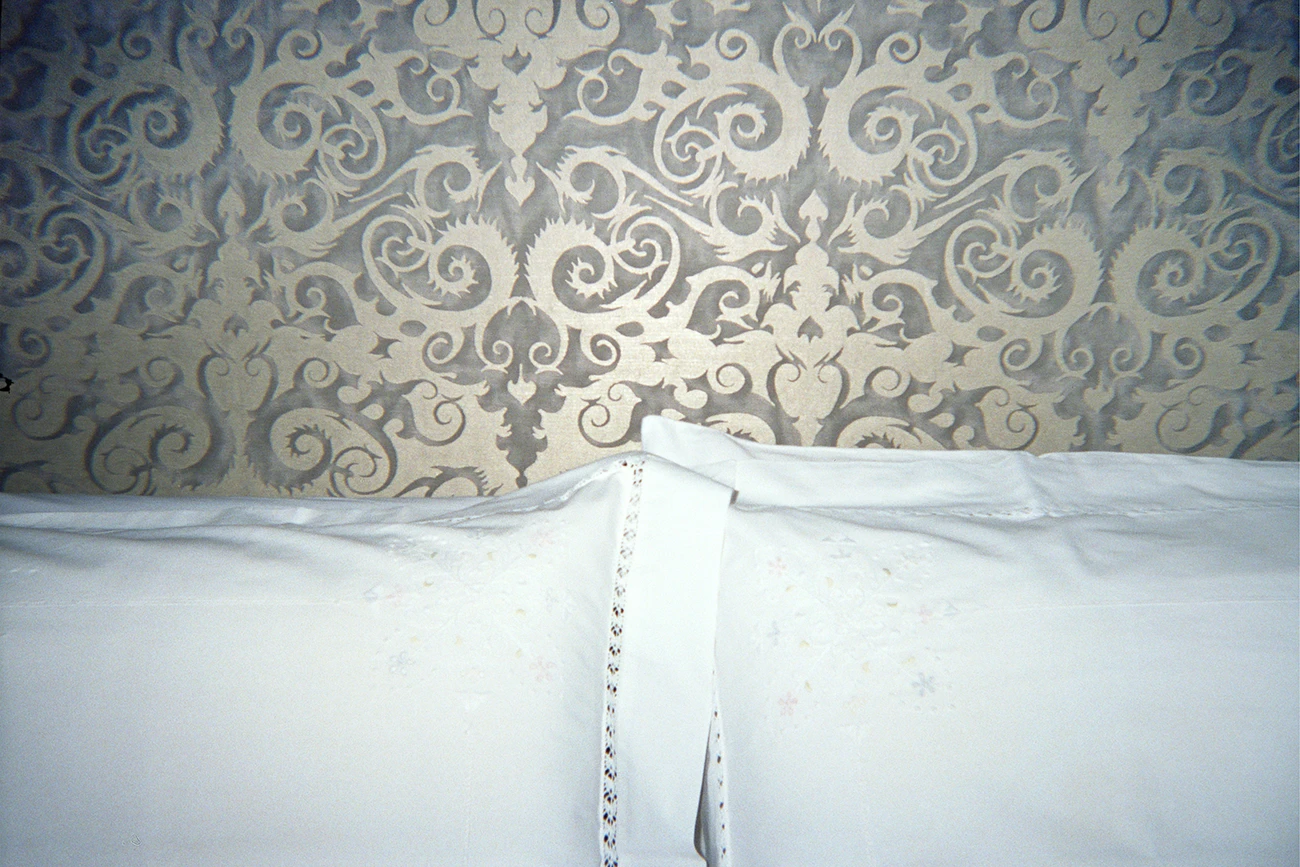
A significant design element is the use of Fortuny textiles as wall coverings. These fabrics, produced on the island of Giudecca using traditional looms and printing techniques, add a layer of sensory depth. Their hand-pressed pigments and subtle reliefs interact with light and shadow, creating dynamic chromatic shifts throughout the day. The rooftop terrace is furnished with Fermob outdoor pieces, extending the living space and offering views of the city's rooftops and the Ponte delle Guglie. The durable, weather-resistant materials of the Fermob furniture align with the apartment’s refined and minimal aesthetic.
Art is an integral part of the interior design, with works by Sicilian artist Elisa Anfuso providing a subtle contrast to the historic setting. Anfuso's surreal figuration prompts contemplation on the relationship between figuration and abstraction, and between history and contemporary elements within the space. Refugium Amoris eschews traditional hotel amenities, positioning itself as a private retreat focused on spatial quality, craftsmanship, and locally sourced design. Digital interfaces are minimized to promote engagement with the physical space and its materials. Natural light is prioritized, managed through Venetian shutters, while artificial lighting is warm and indirect, designed to accentuate materials and art.
This deliberate layering of historical components with contemporary design elements establishes a continuum, inviting guests to inhabit a space that is deeply connected to Venice's history. The apartment offers a sanctuary within the dense urban environment of Venice, encouraging a slower pace of experience where details such as the texture of the floor, the weave of a Fortuny textile, or the city silhouette become focal points. The design emphasizes analog living, free from the distractions of conventional digital interfaces, providing a retreat that values authenticity and quiet reflection.
#VenetianArchitecture #HistoricRestoration #InteriorDesign #LuxuryApartment #RefugiumAmoris #FrancescoPugliese #FortunyTextiles #Venice #HideawayApartment #VenetianArchitecture #HistoricRestoration #InteriorDesign #LuxuryApartment #RefugiumAmoris #FrancescoPugliese #FortunyTextiles #Venice #HideawayApartment
 No comments yet
Historic Destination Reimagined
To Some, Boston City Hall Is An Eyesore. To These Artists, It's Inspiration

A Renaissance of a Geist Estate

Thesis Project: Urban Roots