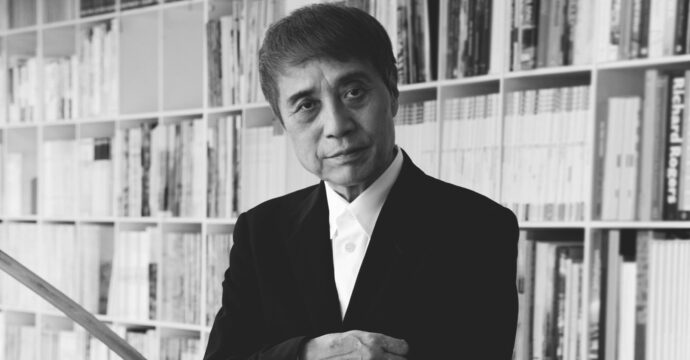
Tadao Ando: “There is no such thing as creation from nothing”
Architect Tadao Ando discusses the nature of architecture, asserting that while it serves a rational function in people's lives, he strives to imbue his designs with a purity of expression akin to art. This purity is defined by the strength of the narrative an architectural work conveys, transcending its mere function. He references Le Corbusier’s Notre-Dame du Haut and his own Chapel on the Water as examples of architectural poetry capable of inspiring self-reflection.
Ando emphasizes the fundamental role of light in his architectural philosophy, considering it a universal theme. He explains that spatial typology is determined by the volume and orientation of light, and walls are crucial elements for exposing light, thereby imbuing life into architecture. He also highlights the importance of contrasting elements, such as light and dark, form and void, and old and new, in generating dynamic creation. These dualistic propositions, which include nature and artificial, entirety and piece, and universality and uniqueness, constantly challenge architects. He views the struggle with these tensions as integral to the creative process, acknowledging that there are no absolute answers to such conflicts.
The architect believes that harmonious integration with a site's unique context and character is essential, citing the Pantheon in Rome as an example of perfect harmony between nature and architecture. He advocates for dialogue with existing environments for new constructions, asserting that no creation truly emerges from nothing. However, this dialogue does not always aim for simple harmony; he is also interested in creating challenging dialogues by introducing foreign elements that cause friction, ultimately forming a new context.
Ando illustrates this concept with his restoration of the Bourse de Commerce in Paris, where a cylindrical concrete wall contrasts with the original 19th-century architecture and mural. He sees no fundamental difference in approach between new construction and renovation, as both involve engaging with the layers of history and culture of a place. The interplay between the 18th-century walls and his 21st-century concrete work, symbolizing the spirit of the architecture, aims to create a harmony with an intensity that can deeply affect people.
His architectural career was shaped by a youth travel experience at age 24, where he learned about the richness and unique architectural forms shaped by distinct contexts across the world. He strongly encourages young architecture students to travel and experience historical architecture firsthand to develop both conceptual understanding and physical senses. Travel, he notes, also nurtures one's inner being. Ando's ultimate goal is to create "eternal" architecture, where even if the physical building decays, its scenery and space will resonate in people's hearts forever. He acknowledges that the life of architecture extends beyond its completion, evolving and being nurtured over time, making it a continuous process.
#Architecture #TadaoAndo #ArchitecturalPhilosophy #LightInArchitecture #DesignProcess #Renovation #ArchitecturalHarmony #CulturalContext #Architecture #TadaoAndo #ArchitecturalPhilosophy #LightInArchitecture #DesignProcess #Renovation #ArchitecturalHarmony #CulturalContext
 No comments yet
Emptiness—not minimalism—is the path to creativity, explains MUJI’s design philosopher