1/4
Echo Chamber
The author reflects on the ubiquity of concrete in the built world, drawing a parallel between the echoing sound of rocks in the Swiss Alps and the lasting impact of concrete structures. Concrete, a mixture of gravel, cement, sand, and water, is a fundamental material whose form is determined by its negative space—the formwork. This essential characteristic distinguishes it from carved stone, highlighting the precision and craftsmanship required in its creation. Once the formwork is removed, the cured concrete stands as a silent testament to its intricate process, defying gravity through the embrace of its constituent elements.
Le Corbusier significantly contributed to the modernist understanding of concrete, recognizing its sculptural potential and its ability to symbolize modernity through its malleability and strength. His use of board-formed concrete, known as *béton brut* or Brutalism, became a defining feature of his architectural style, imprinting the memory of wooden molds onto the concrete surface.
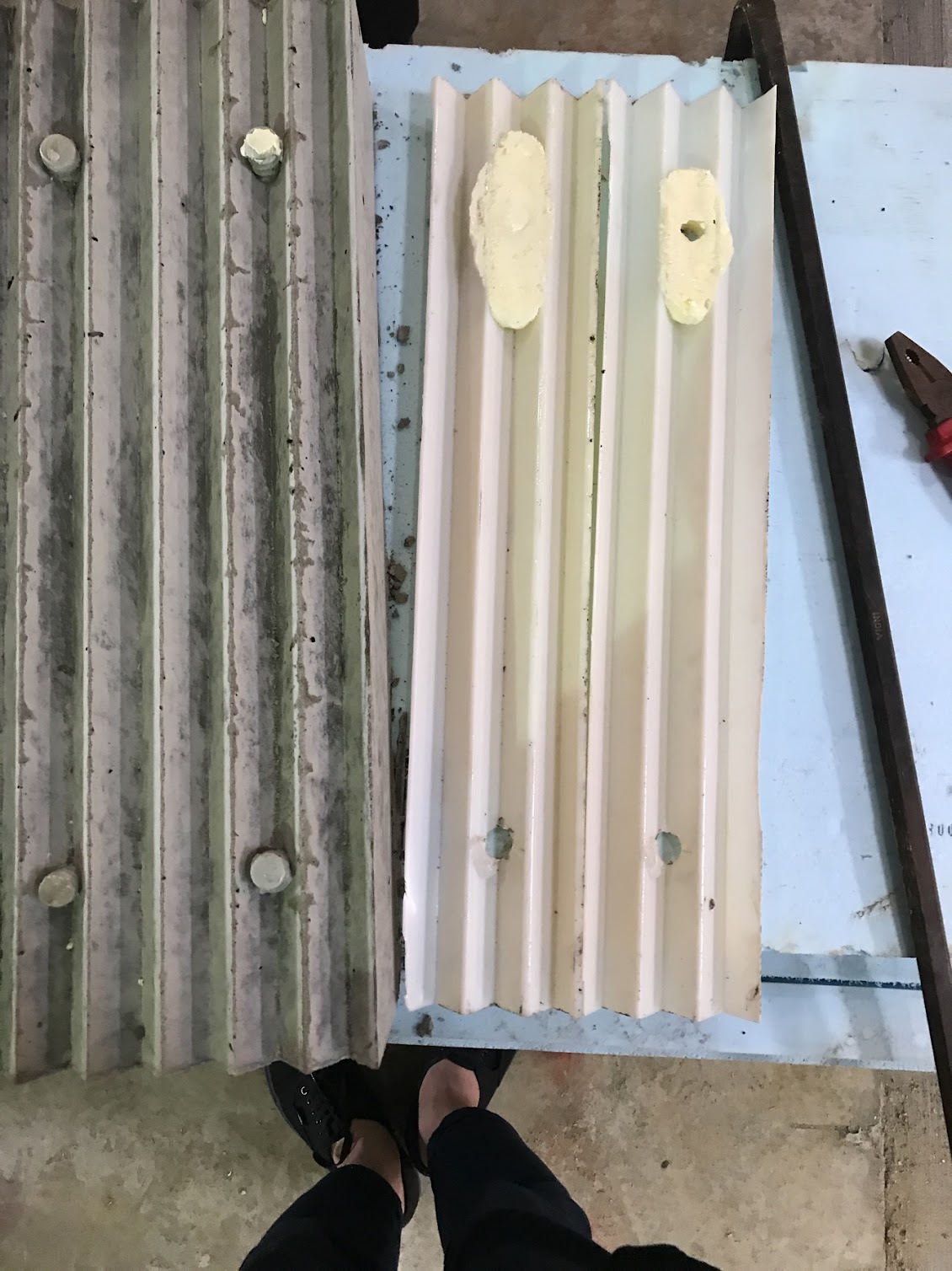
Paul Rudolph, a daring practitioner of modernism, further developed this legacy by allowing concrete to express its inherent qualities. Unlike Le Corbusier, Rudolph designed custom formwork with trapezoidal fins that, once cast, were broken away to reveal rhythmic patterns and luminous textures. This technique created tactile, golden-hued surfaces that celebrated the raw beauty of the material.
The exhibition *Materialized Space: The Architecture of Paul Rudolph* at the Met Museum showcases Rudolph's approach, emphasizing the interplay between material and craft. The exhibit features his intricate drawings and models, with a preserved section of the formwork used for Yale's Art and Architecture Building (1963) standing out. This artifact, framed in a custom case, highlights the estrangement of the tool from its original function, serving as a relic of a time when complex formwork and skilled carpentry were commonplace. Rudolph's architecture often appears in science fiction, symbolizing a world of unbridled experimentation and ambition, contrasting with contemporary trends prioritizing optimization and efficiency.
The author's firm, SO–IL, has reinterpreted Rudolph's corrugated concrete façades in various projects. At the Manetti Shrem Museum at UC Davis, precast panels and wide silicon joints were used to meet seismic demands, integrating them into a vertical corrugated pattern to create the illusion of a continuous surface. At the Amant Foundation in Brooklyn, corrugation was employed to break up vast façades and absorb concrete imperfections, allowing depth to shape their expression through light and shadow rather than raw materiality.
At 144 Vanderbilt, a residential building, SO–IL expanded concrete's tactile and aesthetic potential by incorporating red dye, carefully selected aggregates, and scalloped form liners for rhythmic depth. Bead blasting and acid etching were applied to impart texture and nuance, creating a façade that balances expressive massing with an embrace of its panelization. These projects recontextualize Rudolph's grooves, honoring his legacy while creating new echoes for contemporary architecture.
#Architecture #PaulRudolph #Concrete #Modernism #MaterializedSpace #Formwork #Brutalism #ArchitecturalExhibition #SOILArchitecture #Architecture #PaulRudolph #Concrete #Modernism #MaterializedSpace #Formwork #Brutalism #ArchitecturalExhibition #SOILArchitecture
0 comment in total
 No comments yet
You may also like

Ecophon
L-Acoustics In-Wall Speaker School

Majestic Home Cinema By Cinema Rooms
IKEA hides a Sonos speaker inside the SYMFONISK picture frame

EchoPanel acoustic panels by Woven Image
Renting a recording studio space: Part 2 – Planning the room and some DIY design
Cayman Islands Theater Includes Real Balcony
Can room correction software improve the ‘sound’ of a listening room?

The Interior Designers Making Podcast Studios Feel Just Like Home

The STUDIO


How To Integrate Speakers Seamlessly In Your Home Decor, According To An Expert


Lovesac Sactionals StealthTech is an Impressive Hidden Home Theater

Valentino’s L’Atelier Sonore and the Art of the Listening Room
No, room correction software cannot fix a room’s reverb problem
Soundbar mounting ideas to enhance your TV's audio

Best bass cabinets 2025: achieve your best tone yet with the perfect bass cab

Audio Breakthroughs Focuses on Room Acoustics for Discreet Basement Theater

James by Sonance SA68 In-Wall Speaker Delivers Big Sound From Tiny Opening
Media Integration Lab: the best Focal immersive audio system
Auralex HD Cinema Series Panels Preview