1/4
Textile as Portable Garden
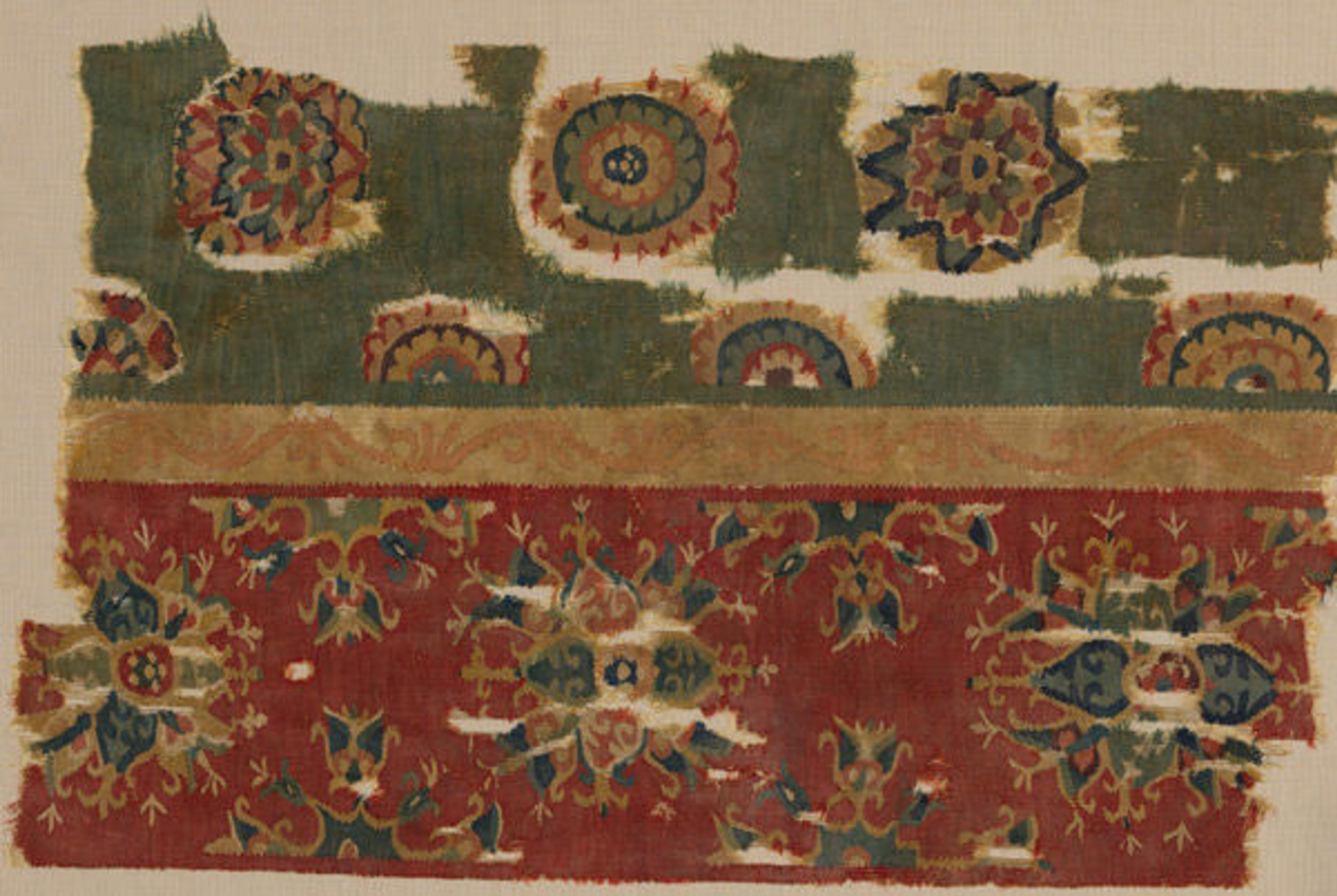
This article explores the significance of an eighth-century Umayyad wool tapestry fragment from the Metropolitan Museum of Art's collection, reconsidering common impressions of Islamic art. While Islamic art is often perceived through its precise and repetitive ornamental motifs, this tapestry fragment offers a counter-example, revealing a more playful spirit in early Islamic textiles. Dated to the mid-eighth century and attributed to the Umayyad Caliphate, the fragment features stylized rosettes and floral motifs that resemble bright flower sprays on a grassy background.
The fragmentary nature of the tapestry, lacking selvedges, suggests it was part of a larger furnishing fabric. Reconstructing Umayyad homes from the seventh or eighth century is challenging due to the scarcity of extant textiles. However, wall paintings and mosaics from Umayyad palaces provide insights into their interior decorations. For instance, a fresco at Qusayr 'Amra depicts a heavily draped space with veiled doorways and colonnades, and covered seating, contrasting with the current austere state of these palaces. Similarly, floor mosaics at Khirbat al-Mafjar, edged with tassels, suggest the presence of carpets of similar size, reinforcing the idea of textile use in these grand spaces.
The author posits that the floral tapestry fragment might have served as a wool seat or wall furnishing. A key aspect distinguishing this fragment is the irregular design and varied color application of its motifs, a departure from the strict repetitive or symmetrical layouts prevalent in decorative art from later Islamic dynasties. The central part of the textile, a band with a green background, features two rows of medallion-style rosettes. Each of the seven rosettes is distinct in color or form, with individually rendered petals. The flower bouquets on the red band, forming the edge, also exhibit this intentional variation, ensuring no two neighboring motifs are identical.
This deliberate variety in repetition is paralleled in the facade of Qasr al-Mshatta, where carved rosettes within hexagons and hexafoils display distinct content while maintaining a general form. The interspaces are densely covered with grape leaves, alongside depictions of lions, griffins, and peacocks. This suggests that such decorative programs were designed to evoke a garden, mimicking the fabled Paradise garden, through a diverse array of flora and fauna.
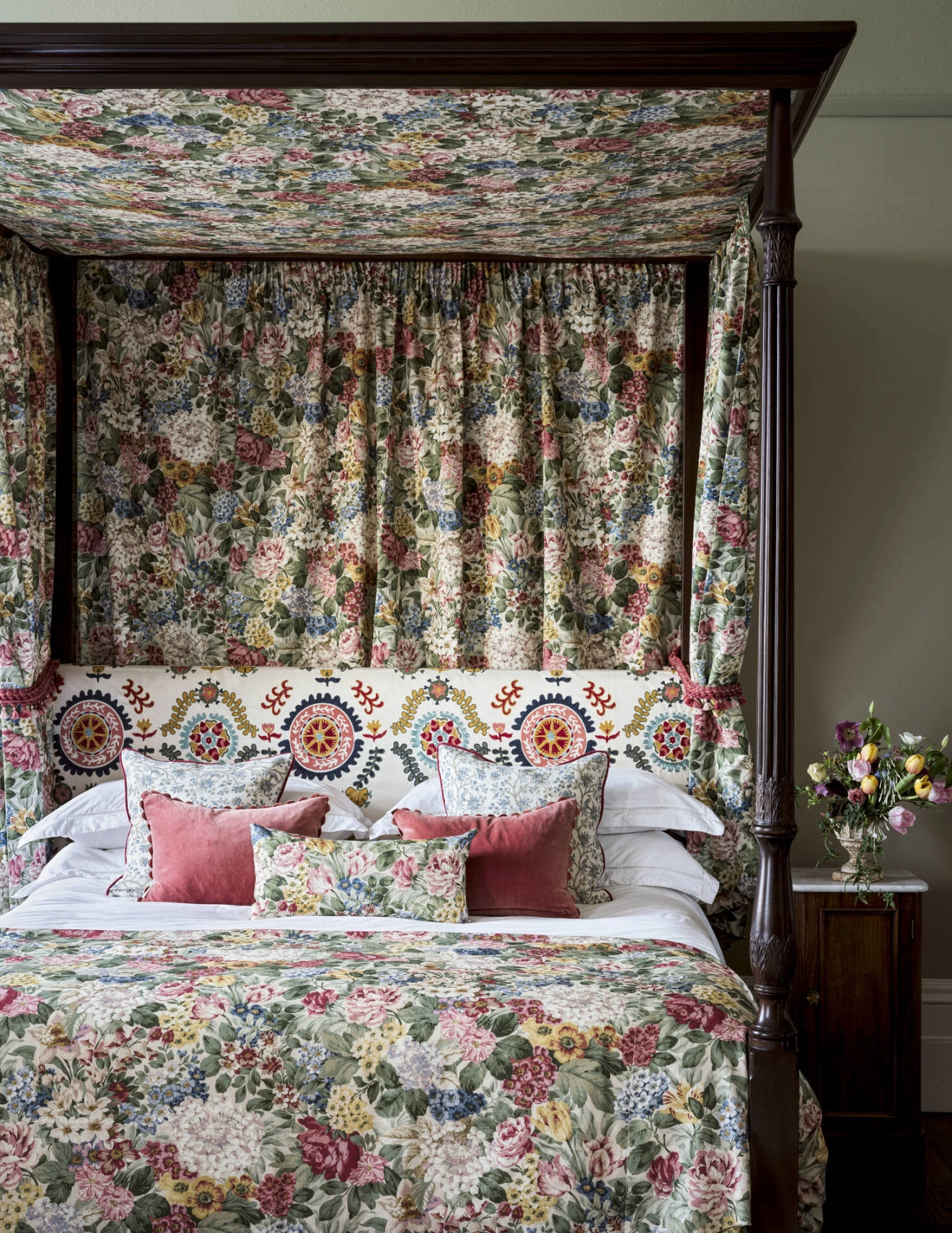
Therefore, the rosette tapestry fragment, whether used as a hanging or a cover, would have functioned as a segment of a portable garden. Spreading the tapestry would have transformed the environment, releasing a miniature Paradise and adding a sense of glamour, as if the owner were seated on a floral lawn or surrounded by fantastic creatures. This interpretation highlights the innovative and artistic intent behind early Islamic textile design, showcasing a sophisticated approach to decoration that went beyond mere repetition to create dynamic and symbolic spaces.
#IslamicArt #UmayyadTextiles #TextileHistory #DecorativeArts #MetropolitanMuseum #ArtInterpretation #GardenMotifs #HomeDecor #IslamicArt #UmayyadTextiles #TextileHistory #DecorativeArts #MetropolitanMuseum #ArtInterpretation #GardenMotifs #HomeDecor
0 comment in total
 No comments yet
You may also like
8 fabulous frond-filled designs to pick this spring

Transforming Textile Waste: How Sustainable Design is Shaping Eco-Friendly Home Decor

4 Creative Ways To Use Textiles in Your Home

6 Ways to Use Outdoor Fabric to Spice Up Your Backyard—Beyond Pillows


21 Ways To Repurpose Old Clothing In Your Home & Garden If Donation Isn't Possible
How to Make Colorful Dyes from Your Own Garden

Q&A with eco-dyed textile designer Joanne O'Rourke

Outdoor Fabrics Have Come a Long Way, With New Colors, Designs
Ten outdoor furniture designs for making a living room in your garden

Transforming Home Comfort
The 5 Fabric Trends Ruling Interiors Now, According to the Pros
How to use woven fabrics to add texture to your interior space
Innovations in Smart Textiles Transforming Home Décor

This Chair Got Its Candy-Colored Speckles From None Other Than Flowers—Here’s How

8 Swoon-Worthy New Fabric Collections
The New Fabric Launches Worth Knowing About
These Fabric Manufacturers Are Planning to Save the World

Boulder Textile Innovator Edie Ure’s Botanical Wallcoverings Put Nature Center Stage

The 5 fabric trends ruling interiors now, according to the pros


Home textiles: The big opportunity