1/8
The diversity and plasticity of descending motor pathways rewired after stroke and trauma in rodents
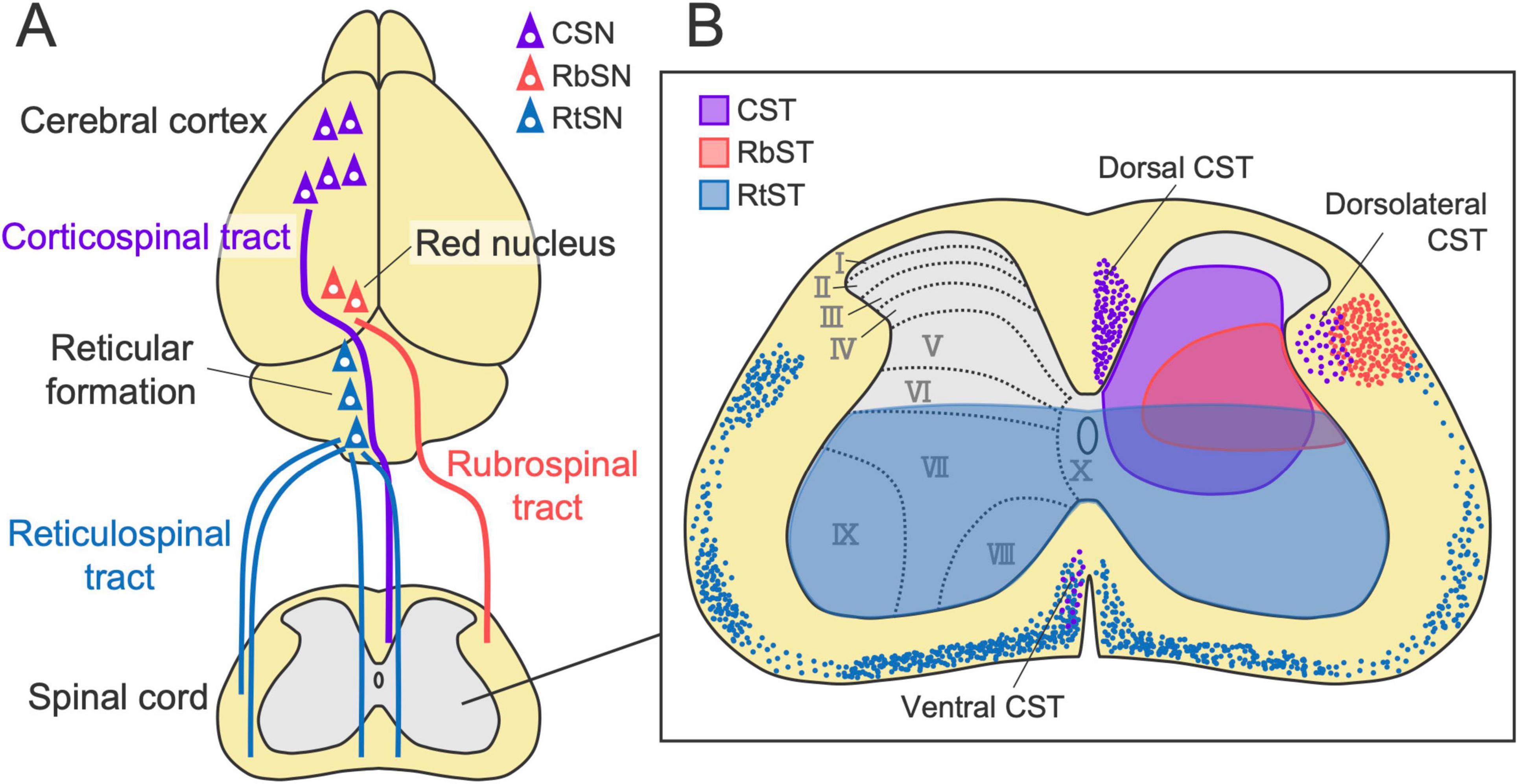
The central nervous system’s capacity for neural circuit regeneration is limited, posing significant challenges for complete recovery from brain injuries like stroke and trauma, which often damage descending motor pathways and cause severe motor impairments. However, residual pathways can reorganize dynamically to compensate for injured circuits, leading to modest spontaneous recovery. Recent advancements in cell-type classification and manipulation have revealed the structural and functional diversity of these pathways, offering new therapeutic avenues. This review focuses on three primary descending motor pathways—the corticospinal tract (CST) from the cerebral cortex, the rubrospinal tract (RbST) from the red nucleus, and the reticulospinal tract (RtST) from the reticular formation—summarizing their structures and functions, particularly in rodent models.
The CST originates from multiple cortical areas (motor and somatosensory cortices) and projects to distinct spinal interneurons (INs), playing crucial roles in skilled movements. Its diverse subcortical collaterals allow commands to be transmitted to parallel descending pathways. The RbST, originating primarily from the magnocellular region of the red nucleus, shares many features with the CST, including contralateral innervation and topographical organization. It is essential for fine motor control, such as dexterous digit movements. The RtST, originating from various brainstem reticular formation nuclei, is the most complex, characterized by diverse neuronal subtypes and neurotransmitters, and projects predominantly to the ipsilateral spinal cord. It plays pivotal roles in locomotor control and can modulate multiple aspects of movement. Understanding these pathways’ structural and functional properties, as well as their similarities and differences, is crucial for developing therapeutic strategies.
Following injuries like stroke and spinal cord injury (SCI), these descending pathways undergo significant reorganization, including axon sprouting and functional remodeling, to compensate for lost connections. For instance, after cortical injury, intact CST axons from the contralesional cortex can sprout into denervated spinal areas, contributing to motor recovery, with the extent of rewiring dependent on lesion size and location. In subcortical injuries, the red nucleus plays a vital compensatory role, with rehabilitation enhancing corticorubral projections. When the corticorubral pathway is silenced, the corticoreticular pathway compensates. In SCI, spared CST axons can form detour pathways, and the RtST, often relatively preserved, relays cortical commands to the spinal cord, with rehabilitation further enhancing corticoreticular and RtSN projections.
Future research aims to enhance recovery by overcoming intrinsic and extrinsic factors that inhibit axon growth. Interventions targeting myelin-related proteins, axon growth inhibitors, and intrinsic neuronal capacities have shown promise in promoting axon growth. However, simply promoting growth is insufficient; axons must reconstruct functional connections with appropriate target neurons. Elucidating the precise connections of different descending pathway subpopulations and target INs using advanced tracing and omics approaches is essential. Identifying critical molecules, like BDNF and Scg2, that drive rewiring and understanding how neural activity coordinates functional connections during rehabilitation are key steps. Maximizing the effects of treatment involves optimizing rehabilitation protocols—considering type, intensity, time, and duration—and combining them with electrical stimulation, pharmacotherapy, or genetic interventions. Finally, bridging the knowledge gap between rodent findings and clinical applications is crucial, considering species-specific anatomical and functional differences, to translate laboratory successes into effective human therapies.
#axonReorganization #corticospinalTract #neuralCircuitPlasticity #redNucleus #reticularFormation #spinalCordInjury #spinalInterneurons #stroke #rodentModels #axonReorganization #corticospinalTract #neuralCircuitPlasticity #redNucleus #reticularFormation #spinalCordInjury #spinalInterneurons #stroke #rodentModels
 No comments yet
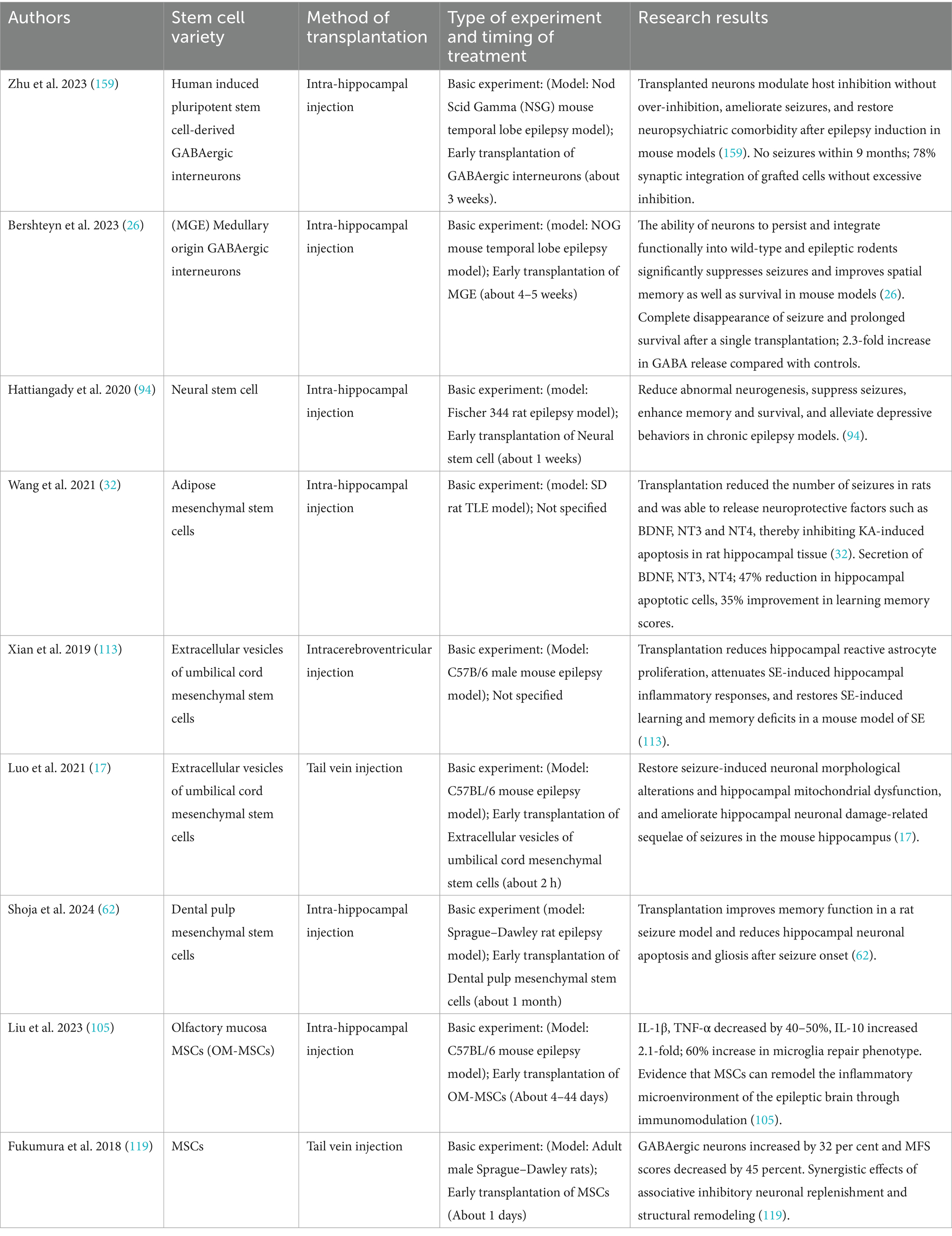
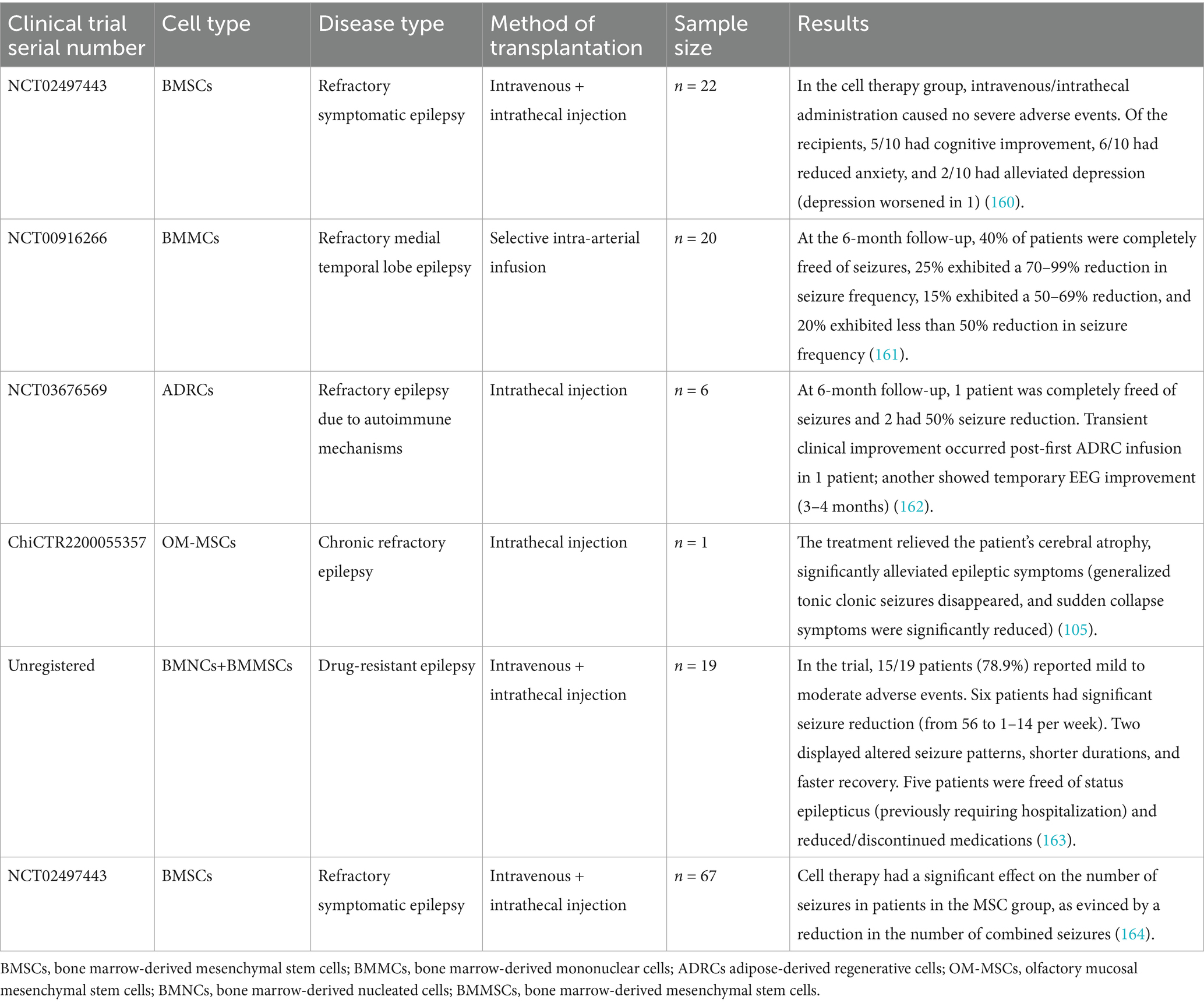
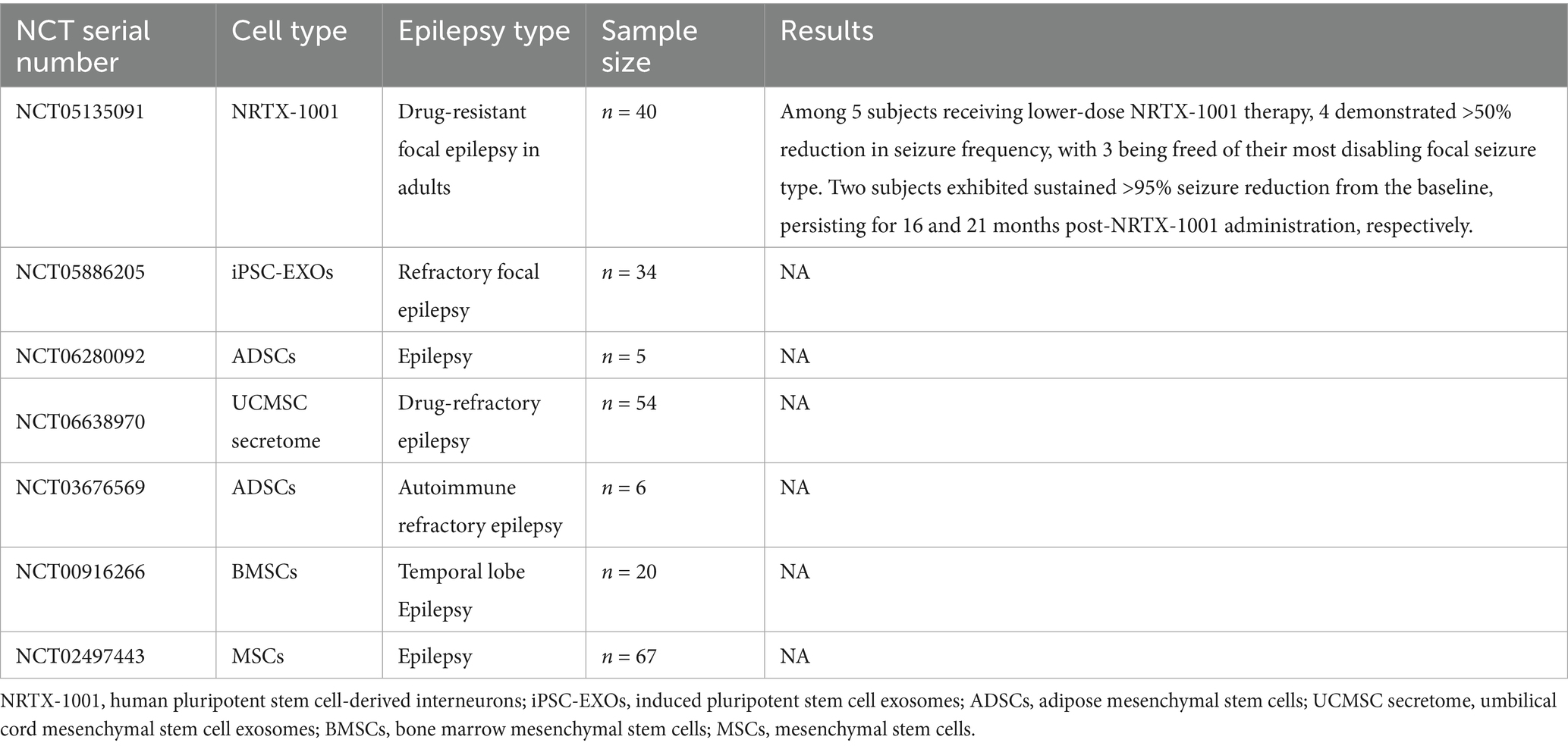
Rewiring the seizing brain: stem cell grafts as neuromodulatory architects in epilepsy therapy