1/4
Lahoma Uses Parametric Modeling to Design Custom Furniture
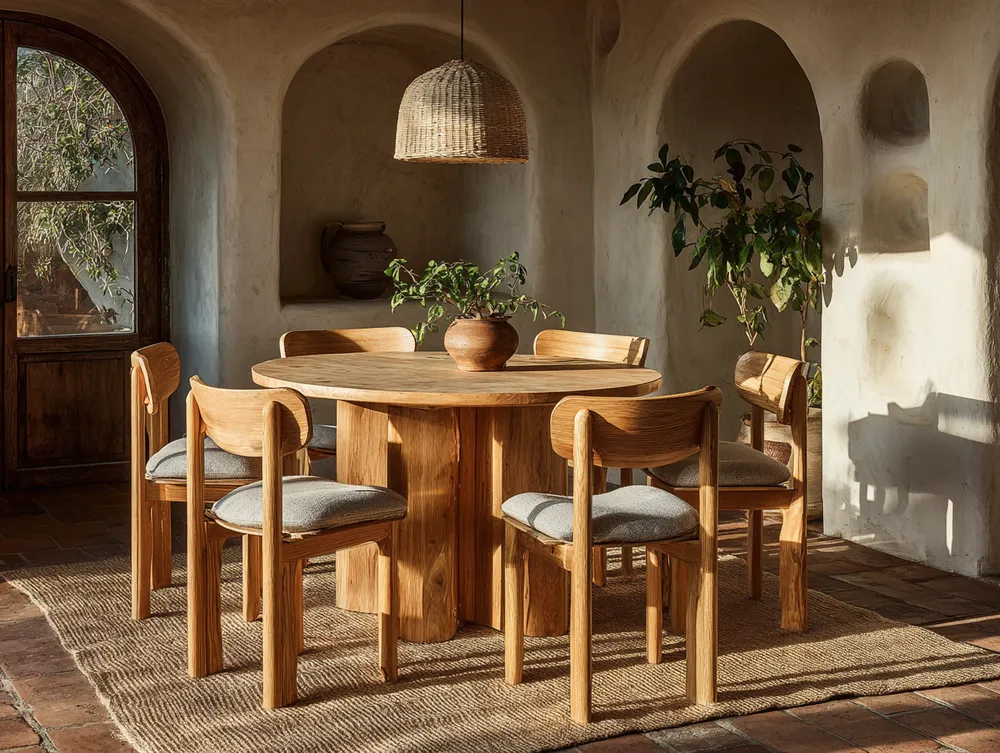
Lahoma, a California-based furniture company, leverages parametric modeling within Autodesk's Fusion 360 to produce its custom, designer furniture line. The company's owner and director, Trent Still, highlights that their process allows for highly customizable, on-demand furniture creation, similar to ordering a customized hamburger. Despite the intricate digital recipe, the resulting heirloom-quality tables and chairs, crafted from solid wood and machined brass, belie the underlying mathematical complexity. Parametric design is central to Lahoma's operations, enabling automatic adjustments to core pieces based on individual customer preferences. Still emphasizes Fusion 360's role in democratizing manufacturing, allowing for significant customization without compromising structural integrity or aesthetic appeal. For instance, dimensions of their Cove collection can be altered in thousands of ways, with the software automatically generating the necessary supports and hardware. This interconnected design approach ensures that any change in one dimension is appropriately linked to other relevant design elements.
Lahoma's strategy involves producing affordable, customizable, flat-pack furniture using premium materials, carving a distinct niche in a competitive market. They cater to customers seeking durable designer furniture without the exorbitant costs associated with traditional bespoke pieces or the often uninspired look of mass-produced items. This market segment has been traditionally challenging for furniture makers, as scaling the talent and craftsmanship of local woodworkers to meet broad demand while keeping prices low is difficult. Lahoma overcomes this by employing advanced tools and automation strategies typically reserved for larger enterprises. Still refers to this as consumer-driven manufacturing, underscoring the increasing attainability of mass customization.
While each piece of Lahoma's furniture undergoes a hand-finished process, a significant portion of the fabrication is automated. Still credits Fusion 360 as foundational to their business, not only for its potential in areas like ECAD and simulation but primarily for its robust design and modeling capabilities and seamless interoperability with manufacturing processes. He also refutes the idea that automation compromises product quality, asserting that achieving a machine-fabricated part with a surface ready for finishing requires considerable effort, skill, and process understanding. This meticulous preparation and attention to process grant Lahoma a significant advantage, allowing for a scalable manufacturing model that many competitors cannot match.
Still takes pride in the fact that Fusion 360's automation allows him to produce high-quality furniture at prices more accessible than those of established designer brands. The success of Lahoma's model suggests a potential paradigm shift for designers and fabricators across various industries. The application of Fusion 360's parametric modeling and API could enable similar customer-driven customizations for a diverse range of products. The possibility of small, agile studios like Lahoma spearheading a renaissance in domestic, custom manufacturing at competitive prices presents an exciting vision for a more personalized future, empowered by intelligent tools and innovative approaches.
#ParametricModeling #CustomFurniture #DigitalFabrication #Fusion360 #FurnitureDesign #MassCustomization #ManufacturingAutomation #SmallBusinessInnovation #ProductDesign #ParametricModeling #CustomFurniture #DigitalFabrication #Fusion360 #FurnitureDesign #MassCustomization #ManufacturingAutomation #SmallBusinessInnovation #ProductDesign
0 comment in total
No comments yetYou may also like