1/2
Best Whole-House Generators
Whole-house generators, also known as home standby generators, offer a convenient and reliable solution for backup power during outages caused by severe weather or electrical grid issues. These units are designed for professional installation and can power essential household appliances and systems, including well pumps, water heaters, and heating/cooling systems, along with medical equipment. Unlike portable generators, whole-house models automatically activate when power is lost, providing seamless continuity. They are approximately the size of a central air conditioning unit and are permanently situated on a concrete pad. Fuel options include natural gas, which offers an unlimited supply, or large propane tanks that require less frequent refueling than portable generator tanks.
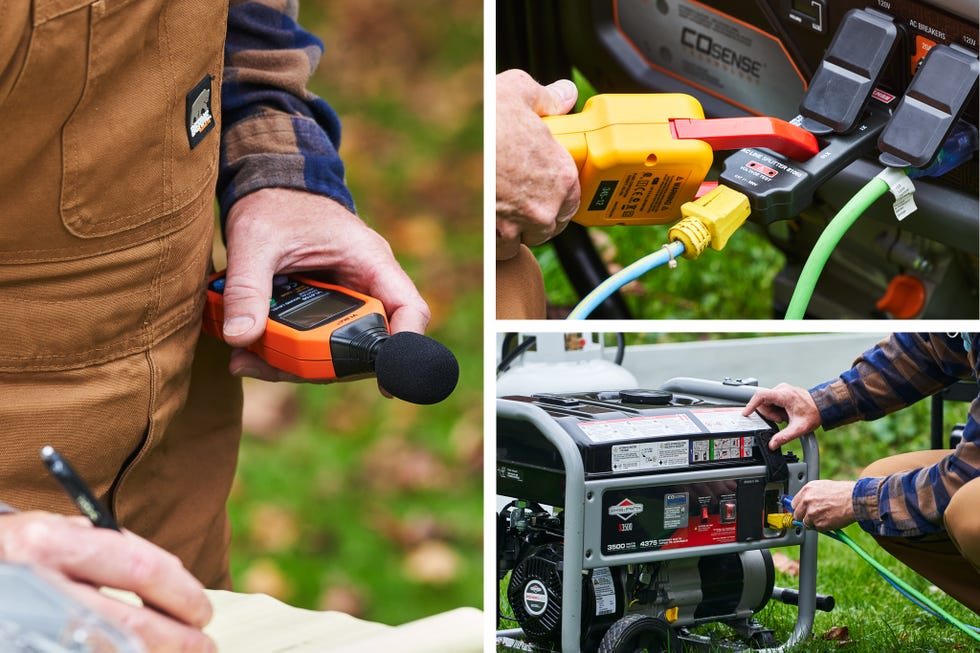
Consumer Reports (CR) conducts extensive testing on generators to assess their performance under various conditions. Expert engineers evaluate each model by simulating power outages and connecting them to typical household loads such as space heaters, refrigerators, and window air conditioners. The testing ensures that generators can handle their advertised load capacity and manage sudden voltage spikes, like those caused by a refrigerator compressor starting. Top-performing models maintain stable operation, while less capable units may falter or shut down. CR also assesses fuel efficiency and the duration a generator can run on a single tank of propane. Their comprehensive buying guide provides additional details on the rigorous testing program.
Whole-house generators come in two main categories: large and small. Large models typically produce 10,000 watts or more, sufficient to power an entire average-sized home. These units generally run for 140 to 200 hours on a propane tank, though their runtime is shorter compared to smaller units due to higher power demand. Small models deliver less than 10,000 watts, enough to power critical appliances and systems, and often offer longer run times on propane. While smaller units have lower purchase costs, their installation expenses are comparable to those of larger generators, meaning the overall savings might be less significant than anticipated.
The advantages of whole-house generators are numerous. Their automatic startup eliminates the need for manual intervention during outages. They offer a choice between propane, which can be stored in large, safer tanks, and natural gas, which provides a continuous power supply. These generators also feature self-diagnostic capabilities that alert users to maintenance needs. Furthermore, their outdoor, professionally installed nature, with proper exhaust diversion, eliminates the carbon monoxide risks associated with indoor portable generator use. However, there are notable drawbacks. Whole-house generators are significantly more expensive than portable models, with prices ranging from $2,000 to $7,000, while large portables can start at $800. Their size necessitates a dedicated, level concrete pad outside the home. Professional installation is mandatory, often involving multiple contractors for gas lines, concrete work, and electrical hookups, with installation costs potentially exceeding the unit's price, ranging from $2,000 to $20,000 or more. The installation cost for smaller units is nearly identical to that of larger ones, limiting the potential financial benefit of choosing a less powerful model.
#WholeHouseGenerators #HomeStandbyGenerators #BackupPower #PowerOutage #EmergencyPreparedness #HomeAppliances #GeneratorInstallation #FuelEfficiency #ConsumerReports #WholeHouseGenerators #HomeStandbyGenerators #BackupPower #PowerOutage #EmergencyPreparedness #HomeAppliances #GeneratorInstallation #FuelEfficiency #ConsumerReports
0 ความคิดเห็นรวม
 ยังไม่มีความคิดเห็น
คุณอาจจะชอบอีกด้วย
The Best Home Generators Are a Big Investment. These Models Deliver Reliable Power During an Outage.

Elegant Design Meets Versatile Performance With This Customizable Home System


Generac PWRcell 2025 Cost & Review

The Best Solar-Powered Generators We've Tested for Storm Prep and Beyond

From Cupboard to Equipment Hub, This Server Rack Setup is Remarkably Compact

EcoFlow Whole Home Backup Power Solution review – The ultimate off-grid solution


The best lighting for every room in the house


Random mansion generator

New! Introducing the Country Living farmhouse lighting collection at Homebase

The Best Home Essentials Products Tested in 2022


Best Portable Power Stations