




1/21
Secret Places of Upper Manhattan: Visit these 20 historic sites in Washington Heights and Inwood
This blog post explores twenty historical sites located in Washington Heights and Inwood, the northernmost neighborhoods of Manhattan, New York City. The areas are characterized by their rugged terrain, which allowed for the preservation of historical elements spanning nearly 400 years of New York City's past, often found along secluded waterfronts or high on shaded hills.
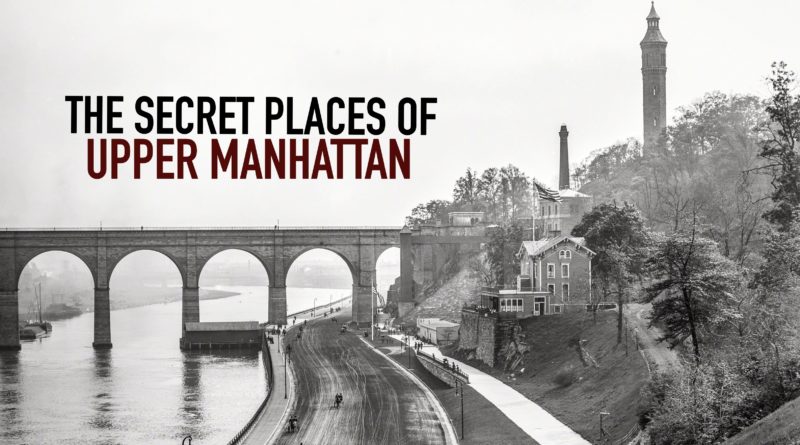
The article begins by highlighting four specific landmarks in Upper Manhattan that have survived significant alterations to their surroundings. These include a picturesque cemetery, Trinity Church Cemetery, which was split in two by Broadway in 1871 and serves as the final resting place for notable figures like John James Audubon and former Mayor Ed Koch. Another landmark is an aging farmhouse, the Dyckman Farmhouse, which is linked to New York’s only surviving natural forest and holds a Revolutionary War secret in its backyard, an excavated Hessian barracks. The High Bridge, a Roman-inspired waterway completed in 1848 as part of the Croton Aqueduct system, is discussed as a vital link that supplied water to the city. Finally, the charming Little Red Lighthouse, originally the North Beacon at Sandy Hook, is featured, which was eventually overshadowed by the George Washington Bridge but saved from demolition due to its fame from a popular children's book.
Following the introduction of these four sites, the blog post provides a detailed list of twenty remarkable places of historic and cultural interest in Washington Heights and Inwood. Each entry includes a brief description and historical context. Key locations include Audubon Terrace, a pocket of Beaux-Arts palaces developed by Archer Milton Huntington, housing institutions like the Hispanic Society of America; the Polo Grounds Staircase, a vestige of the legendary Polo Grounds stadium; and 555 Edgecombe Avenue, an apartment tower known for its famous African-American residents such as Joe Louis and Paul Robeson. The Morris-Jumel Mansion, built in 1765, is presented as New York’s oldest surviving house, with tales of Eliza Jumel and a resident ghost. Sylvan Terrace is described as a unique street with wooden houses constructed in 1882 for working-class families.
Other notable sites include the Audubon Ballroom, a former movie palace where Malcolm X was assassinated, now housing the Malcolm X and Dr. Betty Shabazz Memorial and Educational Center; Mitchel Square Park, named after Mayor John Purroy Mitchel and featuring a war memorial by Gertrude Vanderbilt Whitney; and the Fort Washington Avenue Armory, a 1911 military structure now a significant track and field venue. Coogan's, a long-standing neighborhood pub, is noted for its community importance and a rescue effort by Lin-Manuel Miranda. The United Palace, another Thomas Lamb movie palace, is highlighted for its luxurious past, later religious conversion, and current use as an event venue, with the nearby El Malecón restaurant also mentioned.
Moving further north, the article covers Bennett Park, the highest point on Manhattan Island and the site of Fort Washington during the Revolutionary War; St. Frances Xavier Cabrini Shrine, housing the remains of Mother Frances Cabrini; Fort Tryon Park, a public park with views of the Hudson River and the Palisades, named after a British governor; and The Met Cloisters, an offshoot of the Metropolitan Museum of Art specializing in medieval European treasures, largely assembled by John D. Rockefeller, Jr. Isham Park is noted for its Revolutionary roots and connection to William Bradley Isham, while Inwood Hill Park is celebrated as an under-appreciated natural treasure, home to Shorakkopoch Rock, marking the legendary site of Peter Minuit's purchase of Manhattan Island. The article concludes by encouraging readers to explore these sites, providing a Google Map for navigation, and referencing additional resources for further reading and listening, including the MyInwood blog and the Bowery Boys' own book, "Adventures In Old New York."
#NewYorkCityHistory #UpperManhattan #WashingtonHeights #Inwood #HistoricSites #NYClandmarks #ArchitecturalHistory #RevolutionaryWar #CulturalHeritage #NewYorkCityHistory #UpperManhattan #WashingtonHeights #Inwood #HistoricSites #NYClandmarks #ArchitecturalHistory #RevolutionaryWar #CulturalHeritage
 Комментариев пока нет