1/6
What the Rooms from 6 Famous Paintings Would Look Like Today
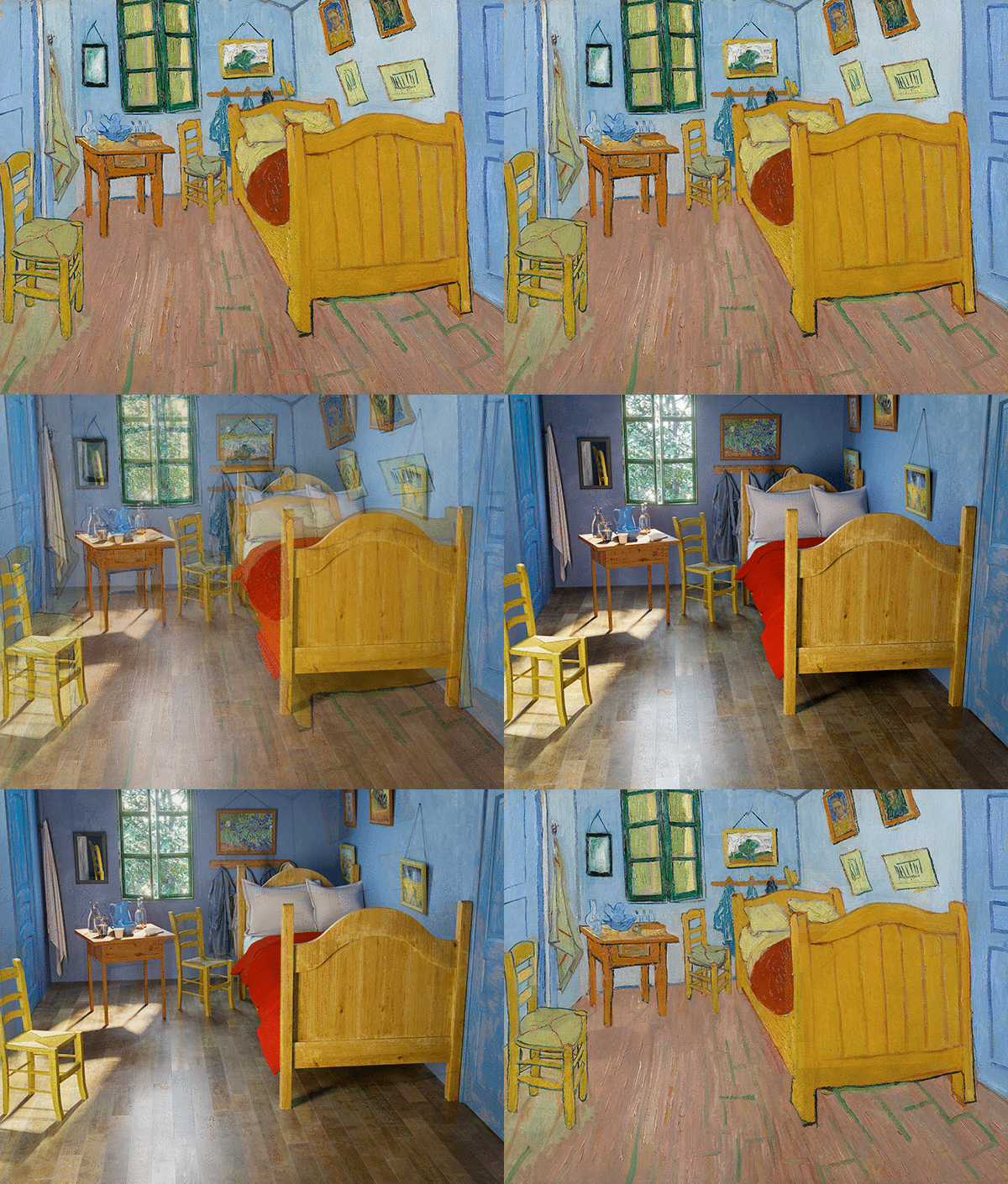
Art history frequently features paintings of home interiors, offering valuable insights into artists' lives and working environments. For example, Henri Matisse's 1911 painting, *Red Studio*, not only showcases his identifiable artworks and objects but also reveals the arrangement of his studio, functioning as a historical record of his artistic space. Recognizing the historical and personal significance embedded within these interior paintings, the creative agency NeoMam, in collaboration with the home-improvement service HomeAdvisor, embarked on a project to re-imagine six such historically significant rooms. They transformed these famous art-historical interiors into realistic computer-generated (CG) renderings, presenting a modern interpretation of how these spaces might appear today.
One of the re-imagined rooms is Vincent van Gogh's *The Bedroom* (1888), which provides an intimate glimpse into his personal life in Arles, France. Van Gogh intended the painting to evoke peace and relaxation. Historical analysis by the Van Gogh Museum in Amsterdam indicates that the vibrant, strongly contrasting colors seen today are partly due to years of discoloration; the walls and doors were originally purple, not the blue that is now prominent.
Another featured interior is from Grant Wood's 1928 painting *The Sun Shine on the Corner*. Wood, a Midwestern realist painter renowned for his rural American depictions, including *American Gothic* (1930), presents a charming and inviting nook in this work. The painting's muted, earthy color palette contributes to its welcoming atmosphere.
Wassily Kandinsky's 1909 painting *Interior (My Dining Room)* is also among the chosen works. Kandinsky, a pioneer of abstraction, used this painting not only to explore color and texture but also to depict his home. The eclectic palette employed in the artwork imbues the space with a distinct personality, reflecting his artistic approach even in a domestic setting.
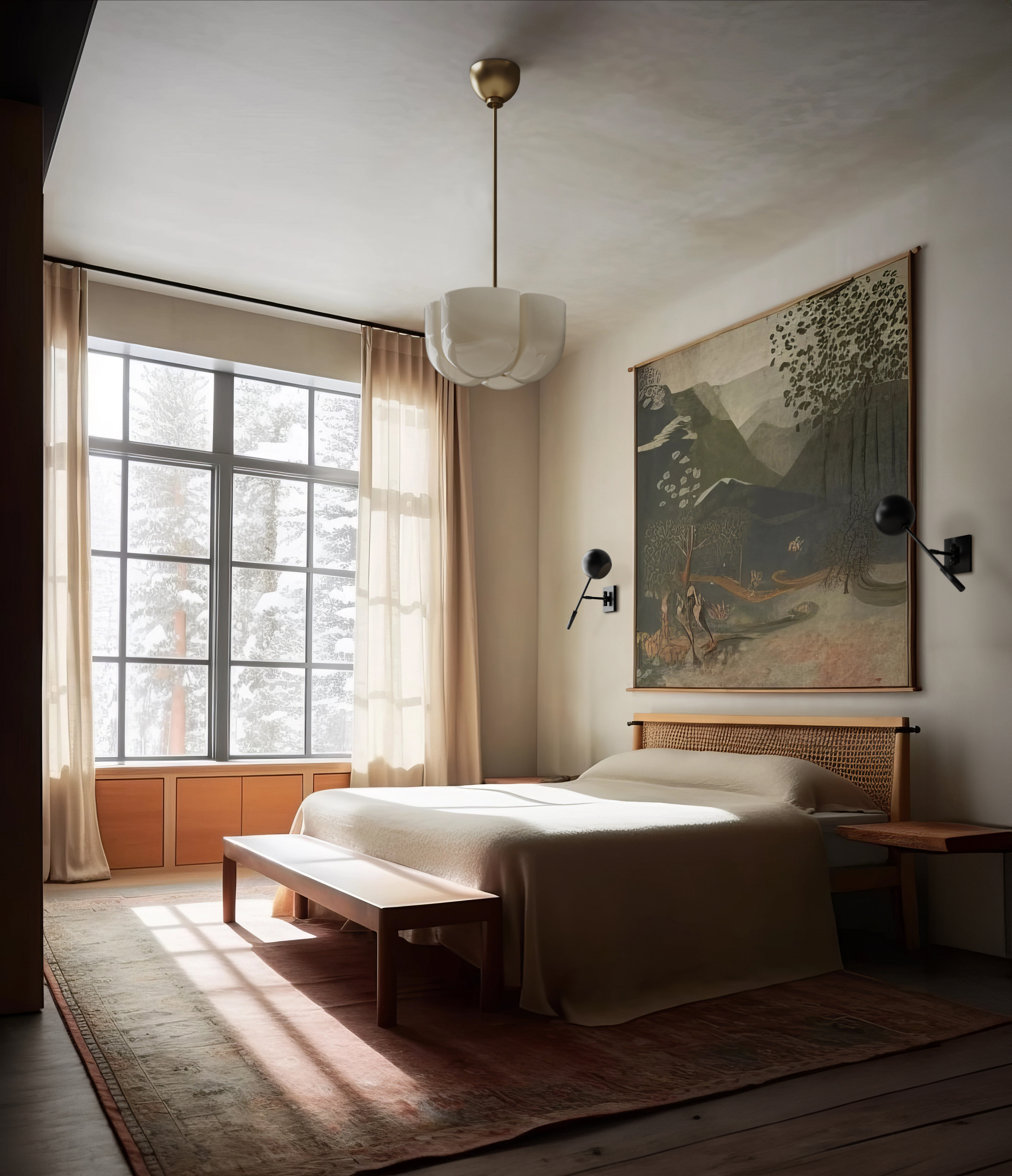
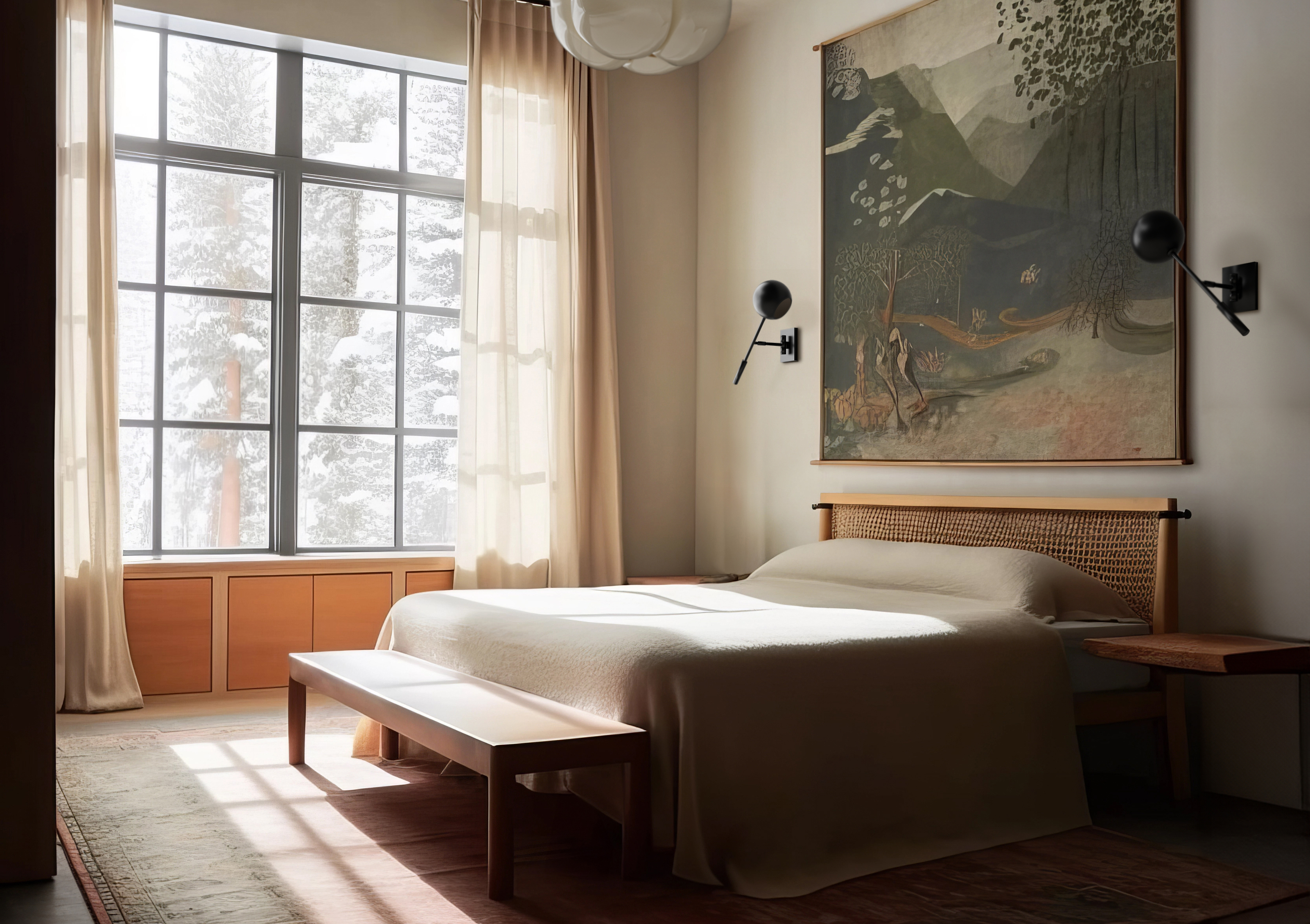
Konstantin Korovin's 1913 painting *Interior* portrays a Russian Impressionist setting. Korovin, known for his landscapes, portraits, and still lifes, used rose and beige hues, complemented by the view of winter snow outside the window, to create a quiet and comforting environment in this work, emphasizing warmth and tranquility through its depiction of bare wood.
Finally, the project includes Roy Lichtenstein’s 1991 work, *Interior With Restful Paintings*. This piece, representative of Lichtenstein’s mature Pop Art style, is part of his “Interiors” series. In this series, he depicted domestic environments, often drawing inspiration from furniture advertisements. A recurring element in these works is an artwork placed within the artwork itself, here positioned above a couch. The CG rendering of this interior provides a contemporary view of Lichtenstein's distinct flat pop imagery in a three-dimensional context. The collection also highlights Eduard Petrovich Hau’s 1835 watercolor of *Empress Alexandra Feodorovna’s Sitting Room*, detailing the opulent interior of Russia's last empress's living space with rich ornamentation.
#ArtHistory #InteriorDesign #FamousPaintings #DigitalArt #CGIRenderings #HomeDecor #ArtInterpretation #VisualCulture #ArtHistory #InteriorDesign #FamousPaintings #DigitalArt #CGIRenderings #HomeDecor #ArtInterpretation #VisualCulture
Há 0 comentários no total
 Ainda não há comentários
Você também pode gostar
Peek inside these artists’ amazing houses
10 Designers on Their Childhood Bedrooms

Paint Ideas for Walls — 29 Inspiring Ways Designers Use Paint in Modern Homes

6 Things You Can Find in Every Stylish Room, According to Interior Designers

Ten homes with interiors designed to showcase art
Interior Designers on the Most Iconic Furniture of All Time
Make a Room Museum-Worthy with These Gallery Wall Ideas

These Designer Rooms Will Convince You to Wallpaper Your Ceiling ASAP
8 classic looks – timeless rooms that will never date

15 Famous Paintings That You Can Bring Home as Canvas Art

Are gallery walls going out of style? These interior designers all came to the same verdict
David Pollack Sotheby's Hang Artwork Hanging Old Masters Interior Design Art

6 room painting ideas that will trick your eye

Total Interiors Eye Candy — These 6 Rooms Make Mixed Marble the Hero, and I Want to Copy Them All for My Home
These Beautiful Paint Colors Will Make You Want to Switch Up Your Bedroom Right Now

An Interior Designer Shows Us Around His Home

Paint ideas for your home – 36 ways to turn every room into a beautiful space bursting with character
How to transform your home with art
This 600-Year-Old Wall Decor is Having a Renaissance in our Homes — and These 5 Examples Look Seriously Modern

Artistic impressions: 9 Canvas wall arts to transform your living room