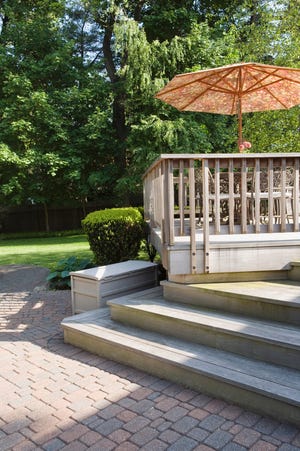
Barry Stone: Spaces in deck rails are unsafe for children
This article addresses two distinct homeowner inquiries, both concerning safety issues within a residential property, with one primarily focusing on real estate transaction implications and the other on immediate structural hazard.
The first query concerns a home in escrow, where buyers are demanding a change to deck railings due to wide spaces deemed unsafe for children by their home inspector. The sellers' contractor friend argues that the 12-inch spacing was legal when the house was built, suggesting no mandatory changes are required. The expert, Barry Stone, confirms that both parties present valid points. He emphasizes the inherent danger of wide deck rail spaces for small children and strongly advises making the spaces smaller to comply with current child-safety standards. However, he clarifies that while safety upgrades are strongly recommended, current code compliance for older constructions is generally not legally mandated if the original construction adhered to codes at that time. Therefore, the decision to upgrade the railings becomes a matter of negotiation between the buyer and seller. Stone notes that such repair requests are common after home inspections and can lead to disagreements, but updating deck rails is often less costly than other common inspection issues. He suggests that sellers might consider making this improvement to facilitate the sale, as child safety is a paramount concern that outweighs rigid adherence to past code compliance. The article traces the evolution of safety rail spacing requirements: from a 9-inch minimum in 1979, reduced to 6 inches in 1985, and finally to the current 4-inch maximum rule in 1993, highlighting a gradual but somewhat illogical progression in bureaucratic practices regarding child safety.
The second inquiry describes a homeowner who discovered a significant fire hazard while installing attic insulation: a sheet metal flue pipe from a forced-air heater is in direct contact with the roof framing, which shows signs of blackening from heat exposure. The homeowner also noted the flue pipe was too hot to touch while the heater was operating. Stone confirms that this situation represents a definite fire hazard. He explains that a furnace flue pipe typically requires a minimum clearance of 1 inch from any combustible material. He advises the homeowner to check the specific clearance requirements printed on the vent pipe itself for verification. Given the observed contact and heat-induced blackening of the wood framing, immediate corrective action is necessary. Stone recommends engaging a licensed HVAC contractor to perform the repair, ensuring that all relevant safety requirements are met.
#DeckRailSafety #ChildSafety #HomeInspection #RealEstateNegotiation #BuildingCodes #FireHazard #HVACSafety #HomeMaintenance #DeckRailSafety #ChildSafety #HomeInspection #RealEstateNegotiation #BuildingCodes #FireHazard #HVACSafety #HomeMaintenance
 Brak komentarzy jeszcze
Tips On How To Make Your Stairs Child-Proof

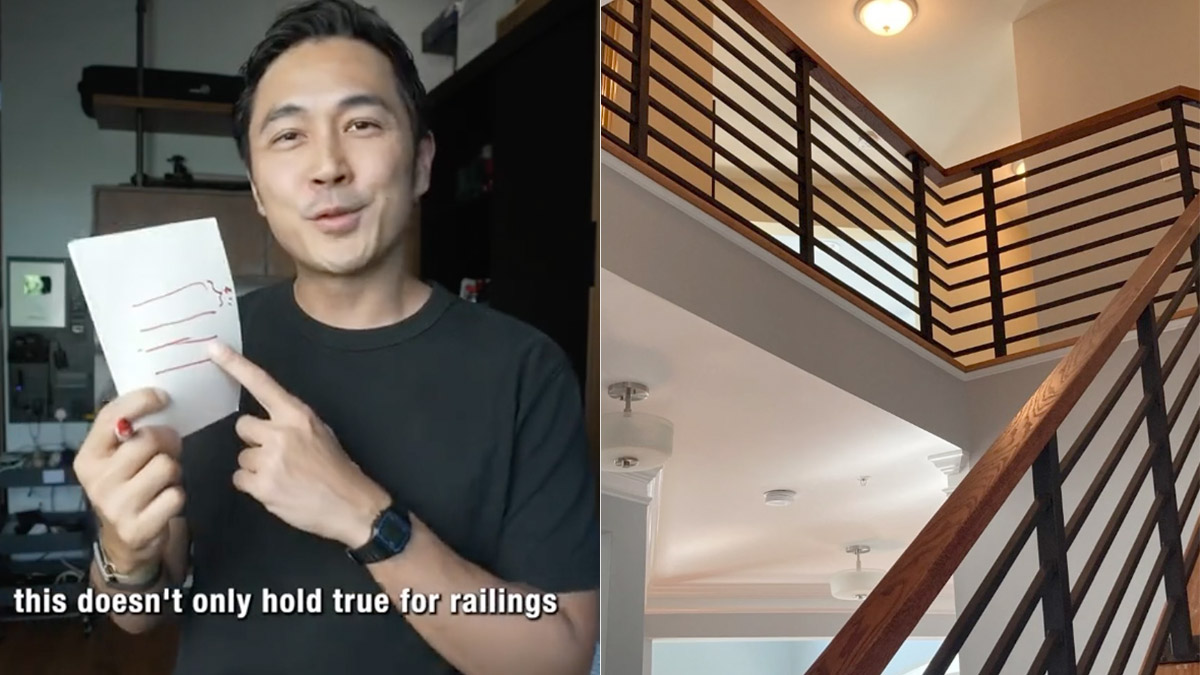
Slater Young’s home tip: No to horizontal railings

Barry Stone: Wood stove too close to wood paneling