1/11
Ever wondered what the Rashtrapati Bhavan looks like from the inside? Take our guided tour
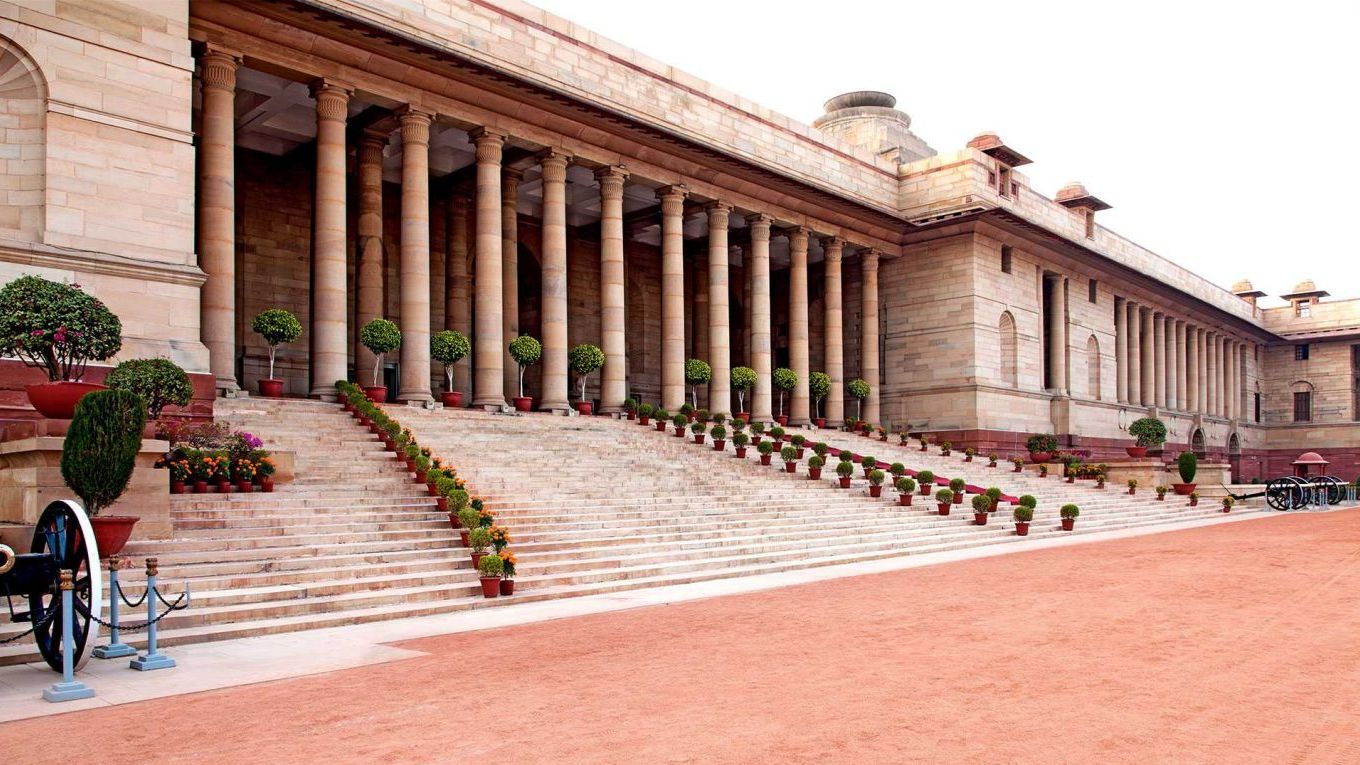
Rashtrapati Bhavan, the official residence of the President of India, embodies a rich shared legacy, reflected in its architecture and design, which narrates the history of India. Designed by British architect Edwin Lutyens, the building and its surrounding estate are a testament to meticulous planning and artistic execution. Lutyens developed a unique architectural style known as the 'Delhi Order,' incorporating elements such as pillar capitals adorned with bells, visible from the grand, sweeping steps leading to the portico.
Upon former President Pranab Mukherjee's tenure, efforts were made to enhance public accessibility and engagement with Rashtrapati Bhavan. In 2012, guided tours were initiated on weekends, providing historical insights into this iconic landmark. Mukherjee also revamped the 'Change of Guard' ceremony, relocating it for better public access, and in late 2013, instituted an in-residence program for artists, writers, and innovation scholars. These initiatives transformed the presidential residence into an accessible landmark, fostering widespread public curiosity about its history and grandeur.
The sprawling estate encompasses 33 acres, housing the main building, the President's Bodyguard, extensive gardens, and water bodies. This self-contained 'township' supports approximately 2,000 employees and their families, functioning as an oasis in the heart of the capital. The majestic wrought iron gates open to a forecourt that leads to the Ashoka Hall's pillared portico. Here, a Mauryan bull sculpture from the 3rd century BC, brought by Jawaharlal Nehru, sits on an axis visually connecting to India Gate and Indraprastha.
New Delhi was declared India's new capital in 1911 by King George V. The construction of Rashtrapati Bhavan necessitated the eviction of three hundred families from Raisina and Malcha villages. Edwin Lutyens, alongside Herbert Baker, meticulously planned every detail, from city layouts and tree species for avenues to intricate designs for carpets, furniture, doorknobs, lighting, and ceiling motifs. Conservation architect Ratish Nanda likened Lutyens' work to the Lodi dynasty's approach, emphasizing both grand scale and exquisite finishing.
Ashoka Hall, originally a ballroom, features a central mural presented by Persian ruler Fateh Ali Shah Qajar to King George IV and later to Lord Irwin. Surrounding paintings were commissioned by Lutyens and executed by Indian artists, while balconies reminiscent of Indian palaces allowed queens to observe proceedings from behind a purdah. The carpet, with its cypress pattern, was woven by Kashmiri artisans. Lutyens, influenced by the Arts and Crafts Movement, integrated traditional Indian craftsmanship into his design, evident in the detailed floors, ceilings, windows, grand stairways, and accessories, seamlessly blending beauty with practicality.
Lutyens, despite his critique of Mughal architecture, incorporated many of its elements, such as trelliswork and chajjas (awnings) inspired by Golkonda Fort. He drew inspiration from the Pantheon in Rome and the Sanchi Stupa for the central grey dome and its base. The dome, a symbolic heart of Rashtrapati Bhavan, overlooks New Delhi from Raisina Hill, with the circular Durbar Hall directly beneath it. This hall features tall, bell-capital pillars, a vaulted ceiling, a bold inlay floor, crimson velvet banners with the Indian emblem, and a two-ton crystal chandelier.
The building's design emphasizes symmetry and proportion, conveying a sense of confidence and power. Hand-painted vaulted ceilings, patterned floors, and courtyards with water bodies contribute to both aesthetic appeal and practical considerations like cooling and ventilation, especially during harsh summer months. The President's personal study on the ground floor overlooks the Mughal Garden, featuring intricate ceilings, chandeliers, and rare volumes in glass-fronted bookshelves. The Cabinet Room, significant for debates on the transfer of power, features deep-brown leather chairs and a mural depicting air and sea routes between India and the British Isles.
Presidential banquets in the official Banquet Hall are grand affairs, with life-size portraits of past presidents, vivid floral carpets, and meticulously arranged tables with fine brocade runners, silver flatware, and crystal glasses embossed with the national insignia. The personal drawing room in the presidential suite features original period furniture, reinforcing the blend of historical and functional design. Lutyens' obsession with precision is evident in unique fireplaces and custom-designed lighting, including elongated 'Lutyens' pendant lights. The comparative sparseness of the bedrooms contrasts with the opulence of public rooms. The overall design of Rashtrapati Bhavan, integrating Hindu, Rajput, Mughal, and colonial influences, represents a synthesis of diverse cultural elements, symbolizing continuity in transformation and reinvention.
#RashtrapatiBhavan #IndianArchitecture #EdwinLutyens #NewDelhi #ArchitecturalDesign #HistoricalLandmark #MughalGarden #PresidentialResidence #IndianHistory #RashtrapatiBhavan #IndianArchitecture #EdwinLutyens #NewDelhi #ArchitecturalDesign #HistoricalLandmark #MughalGarden #PresidentialResidence #IndianHistory
 Nog geen opmerkingen
Take a Peek Inside Kensington Palace with This Virtual Tour
Take a tour of this gorgeous Victorian home...