1/2
Designing an HVAC System for a Passive House
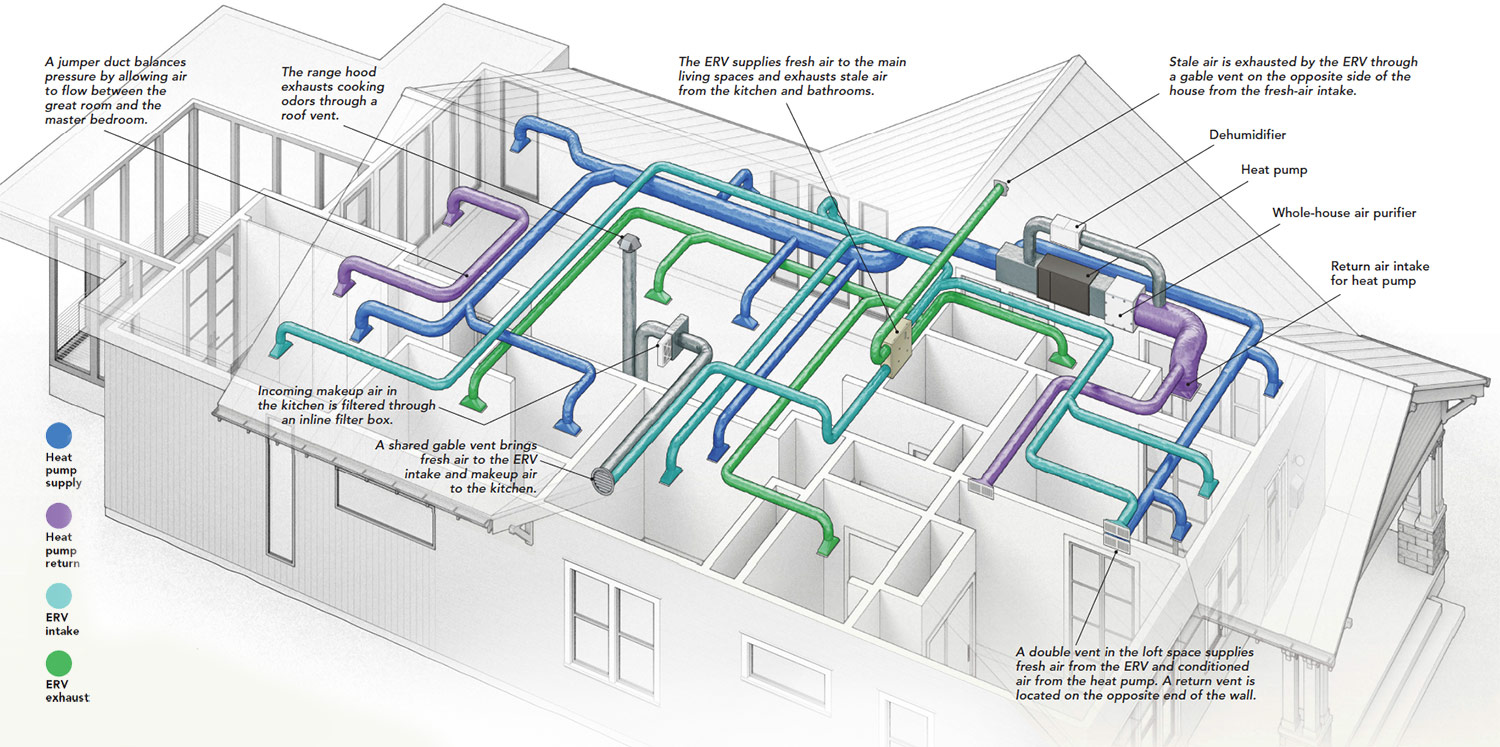
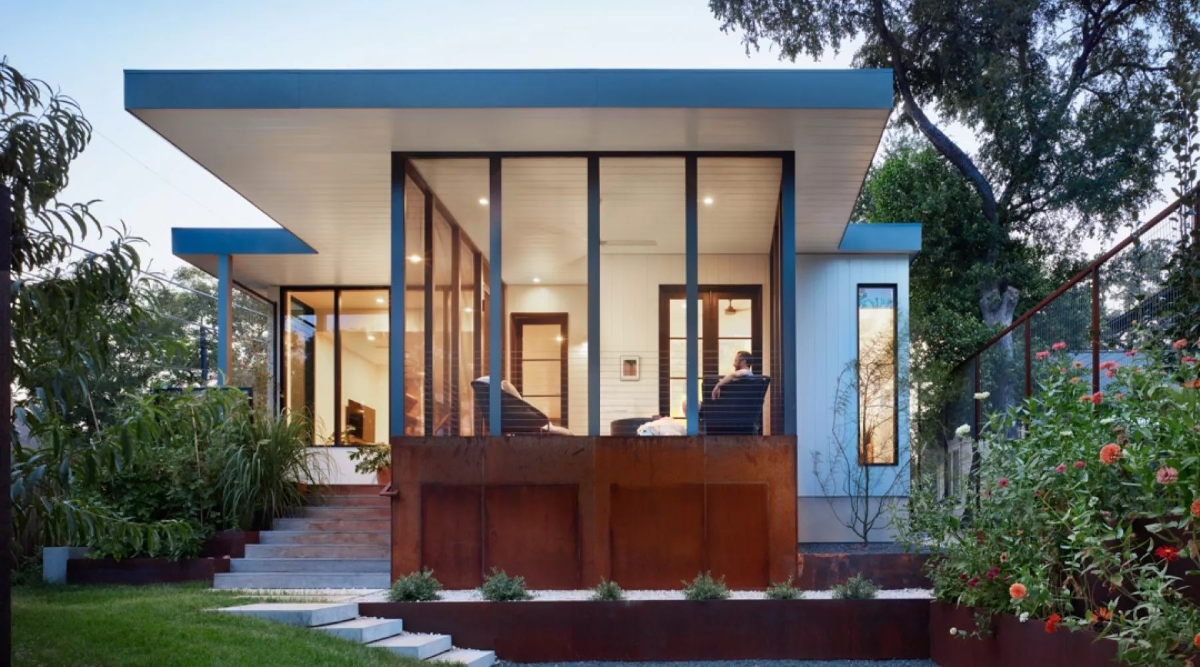
The design of an HVAC system for a Passive House in Austin, Texas, departed from conventional methods, which typically involve sizing and costing based on square footage and installing after framing. Instead, a collaborative approach with Positive Energy, a mechanical-design firm, was employed to integrate the HVAC system early in the design process. This involved utilizing Revit for 3D modeling, allowing for precise adjustments to the assemblies, considering hot and cold spots, and ensuring an even distribution of conditioned air. This detailed pre-planning also facilitated proper sizing of ductwork to fit within the home's structural system, leading to a smoother installation process as installers had exact specifications and plans.
Several key products were selected to achieve balanced ventilation, improve comfort, and enhance indoor-air quality in this high-performance renovation. A Mitsubishi VRF (variable-refrigerant flow) Heat Pump was chosen for its energy efficiency, as it modulates the refrigerant flow to individual zones, circulating only the necessary amount to meet heating or cooling demands. Given the home's proximity to a highway and train line, indoor-air quality was a significant priority. An IQAir Perfect 16 Air Purifier was integrated to provide MERV-16 filtration on the return side of the VRF heat pump, effectively cleaning the air.
For balanced ventilation, a Panasonic Intelli-Balance 100-CFM ERV (Energy Recovery Ventilator) was installed. This system supplies fresh air to living spaces while exhausting stale air from bathrooms and the kitchen, and it helps to positively pressurize the home, which prevents outdoor contaminants from entering. To address Austin's high humidity, a Santa Fe Ultra70 Dehumidifier was added. This was crucial because Passive Houses, due to their superior insulation and airtightness, do not frequently require air conditioning, yet humidity control remains essential to prevent microbial growth.
Furthermore, a custom kitchen makeup-air system was implemented to replace air exhausted by the range hood with filtered outdoor air, utilizing a Honeywell Media Air Cleaner. This system is critical for maintaining indoor air quality, especially when operating a high-exhaust range hood. The kitchen also features an induction range, deliberately chosen over a gas combustion range to avoid the emission of toxic byproducts, further contributing to the home's healthy indoor environment. The comprehensive HVAC strategy, including these specific product choices and the integrated design approach, aimed to create a comfortable, energy-efficient, and healthy living space within the Passive House renovation.
#HVACSystem #PassiveHouse #HomeRenovation #IndoorAirQuality #EnergyEfficiency #Ventilation #Dehumidification #VRFHeatPump #RevitDesign #HVACSystem #PassiveHouse #HomeRenovation #IndoorAirQuality #EnergyEfficiency #Ventilation #Dehumidification #VRFHeatPump #RevitDesign
0 commenti in totale
 Nessun commento ancora
Potresti anche gradire
Passive House Design: What All Energy-Conscious Homeowners Should Know


Why is my upstairs always hot even with AC on? Experts reveal why and how to fix it

How to keep a top-floor apartment cool in summer

Are Your Return Air Vents Facing the Wrong Way? Here's How to Check


This is How People Dealt with Summer Heat Before Air Conditioning
Passive Design Strategies for Energy Efficient Buildings in the Arabian Desert
Are Your Return Air Vents Facing the Wrong Way? They Could Be Making Your Home Hotter

Sick of the heat? Here's how to keep your home cool, heatwave or not, if you don't have AC
HVAC pros reveal if you should close vents in unused rooms – the answer feels counter-intuitive but it's true

Meet the HVAC System Customizing Comfort in Our 2025 Whole Home


For Indoor Comfort Without Central HVAC, a Mini-Split Might Be the Answer
Hydronic radiant wall heating, still the greatest trade secret in the U.S.

HVAC and Indoor-Air Quality

Comfort: Heating & Cooling

The Best Heat Pumps for Cold Climates


This Hexagonal Ceiling Tile System Rethinks Office Air

We Installed 5 U-Shaped Air Conditioners to Find the Best for Quiet, Efficient Cooling
Whole house ducted HVAC: The end is near?
5 Best Ductless Air Conditioners of 2025


Could This Ancient Relic Still Be the Best Way to Heat Your Home?