1/7
Why these imperfect Korean ‘moon jars’ sell for millions
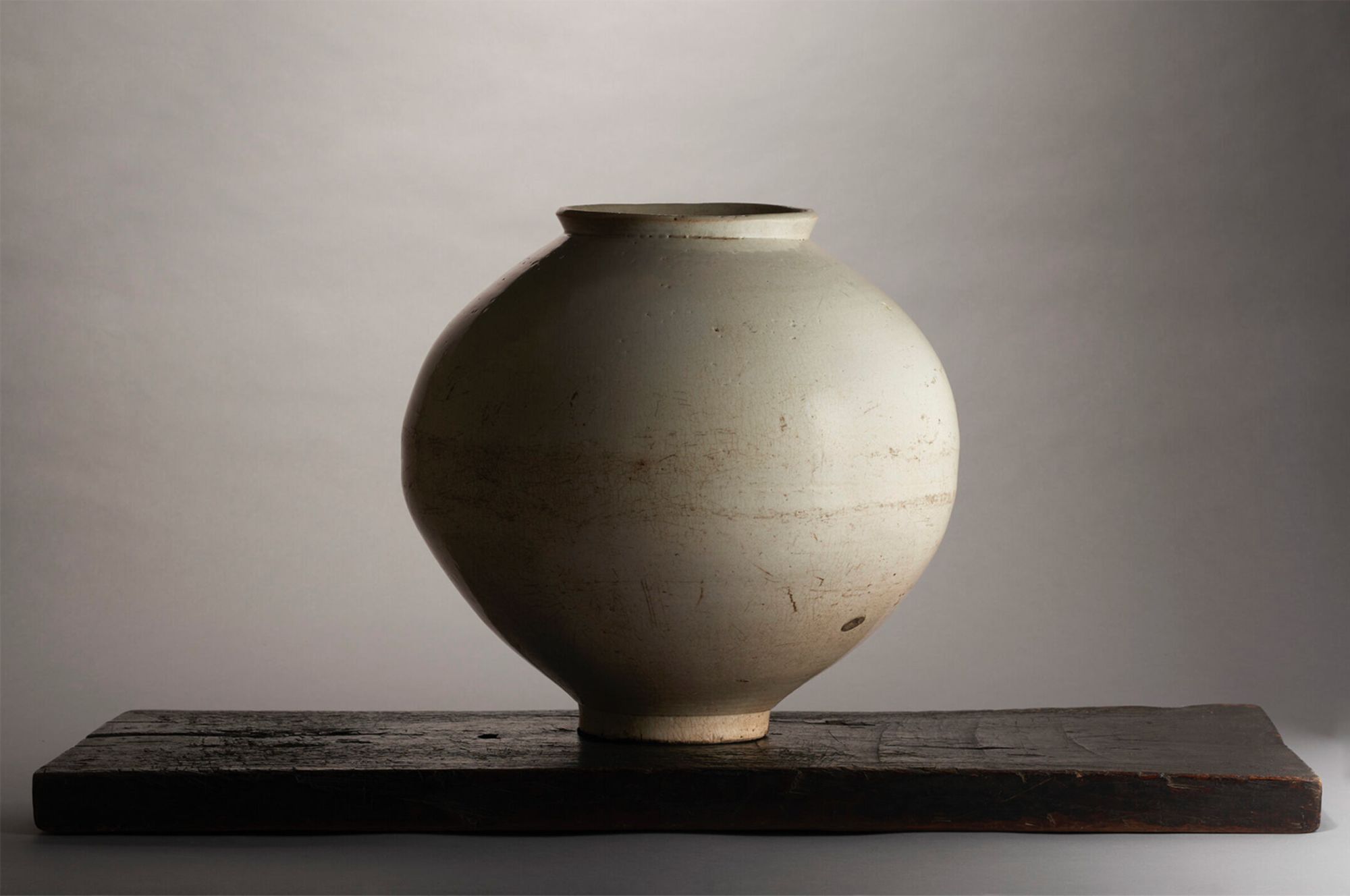
Korean moon jars, or “dalhangari,” are described as old, round, imperfect, and beautiful, captivating a wide audience from K-pop stars to philosophers. These plain white pots, once reflecting neo-Confucian values, are now considered icons of Korean identity. Their global appeal is evident in recent auction prices, with one selling for over $4.5 million at Christie's and another expected to fetch over $3 million at Sotheby’s. The surge in value is attributed to an international cohort of bidders, moving beyond traditional Korean art collectors.
The rarity of these jars also contributes to their high price. Originating from the royal kilns of Korea’s Joseon dynasty between 1650 and 1750, only a limited number, estimated between 12 and 30 larger pieces, are believed to have survived. Many are now housed in prominent institutions globally, such as the British Museum and Boston’s Museum of Fine Arts, alongside private collections. Initially, these jars served practical purposes in court and upper-class homes, holding food and liquids, or as decorative items.
International appreciation for moon jars began to grow in the mid-20th century. Figures like Japanese folk crafts scholar Yanagi Soetsu and British potter Bernard Leach were early admirers. Leach famously acquired one in 1935, describing the experience as "owning a piece of happiness," and later entrusted it to Lucie Rie for safekeeping during World War II, eventually making its way to the British Museum. Following World War II, moon jars gained significance among postcolonial Korean artists and scholars, who saw in them a means to restore Korean art history and national identity. Their aesthetic aligned with the visual language of mid-20th-century modernism and minimalism while maintaining a distinct Korean character.
The emotional impact of moon jars is frequently highlighted. Sotheby’s described them as objects that inspire and soothe. Former National Museum of Korea director Choi Sunu likened them to companions or muses, while Bernard Leach appreciated their "natural unselfconsciousness." More recently, K-pop artist RM shared his sense of calm derived from these pots. Angela McAteer of Sotheby's notes their "meditative presence" and a "palpable energy" comparable to a Mark Rothko painting, where the surface, with its coalescing glaze and spontaneous blush colors from firing, offers endless visual depth and variation depending on viewing conditions.
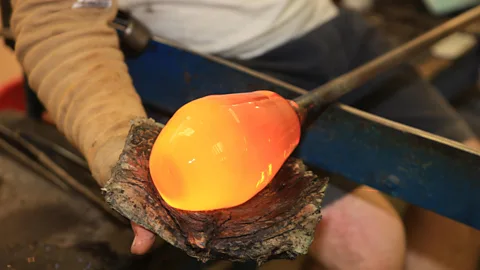
Modern Korean potters draw significant inspiration from these historical pieces. Ceramists like Kim Syyong, Yun Ju Cheol, and Choi Bo Ram have created contemporary interpretations, while Kwon Dae Sup focuses on meticulously recreating the traditional process. Kwon, a 71-year-old ceramist, works in Gwangju, the historical site of royal kilns. His labor-intensive process involves washing and sifting clay, kneading, hand-throwing large halves that are later joined, and firing them in a self-built pine wood kiln for 24 hours. Kwon views each creation as novel due to varying material and environmental conditions, finding joy in the process and a deep emotional connection to the jars, which he describes as feeling "alive." He aims to create art that needs no addition or subtraction, possessing an imposing presence that harmonizes with its surroundings and offers peace and comfort.
#KoreanArt #MoonJars #JoseonDynasty #Ceramics #ArtAuction #KwonDaeSup #KoreanCulture #Pottery #TraditionalCraft #KoreanArt #MoonJars #JoseonDynasty #Ceramics #ArtAuction #KwonDaeSup #KoreanCulture #Pottery #TraditionalCraft
 Aucun commentaire pour le moment