1/2
How to strip the finish off a mirror frame
This guide details the process of stripping the finish from a mirror frame, a common household DIY project, particularly relevant for items exposed to moisture and condensation. The method described focuses on restoring an oval mahogany mirror frame in a bathroom, where the original finish had deteriorated due to steam and condensation.
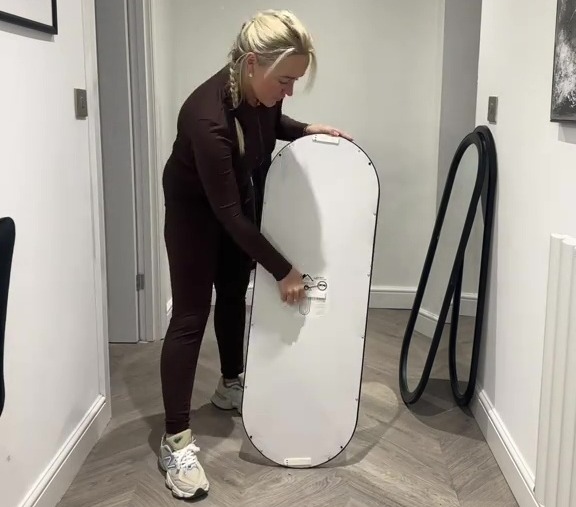
The initial steps involve carefully disassembling the mirror from its frame. The Masonite backing and the mirror glass are removed, with the top of both the backing and the frame marked to ensure correct reassembly and alignment of screw holes. This meticulous preparation prevents potential issues during the reconstruction phase.
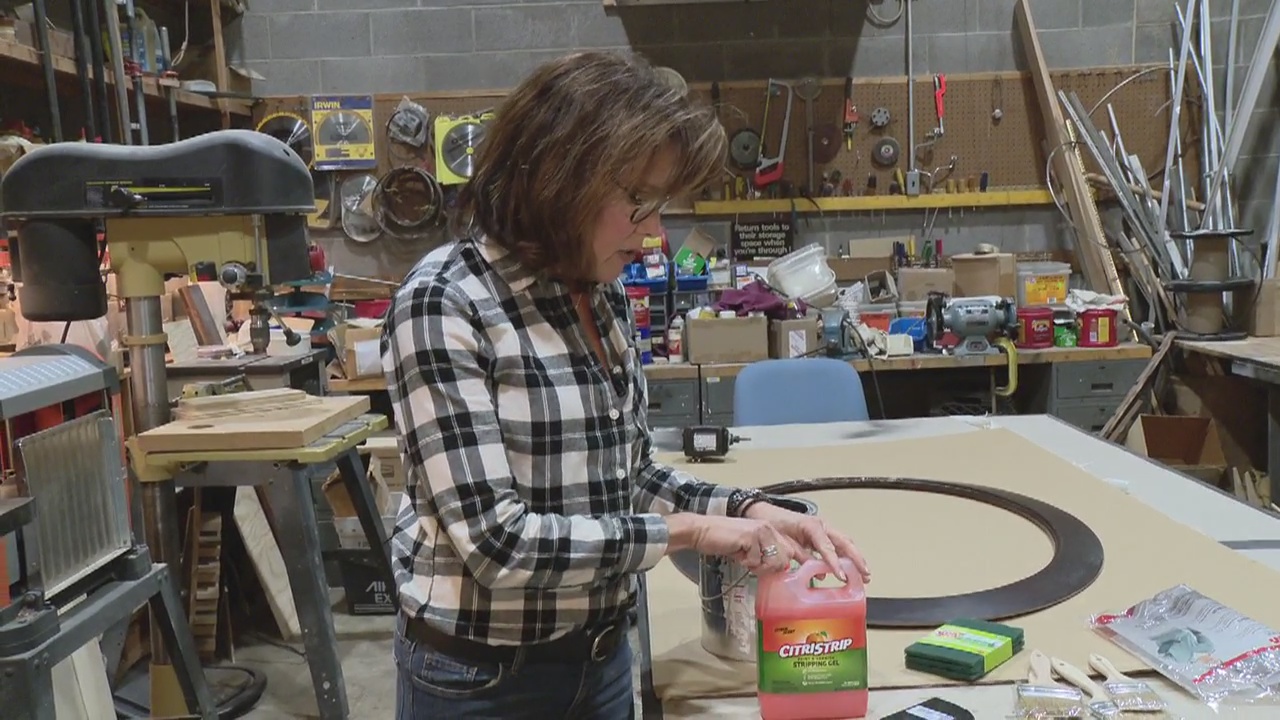
Following disassembly, the work area is prepared by laying down cardboard to protect the underlying surface. The frame is then placed on the protected surface, ready for the application of the stripping agent. The specific product recommended is CitriStrip, a gel-based stripper known for its ease of use and less aggressive fumes, making it suitable for beginners. This product is widely available at building supply and hardware stores.
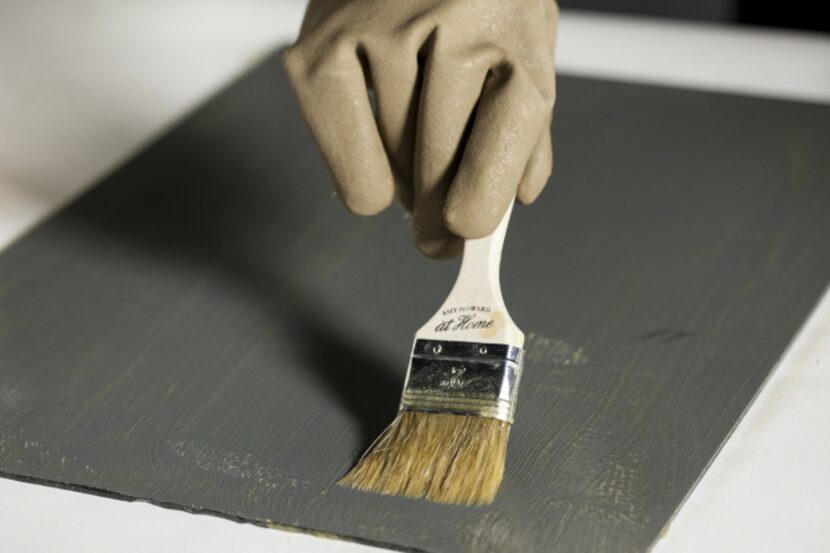
Before application, the CitriStrip is shaken and poured into a disposable container. A disposable chip brush is then used to apply a thick, even layer of the stripper to the entire frame. The importance of wearing protective gloves and potentially eye protection during this step is emphasized for safety.
After application, the stripper is left to work. While not strictly necessary, covering the project with plastic wrap can aid the stripping process by keeping the product wet for longer, potentially up to 24 hours. The progress is monitored by periodically checking if the finish is loosening, with initial checks suggested at 30, 60, and 90 minutes.
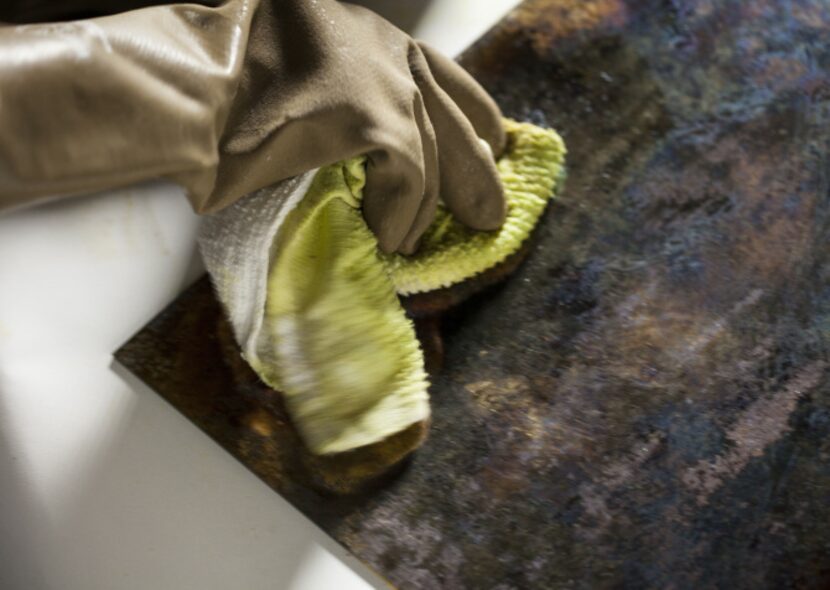
Once the finish has softened sufficiently, a plastic scraper is used to remove the loosened material. For intricate areas and crevices, a plastic stripping brush is employed to ensure thorough removal. In cases where residue remains, a second application of CitriStrip may be necessary. For the second application, a green Scotchbrite scrubbing pad can be used to effectively remove any stubborn remaining finish. After all the finish has been stripped, the frame is thoroughly wiped down with paper towels to remove any residual stripper.
This completes the first phase of the mirror's refurbishment. The subsequent phase, which involves staining and finishing the frame, offers several options. These include applying a clear or tinted wax, staining the frame before a wax finish, or staining and then applying a more durable finish such as varnish, shellac, or oil. Each finishing option has its own advantages and disadvantages, particularly concerning durability in a high-moisture environment like a bathroom. Wax finishes are quicker, more forgiving, and easily renewable but less durable, whereas varnish or shellac offers greater longevity but requires more careful application. The choice of finish will depend on the desired aesthetic and practical considerations for the mirror's continued use in a bathroom setting.
#HomeImprovement #DIYProject #FurnitureRestoration #MirrorFrame #WoodStripping #CitriStrip #BathroomDecor #HomeMaintenance #JillOfAllTrades #HomeImprovement #DIYProject #FurnitureRestoration #MirrorFrame #WoodStripping #CitriStrip #BathroomDecor #HomeMaintenance #JillOfAllTrades
0 commentaire au total
 Aucun commentaire pour le moment
Vous aimerez aussi
My bathroom mirror is a lint magnet — I asked an expert how to get a spotless finish

21 best mirrors for your home, from full-length to decorative
The Best Wallpaper Removers of 2025 for Updating Your Home’s Interior


Hanging Lighted Mirror

Are these mirror cleaning mistakes ruining your shine? Professional cleaners reflect on what we're doing wrong

A Stress-Free Way to Remove Wallpaper

Good Lighting Starts With the Right Mirror—And These 6 Bathroom Mirrors Are the Best We Tested

9 Best Wallpaper Removers


How to Buy an (Actually) Honest Mirror

Refurbish an antique mirror with Ginger Coffer Designs

Homestyle: Glass and mirrors
Follow These DIY Steps to Remove and Refresh Your Kitchen Cabinets


At Home with Marni Jameson: Renew that boring bathroom mirror


How to remove wallpaper - expert-approved steps to prevent damage and ensure a smooth finish
The Easiest Way to Make a Room Feel Twice as Big: Add One of the Best Full-Length Mirrors


A Home Bargains buy made my hall look bigger, but everyone's saying the same


Upon reflection: How to buy an antique mirror

Can You Spot the Swaps in This Drastic Vanity Before-and-After?

The Fairest Full-Length Mirrors of Them All

How to mimic that antique-mirror look