What's The Point Of The Butter Container In The Refrigerator Door?
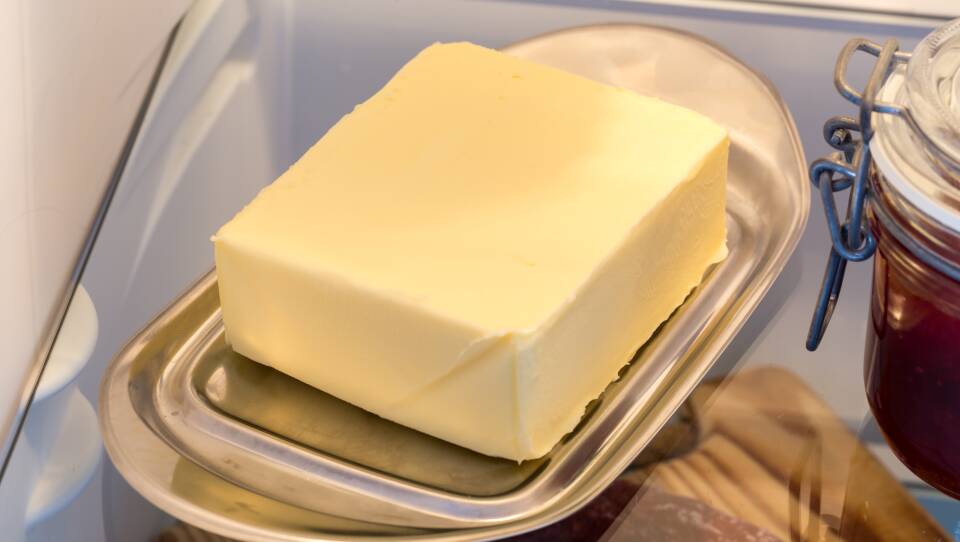
The article addresses a common household mystery: the purpose of the butter compartment found in most refrigerator doors. This question originated from a loyal listener, Louise Erskine of Paxton, Massachusetts, who sought to settle a long-standing family debate. To uncover the truth, the Curiosity Desk consulted Ed Baker, an appliance expert from Belcher's Appliance Center in Framingham, Massachusetts, who has extensive experience selling refrigerators.
Louise's family had several theories regarding the butter compartment's function. Her brother believed it was simply for convenience, allowing easy access to butter and preventing it from falling when the door was opened. While acknowledging that convenience and butter safety are indeed functions, Ed Baker dismissed these as the primary reasons for its inclusion. He emphasized that manufacturers would not spend money on features without a significant purpose.
Louise's own theory was that the butter drawer served to protect butter from absorbing odors from other foods in the refrigerator. Baker conceded that the plastic cover might offer some protection against smells, as it creates a somewhat enclosed space. However, he noted that the compartment is not entirely airtight, and more importantly, preventing odor absorption is not the main reason this feature has been a staple in refrigerators for decades.
Her father's theory posited that the butter drawer had less insulation, and the cover was there to retain cold air. Baker confirmed that there is typically no insulation in this area, but clarified the underlying principle. He explained that cold air in a refrigerator originates from the freezer and is circulated by a fan, usually located at the back near the bottom. Due to the laws of physics, heat rises, making the top of the refrigerator door the warmest section. Therefore, the butter compartment is strategically placed in this warmer area.
The plastic cover's actual purpose, according to Baker, is not to keep cold air in, but rather to keep it out. By creating a slightly warmer microclimate within the compartment, it allows the butter to remain marginally softer than the rest of the refrigerator. This slight increase in temperature makes the butter more easily spreadable. This design evolved from earlier models in the 1950s, such as General Electric's "butter conditioner," which featured an active, adjustable heater to keep butter warm. This earlier design proved to be energy-inefficient, leading to its replacement by the current passive design that uses the refrigerator's own temperature gradients to achieve a similar effect.
In conclusion, the butter compartment in the refrigerator door is designed to keep butter slightly warmer than the rest of the fridge, facilitating easier spreading. This is achieved by placing it in the warmest part of the refrigerator door and using a cover to maintain a localized, slightly elevated temperature.
#RefrigeratorFeatures #HouseholdAppliances #KitchenDesign #FoodStorage #HomeOrganization #EverydayMysteries #CuriosityDesk #ButterStorage #ApplianceFunctionality #RefrigeratorFeatures #HouseholdAppliances #KitchenDesign #FoodStorage #HomeOrganization #EverydayMysteries #CuriosityDesk #ButterStorage #ApplianceFunctionality
 No comments yet
This Kitchen Appliance Adds Refrigerated Storage to Any Space

5 Items in Your Pantry to Throw Away Right Now, and What to Buy Instead


This Versatile Rolling Island Is a Small Kitchen Game Changer

This Built-In Drawer Is the Answer to Your Fridge—or Freezer—Overflow