



Vintage Points
The article explores how three New Jersey homeowners, all wine enthusiasts, have designed and built custom wine cellars in their residences to store and enjoy their extensive wine collections. These projects range from eco-friendly designs to highly functional spaces, showcasing various approaches to in-home wine storage.
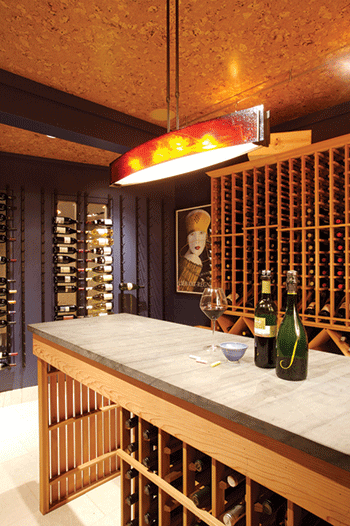
Michael and Lori Feldstein, owners of Surface Technology Inc. and Cogent Medical Marketing respectively, sought to create a sustainable and eco-friendly wine cellar in their Princeton home. They engaged Princeton-based architect Joshua Zinder to design a space capable of holding 2,500 bottles. The cellar's location under the breakfast nook on the southern side of the house, with five angled walls, naturally maintains a cool temperature between 50 to 55 degrees, minimizing energy consumption. The entire basement, including the wine cellar, is powered by solar panels. Zinder incorporated energy-efficient cooling and humidifying systems, non-toxic paint, and sustainably harvested redwood for the wine racks. The tasting table's slate top was sourced locally to reduce transport fuel, and the ceiling is made of cork, known for its sound absorption and moisture-resistant properties. Lighting, with amber-lensed fixtures and track lighting, was chosen to create a warm and inviting atmosphere rather than a typical cold cellar feel. The Feldsteins frequently host wine tastings, using the slate table to mark wine types with chalk.
Attorneys Jim and Linda Hamilton, passionate wine collectors, outgrew their initial climate-controlled wine closet and decided to build a dedicated cellar. In 1996, they added a three-story, 1,000-square-foot extension to their Moorestown home, featuring a custom wine cellar designed for 3,000 bottles. They enlisted Scot "Zippy" Ziskind of ZipCo Wine Cellar Services to install commercial-grade temperature and humidity control systems. The Hamiltons opted for heart of cedar for the wine racks and tongue-and-groove ceiling, noting its attractive appearance and functionality, despite initial concerns about the wood affecting the wine. To manage their collection, they use a separate non-refrigerated rack in the basement for wines intended for quicker consumption, reserving the main cellar for long-term storage.
Robert and Brenda Catalanello, when building their new home in Madison in 2006, chose to convert a planned home gym in the basement into a wine cellar. Robert's career, involving frequent trips to Northern California, introduced them to wine culture. Brenda took the lead in designing the cellar, drawing inspiration from their previous home's cellar. She worked with contractor Tony Butera to create a space for 2,200 bottles, including custom compartments for various bottle sizes. A key design element is a large, insulated picture window salvaged from a previous renovation, installed in an interior wall of the cellar. This window allows views into the rest of the basement, keeping the cellar from feeling isolated and enabling the couple to view their collection from the adjacent gas fireplace area. A counter was included for tastings, without seating, as the fireplace area serves as the primary lounging spot.
#WineCellarDesign #HomeRenovation #SustainableDesign #WineStorage #LuxuryHomes #NewJerseyHomes #InteriorDesign #CustomCellars #WineCellarDesign #HomeRenovation #SustainableDesign #WineStorage #LuxuryHomes #NewJerseyHomes #InteriorDesign #CustomCellars
 No comments yet