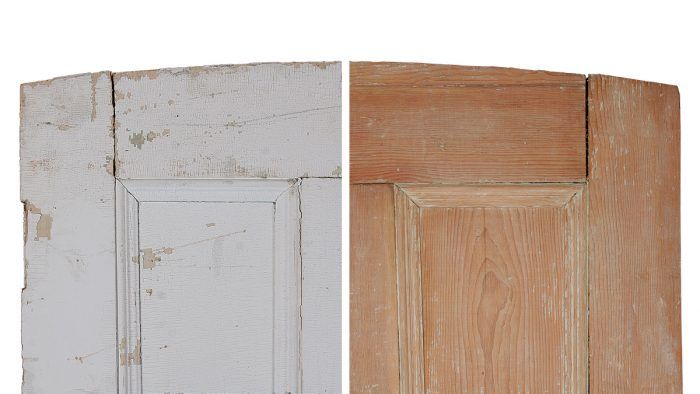
1/14
Torture Test: Paint Strippers
Removing old paint is a common task in home renovation, often involving scraping and sanding. However, when the goal is to return a surface to bare wood, especially for intricate details or cabinets, chemical paint strippers become necessary. With a variety of products available, understanding their effectiveness, toxicity, and application suitability is crucial. This article details a comprehensive test of ten commonly available paint strippers, spanning a spectrum of toxicity and handling characteristics, to help users make informed decisions.
The testing methodology involved an antique door, heavily painted and cut into ten sections, each with flat surfaces and detailed molding, to serve as a uniform test piece. Carpenter Andy Beasley applied each stripper to a designated section, meticulously logging the time and number of applications required to achieve a paint-free surface. The primary objective was to assess the speed and efficiency of paint removal, rather than preparing the wood for a new finish. Prior to starting, a lead paint test was conducted, and appropriate safety measures were taken, given the presence of lead and the inherent hazards of chemical strippers.
Throughout the trials, variables such as temperature were controlled to ensure consistent product performance. Most strippers were applied with a disposable chip brush, with application and removal times carefully recorded. Recognizing that effectiveness decreases if products dry out, test pieces were regularly monitored for dryness and either touched up or covered with plastic wrap to maintain moisture. While testing primarily occurred on horizontal surfaces, products were also evaluated for their ability to cling to vertical surfaces. The Dumond Peel Away 1, for instance, was noted for its unique paste-and-paper system that kept the product active and facilitated paint removal.
The process of determining when to remove a stripper was described as an art, as manufacturer claims often lack precision. Periodic scraping of small patches allowed for monitoring penetration and effectiveness. Once bare wood was exposed or the stripper ceased making progress, the elapsed time was recorded, and the stripper and softened paint layers were removed using various tools, including scrapers, brushes, and abrasive pads. Aggressive scraping was sometimes employed, but the primary aim was to remove paint without damaging the underlying wood. Patience proved essential, as different strippers required varying numbers of applications and contact times, and leaving strippers on for extended periods could soften wood grain, making it vulnerable to damage.
Key findings revealed a trade-off between speed and safety. Highly toxic strippers generally offered the fastest results, making them suitable for projects where time is a critical factor, provided proper safety precautions—such as heavy gloves, splash goggles, and respirators—are meticulously followed, and work is conducted outdoors. The U.S. Environmental Protection Agency's 2019 prohibition of methylene chloride in consumer paint strippers is a critical consideration. Safer, less toxic alternatives, while slower, are better suited for indoor use with good ventilation and appropriate personal protection, as they can be left to work overnight, often covered to maintain moisture. However, prolonged contact with safer strippers can also soften wood, emphasizing the importance of following manufacturer instructions, especially for veneered surfaces.
Specific products were highlighted for their performance: Dumond Peel Away 1 for its unique application method and efficacy on intricate surfaces and lead paint control; Citristrip Safer Paint & Varnish Stripping Gel as the fastest among less-toxic options; Franmar Soy Gel Paint Stripper for its flexibility in application methods; Mötsenböcker’s Lift Off Paint & Varnish Remover for its top-tier performance among safer products despite being runny; 3M Safest Stripper Paint & Varnish Remover for its low odor and minimal safety warnings but slow performance; and Zinsser Magic Strip Paint & Varnish Remover as the slowest performer, though suitable for light-duty tasks and fiberglass surfaces. Ultimately, all tested products were capable of stripping paint, but the choice depends on balancing the need for speed against safety concerns and the specifics of the project at hand.
#PaintStrippers #HomeRenovation #DIYProjects #PaintRemoval #ProductReview #ChemicalSafety #SurfacePreparation #HomeImprovement #WoodRestoration #PaintStrippers #HomeRenovation #DIYProjects #PaintRemoval #ProductReview #ChemicalSafety #SurfacePreparation #HomeImprovement #WoodRestoration
 No comments yet
The 7 Best Painters Drop Cloths and Tarps