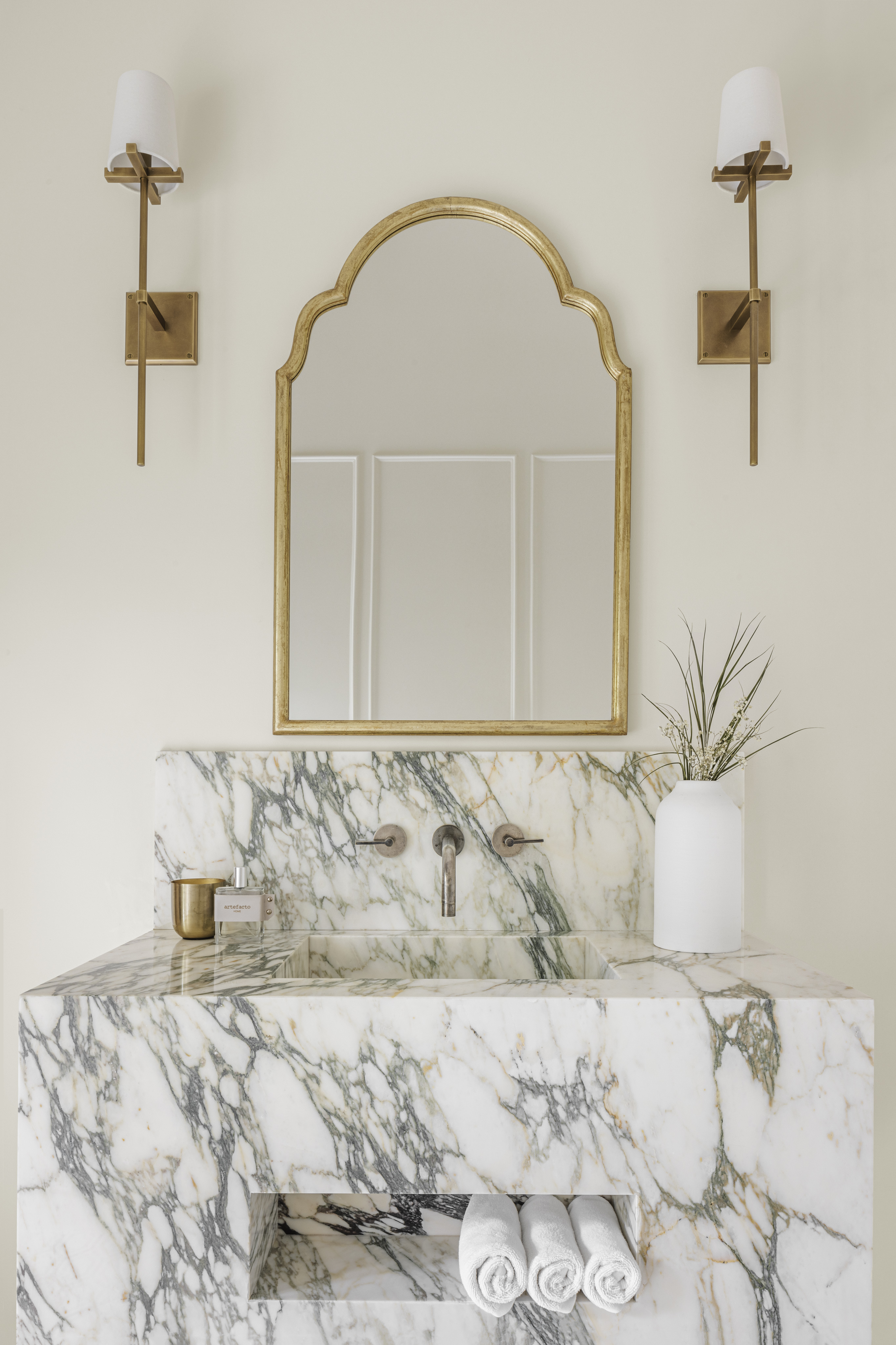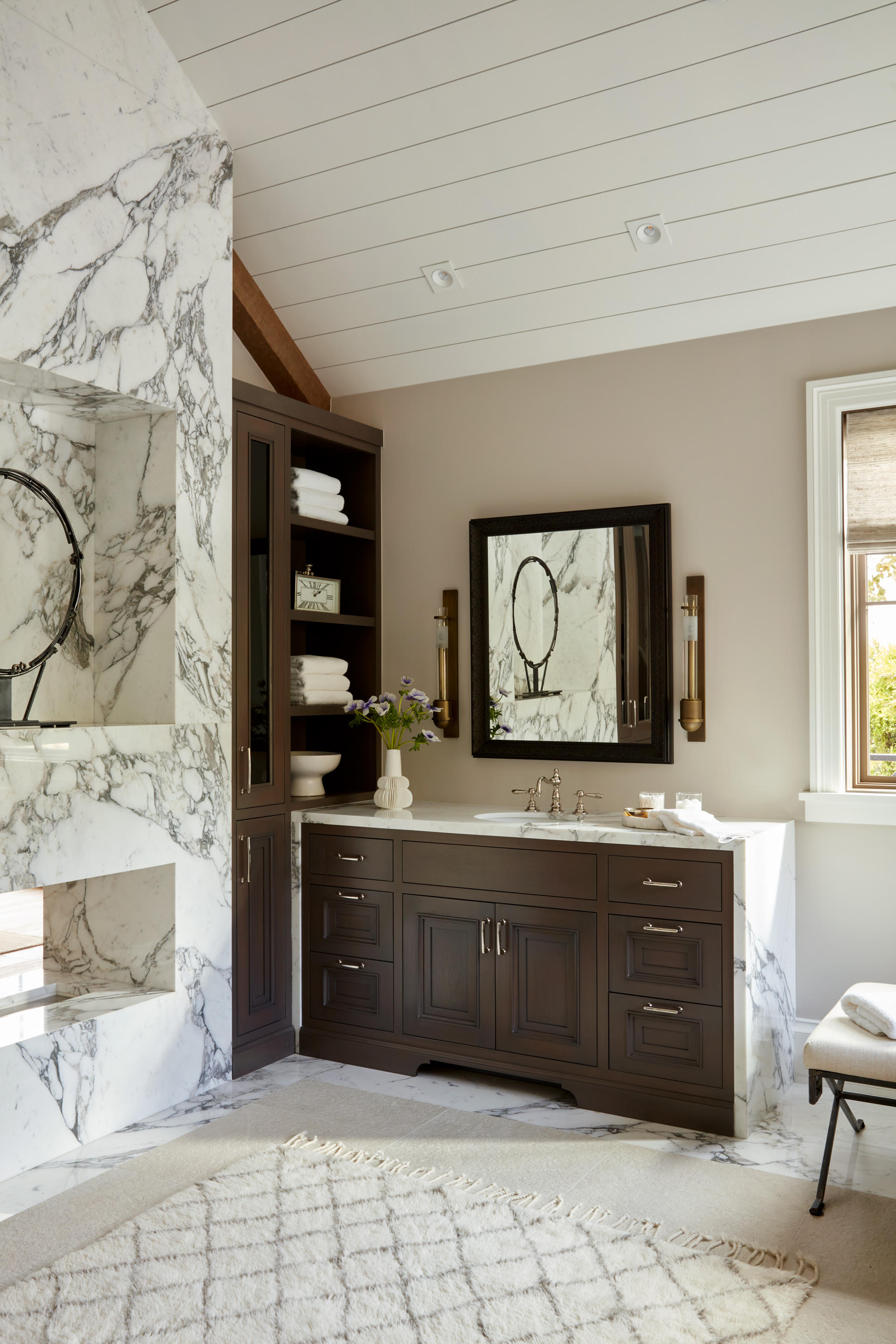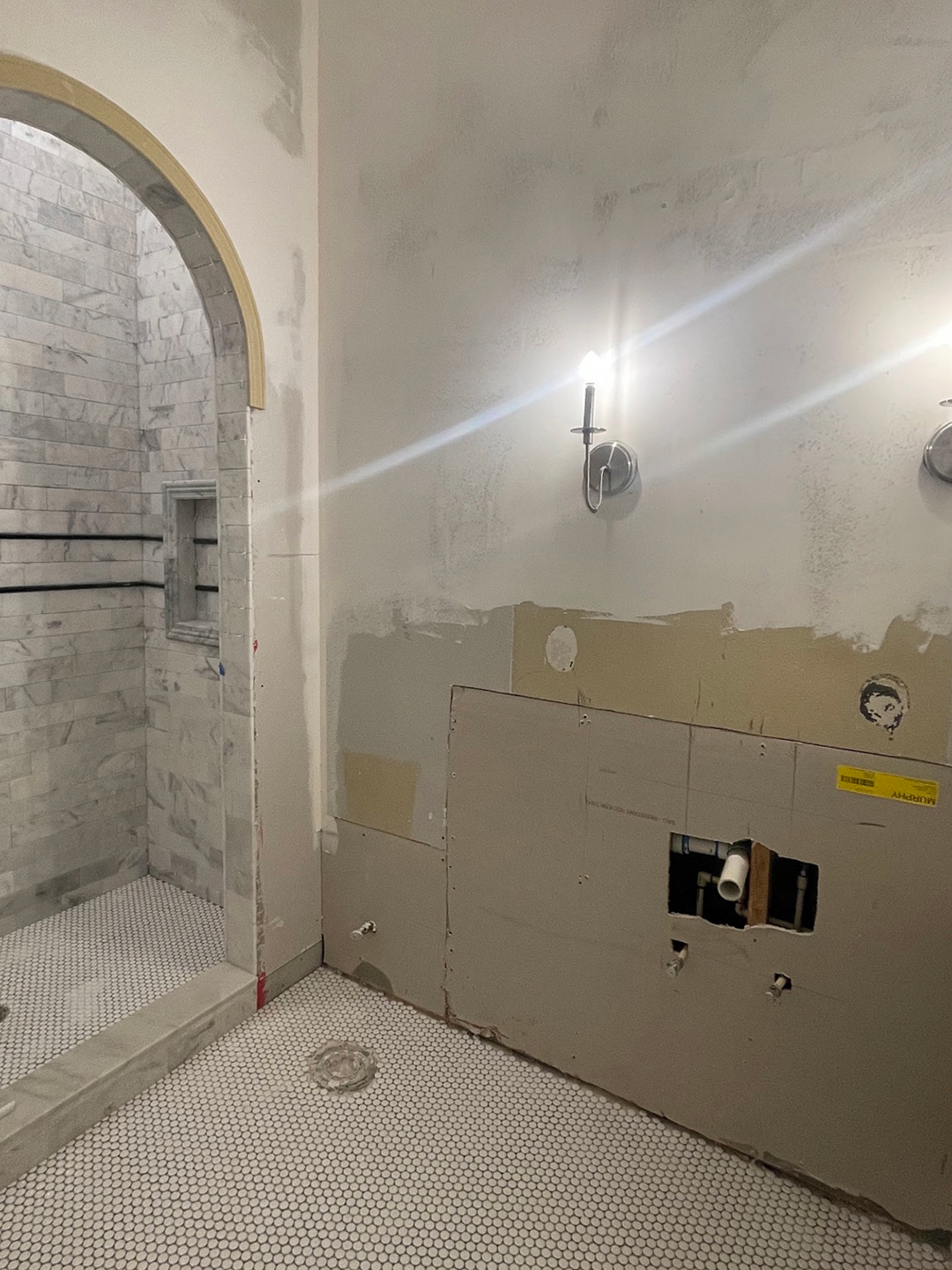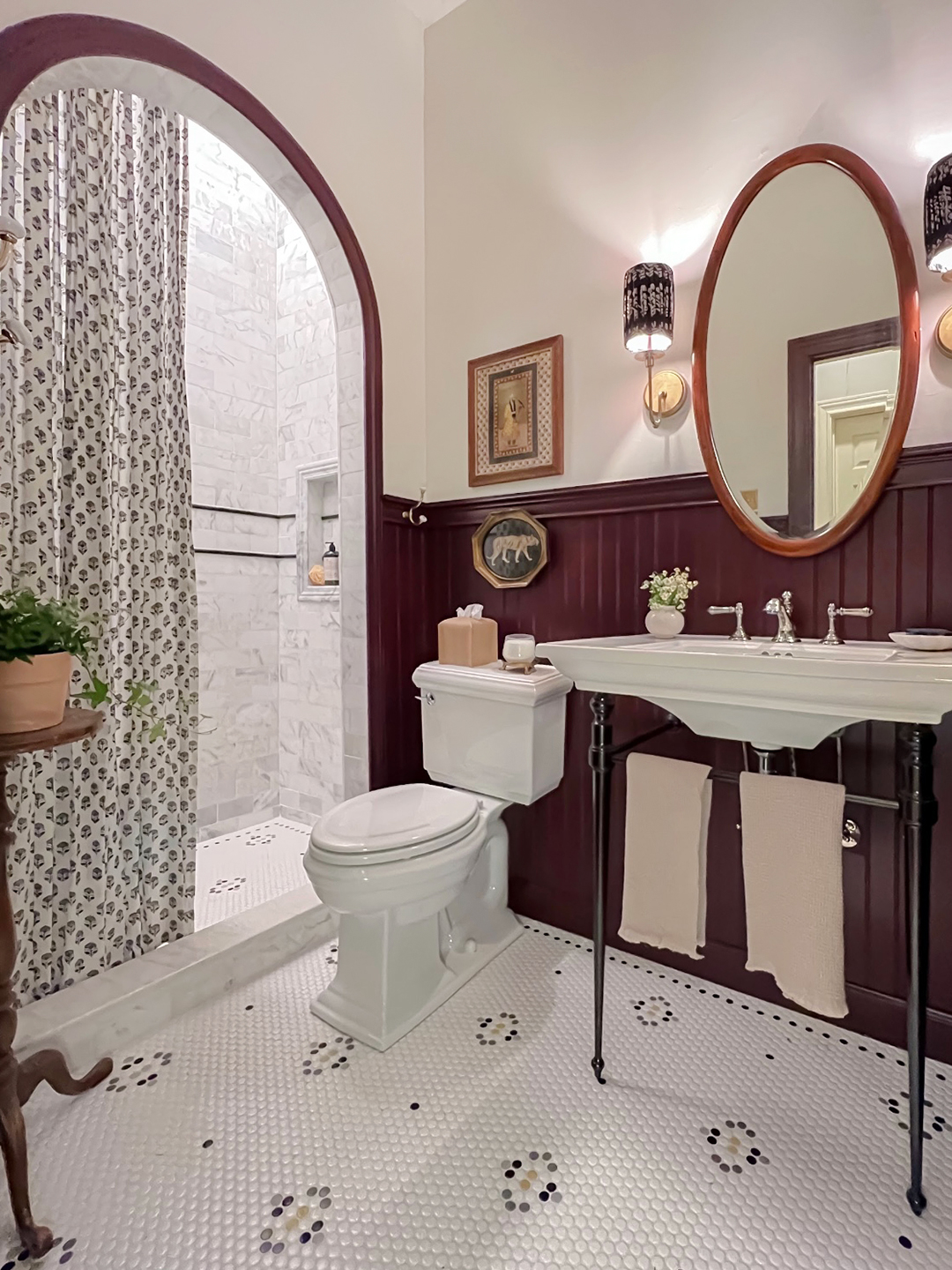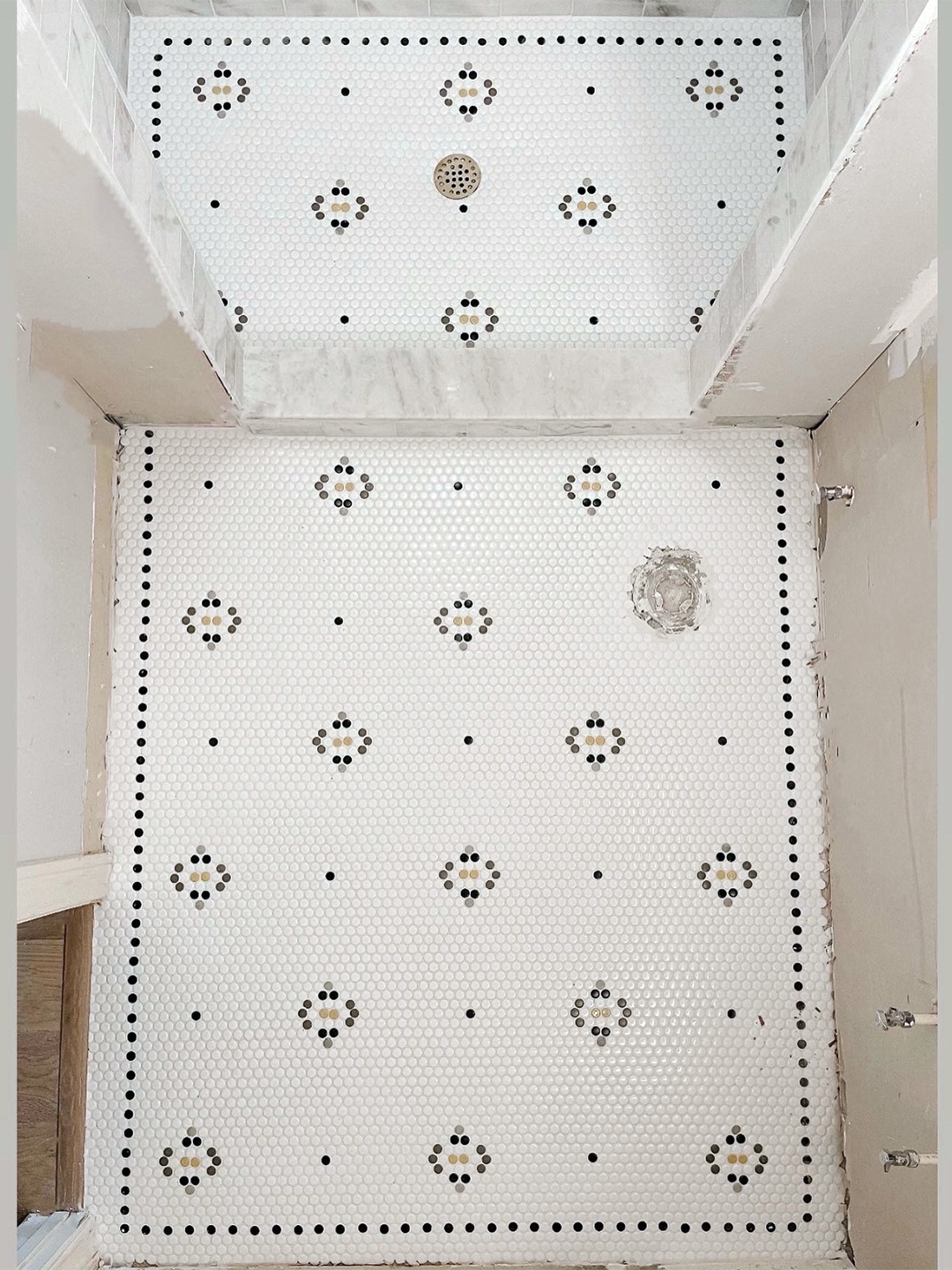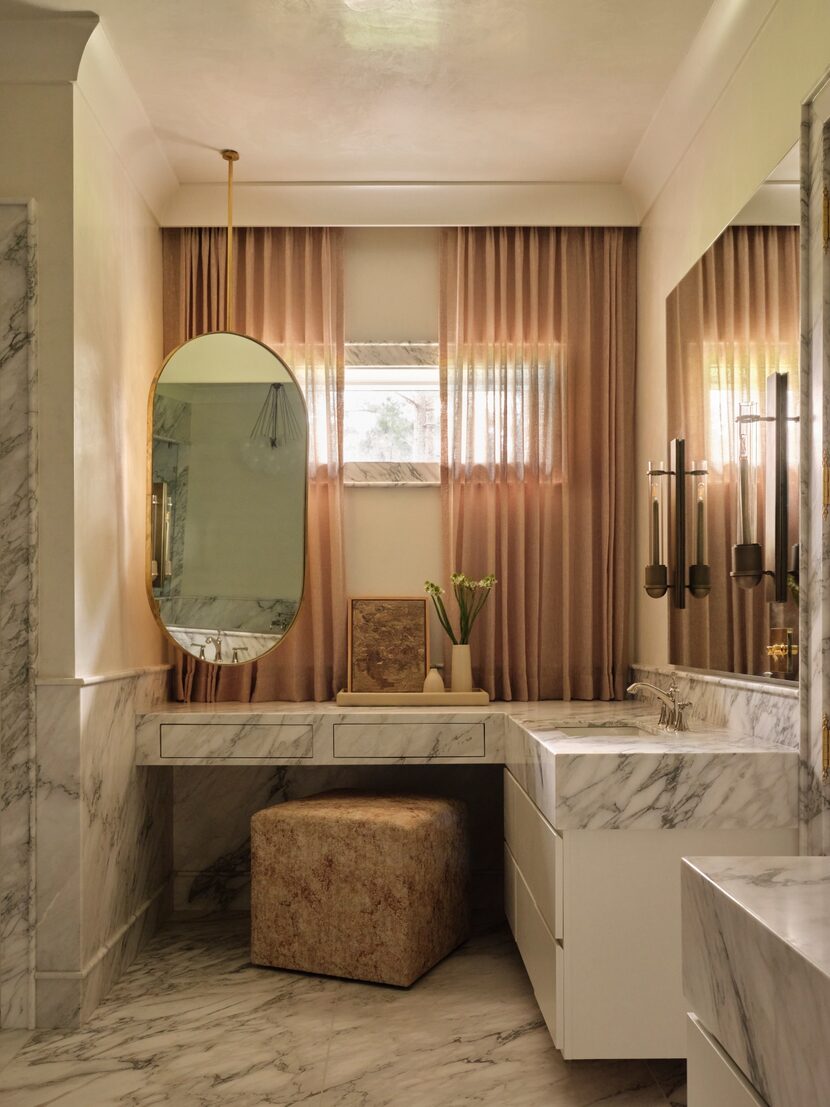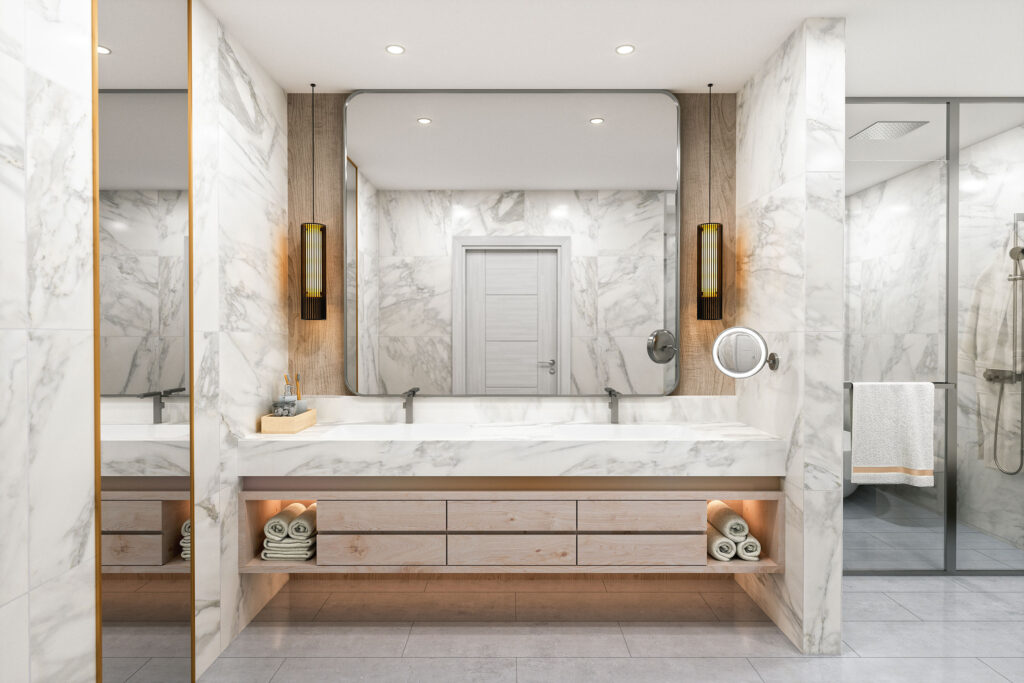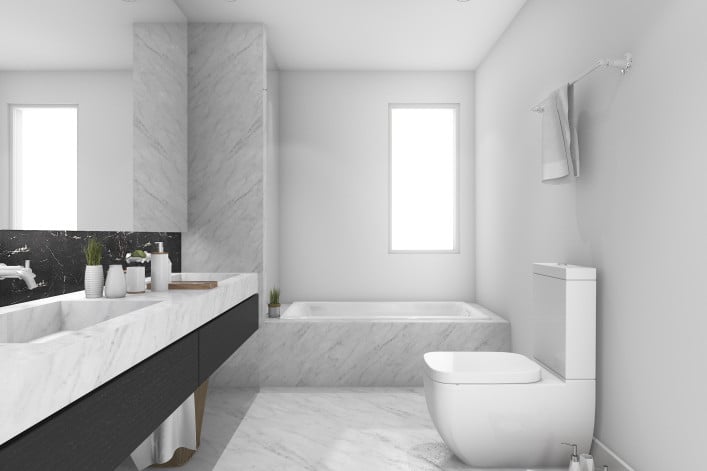
The white marble in my bathroom is starting to turn brown. Is there anything I can do?
This article addresses the common issue of white Carrara marble in bathrooms turning brown, a problem frequently encountered after a renovation. The discoloration, which appeared around the bathtub area about a year after installation, raises questions about its cause and responsibility for resolution. Experts consulted on this matter offer insights and potential solutions.
Fraser Patterson, founder and CEO of Bolster, explains that grout, despite its intended function, is porous and susceptible to staining. He also points out that white or Carrara marble often contains iron deposits. When these deposits are exposed to water, they can oxidize, leading to rust stains in both the marble itself and the surrounding grout. This chemical reaction is identified as a likely cause of the browning.
Regarding responsibility, Patterson notes that most contractors provide a 12-month warranty on workmanship and materials. However, some may offer extended warranties for specific types of work where problems tend to emerge later. He advises contacting the contractor, even if the issue falls outside the official warranty period, as some may offer assistance out of goodwill or due to current workload. Jeff Schneider of Gotham Brokerage suggests that the problem could stem from damage to the shower pan, which might be covered by an insurance claim. He recommends filing a claim promptly to allow the insurance company to investigate the cause.
Deanna Kory, an agent with Corcoran, frequently observes this discoloration and generally advises against using white marble for bathroom floors or showers, especially with an eye toward resale. She attributes the browning to minerals leaching from water into the porous stone. Kory mentions that many contractors may not employ methods to prevent this issue. As alternatives, she suggests using white glass or man-made tiles that mimic Carrara marble's appearance but lack its porous nature.
General contractor Jeff Streich of Prime Renovations recounts an instance where incorrect, non-stainless steel screws caused rusting in marble. Replacing the affected tiles and using stainless-steel screws resolved the problem. Streich outlines a hierarchy of solutions for homeowners. The first, and least expensive, option is to use a marble cleaning product called poultice, ideally applied by a professional stone cleaner recommended by the contractor. If poultice is ineffective, the next step involves replacing the discolored tiles. Streich cautions that finding perfectly matching Carrara marble pieces can be challenging and costly, particularly for large slabs. He advises good contractors typically purchase extra tiles for such contingencies, which can significantly simplify replacement. The cost for replacing individual tiles typically ranges from $300 to $700 and takes a few days, though the new grout may appear whiter than the aged existing grout.
Finally, Gil Bloom of Standard Pest Management introduces an additional consideration: the potential for moisture issues to lead to mold or fungus. Such conditions can attract insect pests like psocids (book lice), fungus/plaster beetles, and fungus gnats, which feed on minute amounts of fungus. If this occurs, it becomes necessary to address the underlying moisture problem by drying out the environment, possibly with a dehumidifier, and potentially administering pest treatment.
#BathroomRenovation #CarraraMarble #MarbleDiscoloration #HomeImprovement #GroutStaining #MoistureDamage #HomeMaintenance #RenovationWarranty #PestControl #BathroomRenovation #CarraraMarble #MarbleDiscoloration #HomeImprovement #GroutStaining #MoistureDamage #HomeMaintenance #RenovationWarranty #PestControl
0 comment in total
 No comments yet
You may also like
How to Get Red Wine Stains Out of White Marble Countertops

Is brown a good colour for a bathroom? 10 brown bathroom ideas that will convince you it is
This changes everything! Experts are advising we stay away from marble in small bathrooms. Here's why

9 important tips for choosing a white marble slab

Moving the Toilet Just 4 Inches Made a Marble Walk-In Shower Possible in This Guest Bath
What to do about white painted floors that are starting to yellow

Clean up those marble countertops and keep your stone protected from stains

How To Clean Marble Countertops And Tile

Traditional Bathroom Tile Is Out—Here’s What to Do Instead
I Regret This "Light and Bright" Bathroom Feature (It's Impossible to Keep Clean!)