logo

Ideal House APP

Your Go-To Interior Design Hub
HomeHome
BoardBoard
ExploreExplore
Logo
B
Beamish

The best art frame TVs of 2025: How do Samsung, Hisense, and TCL models compare?

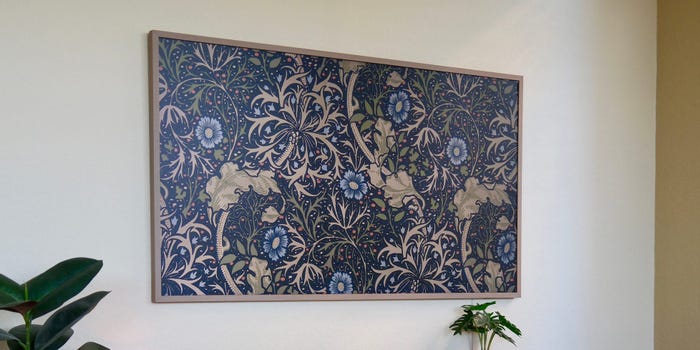
Art frame TVs are designed to blend seamlessly into home décor by mimicking framed artwork when not in use. These televisions typically feature matte, canvas-like screens, ultra-slim wall mounts for a flush fit, customizable bezels, and access to digital art galleries. Samsung pioneered this category with its Frame TV series, which debuted in 2017, but other brands like Hisense and TCL have since introduced their own art-inspired models, often at more affordable price points. The primary appeal of these TVs lies in their aesthetic integration into a living space, transforming an otherwise black rectangle into a decorative element. Samsung's standard Frame TV is often considered the best overall for most users due to its comprehensive design features. It includes a matte screen, support for magnetic bezels (sold separately), a flush wall mount, and a motion sensor that activates art mode when someone is present. A key feature is the wired One Connect Box, which consolidates power and device connections into a single, thin, transparent cable, allowing for a clean, cable-free wall aesthetic. Samsung's Art Store offers a vast catalog of high-quality digital artwork, though full access requires a paid subscription. While its anti-glare matte display performs well in bright rooms, its picture quality, with a brightness of around 500 nits and edge-lit backlighting, is considered mediocre compared to standard QLED TVs, particularly in dark environments where uneven lighting can be noticeable. The Frame TV is available in various sizes from 32 to 85 inches. The Samsung Frame Pro TV represents the high-end option, offering superior picture quality. This model incorporates all the design features of the standard Frame TV but enhances them with a wireless One Connect Box and Mini LED edge-lit local dimming. The wireless connection box significantly increases placement flexibility, requiring only an outlet for the box itself, not a direct connection to the TV. The Mini LED backlight boosts peak brightness to around 1,000 nits, providing bolder HDR highlights and better performance in bright rooms, along with deeper black levels than other art TVs. However, uneven dimming can still occur in very dark scenes. The Frame Pro is available only in larger sizes (65, 75, and 85 inches) and, like the standard model, requires a subscription for the full Art Store and separate purchase for magnetic bezels. The Hisense CanvasTV serves as a strong, more affordable alternative to Samsung's Frame. It offers similar core features, including a matte screen, magnetic bezel support, a flush mount, and a motion sensor. A notable advantage is the inclusion of a magnetic bezel and a substantial free library of digital artwork, eliminating the need for a subscription. However, unlike Samsung's models, the CanvasTV's connection ports are built directly into the display, potentially leading to visible cables if not managed carefully. Its viewing angles are also more limited than Samsung's offerings, though its picture quality is comparable to the standard Samsung Frame in terms of brightness and color saturation. Customization options for bezels are fewer due to limited third-party availability. The TCL NXTVISION TV is presented as an honorable mention and is typically the most budget-friendly option. It features a matte display, a slim frame, and a flush wall mount, and includes a light wood-style magnetic bezel. TCL provides over 100 free digital art pieces, though this selection is smaller than Hisense's free library and Samsung's paid Art Store. The NXTVISION lacks a motion sensor and its connection ports are integrated into the TV panel, similar to Hisense, which can complicate cable management. Art customization options are limited. The TV does not include a basic stand, though a separate rolling stand is available for purchase. Picture quality is comparable to the standard Samsung Frame and Hisense CanvasTV, though it is slightly dimmer, with marginally wider viewing angles than the Hisense model. This TV is best suited for those prioritizing style on a budget, with less interest in advanced art mode features or extensive customization. Overall, while art frame TVs prioritize aesthetics, they generally compromise on peak picture quality compared to traditional midrange and high-end TVs, especially concerning contrast and black levels, making them less ideal for home theater enthusiasts who prioritize image performance. #ArtFrameTVs #SamsungFrameTV #HisenseCanvasTV #TCLNXTVISION #HomeTechnology #InteriorDesign #DisplayTechnology #SmartTVs #ProductReview #ArtFrameTVs #SamsungFrameTV #HisenseCanvasTV #TCLNXTVISION #HomeTechnology #InteriorDesign #DisplayTechnology #SmartTVs #ProductReview
No comments yet