




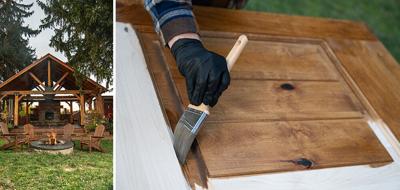
No stain, no gain: Staining exterior wood is a simple way to boost outdoor living spaces
The arrival of warmer weather signals an opportune moment for homeowners to address the preservation of exterior wood surfaces. This includes common outdoor elements such as decks, porches, fences, siding, and outdoor furniture. A key recommendation from paint brand Sico emphasizes a 'less is more' approach when applying exterior wood stains. According to Louis-Philippe Morand, senior marketing manager for Sico, effective stain performance relies on thorough and even penetration into the wood. Applying an excessively thick layer of stain can impede the wood's ability to breathe, potentially leading to undesirable outcomes. These negative results can manifest as streaks, drip marks, and suboptimal surface protection, which may ultimately cause peeling, flaking, and moisture damage.
Morand notes that a primary challenge encountered by individuals undertaking wood staining projects is achieving a uniform and consistent finish. In response to this common issue, Sico has introduced a new line of one-coat 'grab-and-go' wood stains, branded Sico Formula 77. This product line is designed to simplify the staining process, enabling both first-time DIY enthusiasts and experienced professionals to achieve a flawless finish with greater ease.
Several essential tips are provided to ensure optimal results for any exterior wood staining job. Firstly, preparation is paramount. Before commencing the staining process, it is crucial to inspect the wood surface thoroughly. The surface must be free from dirt, dust, mildew, algae, moss, leaves, and loose wood fibers. If necessary, a wood cleaner or a household solution comprising one part bleach to three parts water can be used to remove these particles. The surface should then be cleaned either with a garden sprayer or by scrubbing with a hard bristle brush, followed by a thorough rinse with water.
After rinsing, the wood needs to dry completely for two to three sunny days. Subsequent to drying, the surface should be sanded to eliminate any residual material and to open the wood pores, facilitating better stain absorption. For vertical surfaces, 80–120 grit sandpaper is recommended, while 60–80 grit sandpaper is suitable for horizontal surfaces. A simple absorbency test involves sprinkling water on the wood: if water beads on the surface, further sanding is required; if the water penetrates within two minutes or less, the wood is ready for staining. It is advisable to avoid staining if rain or any form of condensation is anticipated, particularly late in the day as temperatures drop.
Secondly, whenever feasible, all six surfaces of the wood planks should be coated. Special attention should be given to covering end grains and any cut or damaged areas to ensure adequate sealing against moisture absorption. This practice helps regulate the natural moisture exchange within the wood, allowing it to breathe properly. Thirdly, the most effective tool for stain application is a brush, although rollers, sprays, and pads can also be used. However, these alternative tools may lead to increased pooling of the stain. For superior results, staining should ideally be performed in the shade, following the sun's movement to avoid direct sunlight exposure. Finally, to maintain the appearance and integrity of exterior wood surfaces, re-staining every two to three years is recommended. Certain surfaces, especially those subjected to heavy use or harsh conditions like winter shoveling on a deck, may require more frequent re-application. When re-staining, proper surface preparation remains critical, as merely staining over existing cracks and peels offers only a temporary, superficial solution.
#ExteriorWoodStaining #HomeImprovement #DIYProjects #WoodCare #OutdoorLiving #SicoPaints #SurfacePreparation #WoodProtection #ExteriorWoodStaining #HomeImprovement #DIYProjects #WoodCare #OutdoorLiving #SicoPaints #SurfacePreparation #WoodProtection
 No comments yet