1/6
Masdar City’s Phase 2 Master Plan Moves Forward
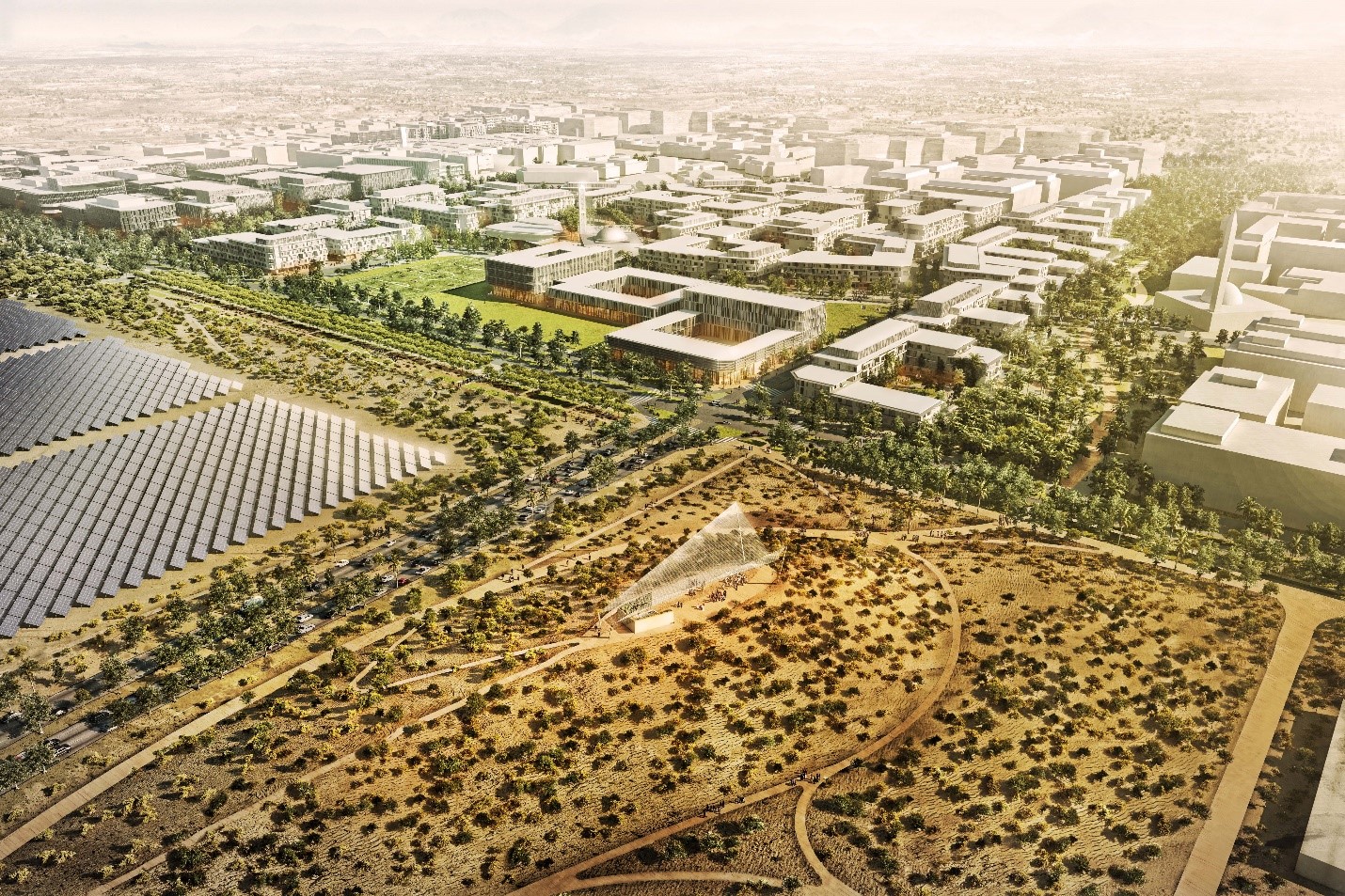
Masdar City, located outside Abu Dhabi in the United Arab Emirates, is advancing with the detailed master plan for its Phase 2 development. This initiative aims to push the boundaries of urban design and community building by creating a living environment with a minimal carbon footprint while maintaining a high quality of life. The Boston-based firm CBT is leading the design for Phase 2, which recently earned the 2015 American Institute of Architects Middle East Design Award for its excellence in urban design and planning, particularly for its integration of residential, research, and development clusters within a cohesive urban structure.
Masdar City Phase 2 seeks to establish a replicable and market-friendly model for sustainable urbanism. The design principles are based on comprehensive guidelines spanning four levels, ensuring that sustainability goals are met and the city's unique character is reflected across all scales. This approach provides a blueprint for other communities in harsh environments, such as the American Southwest, to adopt sustainable living practices. The plan emphasizes creating an authentic identity for Masdar City, blending innovation with local culture and environment. Features like sikkak (pedestrian pathways) and barahaat (community courtyards) are designed to offer unique cultural and pedestrian experiences, fostering a strong community identity. A notable landmark, Gateway Hill, is planned at the city's entrance, which will serve as an iconic symbol and an environmental education center, highlighting the city's connection to its natural surroundings.
Sustainability is central to the Phase 2 master plan, with a strong focus on passive design strategies. These include a fine-grain urban fabric, environmental optimization, and hydro-zoning to create a cooler and more comfortable built environment, even in the desert climate. The plan aims to achieve the Abu Dhabi Urban Planning Council’s Four Pearl Community Rating under the Estidama sustainability program, which is comparable to LEED certification. Key sustainability targets include a 40% reduction in energy consumption compared to ASHRAE standards, recycling 70% of demolition and construction waste, and heating 75% of hot water using solar power.
Innovative approaches to solar, water, and wind management are integrated into the design. Buildings are strategically positioned nine meters apart to maximize shade, potentially lowering temperatures by up to 15 degrees Celsius. Natural green elements with low reflectivity and extended roof canopies, overhangs, and balconies further enhance shading for pedestrian areas. Water management involves a hydro-zoning strategy that allocates water resources efficiently across diverse landscape typologies, including lush courtyards and desert-inspired parks. The selection of 70% native, drought-tolerant plant species contributes to a significantly reduced water demand, with an estimated consumption of only two liters per square meter daily. High-efficiency water features and a dew net collection system are also incorporated to enhance microclimates and conserve water. Additionally, 60% of operational wastewater will be diverted from landfills.
Wind analysis played a crucial role in designing city blocks and linear parks to channel prevailing winds, creating comfortable microclimates throughout the city. Walkability is prioritized, with only 20% of land dedicated to automobiles and streets, compared to 30-35% in traditional cities, allowing for more space for diverse and attractive walking and biking environments. The iconic sikkak and shared streets connect to a robust multi-modal transit system, linking neighborhoods and cities. Masdar City also serves as a hub for innovation, integrating knowledge sharing and research in renewable energy and clean technology. It hosts various institutions and operations, including the Masdar Institute of Science and Technology, GE’s Ecomagination Centre, and the International Renewable Energy Agency, among others. Phase 2 will further expand this innovation ecosystem with facilities such as the Masdar Solar Hub and an Eco-Villa Prototype, solidifying Masdar City's role as a leader in sustainable urban development.
#MasdarCity #SustainableUrbanism #EcoFriendlyCity #PassiveDesign #CleanTechnology #UrbanPlanning #RenewableEnergy #SmartCity #EnvironmentalSustainability #MasdarCity #SustainableUrbanism #EcoFriendlyCity #PassiveDesign #CleanTechnology #UrbanPlanning #RenewableEnergy #SmartCity #EnvironmentalSustainability
 No comments yet
Say Yes to New Housing—Before Anyone Even Asks To Build It
Urban planning theory is ripe for a revamp, as ‘2040’ court decision and the pandemic show

What's slowing down Palm Beach County construction? I'll tell you. | Opinion