



1/14
Living wall ideas to create a stylish vertical garden in your space
Living walls offer an on-trend and impactful way to incorporate greenery into outdoor spaces, regardless of size. This planting technique allows for the creation of lush vertical gardens, adding a unique and personal touch to any exterior. Marcus Eyles, Head of Horticulture at Dobbies, highlights that living walls introduce greenery, refresh spaces, and create a modern, sophisticated aesthetic with added interest and color. The trend has seen increased adoption in residential gardens, with systems varying from simple hanging plant pots to advanced modular, hydroponic panels that automate water and nutrient delivery.
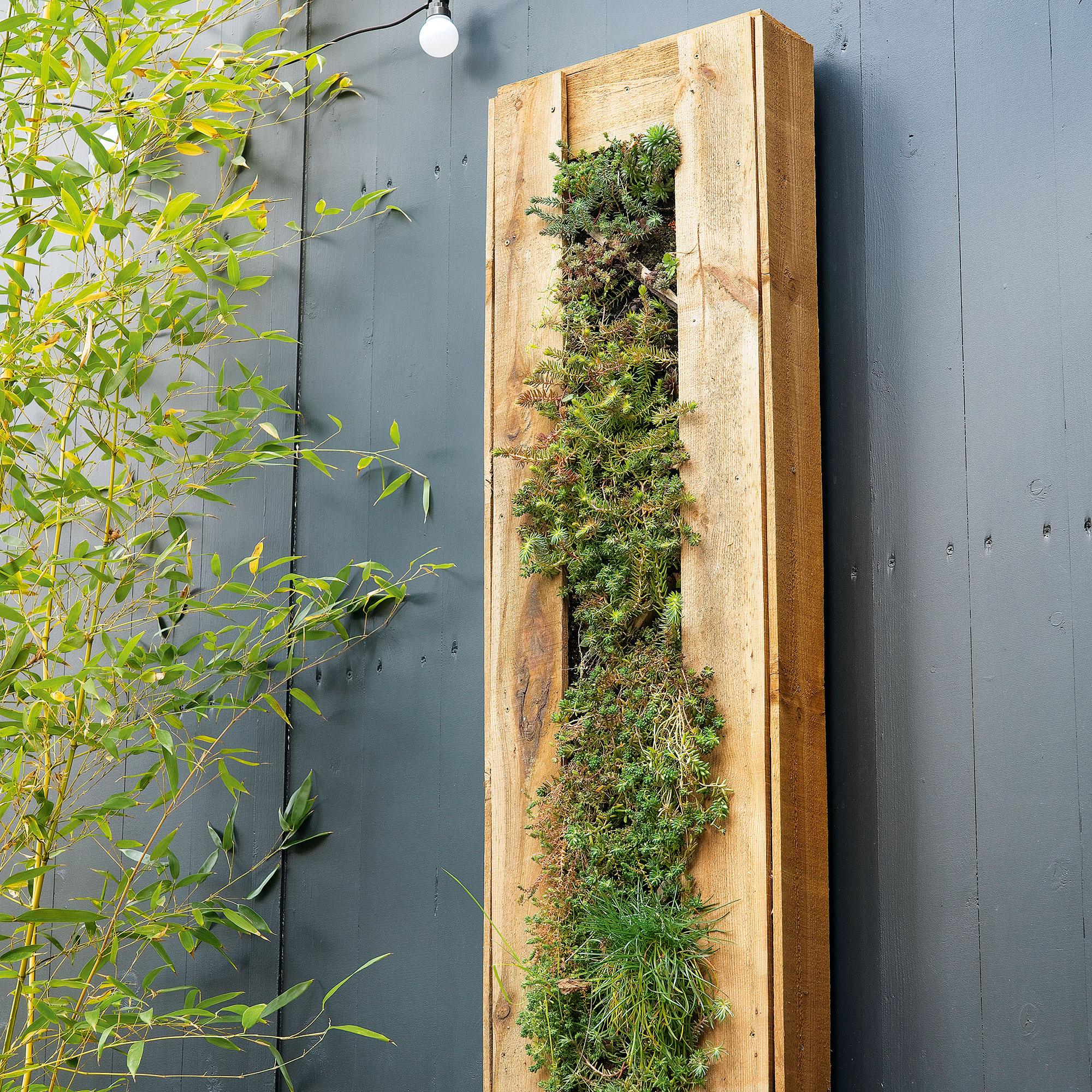
For smaller spaces or to create visual breaks on larger walls, framing foliage can make a significant impact. Selecting a frame that contrasts with the background wall enhances the plants' visibility. An alternative for those who prefer flexibility or seasonal changes is using a trellis. Large plants can be placed at the base, with potted foliage and flowers hung from brackets, allowing for easy rotation, especially for floral displays. Incorporating delicate flowers such as Vinca minor or Saxifraga x urbium can add texture, color, and visual interest without overwhelming the foliage-focused design. These rambling varieties are well-suited for vertical planting.
For individuals seeking the aesthetic of a living wall without the maintenance, botanical tiles can be used to create a mural. This approach, combined with climbing plants, can achieve a three-dimensional effect. To ensure cohesion in a garden, raised beds can be integrated with living walls, planting similar or complementary foliage to blur the lines between the wall and the beds. Beyond plants, vertical insect hotels can be incorporated to support local biodiversity, benefiting garden pollination.
Even compact outdoor areas like courtyards or balconies can benefit from living walls, as vertical planting can conceal unattractive walls or fences, making limited spaces feel more expansive and closer to nature. Wild planting styles, incorporating long grasses and climbing ivy, create a natural, textured look. Heucheras and ferns require regular tidying, and annuals benefit from bi-weekly liquid feeding during summer to maintain their appearance. Colorful bedding plants can be used to add vibrant hues, with deadheading necessary to encourage continuous blooms. When attaching a living wall to a house, installing a waterproof membrane is crucial to prevent damp issues.
Ready-made modular panels simplify the implementation of living walls, allowing for easy installation indoors or outdoors, and can be scaled to fit any space. Marcus from Dobbies notes that these planters can be fitted onto solid areas and tailored in size. Maintaining leafy plants like ferns and other evergreen foliage involves watering every two to three days, or more frequently in summer, checking soil moisture. A creative approach involves a living gallery wall, hanging various potted plants in frames for a budget-friendly and low-maintenance option. Finally, cultivating climbing plants against a wall or fence can mimic a living wall's lush coverage without a complex irrigation system, though consistent watering is essential due to potential 'rain shadow' effects. The concept can also be adapted for indoor spaces, such as creating a framed planter system in a living room, using irrigated troughs, live panel modular systems, or planting pockets.
#LivingWalls #VerticalGardens #GardenDesign #OutdoorSpaces #PlantingTechniques #HomeDecor #DIYGardening #SustainableGardening #LivingWalls #VerticalGardens #GardenDesign #OutdoorSpaces #PlantingTechniques #HomeDecor #DIYGardening #SustainableGardening
 No comments yet