




In Top Form
Achieving spectacular countertop design often involves innovative and unconventional approaches, such as blending diverse materials, re-purposing materials for different applications, or incorporating unique edge treatments. The goal is to create a 'wow' factor while also fulfilling clients' aesthetic and functional needs. Key elements for a dynamic countertop application include color, texture, proportion, and the unexpected. Edge treatments play a crucial role in achieving this desired effect, requiring careful consideration of the surrounding colors and the overall room design. Performance and ease of maintenance remain paramount, with a growing consumer preference for functional and health-conscious products.
Mixing and matching materials is a prominent trend, enabling the creation of eclectic, personalized spaces. This approach allows for selective or bold use of color, fosters texture and balance, and facilitates different surfaces for various purposes. It also makes high-end materials accessible even within tighter budgets. The integration of diverse materials, such as stone combined with elevated glass, is increasingly common. Sometimes, one surface provides high drama, while others offer subtle support. Natural materials and hues continue to be popular, though they can present challenges, especially regarding durability. For instance, designers often address the desire for warm wood surfaces by integrating more durable materials like quartz, particularly in areas like lavatories, to combine aesthetics with practicality.
Another innovative application involved integrating glass into a stone countertop, creating a seamless yet visually distinct surface. A kitchen project highlighted the mixing of natural materials, combining a thick edge grain Burmese teak countertop with granite. This not only added functionality, such as built-in knife slots and a lower chopping surface, but also introduced warmth to a kitchen often dominated by stainless steel and polished finishes. The article emphasizes how the thickness and overlap of materials can create a unique and finished look.
Beyond aesthetics, there is an increasing focus on healthy and eco-friendly countertop choices. Clients are increasingly interested in antibacterial qualities and stain resistance, demanding materials that can withstand daily use without harm. The use of chemical and stain-resistant sealers addresses these concerns. Environmentally friendly options, such as countertops made from recycled paper with eco-friendly resins, are gaining traction, demonstrating that 'green' materials can seamlessly integrate into any design theme without sacrificing style. Ultimately, a project's success is determined by how well the countertop design aligns with the client's vision, demonstrating that imaginative material use can elevate an ordinary kitchen to an extraordinary one.
Islands serve as prime platforms to showcase unique countertop materials. While two-tiered islands remain popular, standard single-height islands also provide adequate seating in smaller spaces. However, with kitchens generally becoming larger, multi-level islands are becoming a standard feature, offering an opportunity to customize the kitchen to a client's lifestyle. Designing islands with varying heights, materials, and spaces transforms them from simple work surfaces into multi-tasking centers for entertainment, display, and functional activities. A notable trend involves larger countertops extending further than traditional designs, sometimes removing bars to create more expansive, usable surfaces. The article also details a project where a plain kitchen was transformed into an Old World style using a custom island with a unique Old World stone countertop and an innovative edge design that included rounded corners and an overhang for a bar top. This approach created a cohesive look that integrated the kitchen with the adjacent living room.
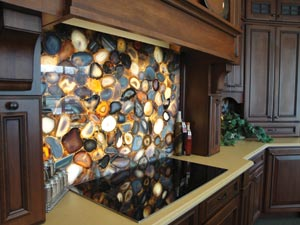
Finally, the importance of lighting in showcasing countertop design is highlighted. In one project, a client's desire to spotlight the countertop material led to its use as a backlit backsplash made of Brown Agate Concetto by CaesarStone, coordinated with Corian. This innovative application, combined with LED tube lights, emphasized the translucent qualities of the stone, creating a unique focal point. This project exemplifies a growing trend towards imaginative use and placement of materials, suggesting that designers will continue to explore diverse options for countertop surfaces and their integration into other areas of the kitchen and bath.
#CountertopDesign #KitchenDesign #MaterialInnovation #SustainableDesign #InteriorDesignTrends #Backlighting #MixAndMatchMaterials #IslandDesign #CountertopDesign #KitchenDesign #MaterialInnovation #SustainableDesign #InteriorDesignTrends #Backlighting #MixAndMatchMaterials #IslandDesign
 No comments yet
New—And Instantly Improved