1/4
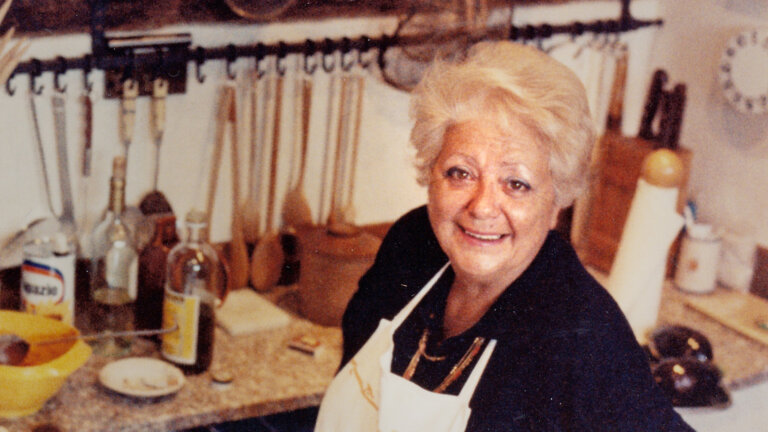
Exploring Italy’s regional flavors through Marcella Hazan’s kitchen
This article details the culinary journey and significant impact of Marcella Hazan, an Italian-born American cookbook author, on American perceptions of Italian food. Hazan, who moved to New York in 1955, initially had no cooking experience but quickly developed a natural aptitude for it. Her approach revolutionized American understanding of Italian cuisine, moving beyond the Southern Italian dishes prevalent at the time to encompass the rich regional diversity of Italy.
Hazan’s seminal work, “The Classic Italian Cook Book,” published in 1973 with her husband Victor’s translation, emphasized the regionality of Italian cooking. She highlighted that Italy's culinary landscape was a collection of distinct regional traditions, a concept largely unknown in America. Hazan, hailing from the Emilia-Romagna region, initially focused on Northern Italian dishes. Her cooking philosophy centered on using a few high-quality ingredients and combining them with intentional skill, a stark contrast to the existing Italian American cuisine she found unappealing. Her influence shifted American appreciation towards a more authentic and nuanced understanding of Italian flavors.
Key recipes that exemplify Hazan’s minimalist yet impactful approach include her famous tomato sauce, which consists of just tomatoes, butter, a halved onion, and salt. This recipe, particularly popular in its earlier iteration with a generous amount of butter, showcases her Emilia-Romagna roots. Another celebrated dish is her roast chicken with lemon, a simple preparation involving a whole chicken seasoned with salt and pepper and two perforated lemons in its cavity. This recipe gained legendary status, even being dubbed “Engagement Chicken” due to its perceived romantic effects.
Hazan’s bolognese, rooted in Bologna where she taught cooking classes, is presented as an architectural dish, with precise layering of seven ingredients and a long simmering process. She relied on her sense of smell to determine when each stage of the dish was complete. Risotto, another Northern Italian staple, was the first dish she taught her son, Giuliano, to make. Hazan favored Carnaroli rice from the Po River Valley, and her risotto with fresh tomatoes and basil exemplifies her ability to infuse both flavor and color into her dishes.
Her second cookbook expanded her culinary scope, as the Hazans traveled across Italy to research and recreate regional dishes. Giuliano recalls their time in Sori, Liguria, where his mother refined her recipe for focaccia with fresh rosemary, a staple in her later work, “Essentials of Italian Cooking.” In the last 15 years of her life, living in Longboat Key, Florida, which she considered a “food desert” compared to Venice, Hazan adapted by developing recipes using more accessible American ingredients and sourcing specialty items online. Her request for Tuscan sorana cannellini beans led Rancho Gordo Beans to produce what are now known as Marcella beans.
Marcella Hazan’s legacy is characterized by her precision as a chef, despite not relying on measurements, and her unwavering commitment to authenticity. Her husband, Victor, described her as “true” and uncompromising. Together, they championed this truth in every recipe they published, significantly shaping how Italian cuisine is understood and prepared globally.
#MarcellaHazan #ItalianCuisine #RegionalFlavors #CookbookAuthor #CulinaryHistory #FoodCulture #ItalianRecipes #EmiliaRomagna #NorthernItalianFood #MarcellaHazan #ItalianCuisine #RegionalFlavors #CookbookAuthor #CulinaryHistory #FoodCulture #ItalianRecipes #EmiliaRomagna #NorthernItalianFood
0 comment in total
 No comments yet
You may also like
Buon Appetito: Inside Milan’s Hottest Culinary Destinations

There’s No Need for Tablecloths or Backsplashes With Zdora


Humble Pizza — London, UK
Italian Kitchen Trends — 5 Emerging Ideas From the Chicest Italian Designers That I Predict Will Go Global in 2025

Art-infused restaurant Carlo’s is Manila’s latest gem, by design studio JJ Acuna

Italian Kitchen Brands Combine Design Flair With Cooking Knowhow — These Are the 9 to Know


Catching Up with Heinz Beck

Manko — Paris, France

In the Kitchen with Marta Azzollini

Your Family Decorator: Monopoli a winner along Italy’s Adriatic
This Premium Line of Italian Ranges Proves Your Stove Can Make a Statement

Italian Kitchen Trends — 5 Emerging Ideas From the Chicest Italian Designers That I Predict Will Go Global in 2025
Orzo Kitchen and Wine Bar delights with classic Mediterranean flavors
What’s it really like to work in a Michelin kitchen? Six far-flung Irish chefs tell their stories

Chef’s corner

We Tried Making Our Own Pasta at Italian Kitchen
La Pergola: Rome’s Only Three-Michelin-starred Restaurant

Caroline Eden crafts travel-evocative recipes from her basement kitchen in Edinburgh
Community spotlight: Kitchen Culture — Shop local and cook together


Rachael Ray Just Gave a Tour of Her Gorgeous Italian Kitchen—Here Are 10 Things to Buy to Copy the Rustic, Chic Vibe