



1/10
Candace Wheeler (1827–1923)
Candace Wheeler, an influential figure whose life spanned nearly a century of rapid transformation in American society, moved from a rural upbringing to the bustling jazz-age New York City. At the height of her career in the late 19th century, Wheeler was instrumental in instigating changes in the lives of American women. While considered a feminist, her approach was not radical; her leadership stemmed from a profound sense of responsibility for less fortunate women and a vision for their financial independence. In an era marked by a devastating war and financial instability, Wheeler prioritized economic empowerment for women over political power. Although she supported women's suffrage, she channeled her energy into training women for self-sufficiency rather than actively pursuing voting rights.
Wheeler initially engaged in not-for-profit benevolent organizations, a conventional avenue for women's charity work in the 19th century. However, she deliberately distinguished herself from the typical 'charity lady,' rejecting the dilettante status often associated with the term. As a middle-class woman, she lacked the financial and social capital typically required to ascend to leadership roles in elite charitable circles. Instead, Wheeler's impact was driven by her artistic talent and strong social conscience. Her effectiveness as a leader was fortified by her passion for art, her connections with prominent artists and designers, the support of her husband and brothers, and her unwavering self-confidence and drive. Leveraging these resources, she built a significant career as a designer of textiles and interiors, as well as a teacher, lecturer, and author.
Between 1877 and 1893, from the establishment of the Society of Decorative Art to her final major commission, the interior design of the Woman's Building at the World's Columbian Exposition, Wheeler was recognized as the national authority on decorative textiles and interiors. She continued to contribute to the design world through her writings, including books, articles, and her autobiography, 'Yesterdays in a Busy Life' (1918).
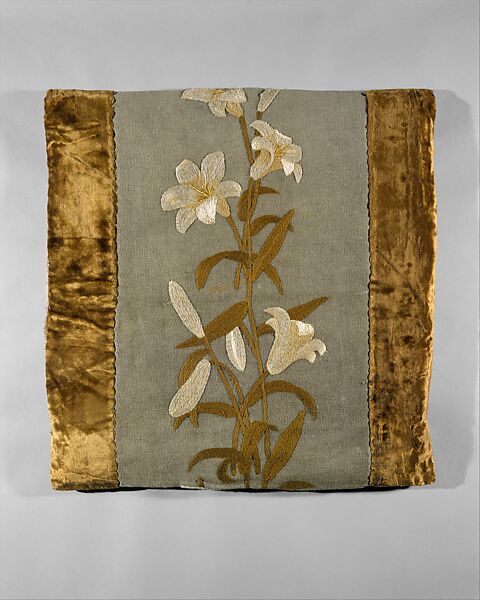
In an era that often undervalued strong women, Wheeler championed art and design as viable professional careers for women, shifting perceptions from hobbies to professions. She was among the first American women to create designs for manufacturers, paving the way for countless female designers, some of whom she personally trained within her woman-run firm, Associated Artists. She also played a pioneering role in establishing interior decoration as a recognized profession. Throughout her extensive life, Wheeler created numerous beautiful objects and promoted a distinctly American style in textile and wallpaper design, characterized by colors and patterns inspired by American flora and adapted to the unique qualities of American light. However, her most profound legacy lies in her role as an early 'career woman' and designer, serving as an inspiring role model for women at the turn of the 20th century, encouraging them to seek equal footing with men in the workforce.
#CandaceWheeler #AmericanDesign #TextileDesign #InteriorDesign #WomenInDesign #19thCenturyArt #SocialConscience #FeministHistory #DecorativeArts #CandaceWheeler #AmericanDesign #TextileDesign #InteriorDesign #WomenInDesign #19thCenturyArt #SocialConscience #FeministHistory #DecorativeArts
 No comments yet