




1/5
Artist Amanda Williams on race, social space and the power of colour
This article profiles Chicago-based visual artist Amanda Williams, highlighting her distinctive approach to exploring race, social space, and urban landscapes through the medium of color. Williams, recognized as a future creative leader by architect Frida Escobedo, leverages her architectural training from Cornell University to critically examine how racial dynamics influence the perceived value of spaces. Her work, showcased in prestigious venues like the Venice Architecture Biennale, MoMA, and the Museum of Contemporary Art in Chicago, challenges viewers to reconsider their understanding of built environments.
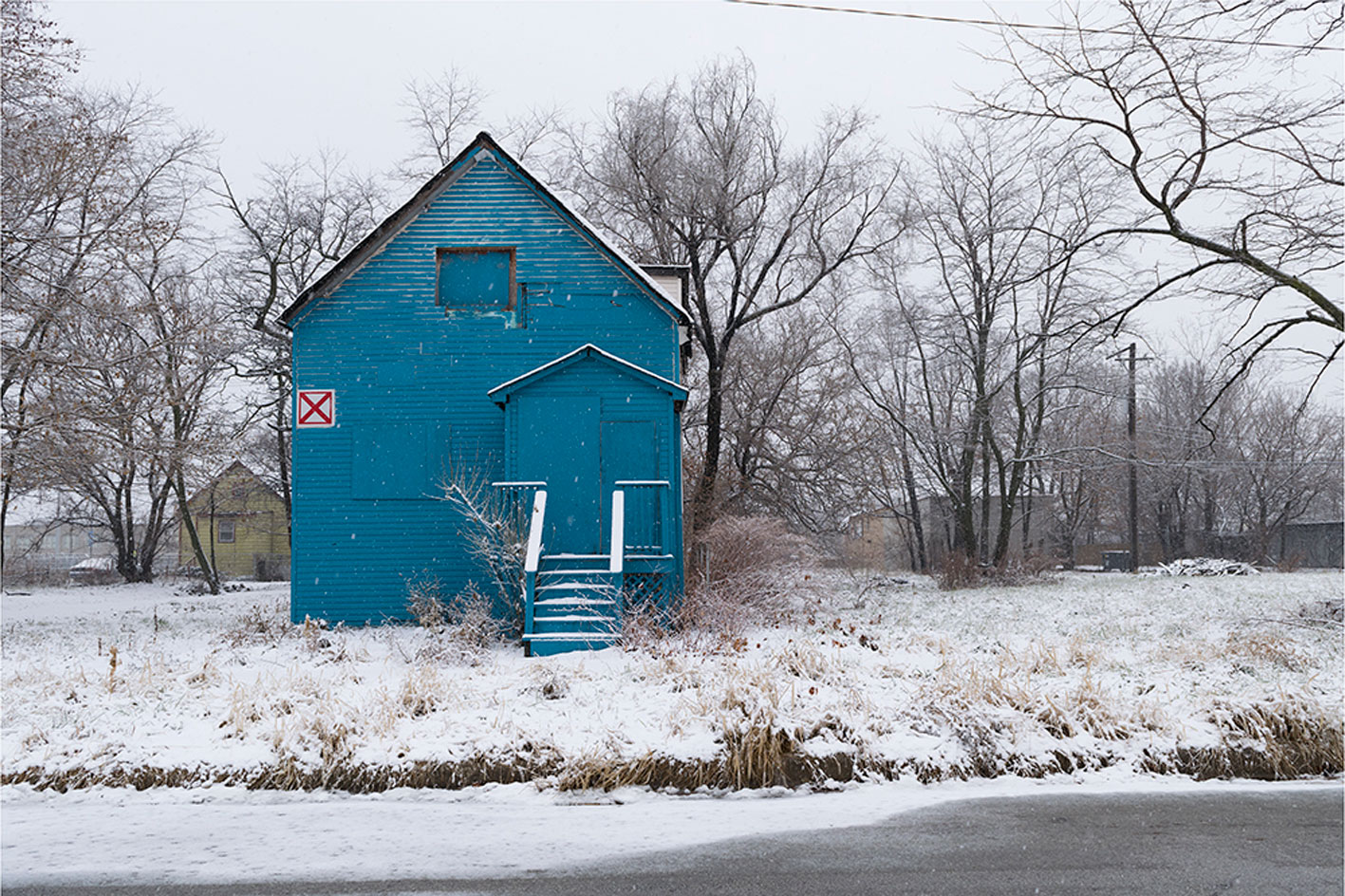
One of Williams' most significant projects, *Color(ed) Theory*, delves into the redefinition of color through the lens of Black culture. This series features eight houses in Chicago’s Englewood neighborhood, all slated for demolition. By painting these neglected structures in specific hues and then photographing them, Williams draws attention to the systemic underinvestment in African American communities. A key aspect of this project is the unique color palette she developed, with each color named after culturally resonant items, places, or spaces within the Black community. Examples include "Pink Oil Moisturizer," referencing a hair product for Black hair, and "Harold’s Chicken Shack," an homage to a popular African American-founded fast-food chain in Chicago. Other colors like "Ultrasheen," "Newport 100s," "Crown Royal Bag," "Flamin’ Hot Cheetos," "Currency Exchange," and "Safe Passage" all carry specific cultural meanings, which Williams notes are immediately understood by members of the African diaspora. This linguistic and cultural nuance highlights the different interpretations and understandings that arise between disparate communities, effectively using color to bridge or highlight these gaps. *Color(ed) Theory* gained significant recognition, being exhibited at MoMA and featured in *The New York Times* as one of the "25 Most Significant Works of Postwar Architecture."
Another notable exhibition, *Embodied Sensations*, a solo show at MoMA in spring 2021, explored themes of bodily autonomy and movement within space. Williams conceptualized this exhibition during the global pandemic, drawing parallels between the disorientation and restrictions experienced by the general population during Covid-19 and the everyday physical and social constraints faced by marginalized groups, particularly Black women. The exhibition included a performance piece where visitors engaged with prompts related to movement, further emphasizing the lived experience of navigating restricted spaces. Williams explains that this shared sense of vulnerability during the pandemic allowed her to remind audiences that such limitations are a constant reality for many.
Looking ahead, Williams is scheduled to participate in a group exhibition titled *Social Works II* at Gagosian London and will present a standalone booth at Art Basel Miami with Rhona Hoffman Gallery. Her year-long project, *What Black Is This You Say*, which began as an Instagram series during the pandemic, has evolved into watercolors, oil paintings, and public art installations displayed at the Storefront for Art and Architecture in Manhattan. Williams views her work as an opportunity to ask challenging questions about racial inequality and the persistent struggle for existence faced by Black individuals globally. She contends that art, design, and architecture have historically contributed to these spatial injustices, making it imperative to address them through creative practice.
Williams expresses optimism about the current moment, believing it to be a crucial period for Black artists and designers to not only be recognized but to thrive. She emphasizes the concept of prosperity, which for her encompasses joy, liberation, and self-determination. This idea is explicitly explored in projects such as *We’re Not Down There, We’re Over Here*, featured in MoMA’s *Reconstructions* exhibition. Through her diverse artistic output—including paintings, installations, and exhibitions—Williams consistently raises critical questions about urban environments, racial undertones, and political issues, asserting that "There is no day when colour isn’t present," underscoring the pervasive nature of these themes in daily life.
#AmandaWilliams #ArtAndArchitecture #ColorTheory #SocialJustice #UrbanArt #BlackCulture #ContemporaryArt #RacialEquality #AmandaWilliams #ArtAndArchitecture #ColorTheory #SocialJustice #UrbanArt #BlackCulture #ContemporaryArt #RacialEquality
 No comments yet