1/7
Another Use for the Turmeric in Your Pantry: Tie-Dyeing Pillowcases
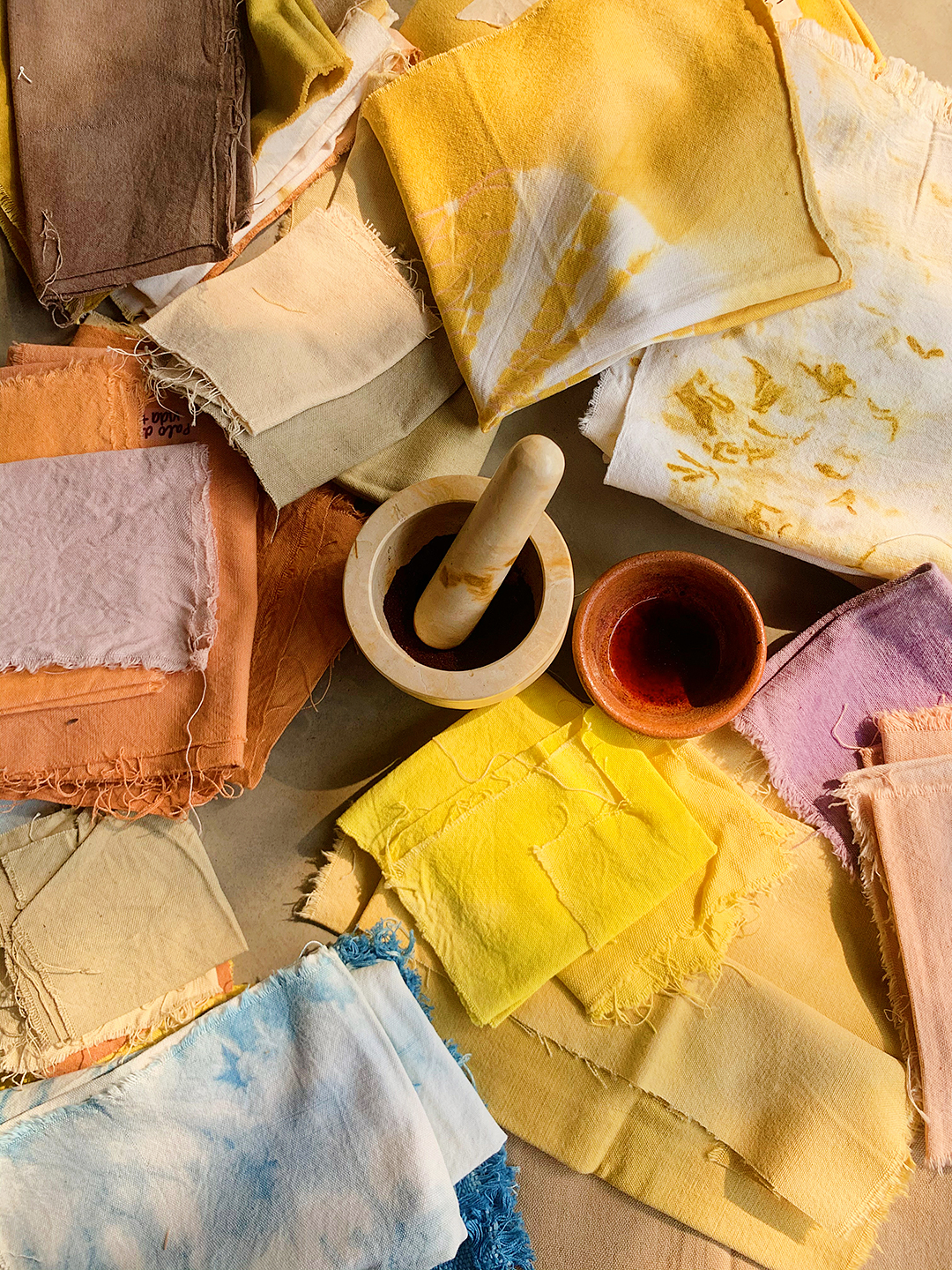
Natural dyeing techniques, a practice with deep historical roots, particularly in places like Guatemala, offer an elevated alternative to conventional tie-dyeing, transforming everyday items into uniquely colored textiles. Molly Berry, founder and creative director of Luna Zorro, a design studio in Antigua, Guatemala, highlights the versatility of natural ingredients in imparting soft hues to fabrics. Her studio not only specializes in these methods but also conducts workshops to teach how various natural elements, ranging from vegetables and fruits to flowers and even insects, can be used to dye natural fibers such as cotton, linen, silk, and wool. This tradition is particularly significant in Guatemala, where communities in the Valley of Guatemala have historically used cochinilla insects to produce vibrant pinks, fuchsias, and purples for centuries, a color range once reserved for royalty.
Berry notes that while industrial dyeing became more prevalent, efforts are now being made across Guatemala to revive and preserve this natural dyeing heritage. She explains that natural dyeing is an accessible process, though it can be time-consuming, and can be achieved using many common pantry items like avocado pits and red onion skins, which would otherwise be discarded. Even different species of mushrooms can yield unique color palettes; for instance, Boletus mushrooms produce shades of gray, while surprise webcap mushrooms can turn fabrics pink. Berry consistently expresses amazement at the transformations, such as dipping fabric into indigo or witnessing perricone flowers impart a tea-like scent while dyeing items yellow.
This article provides a step-by-step guide to tie-dyeing pillowcases using turmeric, a readily available spice. The process begins with gathering supplies, including a clean bucket, a large stainless steel pot, stove, tongs, cooking spoons, rubber gloves, measuring spoons, a small scale, two 100 percent cotton pillowcases, 2.5 cups of turmeric powder, 2 cups of soy milk, and water. The first step involves washing the pillowcases to remove any dirt, oil, or natural waxes, ensuring they are made from natural fibers like cotton, linen, wool, or silk, as synthetic fibers will not absorb the dye.
Next is the mordanting process, which pretreats the fabric to enhance dye bonding. Instead of traditional metallic salts, this method uses soy milk as a binder. Two cups of soy milk are diluted with enough water in a bucket to fully submerge the pillowcases, which are left to soak for at least 10 hours or overnight. After soaking, the pillowcases are gently squeezed to remove excess liquid and air-dried in a shaded area until completely dry, ensuring the soy milk is fully bonded to the fabric. The dye bath preparation follows, where the amount of turmeric powder is determined by the fabric's weight; for two cotton pillowcases weighing approximately 200 grams each, 40 tablespoons (2.5 cups) of turmeric powder are needed. This powder is dissolved in hot water in a stainless steel pot, ensuring enough water for the fabric to float freely, and then boiled for 15-20 minutes, stirring until fully dissolved, without adding the pillowcases yet. An advanced tip suggests experimenting with baking soda and vinegar to alter pH levels and color intensity.
Before dyeing, the pillowcases are slightly dampened with regular water, and patterns are created by folding, twisting, tying, or manipulating the fabric with rubber bands, string, or clothespins. For the dyeing phase, the manipulated pillowcases are placed into the pot using tongs, and heated on medium for 40 minutes to an hour, turned every 15 minutes until golden, and then allowed to cool in the pot for up to an hour. Finally, after cooling, the pillowcases are removed with tongs and rinsed in cold water until the water runs clear, ensuring they are not washed with other clothing or in a washing machine during this stage. They are then air-dried in a shaded place before being exposed to the sun, completing the natural tie-dyeing process.
#NaturalDyeing #DIYHomeDecor #TurmericDye #TextileCrafts #Sustainability #GuatemalanCrafts #HomeStyling #NaturalDyeing #DIYHomeDecor #TurmericDye #TextileCrafts #Sustainability #GuatemalanCrafts #HomeStyling
 No comments yet
6 Ways to Decorate with Sherwin Williams' 'Dried Thyme'

7 Pillow Inserts to Adorn Your Couch or Bed


The 10 Best Fabric Dyes for Clothing, Upholstery and More


Throw Pillows So Cozy You Won’t Want To Push Them Off The Couch


7 Pillowcases That Are So Good, We'd Buy Them Separate From Their Matching Sheets
A Whole New World: 12 Luxurious Turkish Fabrics That’ll Transform Your Home