1/2
A Paris Apartment That Spans Styles and Centuries (Published 2021)
For nearly five decades, beginning in 1969, Jean-Paul Beaujard, a Burgundy-born antiques dealer, established himself as a leading authority on 19th-century French aesthetics on the Upper East Side of Manhattan. His eponymous shop on East 76th Street was renowned for its curated blend of Napoleon Bonaparte’s First Empire style, characterized by disciplined stripes and allusions to Ancient Egypt and Imperial Rome, alongside the late 19th-century Art Nouveau furnishings of French cabinetmaker Louis Majorelle. Beaujard, who developed a passion for antiques at a young age, utilized his Art Deco duplex apartment in New York as a personal canvas for his eclectic tastes. He frequently reconfigured his living spaces, incorporating diverse pieces such as a lion paw table in the Troubadour style of Charles X or a giltwood velvet-covered sofa alongside a seven-foot-tall palm tree crafted from brass and steel. His personal aesthetic extended beyond 19th-century French furnishings, drawing inspiration from 18th-century Pavlovsk Palace watercolors, the large-scale oils of French painter Felix Courché, and the work of Parisian decorator Madeleine Castaing.
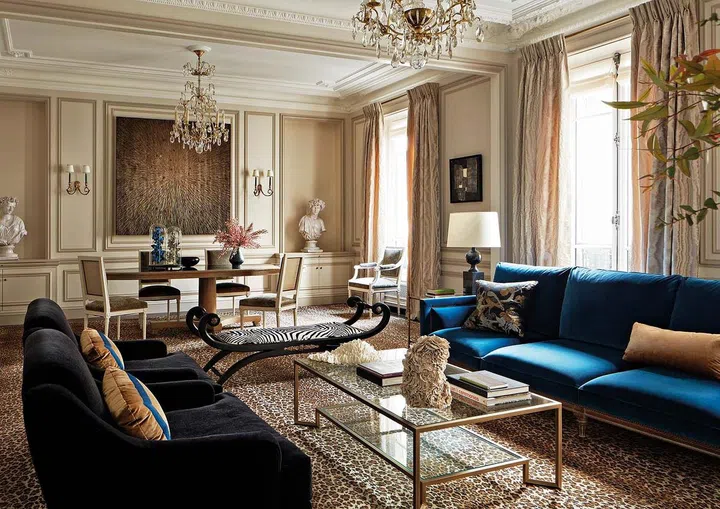
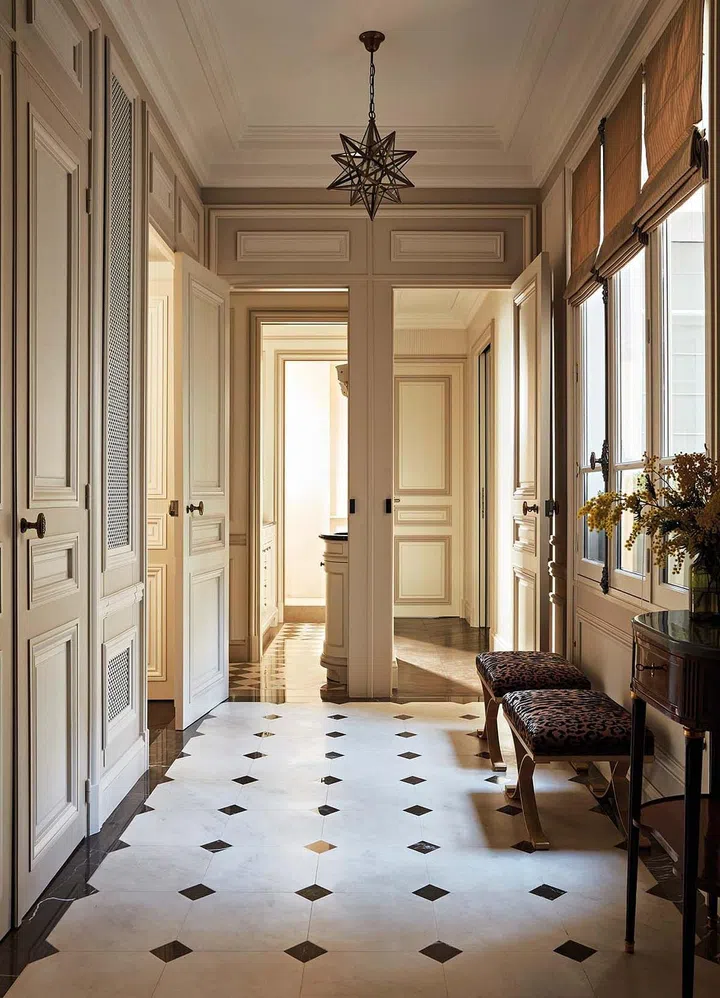
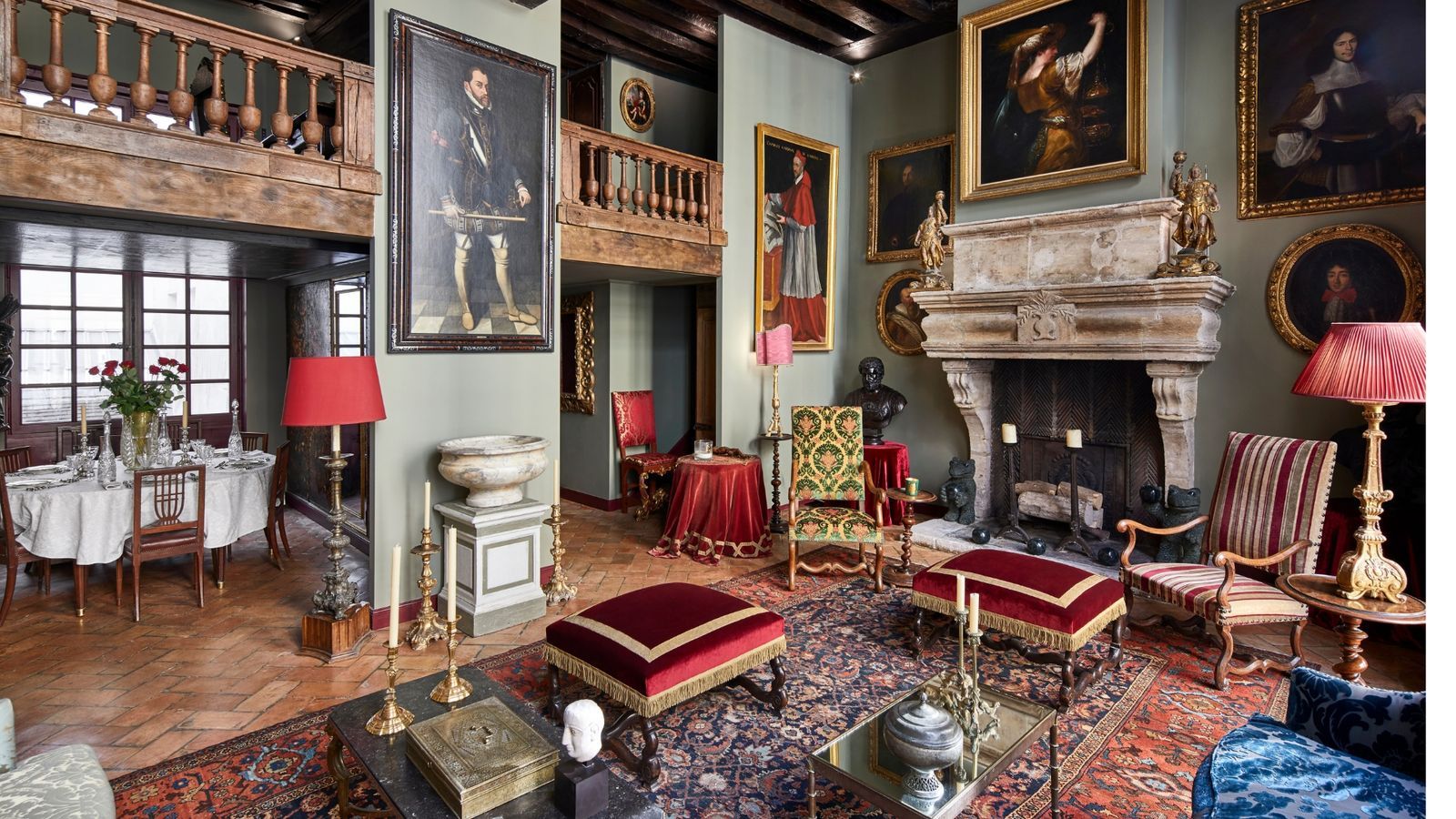
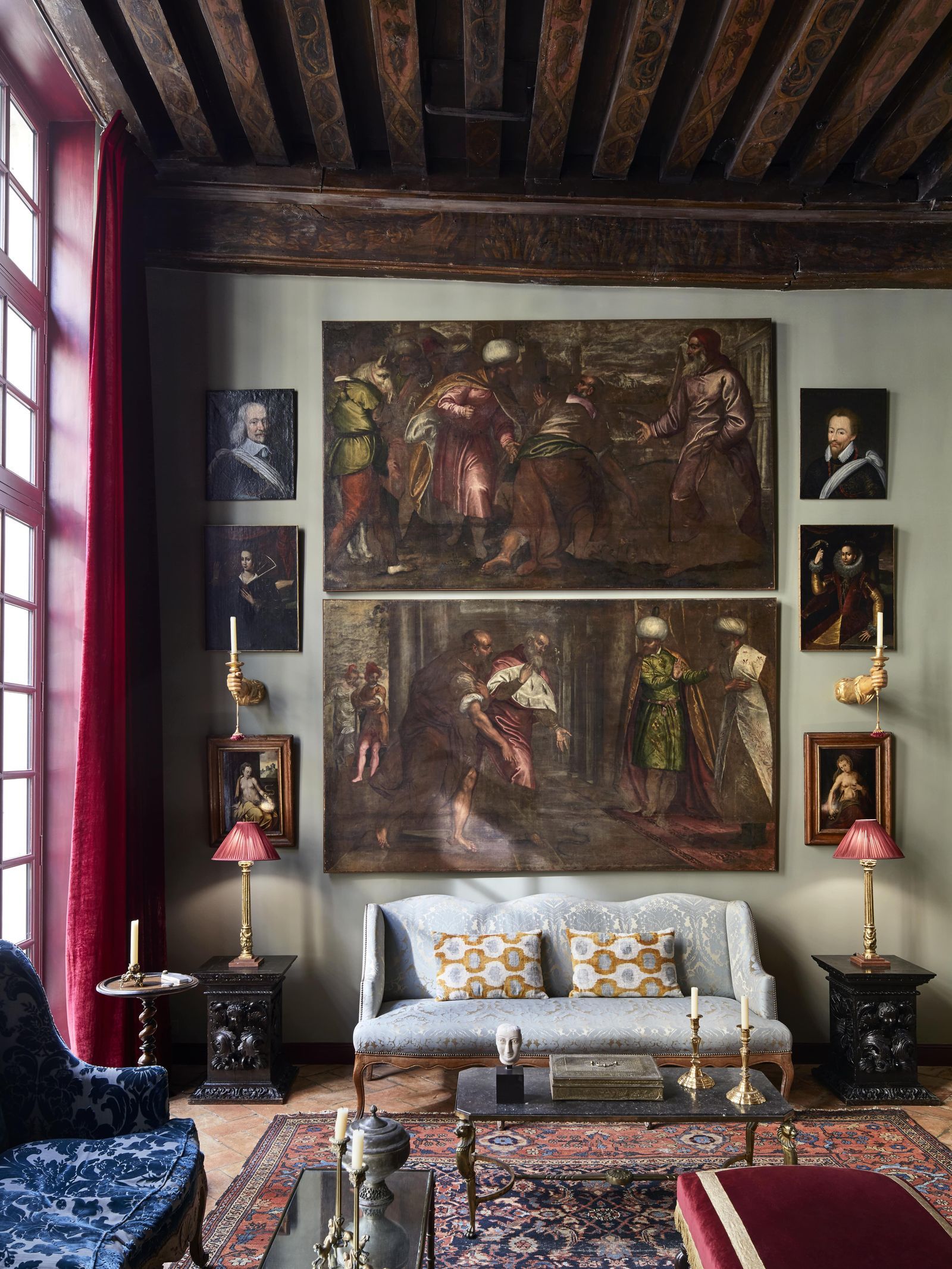
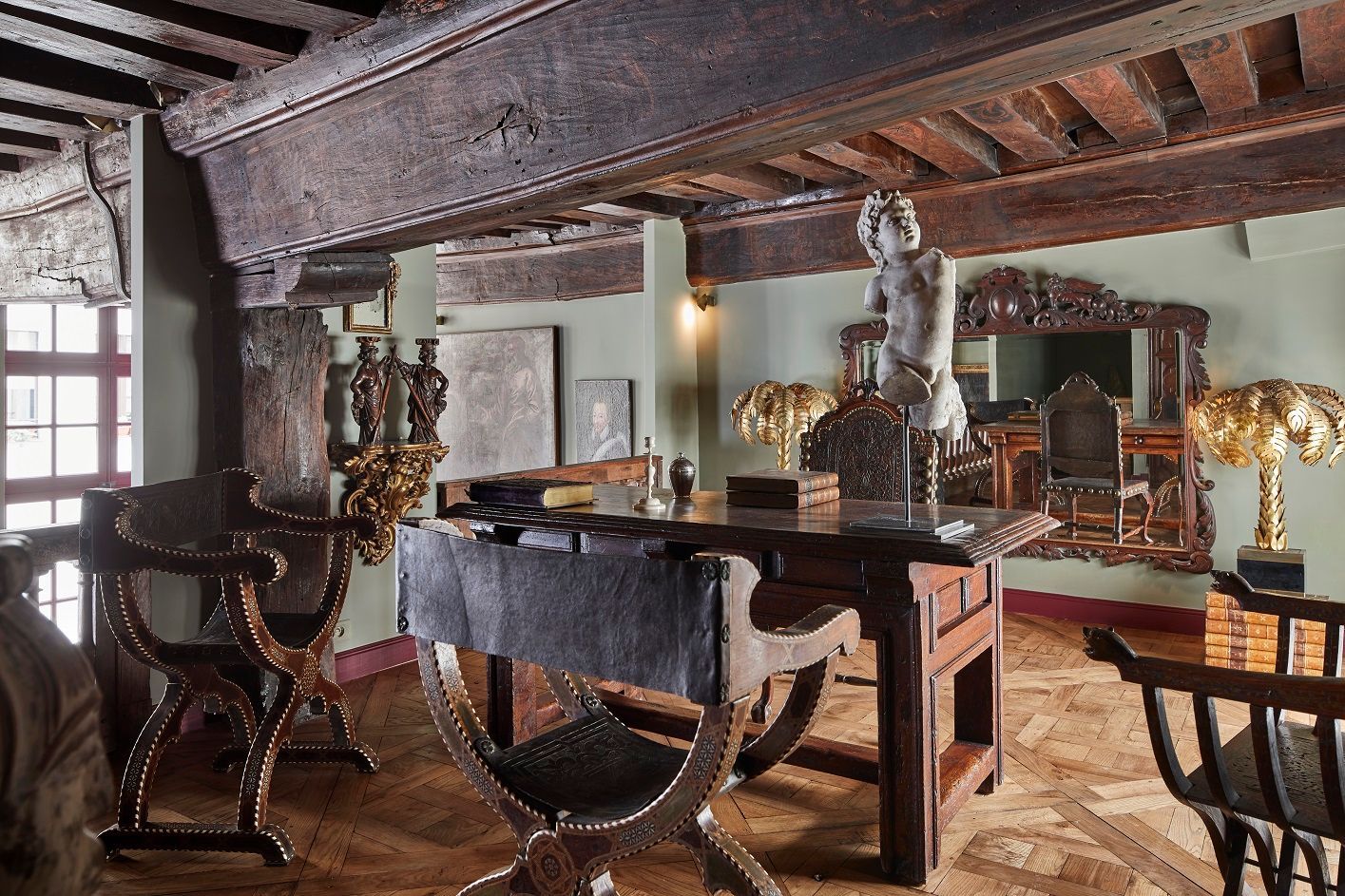
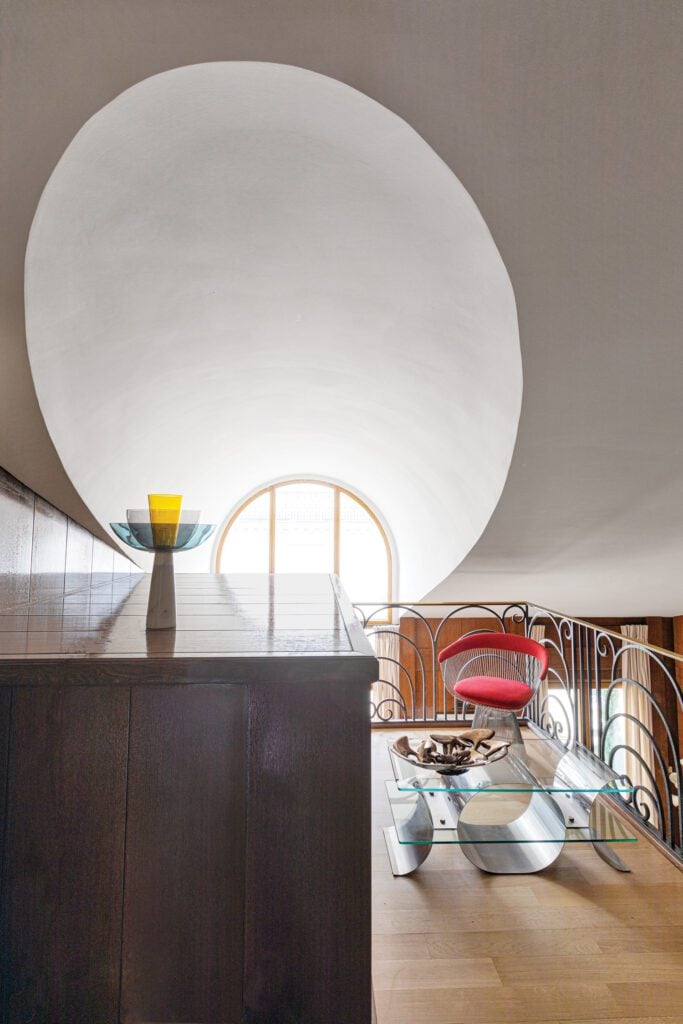
In 2017, Beaujard made the significant decision to relocate permanently to Paris, his hometown, selling his duplex and closing his New York shop. He had owned a 2,200-square-foot apartment in an Art Nouveau building in the Seventh Arrondissement of Paris for over two decades, previously using it primarily during buying trips. Initially, the apartment's decor was relatively minimalist, featuring ivory and wheat tones, despite his extensive restoration of its surfaces, including parquetry floors and boiserie. Since his return to Paris, Beaujard has transformed the two-bedroom penthouse, infusing it with his characteristic theatricality and a newfound sense of insouciance. The apartment boasts a 25-foot-tall octagonal salon at its center, with terraces offering views of the neighborhood's mansard roofs. An internal rounded balcony on the second floor overlooks the living room and provides views of Notre-Dame through floor-to-ceiling windows. This space now serves as a vibrant amalgamation of furnishings spanning two centuries, transitioning between explosively decorative and airily calming elements.
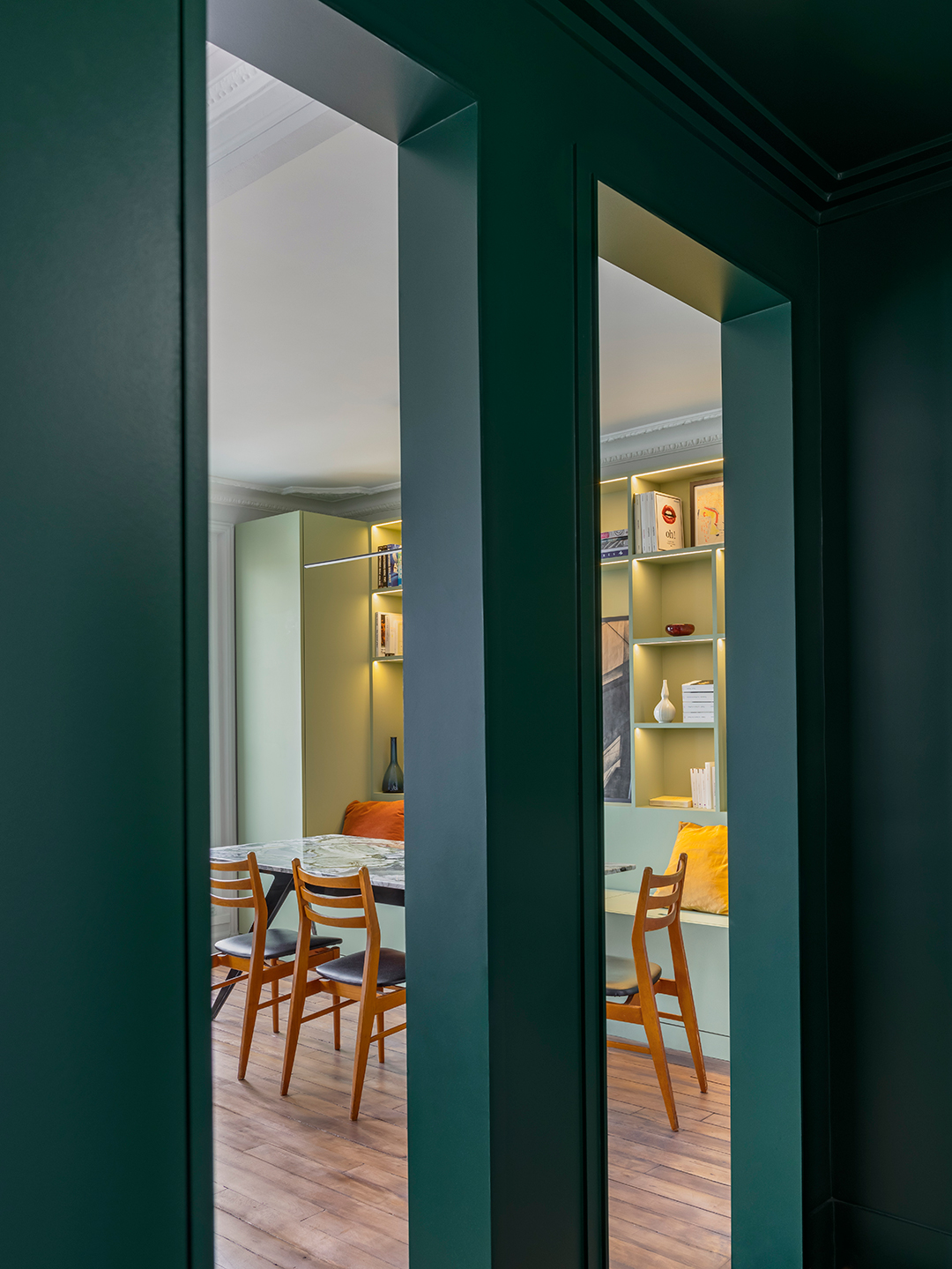
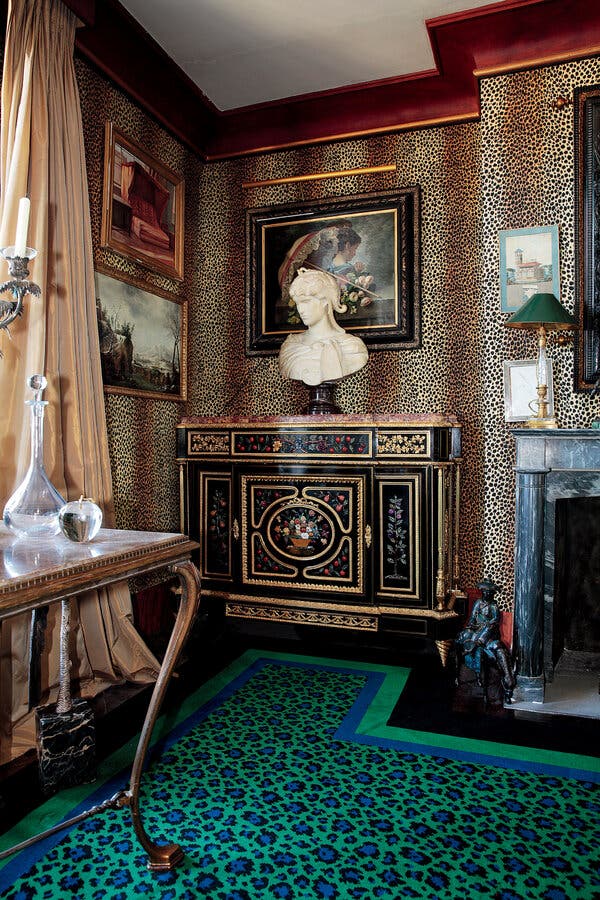
Beaujard emphasizes that his design philosophy is driven by instinct, finding connections between objects regardless of their monetary value. The large, moodily lit entry hall features a mahogany Empire console adorned with Sèvres vases from the 1870s and a 19th-century marble bust of Louis XVI. An expansive early 1800s eight-panel Coromandel screen, painted with rural Chinese scenes, is used to delineate an area for dinner parties. A gently illuminated niche showcases a collection of emerald green-edged Paris porcelain plates from the 1840s, each depicting a different flower. The center of the room is anchored by two forest green velvet 19th-century Italian sofas and a round pale pink silk borne settee, reminiscent of genteel French parlors during the Belle Époque. Beaujard's liberal use of these hues and animal prints in carpets and wallcoverings echoes the preferences of Madeleine Castaing, whose eclectic mixing of high and low influenced his warm and informal approach. He continues to acquire and sell pieces, often through Instagram and 1stDibs.
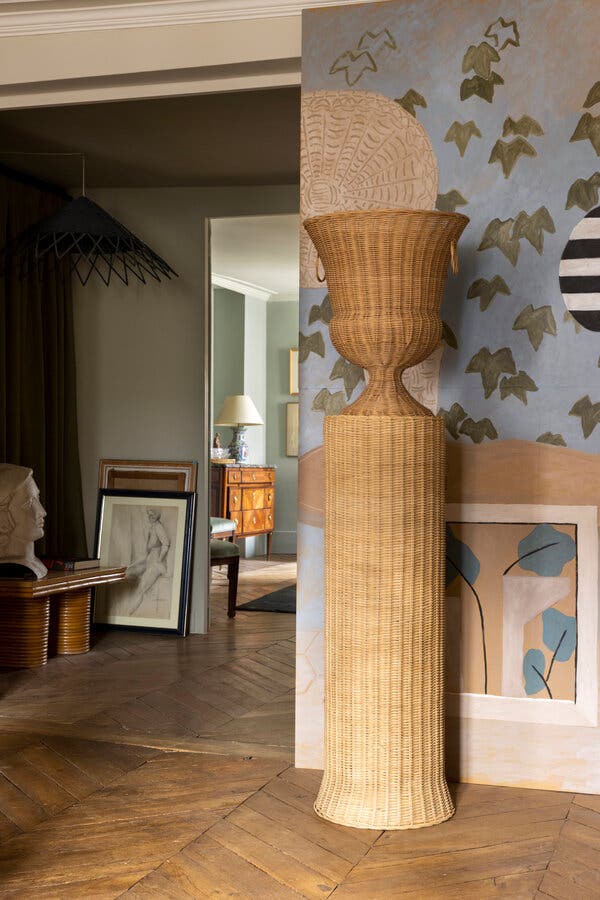
The salon is painted in a celadon shade, also favored by Castaing, and features trompe l’oeil marble columns. In the evening, the crystal chandelier and terrace lights reflect in mirrored panels, creating an 'alchemical' effect. The top floor houses Beaujard’s bedroom and a guest room, both designed with a breezy and debonair aesthetic in pale white and yellow tones with accents of ebony and chocolate. These spaces blend formal late 19th-century French design with fanciful postwar modernism. The polymathic writer and filmmaker Jean Cocteau, a significant influence on Beaujard, is celebrated in the bedroom with a grid of framed illustrations by Bernard Buffet from Cocteau’s 1930 play “La Voix Humaine.” A life-size blackened bronze bust by Cocteau of his lover, Jean Marais, depicted as a faun, rests on an 1874 bamboo cart. This sculpture, a gift from a friend, has traveled with Beaujard across the Atlantic multiple times, symbolizing an enduring commitment to beauty and personal ethos. While many objects may find new homes, some, like this sculpture, are destined to remain with him.
#ParisApartment #AntiquesDealer #FrenchDesign #InteriorDesign #EclecticDecor #ArtNouveau #EmpireStyle #19thCenturyFurnishings #JeanPaulBeaujard #ParisApartment #AntiquesDealer #FrenchDesign #InteriorDesign #EclecticDecor #ArtNouveau #EmpireStyle #19thCenturyFurnishings #JeanPaulBeaujard
0 comment in total
 No comments yet
You may also like
Step Inside This Elegant Haussmann-Style Paris Apartment That Mixes Tradition With Modern Style
7 Character-Filled Apartment Buildings That Wow

From the Banister to a Bed Nook, Curves Are Everywhere in This Paris Apartment
memphis aesthetics and mid-century modernism blend together in milanese apartment
5 Lessons From a New York Home That Takes Its Cues From Modern Parisian Design

Peachy Picture Molding Conceals a Walk-In Closet in This Paris Apartment

Property of the week: a Parisian apartment with an industrial past
Hauvette and Madani Updates a 1980s Paris Apartment With Eclectic Accents
House Tour: Classical Modern Parisian Pied-à-Terre Apartment Opposite the Louvre
theo domini abstracts steel and faded plaster for this 19th-century parisian apartment
A Creative Director Turned Wood From His Demo Into the Kitchen Cabinets

172 Spring Street by March Studio
In Paris, an Apartment Built on Heirlooms and Wicker (Published 2022)

The Paris apartment that takes colour drenching to new ombré heights

This refined Paris pied-à-terre is a masterclass in small-space planning
Inside AD’s October 2025 Issue: City Living

This multilayered New York apartment tells a story of passion for vintage design and craft

Paris: This 17th century house encompasses the best of classical interiors

Hines Collective Creates an Artful Museum Tower Apartment
Your Complete Guide to Parisian Interior Design, Straight From Designers