




1/7
6 ways to decorate with jewel tones to bring intrigue and character to your color schemes
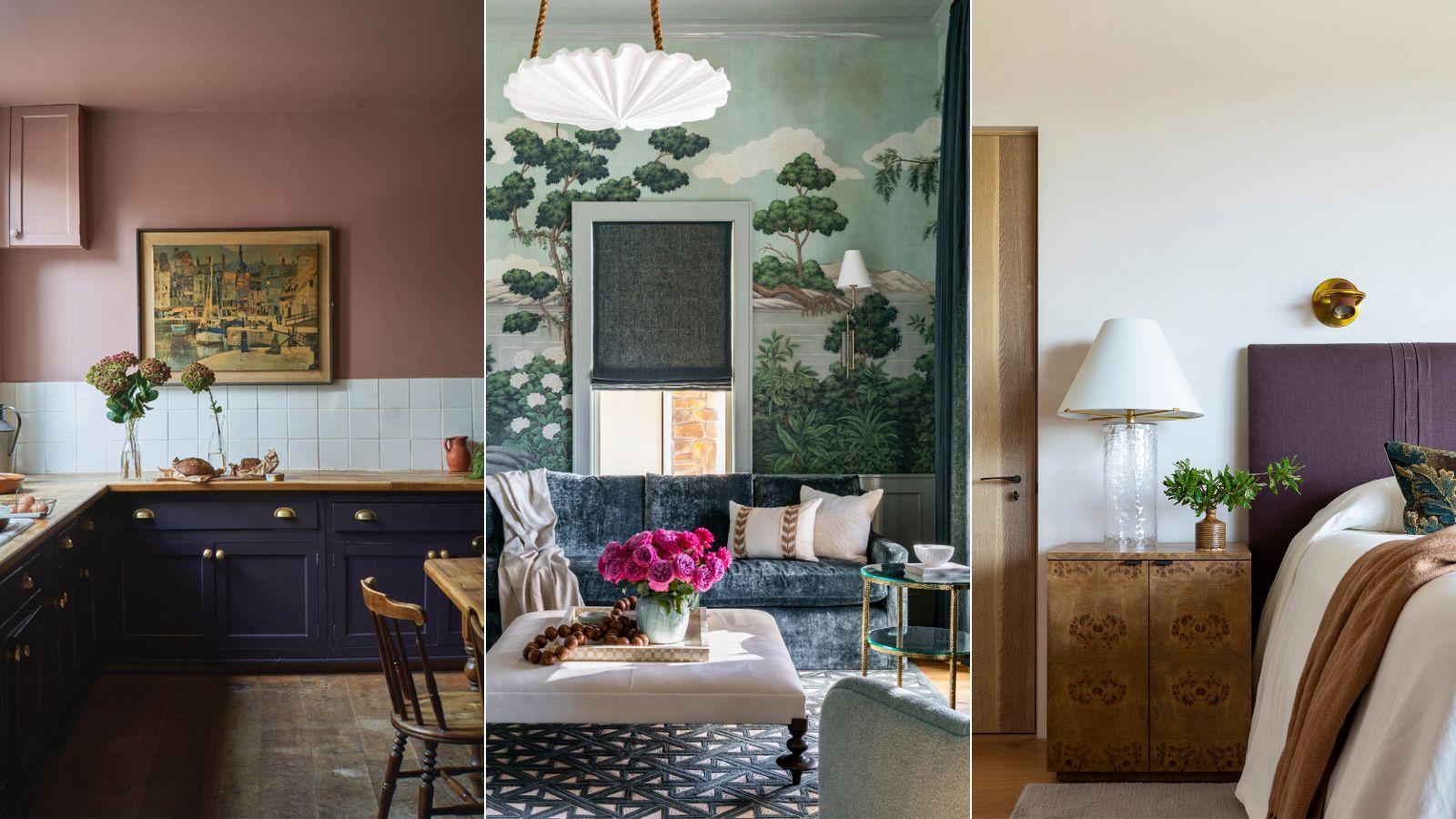
The article explores six effective ways to incorporate jewel tones into home decor, moving away from traditional neutral palettes towards bolder, more vibrant color schemes. Jewel tones, including deep greens, dark purples, rich reds, royal blue, plum, and emerald green, are gaining popularity for their ability to add drama and a luxurious feel to interior spaces. This trend signifies a shift from minimalist styles to more expressive and personalized decor, often associated with "dopamine decor."
One key recommendation is to carefully select the right shade for a specific space. When using dark colors, understanding the room's orientation (north or south-facing) is crucial, as is considering the room's function. Warm plum tones are suggested for inviting spaces, while blue might feel colder depending on its application. Bedrooms, for instance, are ideal for deep jewel tones to create a cozy, characterful ambiance, especially when dimly lit. In contrast, kitchens benefit from more organic dark shades like forest greens, paired with natural woods and metallic accents to maintain a fresh and airy feel.
Another approach involves layering jewel tones. This method suggests using muted gem tones, which are less saturated and more organic, making them versatile and complementary. Pairing colors like evergreen with russet or copper creates a harmonious blend. For those new to jewel tones, starting with small accents such as throw pillows and blankets is advised. For more extensive integration, these tones can be used as paint colors and incorporated into soft furnishings like furniture, drapery, and rugs.
Color drenching is presented as a bold strategy, encouraging a full commitment to a chosen jewel tone by applying it to walls, woodwork, and even the ceiling. This technique can create an illusion of a larger room or higher ceilings by minimizing contrast, offering a more cohesive and contemporary look than traditional accent walls or white ceilings. The "more is more" ethos underpins this method, suggesting that embracing a single deep color throughout a room can be highly impactful.
For lighter schemes, jewel tones can serve as grounding elements. Instead of a feature wall, accents of deep tones in textiles, such as a rich headboard in a neutral bedroom, can create elegant juxtapositions. This balances the vibrancy of jewel tones with the subtlety of off-white ceramics and warm neutral hues, resulting in an indisputably elegant aesthetic. Versatility is also highlighted, with suggestions to pair jewel tones with related lighter shades, like emerald with lighter greens or ruby reds with pinks, to enhance luxuriousness.
Finally, the article advises treating jewel tones as if they were neutrals due to their inherent versatility. This perspective makes them less daunting to incorporate. For example, a velvet sofa in emerald or sapphire can anchor a living room, complemented by a patterned rug featuring similar rich hues. For those wishing to add subtle pops of color to an existing lighter scheme, throw blankets, decorative pillows, or accent trays in maroon, amethyst, or teal are suggested. This approach allows for dramatic and impactful decorating without being overwhelming, especially when combined with a muted backdrop.
#JewelTones #InteriorDesign #ColorSchemes #HomeDecor #ColorDrenching #LuxuriousInteriors #AccentColors #DecoratingTips #BoldColors #JewelTones #InteriorDesign #ColorSchemes #HomeDecor #ColorDrenching #LuxuriousInteriors #AccentColors #DecoratingTips #BoldColors
 No comments yet