



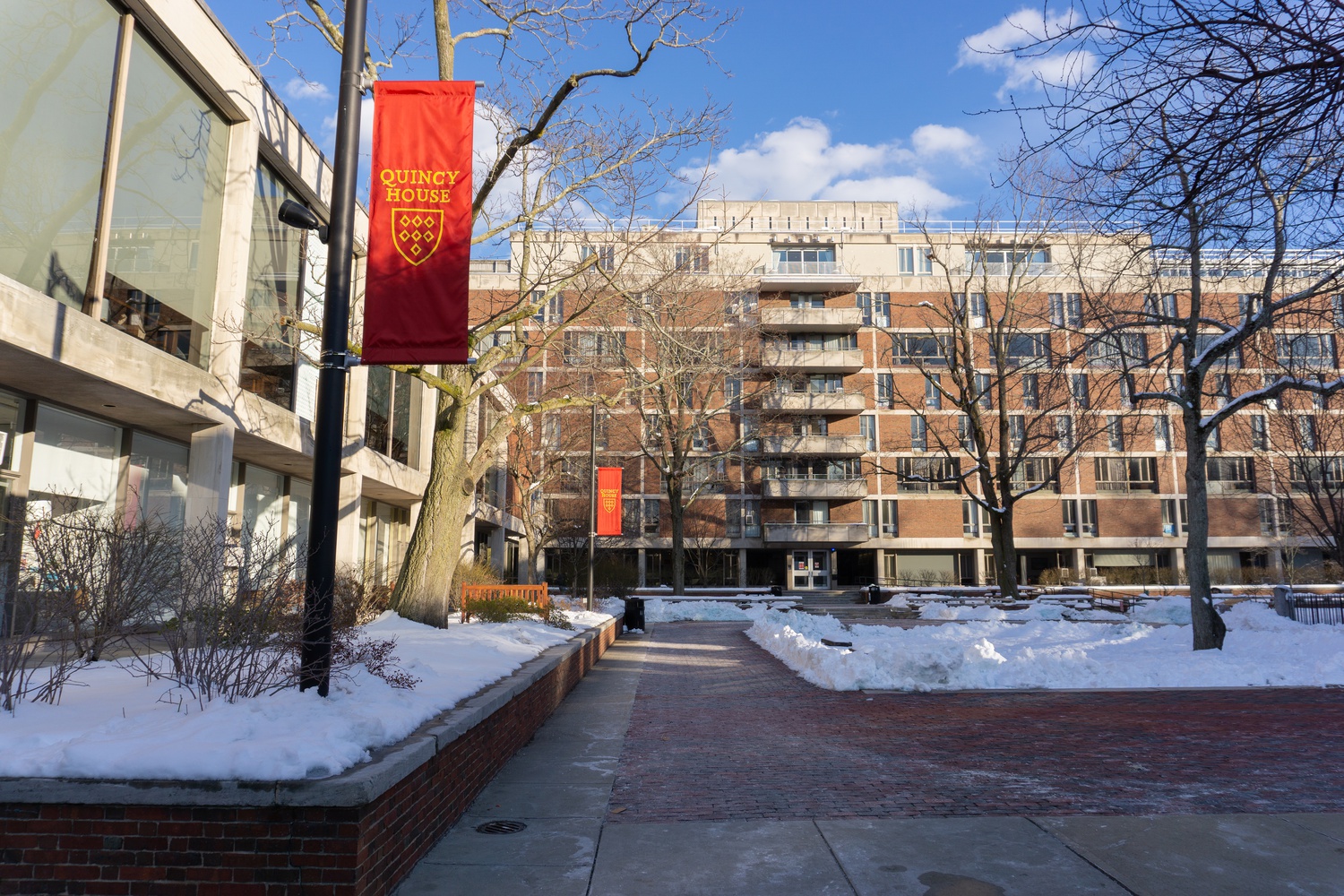
Close Quincy Courtyard Now
The article advocates for restricting public access to Quincy House courtyard at Harvard University, highlighting the need to secure residential spaces and protect students. It draws a comparison with the general discussion about closing Harvard Yard to tourists, acknowledging the logistical challenges of securing the Yard due to its numerous high-traffic access points. However, the author argues that securing Quincy courtyard presents a more straightforward solution, as it has only one unsecured entrance that could easily be fitted with an ID swipe system.
The author emphasizes that House courtyards are intended as central spaces for student life and community, not public parks. The constant presence of the general public is seen as detrimental to fostering a strong sense of community among residents. Examples of other Harvard houses, such as Adams, Dunster, Eliot, Kirkland, Leverett, Lowell, Mather, and Winthrop, are cited, all of which already require ID swipe access for their courtyards, further supporting the case for Quincy.
Quincy courtyard's unique features, such as its large size and its role as a natural thoroughfare between New Quincy and Stone Hall for residents, underscore its importance as a communal space. The absence of an indoor connection to the dining hall in New Quincy means residents frequently pass through the courtyard, making its public accessibility particularly impactful on student interactions.
The increasing number of theft reports on campus, including bicycles, electric scooters, laptops, iPads, and backpacks from dorm rooms and common spaces, adds urgency to the call for enhanced security measures. Closing Quincy courtyard to non-affiliates is presented as a practical step to reduce opportunities for crime and protect student property. Beyond preventing theft, the act of restricting access to Harvard ID holders is expected to instill a greater sense of safety and security among students.
The article concludes by stressing that while closing the entire Harvard Yard might be a long-term goal, implementing security measures for Quincy courtyard is a manageable and immediate step towards safeguarding the residential environment. This smaller, more achievable action is positioned as a crucial move in the right direction to better protect Harvard's students and their living spaces.
#HarvardUniversity #StudentLife #CampusSecurity #QuincyHouse #TheftPrevention #ResidentialLife #CommunityBuilding #CampusAccess #HigherEducation #HarvardUniversity #StudentLife #CampusSecurity #QuincyHouse #TheftPrevention #ResidentialLife #CommunityBuilding #CampusAccess #HigherEducation
 No comments yet