



1/9
Exposed Brick and Interior Design: An Ancient Material Meets the Realm of Retail
Exposed brick, a material with a long and diverse history in construction across various cultures, is now experiencing a resurgence in contemporary interior design, particularly within retail spaces and furniture. This versatile material has transcended its traditional structural role, evolving into a foundational element for artistic and cultural expression, as evidenced by its application in Roman architecture and the strategic perforated designs found in the Mediterranean. Renowned architects like Louis Kahn, Walter Gropius, Mario Ridolfi, Aldo Rossi, and Renzo Piano have previously showcased brick's capacity for innovation.
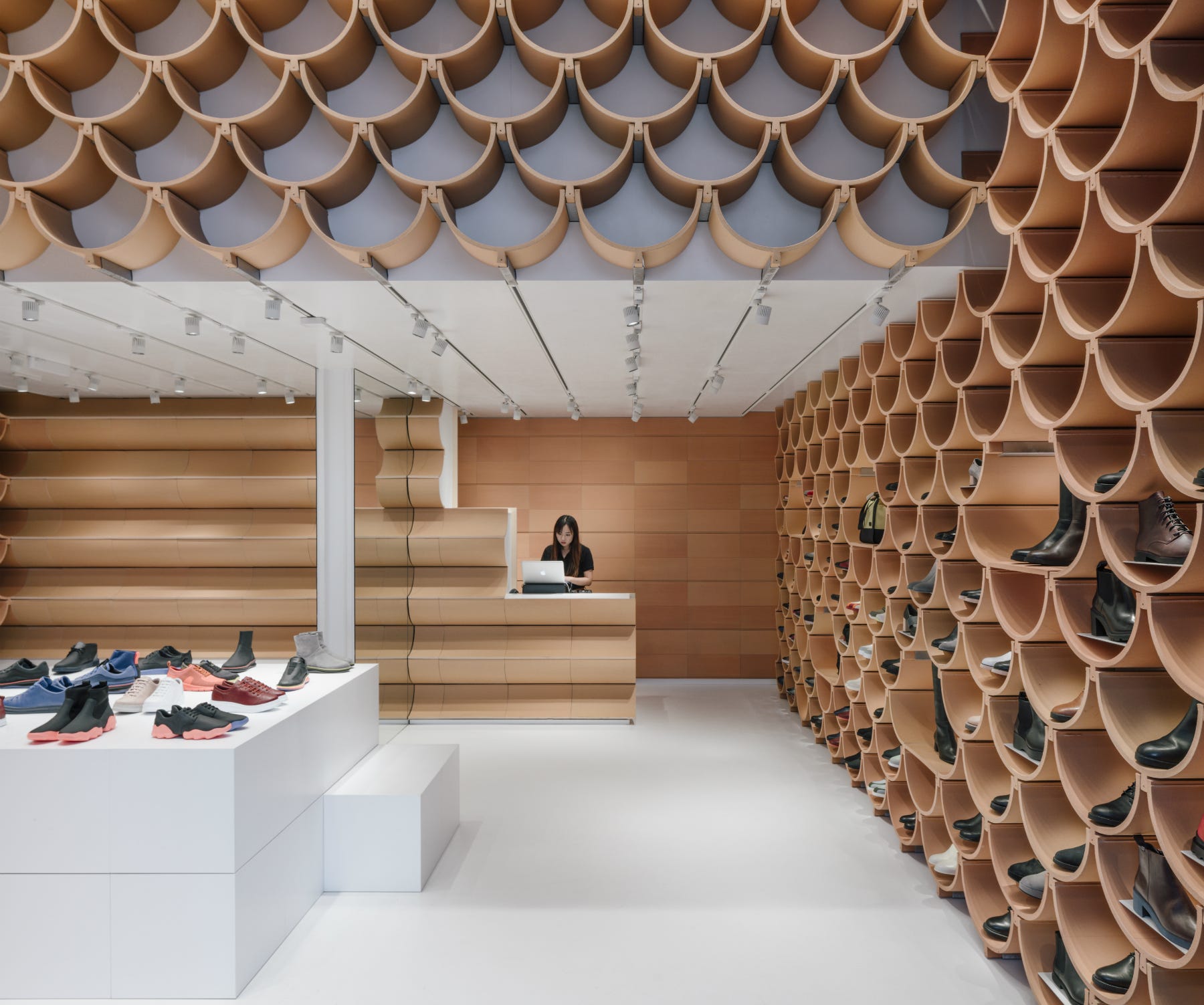
Today, exposed bricks, interior bricks, and brick tiles are transforming spaces, integrating historical heritage with sustainable design practices. Kengo Kuma's design for Camper's Barcelona storefront exemplifies this trend, where the architect merges Japanese and Spanish cultural influences. Kuma reinterprets traditional brick tiles, creating a unique fish-scale pattern that forms decorative matrices, displays, desks, and chairs. This approach highlights the module's versatility and its ability to serve multiple functions within a retail environment.
Similarly, Japanese designer Tsuyoshi Hayashi's "Kawara Bench" collection reimagines the traditional Japanese clay shingles, Kawara. Conceived in 2014, the collection incorporates salvaged and ready-made shingle scraps into lightweight wooden structures, showcasing a sustainable and artistic use of materials. The addition of color to these pieces further expands the aesthetic possibilities of brick.
In furniture design, Simone Bonanni's Obon coffee table collection for Moooi uses terracotta, celebrating its warm tones and embracing slight imperfections as part of its aesthetic. These minimalist tray tables, in various sizes and mounted on cylindrical bases, introduce an earthy touch to modern interiors.
The application of brick also extends to specific regional contexts, such as Aesop's Sao Paulo store, which pays homage to Brazil's traditional cobogó bricks. Designed by Fernando and Humberto Campana, the store utilizes perforated bricks to provide natural shade and ventilation, creating a seamless flow between indoor and outdoor spaces. The design incorporates radial motifs, reflecting artisanal traditions and Mediterranean influences, similar to Patricia Urquiola's Tierras and Celosia collections for Mutina. Tierras features modular, multi-colored porcelain stoneware claddings with earthy tones, bringing tactile materiality to industrial production. Celosia, on the other hand, consists of hollow terracotta modules that use a three-dimensional effect to redefine interior aesthetics.
In Aesop's Brussels location, Bernard Dubois Architects employed traditional yellow brick tiles, common in the Benelux region, referencing works by modernist pioneer Hendrik Petrus Berlage. Dubois uses basic rotations and aggregations of these tiles, laying them vertically to cover curved surfaces, creating a continuous and uniform interior that balances tradition with innovative design principles. This global reinterpretation of brick underscores its enduring relevance and adaptability in contemporary architecture and interior design, moving beyond its ancient origins to shape modern retail and living spaces.
#ExposedBrick #InteriorDesign #RetailArchitecture #SustainableDesign #KengoKuma #TsuyoshiHayashi #SimoneBonanni #CampanaBrothers #PatriciaUrquiola #ArchitecturalMaterials #ExposedBrick #InteriorDesign #RetailArchitecture #SustainableDesign #KengoKuma #TsuyoshiHayashi #SimoneBonanni #CampanaBrothers #PatriciaUrquiola #ArchitecturalMaterials
 No comments yet