




1/7
4 buildings and places in St. Louis in danger of disappearing forever
The Missouri Alliance for Historic Preservation annually calls for nominations for its Historic Places in Peril list. The article, written by an architectural historian, identifies four categories of structures and places in St. Louis that face an insidious threat of disappearance. These nominations are open to any building or place threatened by destruction, neglect, abandonment, development pressures, or insensitive alterations, regardless of official historic recognition.
The first category highlighted is the Churches of North St. Louis. Following the white flight of the 1960s and 70s, many large Roman Catholic and Lutheran churches, originally built in the early 20th century, were taken over by African-American congregations. However, in the new millennium, these congregations are increasingly closing or relocating to North County. Consequently, these magnificent edifices are falling into disrepair, suffering from scavenging and vandalism. The surrounding neighborhoods are also experiencing depopulation, making the long-term revival of these landmarks uncertain. The exact locations are intentionally not publicized to avoid drawing further negative attention to the vacant structures, but their widespread decline signifies broader future problems for North St. Louis and a tragic loss of the city's historic architecture.
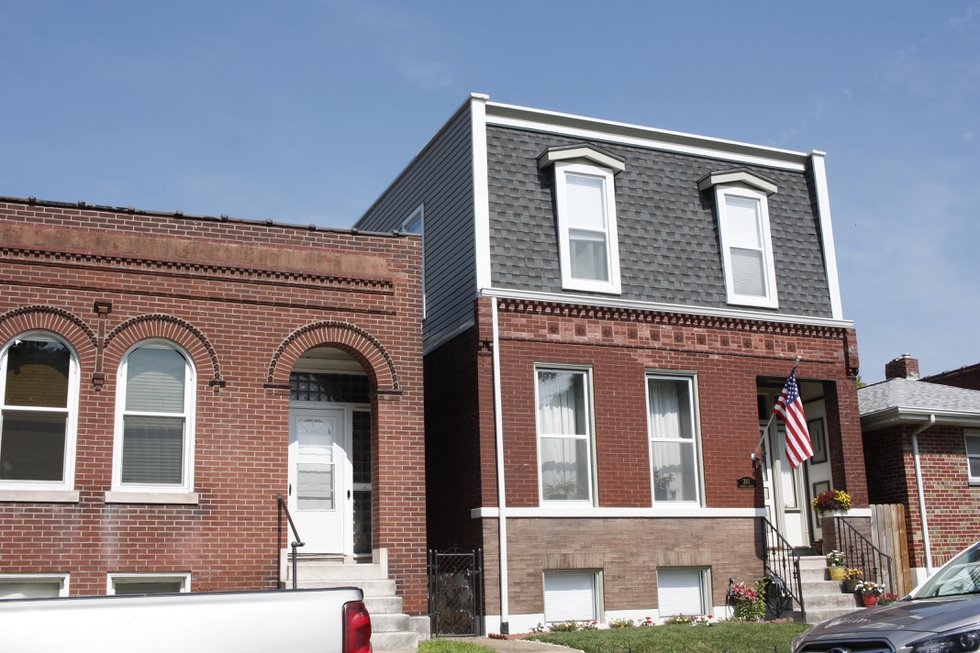
The second category focuses on the one-story bungalows of South St. Louis. A concern is raised about the disappearance of these smaller, affordable homes. Historically, St. Louis neighborhoods exemplified equitable development by mixing houses and apartments of varying sizes and price points on the same block. For example, areas like Dutchtown feature mansions, four-family flats, three-story Second Empire houses, and 1,000-square-foot bungalows alongside each other. However, a recent trend in "hot" and "trendy" neighborhoods near Tower Grove Park involves the demolition or significant alteration of these bungalows. Developers often replace the original structure with large, vinyl-clad, second-story additions, sometimes topped with incongruous Second Empire roofs, in what is described as an "ugly new trend in house flipping." This trend eradicates a segment of quality, respectable, and aesthetically pleasing smaller homes for which a demand still exists.
The third endangered site is Falstaff Plant No. 10, also known as Old Griesedieck Brothers and Consumers’ Brewery, located at the corner of Shenandoah and Lemp. This site has a brewing history dating back to the 1860s, with Falstaff closing its last St. Louis brewery here in 1977. While parts of the complex are now used by light industry and a skate park, the northeast corner, dating to the 1890s, is deteriorating. The north wall of the stock house, facing Shenandoah, exhibits a noticeable bulge and requires urgent rebuilding to ensure its survival. This location is considered hallowed ground in St. Louis brewing history, having been owned by the Griesedieck Brothers and associated with Otto Stumpf, a business partner of William Lemp Sr. The brewery cave, locally known as the Consumers’ Brewery, remains intact underneath the streets. The potential loss of this brewery is particularly significant given that most other historic brewing buildings in St. Louis have already disappeared, unlike the well-preserved Anheuser-Busch and Lemp breweries.
Finally, Westland Acres, an historic African-American community spanning Chesterfield and Wildwood, has been on the Most Endangered list annually since 2016. Recent developments indicate its status as "pending" sale for $15 million. Historical records document this community as comprising descendants of freed slaves who received the land post-Civil War, struggling with rising property taxes as affluent subdivisions expanded around their historic enclave. County records still refer to the tract as the Long Estate, named after the former owner of both the people and the land. The future of Westland Acres remains uncertain due to these external pressures.
#HistoricPreservation #StLouisArchitecture #EndangeredBuildings #UrbanDecay #CommunityHistory #ArchitecturalHeritage #NeighborhoodDevelopment #HistoricChurches #BreweryHistory #HistoricPreservation #StLouisArchitecture #EndangeredBuildings #UrbanDecay #CommunityHistory #ArchitecturalHeritage #NeighborhoodDevelopment #HistoricChurches #BreweryHistory
 No comments yet