



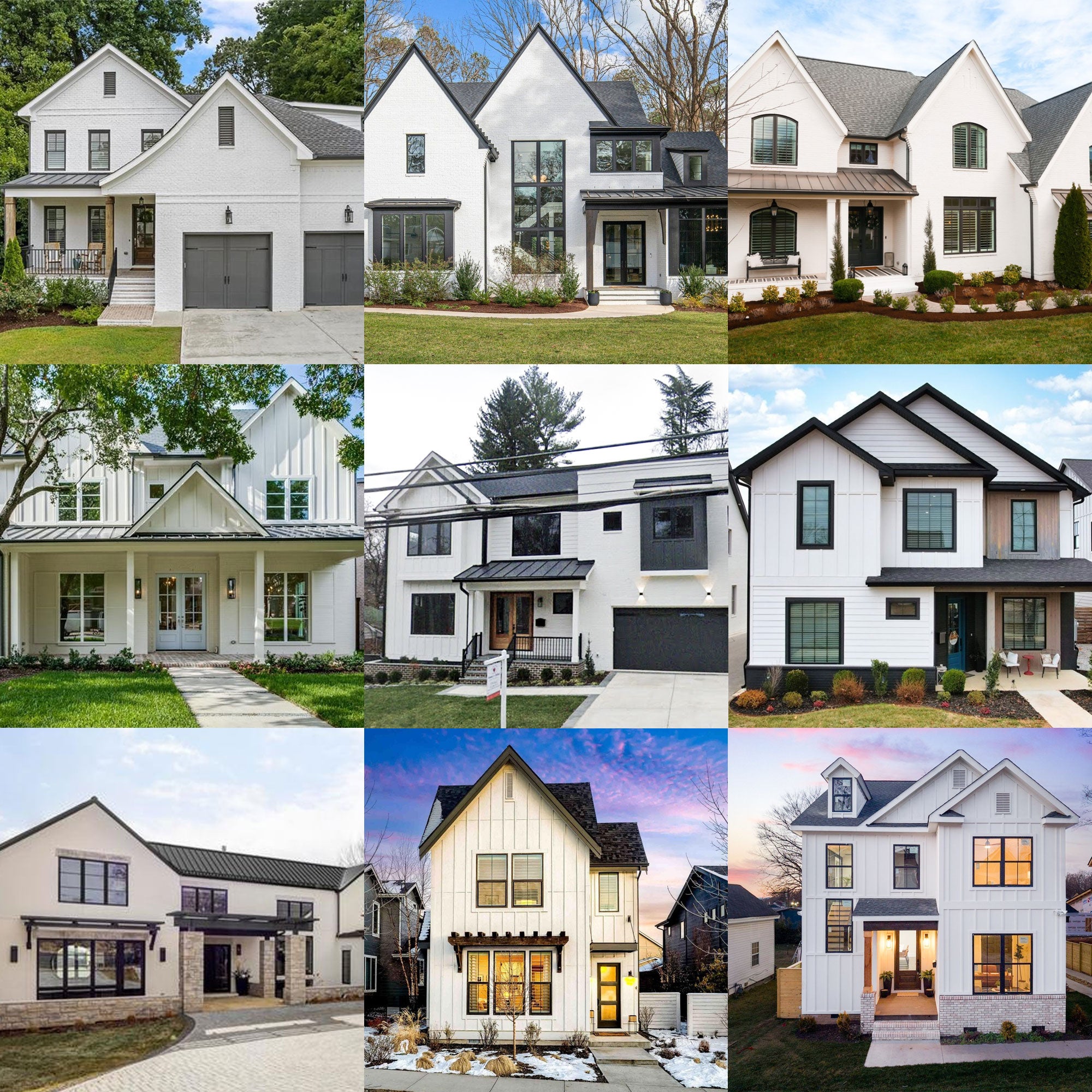
They’re Sprouting Up in Every Rich Neighborhood in America—Including Mine. I Had to Know Where They Came From.
The author explores the proliferation of "Giant White Houses" (GWHs) in affluent American suburbs, a phenomenon observed firsthand with the demolition and reconstruction of a neighboring property in Arlington, Virginia. These GWHs are characterized by their immense size, white facades with black accents, and a blend of architectural styles. The house next door to the author's, for example, features five bedrooms, six baths, and 5,600 square feet, listed at $2.5 million, reflecting a trend seen across various cities like Atlanta, Nashville, Austin, and Boulder.
The article delves into the economic drivers behind the construction of these large homes. While the average size of new single-family homes has not drastically increased nationwide, GWHs, built for the wealthy, are significantly larger. Homes over 4,000 square feet now constitute 14% of new builds in the Northeast, up from 5% in 1999. Developers, like James McMullin of MRE Homes, justify the large scale by economic necessity, as the market rewards square footage. High land and construction costs, coupled with administrative burdens, mean developers must maximize square footage to achieve an 8-15% profit margin.
The verticality of GWHs is another prominent feature, influenced by the popularity of urban lofts with high ceilings. Modern construction techniques, such as glulam lumber and stronger steel, make it easier and more affordable to build taller structures. The house next door to the author boasts 10-foot ceilings on the first floor and 9-foot ceilings upstairs and in the basement, creating a sense of detachment from the street and neighbors, akin to the increasing size of SUVs for a feeling of security and status.
The GWHs, though large, often lack the ornate fripperies of earlier McMansions. Architectural critic Kate Wagner defines McMansions not by style but as a type of house reflecting a "house as consumer product" logic, driven by continuous upgrades and specific social functions. These homes prioritize interior amenities like large entertainment suites, great rooms, and restaurant-scaled kitchens, effectively interiorizing social functions that once occurred outside the home. The sealed windows and towering presence further isolate residents from their community.
The monochromatic white and black aesthetic of GWHs is also analyzed. Developers like Jon DeHart explain that white is a "fan favorite" because it appeals to the broadest market, reflecting a desire for the "least offensive possible" design in spec homes. This trend is heavily influenced by the modern farmhouse style popularized by Chip and Joanna Gaines of *Fixer Upper*. However, the GWH has evolved beyond a pure farmhouse, incorporating elements of minimalism. Wagner notes that minimalism, once associated with elite taste, has become a signifier of class and sophistication, even if the GWHs themselves are maximalist in scale. This "normie minimalism" suggests a clean, crisp, and purposeful clarity.
The article also touches upon the role of real estate data platforms like Zillow and Redfin. These platforms have changed how people interact with architecture, focusing on consumer product aspects and investment potential. The high value of land in areas like Arlington means that smaller, older homes are often bought by developers, demolished, and replaced with GWHs, contributing to a housing crisis where "starter homes" are increasingly rare. The house, in this context, becomes less a home and more a financial investment, a "vehicle for investment," where uniformity in design is preferred to ensure marketability.
Ultimately, the author reflects on the transformation of his own neighborhood, where once diverse middle-class homes are steadily being replaced by GWHs. This shift signifies a demographic change, moving from middle-class to affluent and then to very rich residents. The author anticipates his own home will eventually be sold to a developer, dismantled, and replaced by another GWH, illustrating the pervasive nature of this architectural and economic trend across America.
#GiantWhiteHouses #SuburbanDevelopment #RealEstateTrends #ArchitecturalStyle #HousingEconomics #McMansions #ModernFarmhouse #MinimalistDesign #SpecHomes #ZillowInfluence #GiantWhiteHouses #SuburbanDevelopment #RealEstateTrends #ArchitecturalStyle #HousingEconomics #McMansions #ModernFarmhouse #MinimalistDesign #SpecHomes #ZillowInfluence
 No comments yet