




1/9
Saxons to Stormzy: Nine radical moments that defined their era
The "Art That Made Us" series explores how creative works have shaped the diverse story of the British Isles, presenting nine pivotal moments that capture dramatic periods of change. This ambitious eight-part series spans centuries, from early Welsh resistance to contemporary musical phenomena.
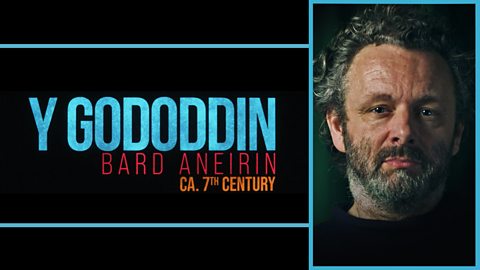
The journey begins with "Y Gododdin," a 14-century-old Welsh poem attributed to Aneirin. This lament to a doomed struggle against the Anglo-Saxons is preserved in a 13th-century manuscript and is described by actor Michael Sheen as deeply moving, embodying the glory of losing well. The series' opening episode, "Lights in the Darkness," delves into the turbulent era following Roman occupation, featuring sculptor Antony Gormley examining Spong Man, artist Cornelia Parker investigating the Staffordshire Hoard, and Reverend Richard Coles exploring the Lindisfarne Gospels. It also touches on Beowulf, the Anglo-Saxon Mappa Mundi, and the Bayeux Tapestry, offering an alternative history of the 'dark' ages.
The second key moment highlights "The Book of Margery Kempe," the first autobiography in English, written in the 15th century. Margery Kempe, a spirited pilgrim and mystic, recounts her spiritual conversion, fits, and visions, potentially linked to post-natal depression. Her tell-all account details her pilgrimages and conflicts with religious authorities. Episode two, "Revolution of the Dead," focuses on the aftermath of the Black Death, showcasing how creative renewal emerged, with English literature reviving through works by Chaucer, Langland, and pioneering women like Kempe.
The 16th century's religious revolution in the British Isles is explored through "The Penicuik Jewels." As England and Scotland turned Protestant, art, language, and new technologies became tools in the power struggle between Elizabeth I and Mary Queen of Scots. Mary's use of jewels and Scottish gold work is highlighted, with the Penicuik Jewels symbolizing both craftsmanship and a critical juncture in British history. Episode three, "Queens, Feuds and Faith," features examinations of John Foxe’s Book of Martyrs, the Barton Altar Cloth, Mary Queen of Scots' embroideries, and Shakespeare’s Othello.
The growth of scientific thought under the Stuart kings is exemplified by Robert Hooke's "Micrographia." This book, the first to present images taken under a microscope, revolutionized perceptions of the natural world, marrying art and science through meticulous drawings. Episode four, "To Kill a King," investigates how political and religious divisions led to questioning art, new science, and architecture, with discussions of Inigo Jones’ Queen’s House and Christopher Wren’s St Paul’s Cathedral.
Anthony van Dyck’s "Philip Herbert, 4th Earl of Pembroke, and his Family" represents a redefinition of British art in the 17th century. As court painter to Charles I, Van Dyck's monumental portraits captured the era's turmoil and his Flemish master Rubens' influence is evident in his extraordinary skill.
Jonathan Swift’s 18th-century satire, "A Modest Proposal," is a bitter critique of the callous treatment of Ireland's poor. Written in the style of political pamphlets, Swift's macabre suggestion of using children as food served as a potent, absurd commentary. Episode five, "Consumers and Conscience," links the explosion of creativity funded by trade and conquest to the dark side of slavery, as seen in the interiors of Harewood House, and examines William Hogarth’s social critiques.
William Morris’s 19th-century wallpapers are presented as an effort to integrate nature into Victorian homes and counteract industrialization. His designs, inspired by medieval artistry, emphasized handmade craftsmanship over machinery. Episode six, "Rise of the Cities," charts the shift of power from rural to urban areas, with artists like JMW Turner, Elizabeth Gaskell, and Oscar Wilde responding to societal upheaval.
Barbara Hepworth's "Contrapuntal Forms" embodies a vision of technological and cultural renewal in the post-war era, specifically for the 1951 Festival of Britain. This abstract sculpture, Hepworth's first public commission, aimed to lift public spirits and create a new art for a new era. Episode seven, "Wars and Peace," focuses on artists grappling with destruction and transforming culture during the first half of the 20th century.
Finally, Stormzy’s 2019 Glastonbury headline performance marks a contemporary radical moment. As the first Black British solo artist to headline, his incendiary show, featuring a Banksy-designed stab-proof Union flag vest, brought grime music to the mainstream. The final episode, "Brilliant Isles," examines how new voices from the 1950s and 60s onward led to a richer, more diverse cultural landscape, including works by Tracey Emin and Michael Sheen’s production of The Passion of Port Talbot.
#BritishArtHistory #CulturalImpact #HistoricalMoments #ArtisticExpression #SocialCommentary #LiteraryMilestones #ArchitecturalInnovation #MusicAndCulture #PublicArt #BritishArtHistory #CulturalImpact #HistoricalMoments #ArtisticExpression #SocialCommentary #LiteraryMilestones #ArchitecturalInnovation #MusicAndCulture #PublicArt
 No comments yet