
1/2
In the (house) with Ed: Talking about poinsettias
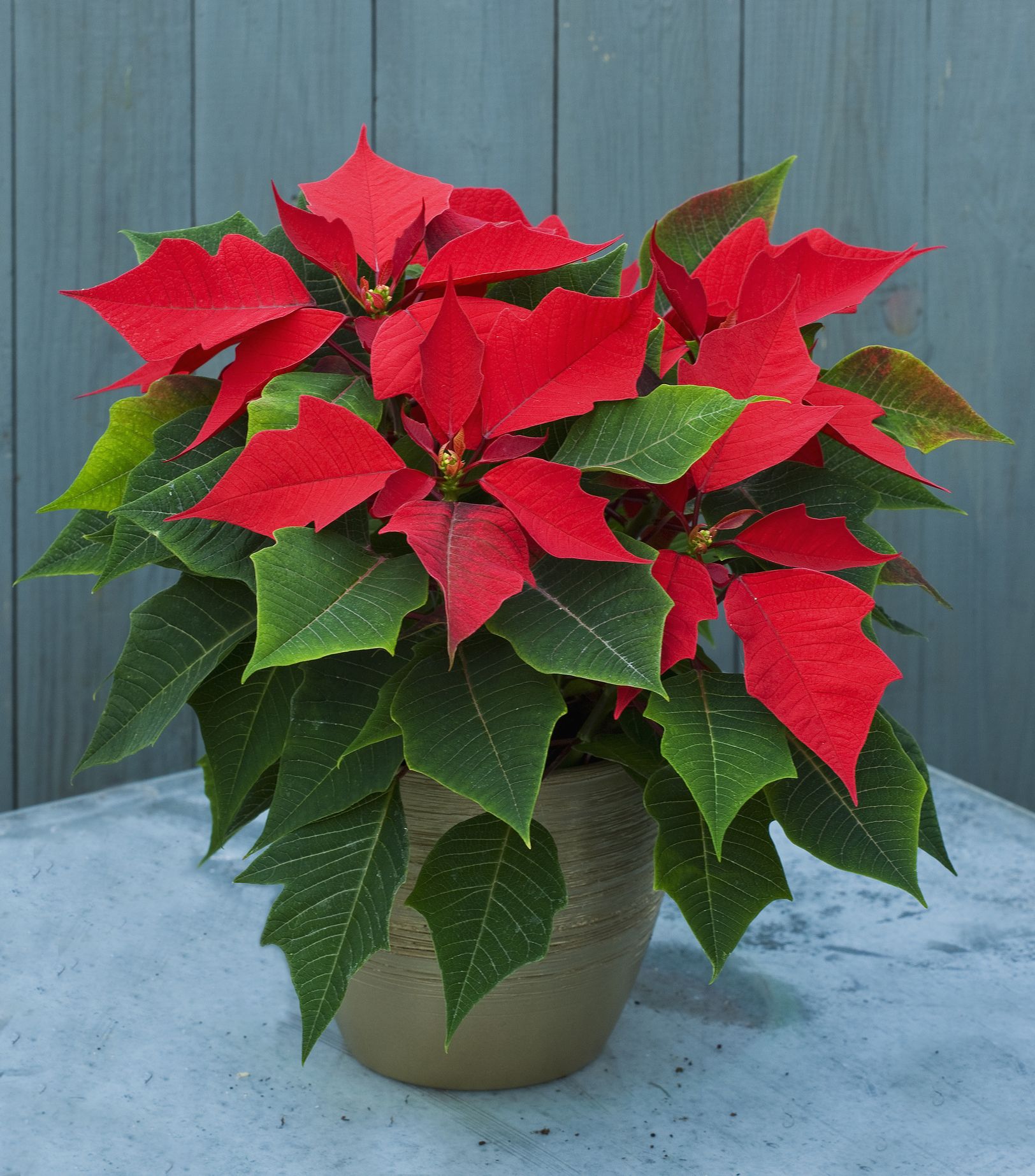
Poinsettias are prominently featured in Christmas decor, with their vibrant scarlet blooms and lush green leaves setting a festive tone. These plants thrive in bright, indirect light and require watering only when the topsoil feels dry, which helps prevent root rot from over-saturation. The appearance and care requirements of poinsettias have significantly evolved since the 1950s, when varieties were limited to red and some whites, and their longevity was often poor, with plants losing leaves and bracts within a couple of weeks. Today, due to extensive breeding and development efforts by entities like the Ecke Family and large horticultural companies over the past seventy years, there is a much wider array of colors, sizes, and shapes, along with significantly improved longevity and easier care.
Key to understanding poinsettias is recognizing that the actual flowers, known as cyathia, are the tiny yellowish berry-shaped knobs located at the center of the plant. The colorful, leaf-like structures that are typically admired are called bracts. While many consider poinsettias to be houseplants, their primary role is often for seasonal decoration, and maintaining them as a permanent houseplant, especially getting them to re-bloom, is more challenging than caring for them as fresh plants. Growers like Steve Boehler of Boehler's Greenhouse cultivate thousands of these plants, offering about 15 varieties across red, pink, white, and marbled colors, with red varieties making up nearly 70% of his stock. Each variety is chosen for its specific characteristics, including its ability to "branch" effectively, which contributes to a fuller plant with rich green foliage and a wide spread of color.
Commercial cultivation of poinsettias begins with rooted cuttings, which arrive in late July. These cuttings are then potted and placed on greenhouse benches for further development. Around Labor Day, the plants enter a crucial period of natural darkness that extends until just after Thanksgiving. During this time, they receive sunlight during the day but are kept in complete darkness from dusk until dawn. Any artificial light, even as little as two footcandles (comparable to a nightlight), can disrupt this cycle and retard the development of colorful bracts. This strict light regimen is essential for triggering flower production and explains why getting a poinsettia to re-bloom the following year at home is difficult and demanding.
Caring for a newly purchased poinsettia is relatively straightforward. It should be watered only when the top inch of soil is dry, and any water collected in the foil or saucer should be discarded to prevent the roots from sitting in water. Weekly watering is typically sufficient. While the plant does not require direct sunlight or lamplight to maintain its color for a few weeks—it could even be placed in a closet—it is ideal to position it in a nicely lit room to allow the leaves to continue photosynthesis. Poinsettias do not require feeding. With proper care, a poinsettia can remain attractive through March or even longer. Eventually, a decision must be made whether to discard the plant or attempt to keep it as a houseplant, bearing in mind the challenges associated with getting it to re-bloom.
#PoinsettiaCare #ChristmasDecor #HouseplantTips #Gardening #FloralArrangement #SeasonalPlants #PlantBreeding #Horticulture #PoinsettiaCare #ChristmasDecor #HouseplantTips #Gardening #FloralArrangement #SeasonalPlants #PlantBreeding #Horticulture
 No comments yet
Home & Design | Conversation Piece
Garden Column: Poinsettia still No. 1 choice for Christmas plant
16 Ideas for Decorating with Poinsettias to Add Holiday Spirit to Your Home


The Plant Doctor: Flowers on Brunfelsia shrub open purple, fade to violet and then turn white